Chumley's: History of a Legendary NYC Speakeasy
Questo contenuto non è ancora disponibile in italiano. Mostriamo la versione in inglese.
From Blacksmith Shop to Speakeasy
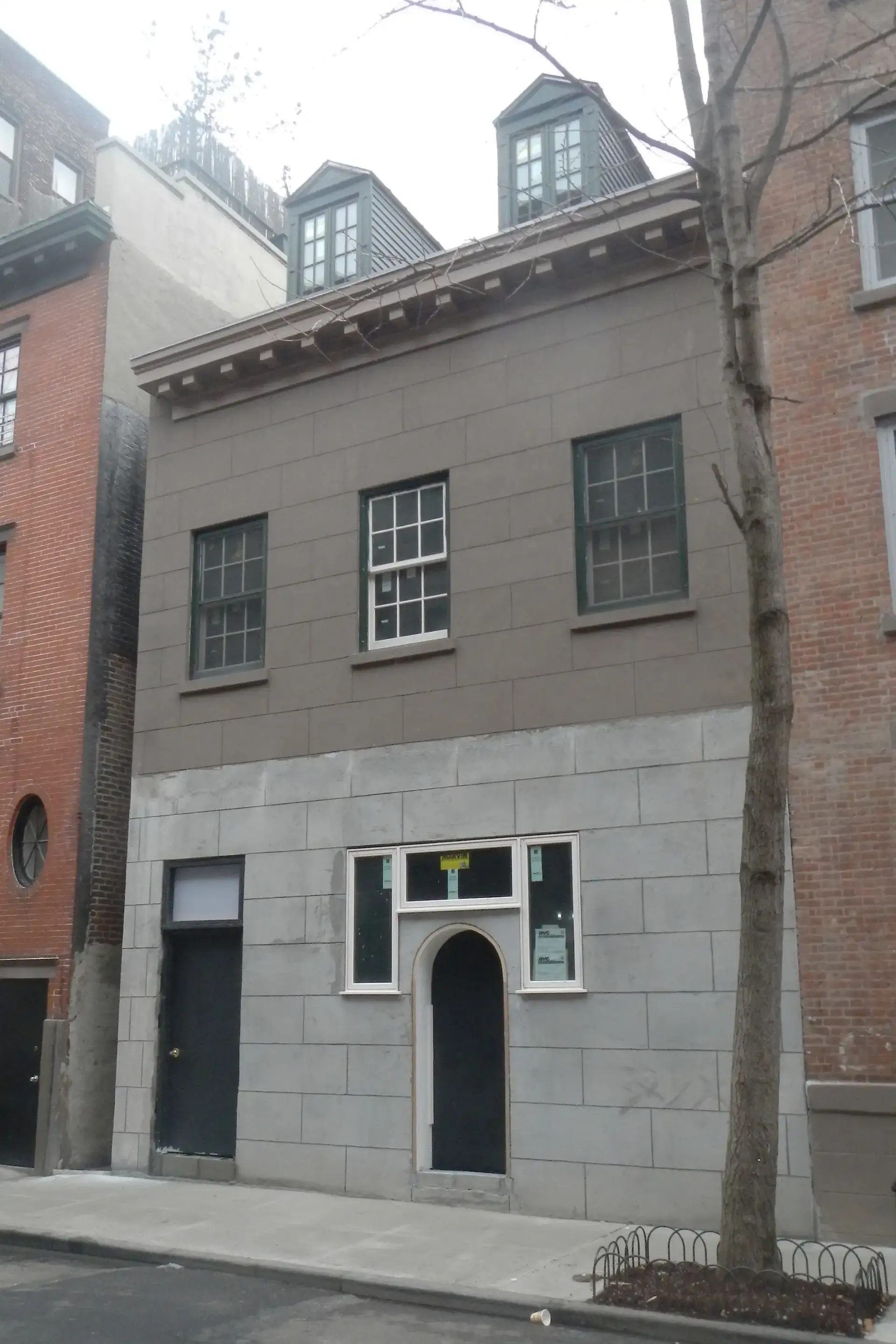
Located at 86 Bedford Street in New York City's West Village, the building that housed Chumley's began its life as a Federal-style house and blacksmith's shop, constructed between 1820 and 1830. In 1922, during the height of Prohibition, socialist activist and Industrial Workers of the World (IWW) member Leland Stanford Chumley transformed the property. He established a speakeasy and gambling den that also served as a clandestine meeting place for his fellow IWW members.
A Prohibition-Era Legend
As a speakeasy, Chumley's was designed for discretion, featuring unmarked entrances, trap doors, and secret passages to evade authorities. The establishment's address is widely believed to be the origin of the common idiom "86," which means to get rid of something or someone. According to legend, police would call ahead to warn staff of an impending raid, instructing them to "86" their customers out the back door at 86 Bedford Street.
The Literary Heart of Greenwich Village
Chumley's quickly evolved into a celebrated literary hub, attracting a remarkable roster of 20th-century writers from the Lost and Beat Generations. Its patrons included William Faulkner, Ernest Hemingway, F. Scott Fitzgerald, John Steinbeck, J.D. Salinger, and Jack Kerouac. Other notable figures like Willa Cather, E.E. Cummings, and Eugene O'Neill also frequented the bar. Leland Chumley started a tradition of displaying the dust jackets of books published by his patrons on the walls, cementing its status as a cultural nexus. It was even rumored that poet Edna St. Vincent Millay occasionally tended bar.
Eras of Change and Closure
After Leland Chumley's death in 1935, his wife, Henrietta Chumley, took over management and ran the establishment for 25 years until her own death in 1960, reportedly at her favorite table. The bar's history also includes several darker incidents, including a fatal dispute over a chess game in 1960.
A major turning point occurred on April 5, 2007, when a chimney collapse severely damaged the building, forcing a decade-long closure for extensive renovations. Chumley's reopened in October 2016 as an upscale dinner restaurant. However, this new iteration was short-lived, as it permanently closed in July 2020 due to the economic impact of the Coronavirus lockdown.
The Legacy at 86 Bedford Street
While the original Chumley's is now a part of New York City history, the building itself continues to operate. Following its closure, another restaurant named Frog Club opened in the space in February 2024. By September 2025, a steakhouse called The Eighty Six was documented as being in operation at the historic address, carrying on the location's long tradition of hospitality.
FAQ
What was Chumley's?
Chumley's was a historic speakeasy and bar in New York's West Village, established in 1922. It was famous for its role during Prohibition and as a gathering place for many prominent 20th-century writers.
Where did the term "86" come from?
The term "86" is widely believed to have originated at Chumley's. During Prohibition, police would allegedly call ahead to warn of raids, telling bartenders to send patrons out the exit at 86 Bedford Street.
Is Chumley's still open?
No, Chumley's permanently closed in July 2020. The building at 86 Bedford Street has since been occupied by other restaurants, including The Eighty Six steakhouse as of late 2025.
Who were some famous patrons of Chumley's?
Chumley's was a favorite spot for many literary icons, including William Faulkner, Ernest Hemingway, F. Scott Fitzgerald, John Steinbeck, J.D. Salinger, Jack Kerouac, and Edna St. Vincent Millay.