Hohensalzburg Fortress (Funicular Base)

Consigli e tour per esploratori e viaggiatori

Guida della città di Salzburg

Salisburgo unisce un compatto centro storico barocco patrimonio UNESCO a spettacolari contrafforti alpini, plasmata dall'eredità musicale di Mozart, dal celebre Festival di Salisburgo e da vicoli pedonali nascosti ai piedi della Fortezza di Hohensalzburg.

Paese
Austria
Lingua
tedesco
Valuta
euro (EUR)
Presa
tipo C/F
Fuso orario
Europe/Vienna
Emergenze
112, 133, 144 e 122
Acqua del rubinetto
Potabile
Prefisso
+43

Le tappe

Cosa fare a Salzburg

Il centro raccolto di Salisburgo si scopre a piedi, stretto tra il fiume Salzach e la parete del Mönchsberg. Piazze storiche, i luoghi di Mozart e cortili barocchi si susseguono senza soluzione di continuità, mentre salite ripide portano fino alla Fortezza di Hohensalzburg.

Palazzo Mirabell e Giardini – scandalo in fiore

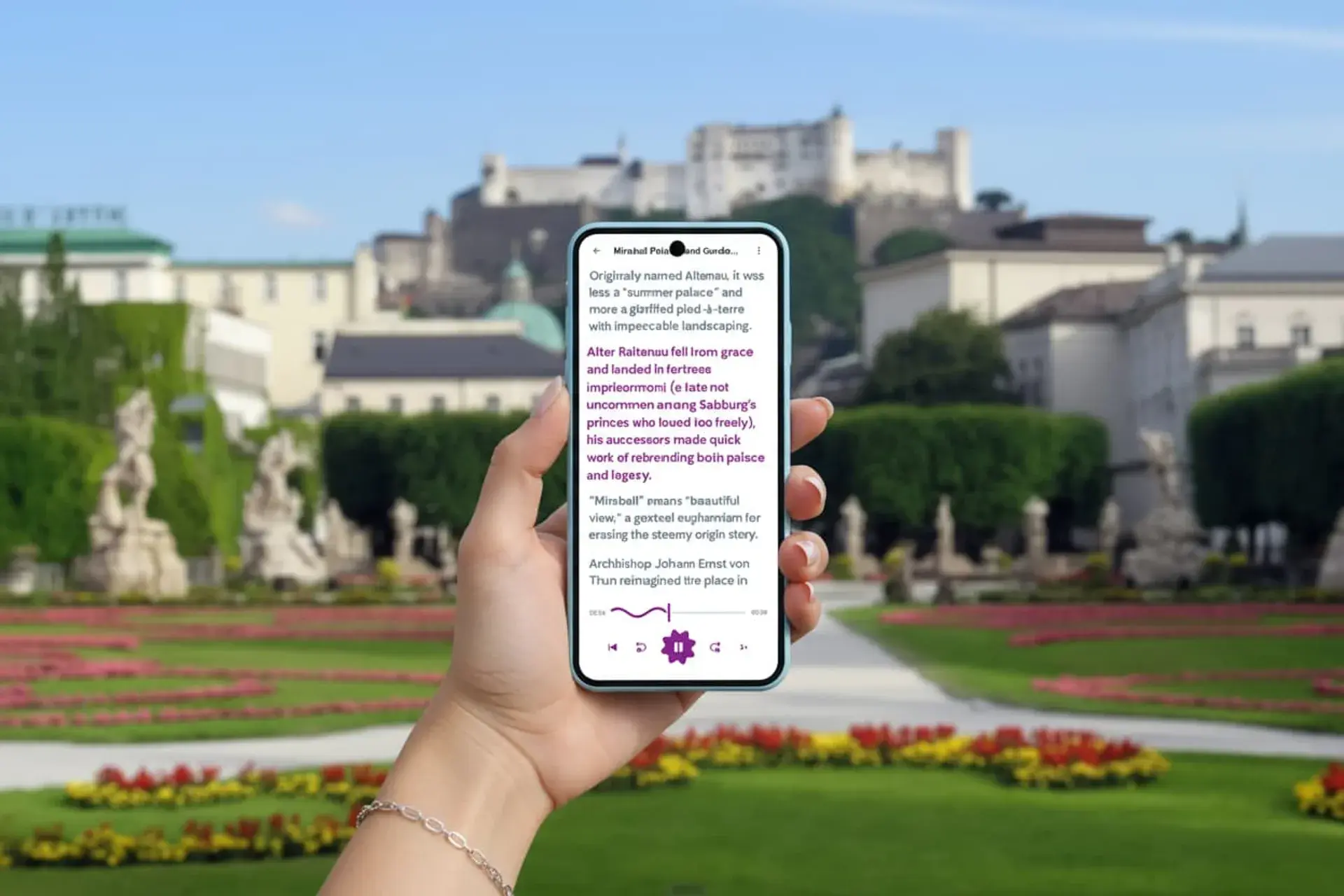
In Salzburg, even the scandals come landscaped. This refined city, threaded along the Salzach River and backed by snow-dusted hills, carries centuries on its shoulders like a well-tailored coat. You’ll find elegance in its Baroque façades, genius in its music halls, and a surprising amount of personality tucked between palaces and pastries. This walk invites you into the layered charm of Salzburg’s history. Not just the postcard version, but the winks, quirks, and human contradictions that fill its alleyways and bell towers. From ecclesiastical strongholds to twirling Do-Re-Mi meadows, local folklore shares pavement with world fame. And while the city’s most celebrated son—Mozart—makes frequent curtain calls, he’s far from the only story worth hearing. We begin with a garden that once bloomed for love, rumor, and a defiant archbishop’s family tree. It’s orderly now, but the roots remember. Mirabell was born out of scandal, which makes its present respectability all the more ironic. Around 1606, Prince-Archbishop Wolf Dietrich Raitenau built this palace—not for God, country, or cultural posterity—but for his mistress, Salome Alt, and their 15 children. Originally named Altenau, it was less a “summer palace” and more a glorified pied-à-terre with impeccable landscaping. After Raitenau fell from grace and landed in fortress imprisonment (a fate not uncommon among Salzburg’s princes who loved too freely), his successors made quick work of rebranding both palace and legacy. “Mirabell” means “beautiful view,” a genteel euphemism for erasing the steamy origin story. Archbishop Johann Ernst von Thun reimagined the place in the Baroque mode, adding a grand marble hall and sculpted gardens that today host weddings more politically correct than their namesake’s domestic arrangements. The gardens, a choreography of hedges and fountains, are more obedient than their original royal patron. You’ll spot the Pegasus fountain and the hedge theater, which now plays more Mozart sonatas than moral scandals. And of course, there’s the Dwarf Garden. Originally 28 strong, these bulbous stone figures were carved for amusement, then scandalized into storage. A few survivors now grin toothlessly for selfie-seeking tourists. Modern crowds remember it less for ecclesiastical gossip and more for Julie Andrews twirling to “Do-Re-Mi.” Mirabell now houses the mayor’s office rather than mistresses, and the Marble Hall doubles as one of Europe’s loveliest registry offices. It’s as buttoned-up as a civil servant—only with vastly better drapery. Children tell tales of the “Hexenkuss,” a tree bark formation they claim grants wishes if kissed. Botanically implausible, but charmingly persistent. Touch at your own peril—or promises. Come early. The only thing more surgically trimmed than the topiary are the tourists’ schedules. At sunrise, the scent of clipped yews and fresh blooms hangs in the air, unbothered yet by camera shutters. Raitenau would have hated the modesty. And just across the river, another Salzburg household brimming with sound and tension awaits—Mozart’s later home and creative crucible.
Residenza di Mozart – genio a distanza ravvicinata

<p>Makartplatz 8 is surprisingly sedate for a house that once echoed with symphonies, family quarrels, and the squawks of a pet starling with suspiciously refined taste. This is where the Mozarts moved in 1773 when their old apartment—above a busy street and below their increasing fame—could no longer contain their ambitions or elbows.<br><br>Leopold Mozart, ever the stage father with a manuscript in one hand and a travel itinerary in the other, designed an octagonal music room here, ideal for shaping Austria’s most precocious export. Wolfgang, by this point just 17, already had the posture of a man weary of small talk and provincial rituals. Many early masterpieces were composed beneath these ceilings.<br><br>WWII bombings shattered much but didn’t silence it. The residence was meticulously reconstructed, giving the building a faintly ghostly feel—the kind of place where the past hangs behind the plaster like a second wallpaper. Within, there’s Mozart’s own fortepiano (still sturdier than his finances ever were) and family instruments that saw more rehearsals than reconciliations.<br><br>The house is heavy with father-son tension, sibling talent (Nannerl, brilliant in her own right, mortally overshadowed), and creative genius caged. Even the alleged starling gets a mention—a bird who memorized Mozart’s tunes and maybe improved them. That kind of feedback loop is hard to come by on Spotify.<br><br>Today, hushed visitors drift through the rooms, headphones on, reverently peering at compositions like naturalists observing a rare fossil. Out the window, the modern city carries on with buses and bratwurst carts, oblivious to internal arias.<br><br>You leave realizing two truths: one, even Mozart needed better acoustics; and two, no genius is ever at home in a house for long.<br><br>From domestic dramas to defensive grandeur, before crossing the bridge we’ll pause by the riverbank and look south to the Hohensalzburg Fortress, which rises above the city like a stone crown still keeping watch over every note and rooftop.</p>

Fortezza di Hohensalzburg – la vista dal potere

<p>You are not climbing it today, just admiring it from afar. Perched on Mönchsberg since 1077, Hohensalzburg began as a holy man’s backup plan: if diplomacy failed, build higher walls. It still dominates the skyline, a pale fortress that has outlasted its founders and the arguments that built it.</p> <p>Over centuries, each Prince-Archbishop added another layer, tower, or torture implement, crafting Europe’s fortification equivalent of a bureaucratic nesting doll. Archbishop Leonhard von Keutschach was especially fond of upgrading, adding princely apartments, self-aggrandizing crests, and what can only be described as medieval flexes. His family’s radish emblem appears in more places than is strictly necessary.</p> <p>Centuries passed. Empires fell. Hohensalzburg remained stubbornly unconquered. Even Napoleon, usually so skilled at turning castles into smoking ruins, declined the invitation. It served as a prison, a bastion, and, ironically, a symbol of safety from the men who built it.</p> <p>Inside, visitors now find museums devoted to war, puppetry, and princely taste, because Salzburg believes in categorizing its ghosts. Then there is the Salzburg Bull, not livestock but a wheezing mechanical organ built to psych out attackers by pretending the fortress had endless cattle. It plays daily, a moody soundtrack that seems to suggest, “We hear you down there, and we are incredibly unbothered.”</p> <p>The Torture Tower, once a medieval HR office, still looms beside the princely rooms, proof that splendor and dread often share hallways. From below, the panorama is just as grand. The fortress that once kept peasants out now welcomes them three times a day via guided tours. Even ramparts lose their edge after a few centuries.</p> <p>You can climb it after the tour if you wish, either on foot or by funicular from the Old Town. For now, keep the fortress in your sight as you head toward the river, where Salzburg’s quieter side glints ahead over a bridge heavy with declarations of love and locks.</p>

Ponte Makartsteg – lucchetti, chiavi e buone intenzioni

This bridge wears its midlife crisis proudly. Makartsteg, in its current incarnation, arrived in 2001—sleek, metallic, and entirely unaware it would soon become encrusted with padlocks engraved with earnest initials and poor spelling. Named after Hans Makart, Salzburg’s most flamboyant painter-turned-decorator in the 19th century, the bridge doesn’t remotely resemble his lush aesthetic. Makart was about velvet and spectacle. The bridge is steel and selfies. But it serves its purpose: connecting Old Town’s baroque opulence to the more practical, modern Neustadt. It’s the daily artery for students, dog walkers, and the occasional accordionist playing Edelweiss with the kind of irony that resists explanation. At some point in the early 2010s, Salzburg caught the European pandemic of “love locks.” It began with a few well-meaning couples clicking closed their affections onto the railing. Then came the hordes. Today, entire sections glisten like medieval chainmail forged by a jeweler. Rumor claims the key, thrown romantically into the Salzach below, guarantees eternal love—or at least physical inconvenience for divers. A discreet irony: the city must periodically remove locks for structural safety. So much for permanence. Somewhere, a civil engineer plays Cupid with bolt cutters. Underfoot, the bridge creaks softly, and the air carries the scent of wet metal and overpriced gelato. It’s one of the best views of Salzburg’s skyline—Hohensalzburg brooding above like a chaperone with a telescope. Makartsteg doesn’t pretend to be historic. It lives mostly in the now, caught between tradition and trend, bearing the weight of metaphor and metal in equal measure. From love notes in metal to merchant tales in stone, follow the path into Getreidegasse, where Salzburg’s oldest shopping instincts meet narrow grandeur.

Getreidegasse – vicolo del commercio e della memoria

Getreidegasse is Salzburg’s answer to the question: what happens when centuries of commerce squeeze into an alley no wider than a marching band? Answer: gorgeously compressed chaos, with an aroma of strudel and capitalism. The name translates to “Grain Lane,” a nod to its Middle Ages functionality. But let’s not be quaint. This was a business street, where grain, shoes, cheese, and possibly gossip were traded with equal vigor. The street’s real genius lies in its signage: wrought-iron symbols so elaborate, even McDonald’s bowed to tradition and swapped out its golden arches for curlicues. Above the shops, you’ll spot the narrow, high-gabled houses reaching for sun like Florentine tenements. Hidden courtyards nestle behind archways, once secret merchant passageways and now Instagram catnip. At No. 9, Mozart entered the world and promptly began upstaging everyone else on the street. Today, Getreidegasse is more boutique than Baroque premise, but the bones remain: uneven cobbles, iron hooks where pigs once hung, and windows designed for window-shopping long before display ads existed. Locals tell whispered tales of passageways between buildings—an anecdotal labyrinth for evading taxes or love triangles. True or not, they track with the street’s mercantile cunning. If you listen, there’s a particular sound: expensive heels clip-clopping over stones worn by generations of bargains and schemes. It’s the soundtrack of a street that’s survived Romans, revolutions, and rent hikes—and still sells leather handbags at full markup. Among all these facades, one address hums a little louder—just ahead is the modest apartment where Mozart first heard the world.

La casa natale di Mozart – piccole stanze, grandi echi

It’s not especially big. Or lavish. Or noticeably purple, which is to say, it’s not how we usually imagine a genius’s nursery. But Getreidegasse 9 is where Wolfgang Amadeus Mozart was born on January 27, 1756—a third-floor tenant above a grocery shop, with a view of shopkeepers, street noise, and destiny. The Mozarts lived here for over 15 years. The apartment, by all accounts, was snug—a polite way of saying Leopold’s violin might’ve occupied more space than a sibling. It was here that infant Wolfgang banged keys and then promptly rewrote the instruction manual for European music. Inside, the museum displays aren’t glitzy. That’s the point. There’s his childhood violin (less than half his adult height), a battered clavichord, and family letters that read like dispatches from a very musical, very tense powder keg. There’s something uncanny about the reconstructions: a silent kitchen barely big enough for elbows, a modest living space drowned in foot traffic from fans with iPhones. Even legends start small—sometimes three rooms and a view of bakers. Legend says loud trumpet blasts once made baby Mozart burst into tears. Not fear—ear pain. Even at one year old, he was already critiquing the brass section. You leave realizing this: Mozart didn’t grow up in a palace. He grew up in a rental unit, squeezed in with parental ambition and melodic instincts. And that makes his music feel less divine and more miraculous. From a prodigy's cradle to a prince-archbishop’s front yard—next, we enter Residenzplatz, where religion, rule, and fountain drama converge.

Residenzplatz – teatro degli arcivescovi

Residenzplatz is the architectural equivalent of a power pose—chest forward, arms open, ready to impress. Commissioned during the Baroque makeover of Salzburg in the 17th century, it was the ego-platform of Prince-Archbishop Wolf Dietrich Raitenau, who believed God and aesthetics had a shared interest in dramatic scale. Flanked by the Old and New Residenz and anchored by the Cathedral, the square was (and is) built for theater, religious or otherwise. Tournaments, markets, ecclesiastical processions—all played out under the stony gaze of facades and fountains. In modern summers, it screens opera on massive outdoor stages. Same drama, less miters. The centerpiece is the Residenz Fountain, a vast marble spectacle of rearing horses and triton swagger. Local legend claims it once flowed with wine during festivals, a sort of municipal hangover in the making. More likely: a flourish of wishful thinking by thirsty spectators. Today, tourists gather here like electrons around a sculpture. The square is perpetually mid-performance: violinists compete with the bells of the Glockenspiel, while children treat its wide spaces as a scooter circuit. The past is less whispered here than amplified. The fountain, by the way, is Central Europe’s largest Baroque fountain—a hydrological monument to grandiosity. So yes, when you toss in a coin, you’re playing into centuries of spectacle-paying tradition. Look around and consider: this was built when Europe’s spiritual leaders still fancied themselves kings. The architecture agrees, even if the pigeons remain unimpressed. It’s only a few steps to the square’s spiritual anchor—Salzburg’s Dom, a cathedral shaped by fire, ambition, and fine acoustics.

Cattedrale di Salisburgo – pietra, suono e salvezza

This cathedral has been reborn more times than some empires. The first version rose in 774, then again after a fire, then again after WWII bombings. Each iteration grander, like a phoenix trained in Baroque embellishments. The current incarnation, consecrated in 1628, was the brainchild of Prince-Archbishop Wolf Dietrich Raitenau—though, fittingly, he didn’t live to see it finished. Markus Sittikus and Paris Lodron completed the work, turning the Dom into a Roman-inspired basilica with Austrian gravity. Even the iron gate carries three dates, commemorating its architectural reincarnations: 774, 1628, and 1959. Inside, the ambiance tips between sacred and strategic. Vaulted ceilings echo Gregorian chants and tourist footsteps alike. The baptismal font near the entrance once held a squirming infant named Wolfgang Amadeus. He’d go on to compose music for the cathedral—and also quietly rebel against it. The various chapels and artworks are less decorative accessories and more hierarchical footnotes. The acoustics have no time for whispers. This is a space where even silence has reverb. Below, crypts murmur history, real or imagined. Locals speak of hidden chambers beneath the cathedral, holding secrets or relics best left unverified. One thing's certain: the laundry list of bishops buried here is enough to start their own parliament. The air smells of incense and cool stone. You leave blinking back sunlight, ears ringing faintly with older music than most Spotify playlists dare contain. Let’s exit through the rear and into Kapitelplatz, where the hierarchy of old now shares space with oversized orbs and occasional snow globes.

Kapitelplatz – ordine, arte e un orbe d'oro

Kapitelplatz feels like the Cathedral’s waiting room—with better sculpture and significantly fewer catechisms. Once the administrative courtyard for the canons of Salzburg’s cathedral chapter, it now doubles as a stage for tourists, fiakers, and Instagram influencers chasing symmetry. The square radiates symmetry and seriousness, its perfectly paved expanse once used for solemn religious processions, announcements, and occasional pageantry whipped into a holy froth. The priests may be gone, but the sense of choreography lingers. In the middle stands 'Sphaera' – a massive golden orb with a tiny man teetering on top, looking either pensive or deeply unsure about art installations. Created by Stephan Balkenhol in 2007, it has already sprouted local lore: some children claim it grants wishes, provided you've been morally upright. A useful loophole if you’re under ten and selectively interpret bedtime curfews. The Pferdeschwemme (horse fountain) nearby once served the city’s noble steeds. Today, it showcases neither horses nor water pressure, but sheer theatricality: Baroque sculptures frozen mid-gallop. Kapitelplatz is a good spot to look up—Hohensalzburg Fortress looms above like a paranoid uncle watching your every move. The funicular station sits nearby, ready to whisk you away from canon bureaucracy to cannon fortifications. At Christmas, the square transforms into a flurry of artisan stalls hawking everything from carved nativity scenes to glühwein by the liter. Ecclesiastical order gives way to consumer joy, though the prices might still feel divinely inspired. Just beyond the golden sphere and former chapter halls lies something even older—St. Peter’s Abbey, still living the quiet rhythm of time.

La tua guida privata, in tasca

Pronto a percorrerle a piedi?

  • Autoguidato, parti quando vuoi
  • Audio offline, 7 lingue
  • Soddisfatti o rimborsati
  • eSIM da 500 MB inclusa

da

5,00 €

1 tour autoguidato a Salzburg

Vedi i tour

Organizza i giorni

Quanti giorni a Salzburg? L'itinerario perfetto di 1 giorni

Giorno 1

Passeggiata nel centro storico di Salisburgo da Mirabell

Attraversa la Salzach da Mirabell, esplora a piedi l'Altstadt pedonale e usa i filobus per i tragitti più lunghi.

5,00 €

Clima e affluenza

Quando visitare

Luglio è di norma il mese più caldo a Salisburgo con 25,0 °C, ma il periodo da giugno ad agosto è anche il più piovoso, superando ogni mese i 180 mm a Freisaal. Settembre abbina massime medie di 20,4 °C a piogge inferiori rispetto all'estate. Da dicembre a febbraio la città si svuota, ma il freddo punge.

Consigliato

Inverno mite e quieto

dic–feb

-3–7°C/ 27–45°F

Pochi visitatoriPiogge occasionali
  • Atmosfera d'avvento
  • Le minime scendono sotto zero a dicembre e gennaio

Da non perdere

  • Mercatino di Natale di Salisburgo

Primavera/bassa stagione

mar–mag

1–20°C/ 34–69°F

Si riempiePiovoso
  • Pomeriggi miti a maggio
  • A maggio le precipitazioni raggiungono i 169,7 mm

Da non perdere

  • Festival di Pasqua di Salisburgo

L'estate dei festival

giu–ago

12–25°C/ 54–77°F

Alta stagionePiovoso
  • Festival di Salisburgo
  • Tra giugno e agosto cadono oltre 180 mm di pioggia al mese

Da non perdere

  • Festival di Salisburgo

Autunno frizzante

set–nov

1–20°C/ 34–69°F

AffollatoPiogge occasionali
  • Calde giornate di settembre
  • A novembre le massime medie scendono a 9,2 °C

Da non perdere

  • Rupertikirtag

Trasporti

Come arrivare e muoversi a Salzburg

Aeroporto di Salisburgo

Come arrivare e muoversi a Salzburg
Autobus urbano 2 per la HauptbahnhofCirca 23 min3,00 €
Autobus urbano 10 per il centroCirca 15 min3,00 €

Obus e autobus urbani

L'opzione migliore

Il biglietto orario Salzburg Verkehr per il centro costa 2,60 € (emettitrici, online, app); il 24 ore costa 5,20 €. Convalida i biglietti comprati prima se richiesto.

Guest Mobility Ticket

Gratuito agli ospiti

Chi alloggia in città usa gratis i mezzi provinciali per il soggiorno. Tassa di mobilità: 0,50 € a notte per persona dai 15 anni in su (dal 1° maggio 2025 al 30 aprile 2027).

A piedi

Ideale nell'Altstadt

Il centro compatto di Salisburgo si visita a piedi. Uniche difficoltà: il selciato storico, i ponti e le ripide salite verso le colline attorno alla città.

Bicicletta

Ciclabili sul fiume

La bici è ottima lungo la Salzach e per spostarsi verso i quartieri più esterni, ma controlla la segnaletica locale nel centro storico e nelle aree pedonali prima di pedalare.

Gira l'Altstadt a piedi e prendi l'Obus per i tragitti più lunghi. Se pernotti in città, il Guest Mobility Ticket copre l'intera rete provinciale ed è molto più conveniente dei singoli biglietti.

Budget

Quanto costa visitare Salzburg?

Salisburgo non è una base economica: i trasporti hanno prezzi ragionevoli, ma il budget lievita per l'impennata dei costi degli alloggi durante il festival tra luglio e agosto, a cui si aggiungono 3,50 € di tassa generale e mobilità a notte imponibile, oltre al contributo separato di 0,05 € per il fondo turistico.

Quanto costa visitare Salzburg?
Biglietto orario per il centro2,60 €–3,00 €
Biglietto 24 ore per il centro5,20 €–6,40 €
Carnet 5 corse per Salisburgo12,50 €
Combinazione P+R, fino a 5 persone7,50 €–15,00 €
Parcheggio P4 dell'aeroporto, un giorno37,00 €–39,00 €

Cash or card?

Salzburg Verkehr vende i biglietti per la zona centrale alle emettitrici, online e tramite smartphone. Il tariffario 2026 non garantisce che tutti i veicoli accettino carte straniere, quindi quando possibile acquista il titolo di viaggio prima di salire a bordo.

Dove dormire

Dove dormire a Salzburg

Altstadt

Prima visita

Il centro storico è ideale per girare a piedi tra fiume e musei. Considera però selciato, aree pedonali e prezzi alle stelle durante le settimane del festival.

Neustadt / Andräviertel

Zona centrale e serate quiete

A est della Salzach, Neustadt consente di andare a piedi in centro con un'atmosfera più residenziale dell'Altstadt. Le linee Obus agevolano ogni tragitto più lungo.

Schallmoos

Vicino ai treni, conveniente

Situato a nord-est del centro e a due passi dalla Salzburg Hauptbahnhof, Schallmoos rinuncia agli scorci da cartolina per offrire trasporti comodissimi e autentica vita locale.

Elisabeth-Vorstadt

Treni, soggiorni brevi

L'area della stazione centrale è ottima per treni all'alba e regionali, con bus frequenti per il centro. Contro: traffico ferroviario e scarso fascino storico.

Maxglan / Riedenburg

Residenziale, verso aeroporto

A ovest del fiume, Maxglan e Riedenburg sono quartieri residenziali ben collegati in bus a centro e aeroporto. Sono zone calme, ma meno pratiche per raggiungere l'Altstadt a piedi.

I tour

Salzburg, una storia alla volta

Gratta e vinci

Dai una grattata

Sotto potrebbe esserci qualcosa di bello. Se vinci, ti diciamo come usarlo.

Un premio per viaggiatore. Valido 2 anni.

Il passaparola

Cosa dicono i viaggiatori

Sicurezza

Salzburg è sicura?

Salisburgo è in genere una città sicura. Le vere insidie sono la convivenza tra pedoni e mezzi nel compatto centro storico, il traffico veicolare limitato nell'Altstadt da luglio 2026, il meteo variabile sui sentieri collinari e le normali precauzioni contro i borseggiatori nelle aree di arrivo affollate e durante il festival. I numeri di emergenza sono 112, 133, 144 e 122.

ZTL del centro storico

Dal 1° luglio 2026 l'accesso in auto al centro storico di Salisburgo è molto limitato. Attento ai dissuasori e non fidarti solo del GPS. Se alloggi in hotel, richiedi prima dell'arrivo le istruzioni di accesso alla struttura.

Folla del festival

Il Festival di Salisburgo si tiene a luglio e agosto e richiama enormi folle. Tieni al sicuro telefono e portafoglio nelle code, sugli autobus affollati e agli ingressi degli eventi, soprattutto quando ti sposti nell'Altstadt.

Sentieri collinari scivolosi

Tra giugno e agosto le piogge a Freisaal superano 180 mm al mese. Con la pioggia, prudenza su selciato scivoloso e salite ripide verso i colli. Numero unico d'emergenza: 112; per l'ambulanza componi il 144.

Biciclette e pedoni

Non dare per scontato che un'area pedonale sia ciclabile. Rispetta la segnaletica dell'Altstadt e scendi dalla sella dove richiesto. Il rischio di intralcio è più alto sui ponti stretti e negli attraversamenti più frequentati del fiume.

Emergenze sanitarie

Chiama il 144 per un'ambulanza. L'ufficio del turismo consiglia il numero 1450 per consulenze sanitarie e indicazioni sulle cure; la guardia medica risponde al 141.

Da sapere

Da sapere

Guest Mobility Ticket

Dal 1° maggio 2025 al 30 aprile 2027, ogni ospite tassabile dai 15 anni in su versa un contributo di mobilità di 0,50 € a notte e viaggia gratis su tutti i trasporti pubblici del Salisburghese per l'intero soggiorno.

Dissuasori del centro storico

Le regole di accesso in auto a Salisburgo cambiano il 1° luglio 2026: l'Altstadt chiude quasi del tutto al traffico ordinario, e l'accesso agli hotel è gestito tramite i pass forniti dalla struttura.

Le origini del Festival di Salisburgo

Il Festival di Salisburgo nasce ufficialmente il 22 agosto 1920, con la messa in scena dello Jedermann di Hugo von Hofmannsthal per la regia di Max Reinhardt.

Domande

FAQ su Salzburg

Sì. La Salzburg AG conferma che l'acqua della città si può bere direttamente dal rubinetto in totale tranquillità: circa il 90% proviene da falde acquifere protette e la restante parte da sorgenti.

Pronto a partire?

Tour audio autoguidati in tutta Salzburg.

Scopri i tour a Salzburg