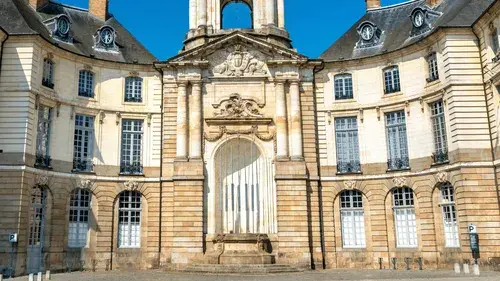
¿Por qué hay un gran nicho vacío en el Ayuntamiento de Rennes?
El Ayuntamiento: resurgiendo de las cenizas como un ave Fénix
Cómo un incendio devastador condujo al renacimiento de Rennes
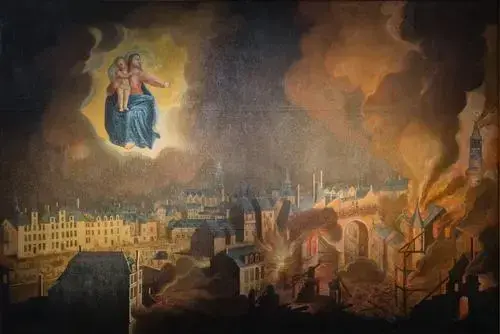
Rennes City Hall isn’t just a place where politicians shuffle papers and make decisions; it's a survivor. Its story starts with one of the most dramatic episodes in Rennes' history—the Great Fire of 1720. Picture this: a carpenter's shop, a bunch of folks having a bit too much fun, a domestic spat, and suddenly—boom! A lamp shatters, and the entire city goes up in flames. For a whole week, fire tore through the medieval streets like it had a grudge, leaving behind nothing but ashes and heartbreak.
But Rennes wasn’t about to give up. In the aftermath, King Louis XV sent his top architect, Jacques Gabriel, to rebuild the city from scratch. Out with the old chaotic medieval streets and in with grand squares and straight streets. The centerpiece of this new city was the Place de la Mairie, where the stunning City Hall still stands today. It's more than just a building; it's a symbol of Rennes’ spirit—knocked down but never out.

Un gran cambio de imagen: la construcción de la nueva Rennes
La visión de Jacques Gabriel sobre el orden y la autoridad
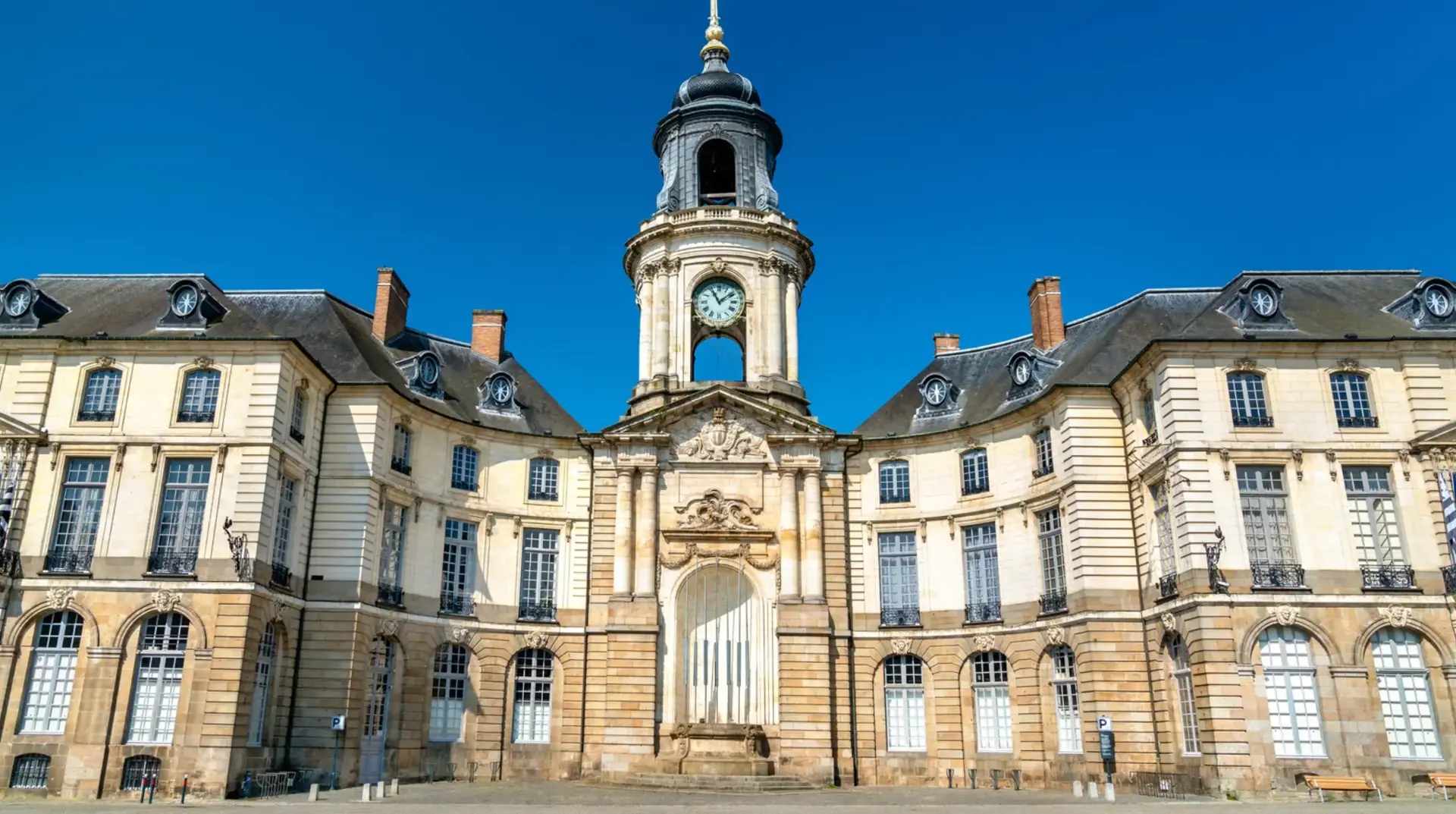
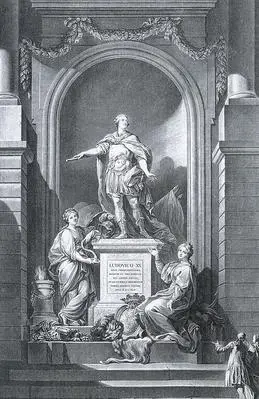
Gabriel no se anduvo con chiquitas a la hora de diseñar el Ayuntamiento. Se decantó por el barroco, con dos alas idénticas y una elegante torre del reloj en el centro. A un lado tienes el tribunal civil; al otro, el centro administrativo. Es como un gran abrazo arquitectónico que envuelve la justicia y la gobernanza. Pero vayamos a la parte más jugosa: el nicho bajo la torre central del reloj. Hoy es un gran agujero vacío, pero no siempre fue así. En su día, este nicho era el lugar ideal para colocar una estatua del rey Luis XV, el hombre que ayudó a sacar a Rennes del abismo tras el incendio. Se trataba de homenajear al hombre al mando. Pero ya sabes cómo es la historia: las cosas cambian.
La Revolución: ¡Que le corten la cabeza (bueno, la estatua)!
Cuando la Revolución Francesa vino a por el Rey
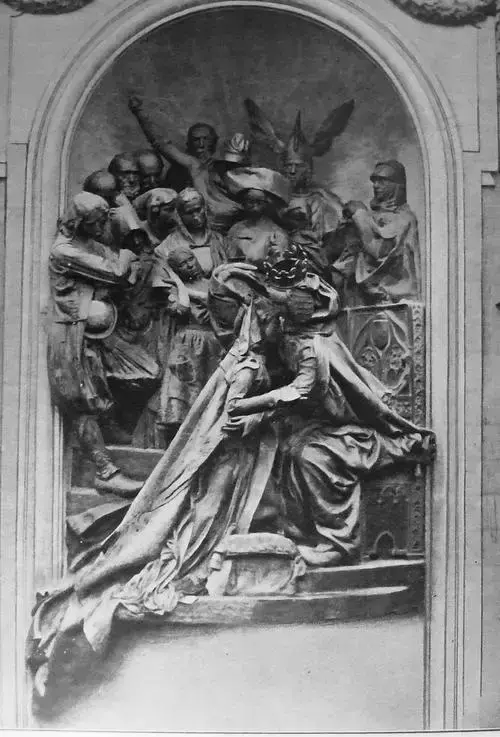
Pasamos rápidamente a la Revolución Francesa, cuando todo el mundo tenía ganas de, bueno, romper cosas. La estatua del rey Luis XV tenía que desaparecer. A los revolucionarios les encantaba derribar símbolos de la monarquía, y esa estatua no era una excepción. Así que la derribaron, dejando el nicho torpemente vacío. Fue como si al Ayuntamiento le faltara un diente. Pero espera, el nicho no iba a permanecer vacío mucho tiempo. Se colocó una nueva escultura, esta vez mostrando la Unión de Bretaña con Francia. En ella aparecía Ana de Bretaña arrodillada ante una figura alegórica de Francia. Suena bien y unificador, ¿verdad? Bueno, no del todo. Esta nueva adición provocó su propia controversia e hizo que la historia del nicho fuera aún más complicada.
Alboroto nacionalista: el nicho se convierte en campo de batalla
Un símbolo de discordia entre Bretaña y Francia
Turns out, not everyone was thrilled with the whole 'Union of Brittany with France' idea. Nationalist sentiment in Brittany was not about to let this monument slide. To them, it was a symbol of oppression, not unity. So, in 1932, during the 400th anniversary of Brittany's union with France, things got heated—literally. A group of protesters decided that this sculpture was a 'monument of national shame' and tore it down. And just like that, the niche was empty again.
And there it remains, an empty spot right in the middle of the City Hall's grand façade. But don’t let that emptiness fool you—it's packed with stories. Every time you walk by, it's like the niche is whispering tales of fire, rebellion, identity struggles, and the eternal tug-of-war between past and present.