Università di Leipzig

为探索者和旅行者准备的贴士与路线

Leipzig城市指南

莱比锡密集的有轨电车网络将适宜漫步的市中心与运河街区、公园及各大节庆云集的社区无缝串联,不过机场位于市区票价区之外。

国家
德国
语言
德语
货币
欧元 (EUR)
插头
类型 F
时区
Europe/Berlin
紧急电话
112
自来水
通常可饮用
区号
+49

景点

Leipzig必做之事

漫步于熙熙攘攘的市集广场与典雅的梅德勒拱廊街,探寻莱比锡的历史核心区;走进闻名遐迩的圣托马斯教堂,并在享誉世界的莱比锡大学追溯数百年文脉流转。

尼古拉教堂

<p>Let’s begin our journey through Leipzig, a city where history, culture, and transformation are woven into its streets and landmarks. From medieval trade routes to musical masterpieces, from religious upheavals to political revolutions, each stop on this tour reveals a different chapter of Leipzig’s incredible story.</p> <p>Our first stop takes us to the very heart of Leipzig’s spiritual and historical evolution—St. Nicholas Church (Nikolaikirche). Founded in 1165, the same year Leipzig gained its city and market rights, this church was originally a Romanesque structure—solid, austere, and fitting for the medieval world in which it was built. But Leipzig grew, and so did its importance. Over the centuries, the church evolved, incorporating Gothic, Baroque, and finally Neoclassical elements, the latter giving its interior the breathtaking palm-shaped columns that stretch toward the heavens, creating an almost surreal atmosphere.</p> <img src="https://storage.googleapis.com/ciceru-assets-stg/c77d7ee6-a652-49e4-ac4b-5a7976a7c440/6HnMz1xI-Nicolaikirche_Leipzig%20%281%29%20%281%29.jpg" alt="undefined" style="height: auto;width: 320px"/> <blockquote>Nikolaikirche from the northeast with the Nikolaisäule (August 2010). Photo by JesterWr.</blockquote> <p>Beyond its architectural beauty, Nikolaikirche has always been a place where faith and ideas shaped history. It stood through the rise and fall of dynasties, through wars and reforms, always adapting to the times. But there came a moment when this church became the heart of a movement that helped change the world.</p>
梅德勒通道

<p>The Mädler Passage, completed in 1914, stands as one of Leipzig’s most beautiful arcades, blending early 20th-century elegance with the city’s deep-rooted mercantile tradition. But this place was never just about luxury—it was built upon Leipzig’s centuries-old status as a trade hub.</p> <img src="https://storage.googleapis.com/ciceru-assets-stg/c77d7ee6-a652-49e4-ac4b-5a7976a7c440/ecMuwGZs-954px-Maedler_Passage_Leipzig-2%20%281%29.jpg" alt="undefined" style="height: auto;width: 320px"/> <blockquote>Inside the Mädlerpassage in Leipzig. Photo by Appaloosa.</blockquote> <p>That legacy began in 1497, when Emperor Maximilian I, ruler of the Holy Roman Empire, granted Leipzig the prestigious Imperial Trade Fair Privileges, allowing merchants to gather here under the protection of the empire. The result? A thriving city where goods from all over Europe changed hands. Walking through the Mädler Passage today, it’s easy to be enchanted by its high glass ceilings and polished stone floors. But if you slow down, you might notice something inscribed on the passage itself—a name tied to one of the most famous literary works ever written.</p>

马克广场

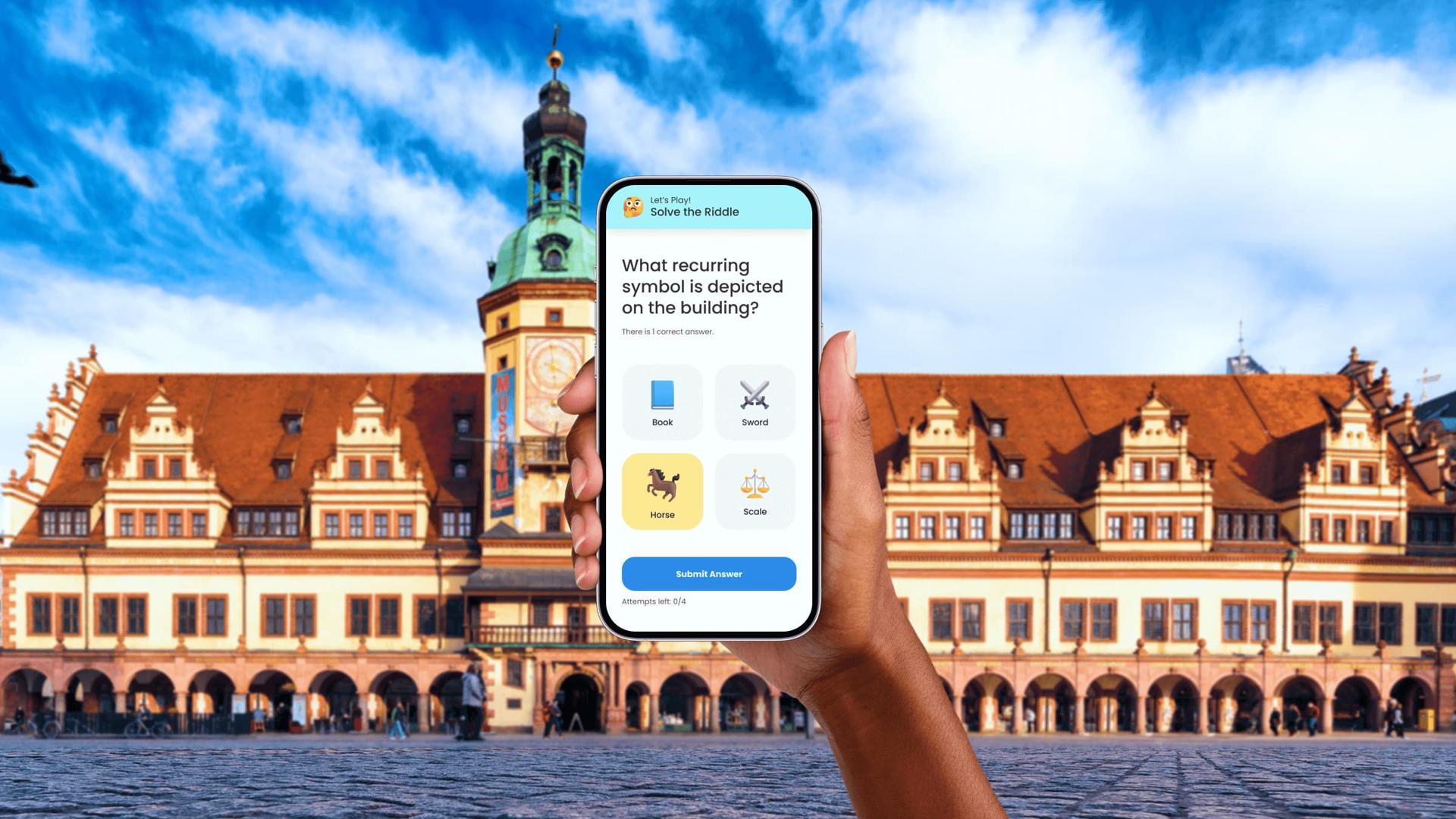
<p>Since 1165, when Leipzig was granted its market and city rights, the Marktplatz has been the city's beating heart. Its location at the crossroads of the Via Regia and Via Imperii—two of medieval Europe’s most vital trade routes—turned Leipzig into a magnet for merchants from all over the continent. Silk from Italy, amber from the Baltics, spices from the East—all found their way here, fueling Leipzig’s transformation into a flourishing economic center of the Holy Roman Empire.</p> <img src="https://storage.googleapis.com/ciceru-assets-stg/c77d7ee6-a652-49e4-ac4b-5a7976a7c440/28kFjIV9-998px-Markt_Leipzig%2C_1712%20%281%29.jpg" alt="undefined" style="height: auto;width: 320px"/> <blockquote>The marketplace of Leipzig with the Old Town Hall, 1712. Engraving by Johann Georg Schreiber.</blockquote> <p>Overseeing the square with its grand Renaissance elegance is the Old Town Hall, built in 1556 under the direction of Hieronymus Lotter, a visionary mayor who reshaped the city’s architectural identity. The building’s richly decorated facade, with its intricate reliefs and arcaded passageways, was designed to impress. Inside, vital decisions were made that shaped Leipzig’s destiny—from trade agreements that secured its economic power to the verdicts of the city council that determined the course of daily life.</p> <img src="https://storage.googleapis.com/ciceru-assets-stg/c77d7ee6-a652-49e4-ac4b-5a7976a7c440/XpiPn79M-1104px-Old_city_hall_of_Leipzig_%2820%29%20%281%29.jpg" alt="undefined" style="height: auto;width: 320px"/> <blockquote>Old Town Hall, seen from the marketplace, 2019. Photo by Krzysztof Golik.</blockquote> <p>But the Marktplatz is more than just a marketplace—it has been the city’s main stage for centuries. Imagine the Leipzig of the 18th century, when the Leipzig Trade Fair filled the square with travelers from all over Europe, exchanging goods and ideas that shaped the Age of Enlightenment. Fast forward to the 20th century, and the square takes on a different role—one of defiance. During the Peaceful Revolution of 1989, thousands gathered here to demand change, their chants echoing against the historic facades. That same year, the protests in Leipzig became the spark that helped bring down the Berlin Wall.</p>

Runde Ecke

<p>The Runde Ecke—or “Round Corner”—was once the headquarters of East Germany’s secret police in Leipzig. From the outside, its 19th-century facade looks like any other government building, blending seamlessly into the city. But within these walls, a silent war was waged—not against foreign enemies, but against East Germany’s own citizens.</p> <img src="https://storage.googleapis.com/ciceru-assets-stg/c77d7ee6-a652-49e4-ac4b-5a7976a7c440/niEoutY6-1273px-Runde_Ecke_Leipzig%20%281%29.jpg" alt="undefined" style="height: auto;width: 320px"/> <blockquote>Former district administration of the secret police in Leipzig, now the Memorial Museum in the 'Runde Ecke.' Photo by Appaloosa.</blockquote> <p>After World War II, Germany was divided, and Leipzig became part of the German Democratic Republic (GDR), the socialist state controlled by the Soviet-backed government. But maintaining power was not just a question of politics; it required total control over the people. To achieve this, the regime established an intelligence agency unlike any other, creating a vast network of full-time officers and informants. No conversation was ever truly private, no letter guaranteed to remain unread, no joke about the government risk-free. Spies could be anyone—your neighbor, your colleague, even a close friend. The goal was clear: eliminate dissent before it could even begin.</p> <img src="https://storage.googleapis.com/ciceru-assets-stg/c77d7ee6-a652-49e4-ac4b-5a7976a7c440/uLoSGaME-Le-vite-degli-altri-Sentieri-1280x640%20%281%29.jpg" alt="undefined" style="height: auto;width: 320px"/> <blockquote>Shot from the film <em>The Lives of Others</em>, a drama about secret police surveillance in East Germany before the fall of the Berlin Wall.</blockquote> <p>For decades, this very building was the nerve center of surveillance, home to interrogation rooms, secret files, and advanced spying technology. But by the late 1980s, the fear that had gripped Leipzig for so long began to crumble. The very people who had been watched, followed, and silenced would soon rise up and reclaim their city.</p>

托马斯教堂

<p>Founded in 1212, St. Thomas Church was originally part of a medieval monastery. Over the centuries, it transformed, blending Romanesque, Gothic, and later Baroque influences, reflecting Leipzig’s evolving identity. By the 16th century, the church found itself at the heart of religious change.</p> <img src="https://storage.googleapis.com/ciceru-assets-stg/c77d7ee6-a652-49e4-ac4b-5a7976a7c440/aJtYmBzS-Screenshot%202025-02-04%20alle%2017.54.29.jpg" alt="undefined" style="height: auto;width: 320px"/> <blockquote>Portrait of Martin Luther by Lucas Cranach the Elder, 1529.</blockquote> <p>In 1539, Martin Luther, the German theologian who sparked the Protestant Reformation by challenging the authority of the Catholic Church, stood right here at St. Thomas Church, delivering a sermon that cemented the city’s shift to Protestantism. From that moment, Thomaskirche became a stronghold of Lutheran tradition, shaping the city’s spiritual identity for centuries.</p> <img src="https://storage.googleapis.com/ciceru-assets-stg/c77d7ee6-a652-49e4-ac4b-5a7976a7c440/tK2TqmXV-Thomaskirche_Interior%20%281%29.jpg" alt="undefined" style="height: auto;width: 320px"/> <blockquote>Interior of St. Thomas Church, Leipzig. Photo by S-kay.</blockquote> <p>Yet, St. Thomas Church was not only a place of worship—it was also a sanctuary for music. For generations, its walls resonated with sacred choral works, performed by the Thomanerchor, the renowned boys’ choir founded in 1212, making it one of the oldest choirs in the world. Even through the destruction of World War II, when bombings severely damaged the church’s roof, its role as a home for music remained unshaken.</p> <p>Yet, there is one figure whose legacy is forever tied to this church. A musician whose compositions would shape the future of Western music, and whose presence in Leipzig turned this place into a pilgrimage site for music lovers around the world.</p>

新市政厅

<p>By the late 19th century, Leipzig was booming. Its trade fairs were among the most important in Europe, industry was thriving, and the city had outgrown its old government buildings. The time had come for something new—an ambitious structure that would reflect Leipzig’s stature. The result was the New Town Hall, designed by Hugo Licht and inaugurated in 1905. With its Neo-Renaissance architecture, vast halls, and over 600 rooms, it became one of the grandest municipal buildings in Germany. Its 114.8-meter tower remains the tallest city hall tower in the country.</p> <img src="https://storage.googleapis.com/ciceru-assets-stg/c77d7ee6-a652-49e4-ac4b-5a7976a7c440/qHho6JR7-1113px-Sitzungssaal_Neues_Rathaus_Leipzig.jpg" alt="undefined" style="height: auto;width: 320px"/> <blockquote>Council Chamber inside the New Town Hall, Leipzig. Photo by Gbecker248.</blockquote> <p>But this wasn’t just an architectural masterpiece—it became the silent backdrop to Leipzig’s turning points. In 1945, as Nazi Germany collapsed, the city’s last Nazi commandant, General von Poncet, surrendered Leipzig to American forces here, preventing further destruction. And in 1989, as protests against the East German regime grew, this building—home to the local government—became a focal point of political tension. Just as Leipzig had transformed over the centuries, Neues Rathaus stood as a witness to the city’s resilience and desire for change.</p> <p>Yet, long before this grand building took its place in Leipzig’s skyline, something different stood here.</p>

大学

<p>Founded in 1409, Leipzig University has been a center of learning for over 600 years, standing as a witness to shifting political and intellectual tides. Established by scholars fleeing the University of Prague, it quickly became one of the most prestigious institutions in the Holy Roman Empire. Throughout its history, it has attracted some of the greatest minds in philosophy, science, and literature, fostering an environment where knowledge could thrive despite wars, ideological conflicts, and even destruction.</p> <img src="https://storage.googleapis.com/ciceru-assets-stg/c77d7ee6-a652-49e4-ac4b-5a7976a7c440/Qe7STRDc-Fotothek_df_roe-neg_0000508_002_Wiederaufbauarbeiten%20%281%29.jpg" alt="undefined" style="height: auto;width: 320px"/> <blockquote>Leipzig in 1948. Reconstruction efforts amid the ruins of the city after World War II. Photo by Deutsche Fotothek.</blockquote> <p>During World War II, much of the university’s historic campus was reduced to rubble. Under East German rule, it was renamed Karl Marx University, reflecting the socialist ideology of the time. Many of its original buildings, including the Paulinerkirche, were demolished and replaced with stark modernist architecture. But after reunification in 1990, the university reclaimed its name and legacy, rebuilding itself while preserving its academic excellence.</p> <img src="https://storage.googleapis.com/ciceru-assets-stg/c77d7ee6-a652-49e4-ac4b-5a7976a7c440/pQOxrqH8-Screenshot%202025-02-04%20alle%2018.14.32.jpg" alt="undefined" style="height: auto;width: 320px"/> <blockquote>The new Paulinum of the University of Leipzig. Photo by James Chicks.</blockquote> <p>Today, standing in front of the Paulinum, a striking glass-and-steel structure that pays homage to the lost Paulinerkirche, one can see Leipzig University’s past and future intertwined—a place where centuries of learning continue to shape new generations.</p>

格万特豪斯

你的私人导游,就在口袋里

这些地方,准备好去走一趟了吗?

  • 自助导览,现在出发或改天再走
  • 离线音频,7 种语言
  • 30 天内不满意可退款
  • 含 500MB 全球 eSIM 流量

起

€7.00

Leipzig的 1 条自助导览

查看全部导览

规划行程

Leipzig要待几天?1天完美行程

第1天

漫步莱比锡市中心、运河步道与电车线

从中央火车站和中心环线起步,随后搭乘电车深入城郊,探寻莱比锡的运河街区与绿意公园。

€7.00 →

天气与人流

最佳旅行时间

五月、六月和九月是徒步与骑行的最佳时节。七八月最是热闹非凡;十一月至次年二月相对清静,但气候寒冷且日照较短。

推荐

冬春时节

1月–6月

-2–24°C/ 28–75°F

游客较少
  • 博物馆巡礼与初春绿意

夏秋时节

7月–12月

5–25°C/ 41–77°F

游客较少
  • 公园
  • 、运河与节庆季

导览

一步一故事,探索Leipzig

刮刮乐

来刮一刮

涂层下面也许藏着好东西。中奖的话,我们会告诉你怎么用。

每位旅行者限一份奖品,有效期 2 年。

口碑

旅行者评价

Google 评分 4.4
查看所有评论
  • Fabulous walking tour around the main areas of Dubrovnik old city.we were able to stop and listen as many times as we needed as there was also written information too

    Karen BakerGoogle 评价

  • A great way to discover the hidden gems in Sorrento. It provides history, cultural context and a flavour of the place. We would have missed so much had we wandered round without this valuable guide. Thank you for the research and information.

    alison ryeGoogle 评价

  • This was a good tour. I used the Spanish tour to practice my Spanish and it was helpful because you could slow it down and listen to it multiple times. This tour is what it says it will be

    LilyGoogle 评价

  • Macht Spaß! Toll, im eigenen Tempo zu den verschiedenen Sehenswürdigkeiten zu schlendern.

    Cécile BlumenbärGoogle 评价

  • Cute and informative tour of several athenian landmarks

    Ginny GlezouGoogle 评价

  • Merci pour ce bel après-midi à Weimar en votre compagnie. Belle expérience, merci!

    Helene CazalsGoogle 评价

  • All very well written and illustrated. Perhaps some of the 'history' was a little 'contrived', i.e. the successes and achievements of the certainly key protagonists slightly embellished, and the selection of a distinctly pedestrian monument to Otto, the second last, pointless! More on the classic architectural, perhaps even planning and development of the old city, would have been very welcome. Otherwise, it was great and the quizzes interesting and fun.

    Mel CadmanGoogle 评价

  • I’ve made two tours of Barcelona and I liked them pretty much, quite fun!

    Tugce UcarGoogle 评价

  • Ein kurzweilige und interessante Stadtrunde, die auch mit Kindern gut zum Erkunden einlädt.

    Anja KöppenGoogle 评价

安全

Leipzig安全吗?

莱比锡整体治安良好,只需保持常规的大城市安全防范意识即可。出行时请注意自行车和有轨电车,在火车站附近及各类活动中看管好财物,深夜尽量避开光线昏暗的运河或公园小径。如遇医疗或火警急救请拨打112,报警请拨打110。

有轨电车轨道

请务必经由指定过街处通行。在莱比锡中央火车站和市中心环线附近,务必左右观察;有轨电车拥有优先通行权。

车站人潮

在莱比锡中央火车站、电车站台及活动排队区,请务必保管好手机和随身包袋。

运河小径

深夜请避开偏僻的运河小径和公园步道,尽量选择照明良好的主街或搭乘有轨电车。

问题

Leipzig常见问题

搭乘城市快铁S5或S5X线,约15分钟即可从莱比锡/哈雷机场直达莱比锡中央火车站。

准备出发?

遍布Leipzig的自助语音路线。

查看Leipzig的路线