Holy Cross Gate: Rovinj's Historic Old Town City Walls
Dieser Inhalt ist noch nicht auf Deutsch verfügbar. Wir zeigen die englische Version.
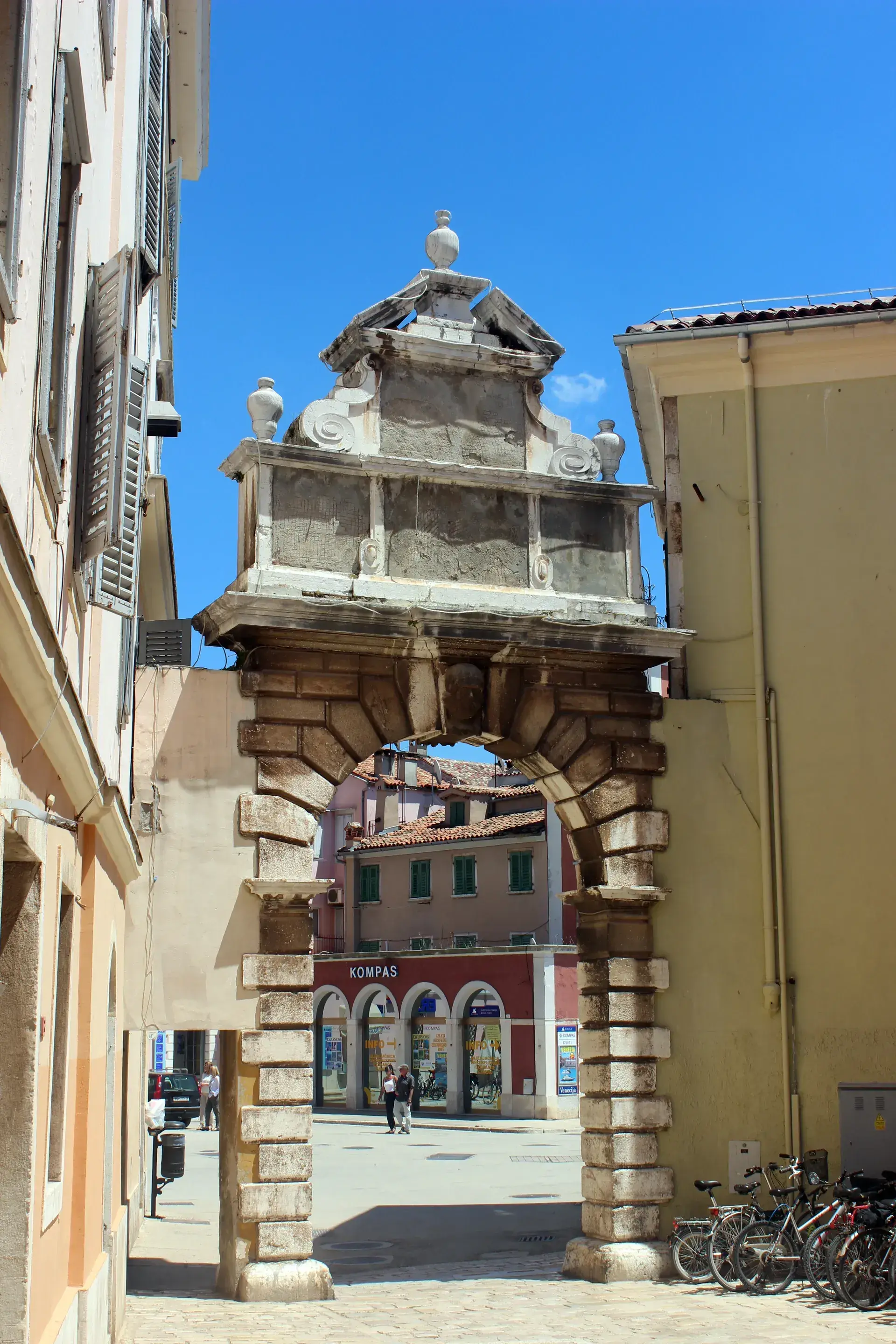
The Old Town City Walls of Rovinj stand as a lasting monument to the town's history as a fortified island sanctuary. Today, the coastal defenses are best observed at the Holy Cross gate (Vrata svetog Križa, or Porta Santa Croce), a historic sea door situated on the seaward side of the historic center.
A Fortress on the Sea
Rovinj originated as an island stronghold known as Mons Albanus. Beginning around the 7th century, the settlement was encircled by perimeter defenses to repel maritime raids. Following the town's submission to the Republic of Venice in 1283, these ramparts underwent extensive expansions and received formidable defensive towers between the 13th and 17th centuries.
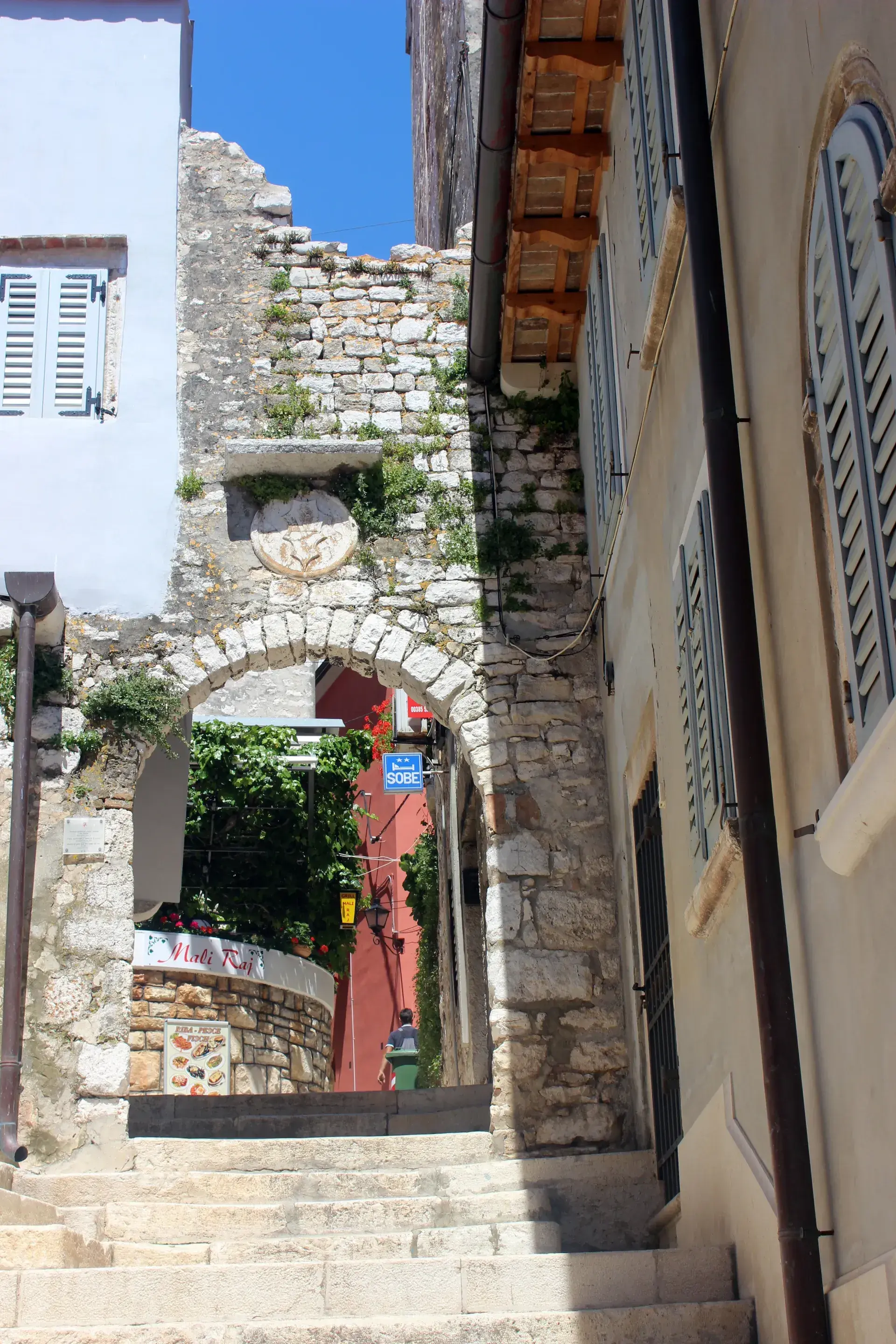
Originally, seven fortified portals regulated access between the town, the harbor, and the sea. Today, only three of these historical entrances survive: the Gate of St. Benedict, the Gate of the Holy Cross, and the Portica (Gate under the Wall). The Portica gate features an intact carved inscription dated 1590, marking a Venetian restoration during a time of intense Uskok piracy. Another remnant of the original fortifications, a stone Venetian Lion of Saint Mark that once guarded the drawbridge entrance, was salvaged after demolition and remounted on the municipal clock tower in the main square.
When Homes Swallowed the Walls
By the 17th century, extreme overpopulation exhausted all available building space within the island's interior. Confined within rigid stone perimeters, locals had no choice but to build upward and outward. Residents constructed houses directly against, into, and over the exterior walls.
Rather than being torn down during peacetime, large portions of the medieval fortifications were swallowed entirely by this residential development. Along streets like Ulica Svetog Križa, structures that appear to be ordinary pastel-plastered domestic facades are actually original defensive bastions adapted into multi-story homes. In 1763, the shallow channel separating the island from the mainland was filled with earth, rendering the seaward fortifications obsolete as military barriers and permanently fusing the walls into the everyday urban fabric.
Coastal Pathways
Today, the remaining walls and portals serve as open public pathways. Polished, uneven limestone street paving leads down through dark, arched stone portals that open abruptly onto crashing sea waves and coastal rocks. The base courses of the surviving seawalls still function as structural foundations and ground-floor facades for private residences, artist studios, and seaside terraces.
FAQ
Where are the Old Town City Walls located in Rovinj?
Visible segments of the Old Town City Walls persist along Ulica Vladimira Švalbe, Ulica Svetog Križa, and near the coastal Belvedere, with a prominent access point at the Holy Cross gate on the seaward side.
How many gates originally protected Rovinj?
Rovinj originally featured seven gates that regulated access from the sea and harbor. Today, only three remain: the Gate of St. Benedict, the Gate of the Holy Cross, and the Portica gate.
Why are houses built directly into the city walls?
During the 17th century, severe overpopulation on the small island left no vacant interior space. Locals were forced to build their homes directly against, into, and over the medieval defensive bastions.