Università di Leipzig

Consejos y tours para exploradores y viajeros

Guía de la ciudad de Leipzig

La densa red de tranvías de Leipzig conecta un centro muy transitable a pie con barrios repletos de canales, parques y festivales, aunque el aeropuerto queda fuera de la zona tarifaria urbana.

País
Alemania
Idioma
alemán
Moneda
euro (EUR)
Enchufe
tipo F
Zona horaria
Europe/Berlin
Emergencias
112
Agua del grifo
Generalmente potable
Prefijo
+49

Las paradas

Qué hacer en Leipzig

Descubre el corazón histórico de Leipzig recorriendo el bullicio de la Marktplatz y la elegancia del pasaje Mädler-Passage. Entra en la célebre iglesia de Santo Tomás y sigue el rastro de siglos de cultura en la prestigiosa Universidad de Leipzig.

Nikolaikirche

<p>Let’s begin our journey through Leipzig, a city where history, culture, and transformation are woven into its streets and landmarks. From medieval trade routes to musical masterpieces, from religious upheavals to political revolutions, each stop on this tour reveals a different chapter of Leipzig’s incredible story.</p> <p>Our first stop takes us to the very heart of Leipzig’s spiritual and historical evolution—St. Nicholas Church (Nikolaikirche). Founded in 1165, the same year Leipzig gained its city and market rights, this church was originally a Romanesque structure—solid, austere, and fitting for the medieval world in which it was built. But Leipzig grew, and so did its importance. Over the centuries, the church evolved, incorporating Gothic, Baroque, and finally Neoclassical elements, the latter giving its interior the breathtaking palm-shaped columns that stretch toward the heavens, creating an almost surreal atmosphere.</p> <img src="https://storage.googleapis.com/ciceru-assets-stg/c77d7ee6-a652-49e4-ac4b-5a7976a7c440/6HnMz1xI-Nicolaikirche_Leipzig%20%281%29%20%281%29.jpg" alt="undefined" style="height: auto;width: 320px"/> <blockquote>Nikolaikirche from the northeast with the Nikolaisäule (August 2010). Photo by JesterWr.</blockquote> <p>Beyond its architectural beauty, Nikolaikirche has always been a place where faith and ideas shaped history. It stood through the rise and fall of dynasties, through wars and reforms, always adapting to the times. But there came a moment when this church became the heart of a movement that helped change the world.</p>
Mädlerpassage

<p>The Mädler Passage, completed in 1914, stands as one of Leipzig’s most beautiful arcades, blending early 20th-century elegance with the city’s deep-rooted mercantile tradition. But this place was never just about luxury—it was built upon Leipzig’s centuries-old status as a trade hub.</p> <img src="https://storage.googleapis.com/ciceru-assets-stg/c77d7ee6-a652-49e4-ac4b-5a7976a7c440/ecMuwGZs-954px-Maedler_Passage_Leipzig-2%20%281%29.jpg" alt="undefined" style="height: auto;width: 320px"/> <blockquote>Inside the Mädlerpassage in Leipzig. Photo by Appaloosa.</blockquote> <p>That legacy began in 1497, when Emperor Maximilian I, ruler of the Holy Roman Empire, granted Leipzig the prestigious Imperial Trade Fair Privileges, allowing merchants to gather here under the protection of the empire. The result? A thriving city where goods from all over Europe changed hands. Walking through the Mädler Passage today, it’s easy to be enchanted by its high glass ceilings and polished stone floors. But if you slow down, you might notice something inscribed on the passage itself—a name tied to one of the most famous literary works ever written.</p>

Marktplatz

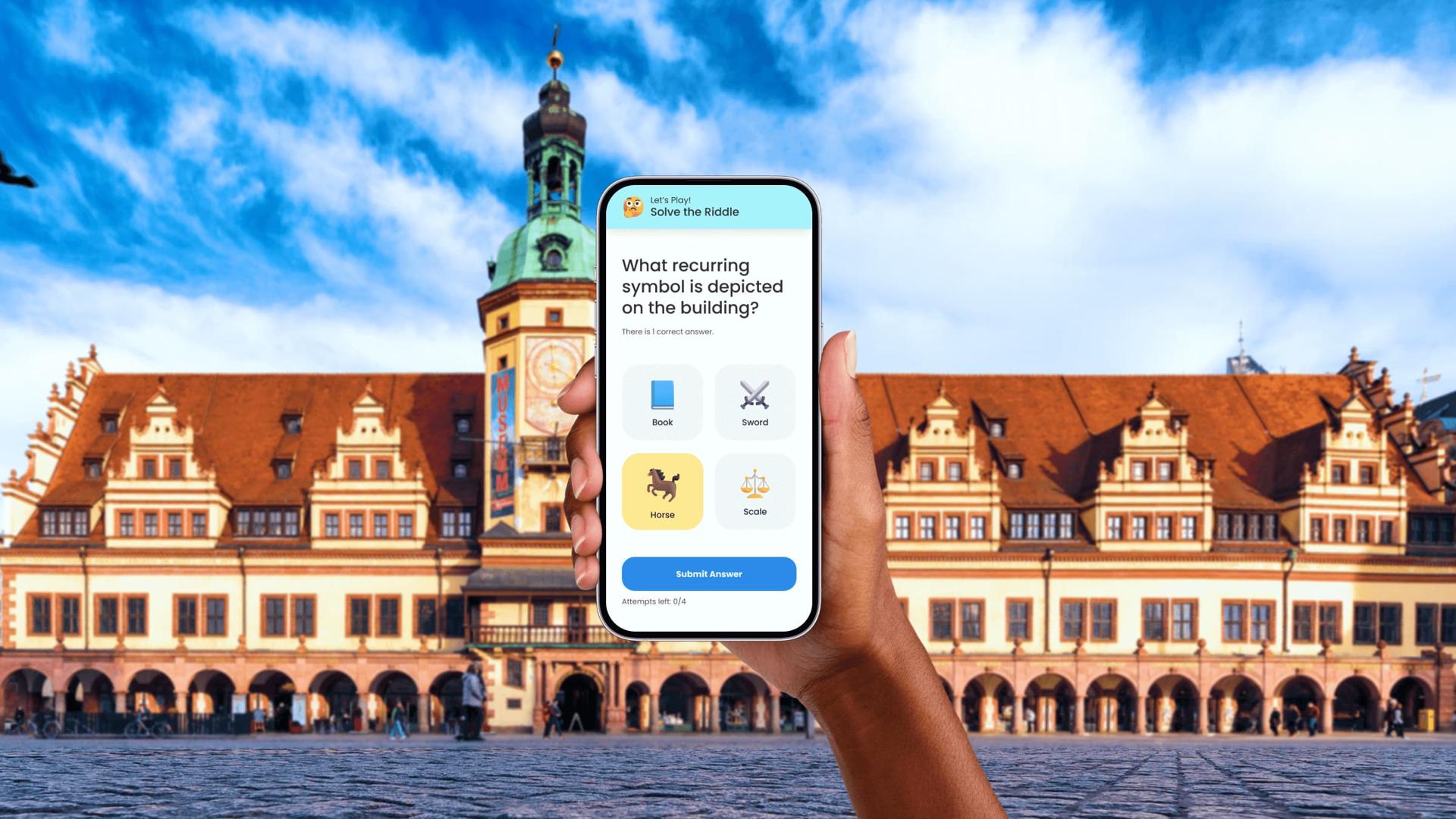
<p>Since 1165, when Leipzig was granted its market and city rights, the Marktplatz has been the city's beating heart. Its location at the crossroads of the Via Regia and Via Imperii—two of medieval Europe’s most vital trade routes—turned Leipzig into a magnet for merchants from all over the continent. Silk from Italy, amber from the Baltics, spices from the East—all found their way here, fueling Leipzig’s transformation into a flourishing economic center of the Holy Roman Empire.</p> <img src="https://storage.googleapis.com/ciceru-assets-stg/c77d7ee6-a652-49e4-ac4b-5a7976a7c440/28kFjIV9-998px-Markt_Leipzig%2C_1712%20%281%29.jpg" alt="undefined" style="height: auto;width: 320px"/> <blockquote>The marketplace of Leipzig with the Old Town Hall, 1712. Engraving by Johann Georg Schreiber.</blockquote> <p>Overseeing the square with its grand Renaissance elegance is the Old Town Hall, built in 1556 under the direction of Hieronymus Lotter, a visionary mayor who reshaped the city’s architectural identity. The building’s richly decorated facade, with its intricate reliefs and arcaded passageways, was designed to impress. Inside, vital decisions were made that shaped Leipzig’s destiny—from trade agreements that secured its economic power to the verdicts of the city council that determined the course of daily life.</p> <img src="https://storage.googleapis.com/ciceru-assets-stg/c77d7ee6-a652-49e4-ac4b-5a7976a7c440/XpiPn79M-1104px-Old_city_hall_of_Leipzig_%2820%29%20%281%29.jpg" alt="undefined" style="height: auto;width: 320px"/> <blockquote>Old Town Hall, seen from the marketplace, 2019. Photo by Krzysztof Golik.</blockquote> <p>But the Marktplatz is more than just a marketplace—it has been the city’s main stage for centuries. Imagine the Leipzig of the 18th century, when the Leipzig Trade Fair filled the square with travelers from all over Europe, exchanging goods and ideas that shaped the Age of Enlightenment. Fast forward to the 20th century, and the square takes on a different role—one of defiance. During the Peaceful Revolution of 1989, thousands gathered here to demand change, their chants echoing against the historic facades. That same year, the protests in Leipzig became the spark that helped bring down the Berlin Wall.</p>

Runde Ecke

<p>The Runde Ecke—or “Round Corner”—was once the headquarters of East Germany’s secret police in Leipzig. From the outside, its 19th-century facade looks like any other government building, blending seamlessly into the city. But within these walls, a silent war was waged—not against foreign enemies, but against East Germany’s own citizens.</p> <img src="https://storage.googleapis.com/ciceru-assets-stg/c77d7ee6-a652-49e4-ac4b-5a7976a7c440/niEoutY6-1273px-Runde_Ecke_Leipzig%20%281%29.jpg" alt="undefined" style="height: auto;width: 320px"/> <blockquote>Former district administration of the secret police in Leipzig, now the Memorial Museum in the 'Runde Ecke.' Photo by Appaloosa.</blockquote> <p>After World War II, Germany was divided, and Leipzig became part of the German Democratic Republic (GDR), the socialist state controlled by the Soviet-backed government. But maintaining power was not just a question of politics; it required total control over the people. To achieve this, the regime established an intelligence agency unlike any other, creating a vast network of full-time officers and informants. No conversation was ever truly private, no letter guaranteed to remain unread, no joke about the government risk-free. Spies could be anyone—your neighbor, your colleague, even a close friend. The goal was clear: eliminate dissent before it could even begin.</p> <img src="https://storage.googleapis.com/ciceru-assets-stg/c77d7ee6-a652-49e4-ac4b-5a7976a7c440/uLoSGaME-Le-vite-degli-altri-Sentieri-1280x640%20%281%29.jpg" alt="undefined" style="height: auto;width: 320px"/> <blockquote>Shot from the film <em>The Lives of Others</em>, a drama about secret police surveillance in East Germany before the fall of the Berlin Wall.</blockquote> <p>For decades, this very building was the nerve center of surveillance, home to interrogation rooms, secret files, and advanced spying technology. But by the late 1980s, the fear that had gripped Leipzig for so long began to crumble. The very people who had been watched, followed, and silenced would soon rise up and reclaim their city.</p>

Thomaskirche

<p>Founded in 1212, St. Thomas Church was originally part of a medieval monastery. Over the centuries, it transformed, blending Romanesque, Gothic, and later Baroque influences, reflecting Leipzig’s evolving identity. By the 16th century, the church found itself at the heart of religious change.</p> <img src="https://storage.googleapis.com/ciceru-assets-stg/c77d7ee6-a652-49e4-ac4b-5a7976a7c440/aJtYmBzS-Screenshot%202025-02-04%20alle%2017.54.29.jpg" alt="undefined" style="height: auto;width: 320px"/> <blockquote>Portrait of Martin Luther by Lucas Cranach the Elder, 1529.</blockquote> <p>In 1539, Martin Luther, the German theologian who sparked the Protestant Reformation by challenging the authority of the Catholic Church, stood right here at St. Thomas Church, delivering a sermon that cemented the city’s shift to Protestantism. From that moment, Thomaskirche became a stronghold of Lutheran tradition, shaping the city’s spiritual identity for centuries.</p> <img src="https://storage.googleapis.com/ciceru-assets-stg/c77d7ee6-a652-49e4-ac4b-5a7976a7c440/tK2TqmXV-Thomaskirche_Interior%20%281%29.jpg" alt="undefined" style="height: auto;width: 320px"/> <blockquote>Interior of St. Thomas Church, Leipzig. Photo by S-kay.</blockquote> <p>Yet, St. Thomas Church was not only a place of worship—it was also a sanctuary for music. For generations, its walls resonated with sacred choral works, performed by the Thomanerchor, the renowned boys’ choir founded in 1212, making it one of the oldest choirs in the world. Even through the destruction of World War II, when bombings severely damaged the church’s roof, its role as a home for music remained unshaken.</p> <p>Yet, there is one figure whose legacy is forever tied to this church. A musician whose compositions would shape the future of Western music, and whose presence in Leipzig turned this place into a pilgrimage site for music lovers around the world.</p>

Neues Rathaus

<p>By the late 19th century, Leipzig was booming. Its trade fairs were among the most important in Europe, industry was thriving, and the city had outgrown its old government buildings. The time had come for something new—an ambitious structure that would reflect Leipzig’s stature. The result was the New Town Hall, designed by Hugo Licht and inaugurated in 1905. With its Neo-Renaissance architecture, vast halls, and over 600 rooms, it became one of the grandest municipal buildings in Germany. Its 114.8-meter tower remains the tallest city hall tower in the country.</p> <img src="https://storage.googleapis.com/ciceru-assets-stg/c77d7ee6-a652-49e4-ac4b-5a7976a7c440/qHho6JR7-1113px-Sitzungssaal_Neues_Rathaus_Leipzig.jpg" alt="undefined" style="height: auto;width: 320px"/> <blockquote>Council Chamber inside the New Town Hall, Leipzig. Photo by Gbecker248.</blockquote> <p>But this wasn’t just an architectural masterpiece—it became the silent backdrop to Leipzig’s turning points. In 1945, as Nazi Germany collapsed, the city’s last Nazi commandant, General von Poncet, surrendered Leipzig to American forces here, preventing further destruction. And in 1989, as protests against the East German regime grew, this building—home to the local government—became a focal point of political tension. Just as Leipzig had transformed over the centuries, Neues Rathaus stood as a witness to the city’s resilience and desire for change.</p> <p>Yet, long before this grand building took its place in Leipzig’s skyline, something different stood here.</p>

Universidad

<p>Founded in 1409, Leipzig University has been a center of learning for over 600 years, standing as a witness to shifting political and intellectual tides. Established by scholars fleeing the University of Prague, it quickly became one of the most prestigious institutions in the Holy Roman Empire. Throughout its history, it has attracted some of the greatest minds in philosophy, science, and literature, fostering an environment where knowledge could thrive despite wars, ideological conflicts, and even destruction.</p> <img src="https://storage.googleapis.com/ciceru-assets-stg/c77d7ee6-a652-49e4-ac4b-5a7976a7c440/Qe7STRDc-Fotothek_df_roe-neg_0000508_002_Wiederaufbauarbeiten%20%281%29.jpg" alt="undefined" style="height: auto;width: 320px"/> <blockquote>Leipzig in 1948. Reconstruction efforts amid the ruins of the city after World War II. Photo by Deutsche Fotothek.</blockquote> <p>During World War II, much of the university’s historic campus was reduced to rubble. Under East German rule, it was renamed Karl Marx University, reflecting the socialist ideology of the time. Many of its original buildings, including the Paulinerkirche, were demolished and replaced with stark modernist architecture. But after reunification in 1990, the university reclaimed its name and legacy, rebuilding itself while preserving its academic excellence.</p> <img src="https://storage.googleapis.com/ciceru-assets-stg/c77d7ee6-a652-49e4-ac4b-5a7976a7c440/pQOxrqH8-Screenshot%202025-02-04%20alle%2018.14.32.jpg" alt="undefined" style="height: auto;width: 320px"/> <blockquote>The new Paulinum of the University of Leipzig. Photo by James Chicks.</blockquote> <p>Today, standing in front of the Paulinum, a striking glass-and-steel structure that pays homage to the lost Paulinerkirche, one can see Leipzig University’s past and future intertwined—a place where centuries of learning continue to shape new generations.</p>

Gewandhaus

Tu guía privado, en el bolsillo

¿Listo para recorrerlo todo a pie?

  • Autoguiado, cuando tú quieras
  • Audio sin conexión, 7 idiomas
  • Garantía de devolución
  • eSIM de 500 MB incluida

desde

7,00 €

1 tour autoguiado en Leipzig

Ver los tours

Planifica los días

¿Cuántos días en Leipzig? El itinerario perfecto de 1 días

Día 1

Recorre a pie el centro, canales y tranvías de Leipzig

Empieza junto a la Hauptbahnhof y el anillo central antes de salir del casco histórico rumbo a los parques y barrios fluviales de Leipzig.

7,00 €

Clima y afluencia

Mejor época para visitar

Mayo, junio y septiembre ofrecen el mejor equilibrio para caminar y pedalear. Julio y agosto rebosan de vida; de noviembre a febrero la ciudad está más tranquila, pero hace frío y anochece pronto.

Recomendado

Invierno y primavera

ene–jun

-2–24°C/ 28–75°F

Pocos visitantes
  • Museos y espacios verdes

Verano y otoño

jul–dic

5–25°C/ 41–77°F

Pocos visitantes
  • Parques
  • canales y festivales

Los tours

Leipzig, historia a historia

Rasca y gana

Rasca a ver

Debajo podría haber algo bueno. Si ganas, te decimos cómo usarlo.

Un premio por viajero. Válido 2 años.

El boca a boca

Lo que dicen los viajeros

Seguridad

¿Es seguro Leipzig?

Leipzig es una ciudad segura en general, solo exige las precauciones habituales de cualquier gran urbe. Presta atención al paso de bicis y tranvías, a los carteristas en la estación o festivales, y a los senderos poco iluminados junto a canales y parques de noche. Llama al 112 para emergencias médicas o de bomberos y al 110 para la policía.

Vías del tranvía

Cruza solo por los pasos habilitados y mira a ambos lados cerca de la Hauptbahnhof y el anillo central; los tranvías siempre tienen prioridad.

Aglomeraciones en la estación

Vigila el móvil y las bolsas en Leipzig Hbf, en las paradas de tranvía y en las colas de eventos.

Caminos junto a los canales

Evita tramos aislados de parques y canales de noche; opta mejor por calles iluminadas o el tranvía.

Preguntas

Preguntas sobre Leipzig

Las líneas de cercanías S-Bahn S5 y S5X conectan el aeropuerto de Leipzig/Halle con la estación central (Leipzig Hbf) en unos 15 minutos.

¿Listo para salir?

Tours de audio autoguiados por toda Leipzig.

Ver los tours en Leipzig