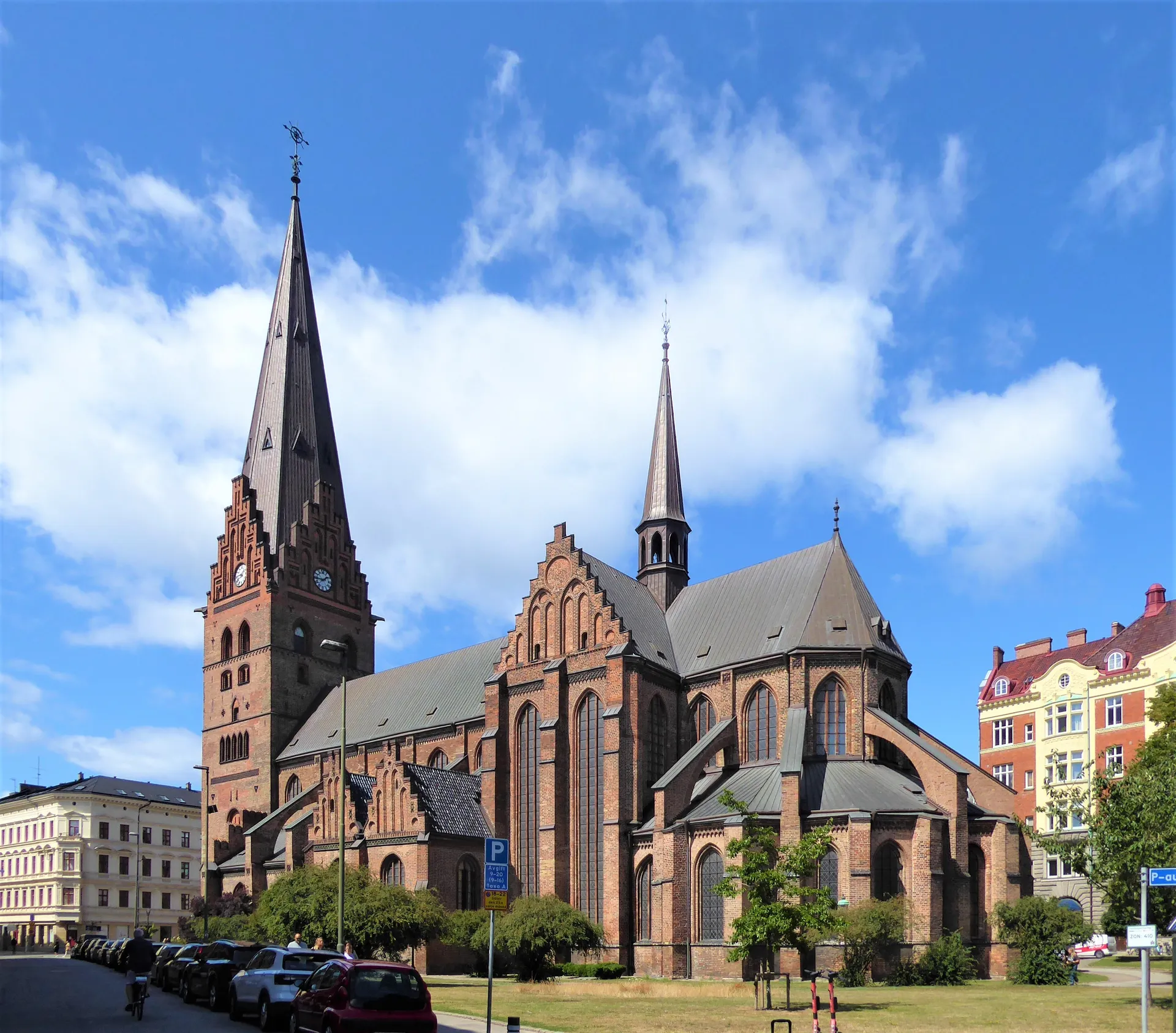
Sankt Petri Kyrka (St. Peter's Church)

Conseils et visites pour explorateurs et voyageurs

Guide de la ville de Malmö

Parcourez à pied ou à vélo le centre compact de Malmö, ses canaux et son front de mer, tout en profitant d'excellentes liaisons ferroviaires vers Copenhague et le reste de la région.

Pays
Suède
Langue
suédois
Devise
couronne suédoise (SEK)
Prise
type C/F
Fuseau horaire
Europe/Stockholm
Urgences
112
Eau du robinet
Généralement potable
Indicatif
+46

Les étapes

Que faire à Malmö

Combinez places médiévales, architecture portuaire contemporaine et quartiers verdoyants, en misant sur le vélo et le réseau Skånetrafiken pour les trajets plus longs.

La station de vapeur et de verre

<p>Welcome to Malmö. You are standing at the threshold of a city that refuses to stand still. From its days as a gritty industrial port to its current life as a design-savvy, green-tech hub, Malmö has always been about transformation. There is no better place to start our walk than right here, where the world arrives and the city begins.</p> <p>If train stations had memory, Malmö Central would be a psychologist’s dream. This brick-and-steel behemoth, opened in 1856, was born during the industrial hustle. That was the point when the city helped funnel in laborers, ideas, and the unmistakable aroma of ambition.</p> <p>At its core, the station symbolized connection. Not just of tracks, but of Malmö to the larger, steam-belching machine that was 19th-century Europe. By 1915, nearly 100,000 people called Malmö home, and each was somehow touched by the station’s whoosh-and-rattle soundtrack.</p> <p>Today, the station wears a glass hat known as the Glass Hall. It is a shimmering modern appendage added to its older, stoic frame. Commuters and tourists now drift through this airy dome like caffeinated particles in a snow globe. It is sleek, functional, and one can easily imagine it smells faintly of cinnamon rolls and suitcase wheels meeting tile.</p> <p>No single figure defines it, but you could argue that Malmö’s labor force left the biggest imprint. With suitcases in hand and factory dreams in tow, they shaped this space. While no grand battles were fought here, the emotional ones over goodbyes and reunions were just as noisy.</p> <p>Local nostalgia whispers about the station as a place of helixed fates. Swedes leaving for America, war refugees arriving, and Copenhageners coming over for cheaper coffee. One quirk is that the original 19th-century building still stands. It remains Gothic and grim beside the glassy newbie, looking like an old general reluctantly chaperoning a start-up.</p> <p>Also, if you are headed across the Øresund to Copenhagen, you will want this place. The tunnel-train connection takes just 35 minutes. Not bad for a city that was once powered by salted fish.</p> <p>From transit to transcendence, our next stop leads us to the medieval grandeur of Sankt Petri Kyrka.</p>
Le géant gothique

<p>Sankt Petri isn’t so much a church as it is Malmö’s answer to a medieval mixtape. It is heavy on brick, ambition, and the kind of theological scale that dominates the skyline. Built in the early 14th century, it was modeled after Lübeck’s Marienkirche. This was a shout-out to Malmö’s Hanseatic League connections and its obsession with German architecture. Or, more accurately, its envy.</p> <p>Back when herring was the bitcoin of the Øresund economy, this Gothic giant was a place for both prayer and power deals. Merchants hobnobbed with mayors near these heavy doors, and post-Reformation Swedes eventually replaced Catholic pageantry with Lutheran restraint. Imagine going from opera to minimalist jazz. It is the same setting, just less incense.</p> <p>One likely parishioner was Jörgen Kock. As a mint master, mayor, and general overachiever, Kock surely walked these grounds while plotting Malmö’s municipal dominance. His political footprint outlived his moral footprint.</p> <p>Today, St. Peter’s remains an architectural jaw-dropper. While we stand outside, know that the nave houses one of the largest wooden altarpieces in Scandinavia. It was crafted in 1611 and stretches an impressive fifteen meters toward the ceiling. There is also a legend, likely engineered over coffee, that secret tunnels run from the crypts to other civic buildings. Probably not true. But Malmö does love a good underground rumor.</p> <p>The spire you see now gives the church a somewhat stockier silhouette than its builders intended. It is actually a late 19th-century replacement, standing in for predecessors that succumbed to storms and gravity. It looks less like it is reaching for heaven and more like it is bracing for the wind.</p> <p>It is not flashy. It doesn’t need to be. It has survived wars, reformations, and a few ill-conceived renovation attempts. That is enough drama for one church roof.</p> <p>From sacred pulpit to civic plaza, let’s walk toward the pulse point of Malmö’s public life—Stortorget.</p>

La grande scène du pouvoir

<p>If Malmö were a theater, Stortorget would be its stage manager: stoic, central, and always surrounded by drama. Laid out in the 1530s by local power player Jörgen Kock (mint master, because of course he was), the square was super-sized to become the largest market square in Northern Europe. Think of it as the region’s original open-air LinkedIn.</p> <p>It has seen proclamations, parades, protests, and probably more than a few public hangovers. When the Swedes took over Skåne in 1658, it became the site for a very unsubtle monument to the new landlord. This is the equestrian statue of King Karl X Gustav in dramatic mid-stride. Horses do not lie.</p> <p>Kock himself left a permanent mark nearby. His grand Renaissance home, Kocksa Huset, sits just around the corner from this plaza. Thanks to him, and the convent he flattened to build this square, you are standing on centuries of commercial hustle.</p> <p>Nowadays, Stortorget plays host to slightly less visceral events such as food festivals, live bands, and pop-up markets. You might also spot teenagers pretending not to notice each other at the fountain. The buzz is still civic, just with better espresso.</p> <p>Local whimsy insists one cobblestone brings good luck if you can find it. Rumor has it the stone migrates, which sounds like a legend designed to waste people's lunchtime.</p> <p>This expansive plaza is not just a name. It is a statement. Whether you are a monarch, a merchant, or a guy holding overpriced gelato, you are part of its ongoing performance.</p> <p>Just off the square's edge, a more ornate chapter in Malmö's commercial life awaits at Apoteket Lejonet.</p>

La pharmacie des lions

Le salon médiéval

<p>If Stortorget is Malmö’s formal handshake, Lilla Torg is its after-hours wink. It was created in 1590 not because the main square was too large, but because the city’s trade had simply burst its seams. Stortorget was overflowing, so this "Little Square" became the necessary overflow valve for grocery goods, crafts, and the daily hustle of burghers' wives.</p> <p>Do not let the cobblestones fool you, as this square has reinvented itself more than once. In the early 20th century, a massive covered market hall was built here, effectively swallowing the open medieval space for decades. It was not until 1968 that the hall was demolished, and the 16th-century style was retrofitted back into being. It was essentially gentrification by way of nostalgia.</p> <p>The buildings here, especially the Hedmanska gården complex, stand like well-dressed dinner guests who refuse to leave the party. One of them hosts the Form/Design Center, just in case you need some Scandinavian minimalism with your cappuccino.</p> <p>Today, Lilla Torg is less of a marketplace and more of Malmö’s unofficial lounge. It is dense with restaurants and bars, which makes it the city’s top choice for people-watching, networking, and possibly regrettable texts.</p> <p>Urban legend insists that couples who share a cinnamon bun here are destined for lifelong happiness. This says a lot about both Swedish romance and baked goods.</p> <p>The square’s nickname, "Malmö’s Ibiza," may oversell the vibe. There are fewer glow sticks and more wine glasses here. But come summer, it earns the comparison. History sleeps under every stone, even if the square now dreams in espresso foam.</p> <p>Before we leave the cobbled conviviality of Lilla Torg behind, take a few steps into design-driven modernity at the Form/Design Center.</p>

Ancien bois et nouveau design

<p>Tucked inside Hedmanska Gården, a historic courtyard where 16th-century merchants once tallied profits and gossip, the Form/Design Center is proof that Malmö does not just adapt. It rebrands. Once a city of boilers and blueprints, now it sells sustainability and good lighting angles.</p> <p>This center is not your grandmother’s museum, unless she was a Scandinavian minimalist with strong opinions on plywood. As Malmö shed its shipbuilding skin and embraced a "city of knowledge" persona, this spot emerged as a creative nerve center. It exhibits architecture and industrial design inside buildings that date back to the 1590s.</p> <p>If the courtyard feels heavy with history, one can almost imagine the spirit of a 17th-century burgher rolling his eyes at the modern concepts housed within. It creates a stark contrast, as if the old merchants are baffled by chairs that cost more than their oxen ever did.</p> <p>Sensory dissonance is the name of the game. We see ancient timber framing and yellow ochre plaster wrapping around a core of cutting-edge design concepts.</p> <p>Form/Design is not just a building. It is a clever exclamation point in Malmö’s evolving sentence. It is a monument to reinvention hiding behind medieval craftsmanship. Here, the past and future share the same address, and neither has to compromise on aesthetics.Tucked inside Hedmanska Gården, a historic courtyard where 16th-century merchants once tallied profits and gossip, the Form/Design Center is proof that Malmö does not just adapt. It rebrands. Once a city of boilers and blueprints, now it sells sustainability and good lighting angles.</p> <p>This center is not your grandmother’s museum, unless she was a Scandinavian minimalist with strong opinions on plywood. As Malmö shed its shipbuilding skin and embraced a "city of knowledge" persona, this spot emerged as a creative nerve center. It exhibits architecture and industrial design inside buildings that date back to the 1590s.</p> <p>If the courtyard feels heavy with history, one can almost imagine the spirit of a 17th-century burgher rolling his eyes at the modern concepts housed within. It creates a stark contrast, as if the old merchants are baffled by chairs that cost more than their oxen ever did.</p> <p>Sensory dissonance is the name of the game. We see ancient timber framing and yellow ochre plaster wrapping around a core of cutting-edge design concepts.</p> <p>Form/Design is not just a building. It is a clever exclamation point in Malmö’s evolving sentence. It is a monument to reinvention hiding behind medieval craftsmanship. Here, the past and future share the same address, and neither has to compromise on aesthetics.</p> <p>Creativity stays onstage as we continue to Malmö Live, where the city trades toolkits for timpani.</p>

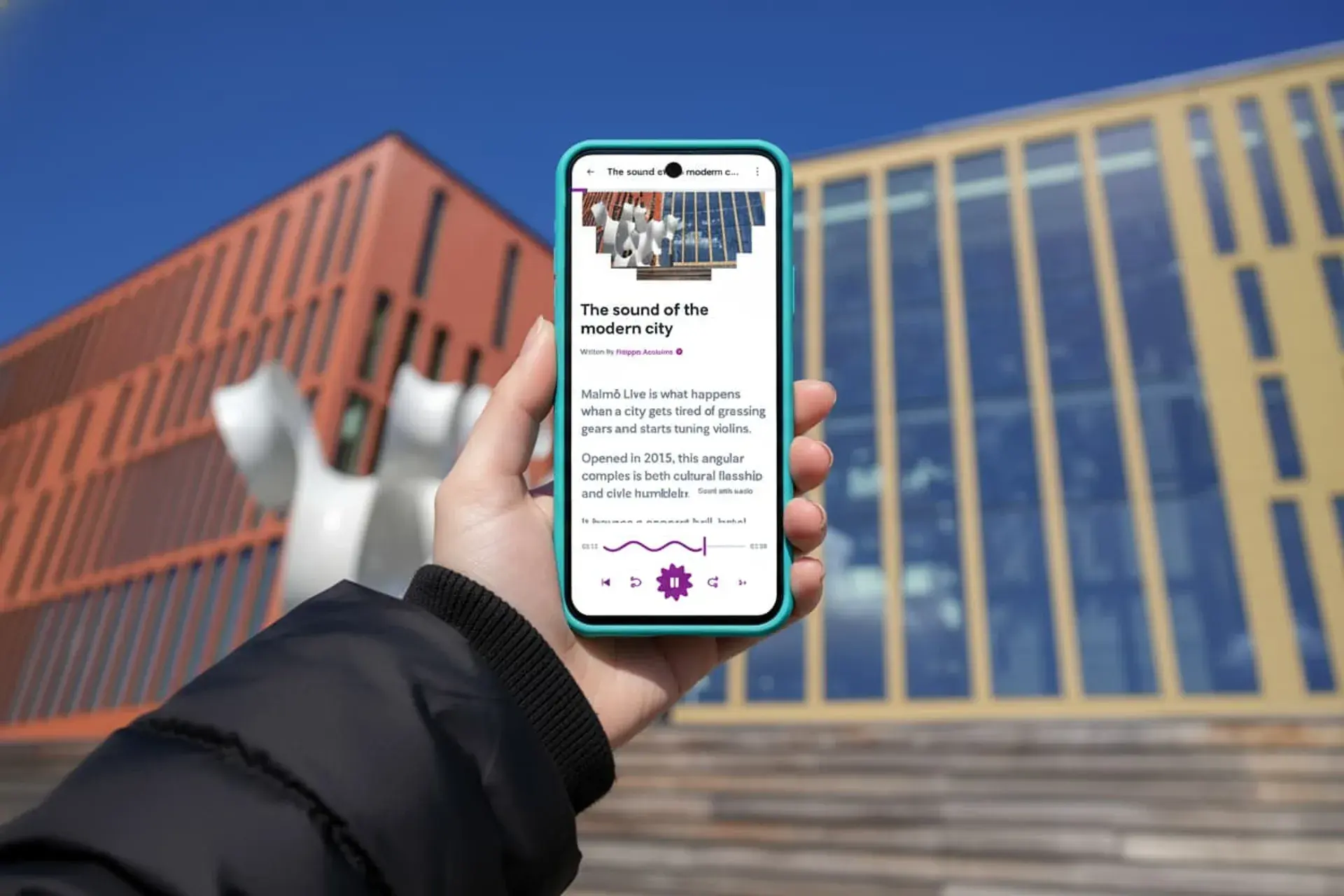
Le son de la ville moderne

<p>Malmö Live is what happens when a city gets tired of greasing gears and starts tuning violins. Opened in 2015, this angular complex is both cultural flagship and civic humblebrag. It houses a concert hall, hotel, conference center, and a healthy dose of architectural swagger.</p> <p>The project is a keystone in Malmö’s identity rehab. After the collapse of its smoky industrial sector, the city dusted itself off and declared that it is creative now. Malmö Live took that mission literally. It raised sharp glass walls and colorful cubic volumes where shipyard clang once echoed.</p> <p>The Malmö Symphony Orchestra calls it home. There is a myth among local concertgoers that the acoustics inside are so precise, they could make a kazoo sound majestic. This remains unverified, but it is plausible.</p> <p>From the street, the building resembles a series of mismatched blocks stacked by a giant hand. The hotel tower buzzes with visiting diplomats, wedding guests, and business conference survivors looking for strong coffee.</p> <p>Its bold, geometric exterior startles passersby who are used to more baroque scenery, but that is the point. It insists on being noticed. It is a distinctly 21st-century answer to Malmö's 19th-century façades. It serves as a glass manifesto that says Malmö is not just historic, but capable of throwing symphonies now.</p> <p>Malmö Live did not land with a cannon blast. It arrived with a cello note, and that is exactly the reinvention Malmö wanted to hear.</p> <p>And now, from newly minted culture to centuries-old brick, we finish our walk at Malmöhus Castle and its contemplative gardens.</p>

La forteresse des rois et des prisonniers

<p>We have reached our final stop, and fittingly, it is a place that has endured it all. Malmöhus Castle is a survivor with boundary issues. Built, burnt, rebuilt, raided, and generally mistreated since the 14th century, it began life as a Danish stronghold courtesy of King Eric. The current Renaissance version owes itself to Christian III of Denmark, who in the 16th century decided Malmö deserved something grand and fortified. Possibly in that order.</p> <p>After the Treaty of Roskilde in 1658 handed Skåne to Sweden, the castle's days of royal glitz were over. It became a prison. In Malmö's version of irony, this meant the furniture got cheaper but the tenants stayed longer.</p> <p>Christian III left his architectural autograph on the heavy masonry. Later came the anonymous souls in shackles and Swedish guards pacing below weather-thrashed turrets. Over centuries, its moats and bastions were less about grandeur and more about damage control from the next war or next winter.</p> <p>Today, it is the anchor of the Malmö Museums complex. While the fortress itself houses history and art, the wider district hosts everything from technological exhibits to a submarine in a nearby hall. The surrounding Slottsträdgården, once a militarized zone, is now so peaceful that sunbathers routinely forget they are lying next to an old dungeon.</p> <p>There is talk of "The Grey Lady." She is a ghost presumed to wander the corridors in search of peace or better lighting. Castle management neither confirms nor charges admission.</p> <p>Stand near the water’s edge and you might catch the scent of damp earth and the canal. It reminds you that centuries here hold a particular humidity. This place is the city’s oldest contradiction. It is royal, grim, bucolic, and pedestrian all at once.</p> <p>Like Malmö itself, Malmöhus has been everything. It was a fortress, a prison, a museum, and a photobomb backdrop. History still lingers here. It is mostly polite, occasionally peevish, but always present.</p> <p>By journey’s end, Malmö begins to feel less like a city and more like a paradox carefully stitched together. We have traveled from glass halls and Gothic naves to leafy squares and concert halls, all without leaving earshot of the Øresund. What emerges is a portrait of reinvention where industrial bones are reshaped into spaces for design, music, and memory. Malmö does not erase its past. It reframes it, sometimes behind modern glazing, sometimes beneath centuries-old timber. Here, even the ghosts have civic pride.</p> <p>From all of us at Ciceru, thank you for exploring Malmö’s timeline with us, from Hanseatic bricks to tomorrow’s glass. We hope you enjoyed the stories, the sea breeze, and the reinvention. We cannot wait to walk with you again soon. Hejdå!</p>

Votre guide privé, dans la poche

Prêt à aller les voir à pied ?

  • En autonomie, quand vous voulez
  • Audio hors ligne, 7 langues
  • Satisfait ou remboursé 30 jours
  • eSIM mondiale 500 Mo incluse

à partir de

5,00 €

1 visite autonome à Malmö

Voir les visites

Planifier les jours

Combien de jours à Malmö ? L'itinéraire parfait en 1 jours

Jour 1

Vieille ville, canaux et littoral de Malmö

Sillonnez les ruelles du centre, traversez le réseau de pistes cyclables et terminez votre balade au bord de l'eau, en profitant de Skånetrafiken lorsque la traversée des zones portuaires allonge le parcours.

5,00 €

Météo et affluence

Meilleure période pour partir

De mai à septembre, la lumière et la météo sont idéales pour pédaler. Avril et octobre offrent un compromis plus paisible ; de novembre à février, préparez-vous au froid, au vent et à l'obscurité.

Recommandé

Hiver et printemps

janv.–juin

-1–20°C/ 30–68°F

Peu de visiteurs
  • Vélo printanier, jours longs

Été et automne

juil.–déc.

3–22°C/ 37–72°F

Peu de visiteurs
  • Mer, parcs et longs jours

Les visites

Malmö, une histoire à la fois

Gratte et gagne

Vas-y, gratte

Il y a peut-être quelque chose de bien là-dessous. Si tu gagnes, on te montre comment l'utiliser.

Un lot par voyageur. Valable 2 ans.

Le bouche-à-oreille

L’avis des voyageurs

Sécurité

Malmö est-elle sûre ?

Malmö est généralement sûre pour les visiteurs qui respectent les précautions urbaines d'usage. Restez attentif au trafic cycliste, aux sols glissants en bord de mer, à la foule lors des grands événements et aux pickpockets près des gares et des lieux de vie nocturne. Composez le 112 pour la police, les urgences médicales ou les pompiers.

Pistes cyclables

Marquez un temps d'arrêt avant de traverser les pistes cyclables balisées. Les vélos déboulent vite et sans bruit dans le centre, près de la gare et sur les quais.

Foule dans les gares

Gardez un œil sur votre téléphone et vos sacs à Malmö C, Triangeln et aux abords des rassemblements très fréquentés.

Météo côtière

Le vent et la pluie peuvent rendre les ponts et les pavés du front de mer particulièrement glissants. Prévoyez plusieurs épaisseurs et consultez les prévisions.

Questions

FAQ sur Malmö

Le train Öresundståg relie l'aéroport de Copenhague à Malmö C en 25 minutes environ. Vérifiez les tarifs transfrontaliers actuels ainsi que les contrôles d'identité en vigueur.

Prêt à partir ?

Visites audio en autonomie dans tout Malmö.

Voir les visites à Malmö