Hohensalzburg Fortress (Funicular Base)

Dicas e tours para exploradores e viajantes

Guia da cidade de Salzburg

Salzburgo alia um centro histórico barroco, compacto e classificado pela UNESCO, aos cenários dramáticos do sopé dos Alpes, moldado pelo legado musical de Mozart, pelo prestigiado Festival de Salzburgo e pelas ruelas pedonais abrigadas sob a Fortaleza de Hohensalzburg.

País
Áustria
Idioma
alemão
Moeda
Euro (EUR)
Tomada
tipo C/F
Fuso horário
Europe/Vienna
Emergência
112, 133, 144 e 122
Água da torneira
Potável
Indicativo
+43

As paragens

O que fazer em Salzburg

O centro compacto de Salzburgo descobre-se a pé entre o rio Salzach e a escarpa de Mönchsberg. Praças históricas, marcos dedicados a Mozart e pátios barrocos cruzam-se sem interrupções, enquanto subidas íngremes conduzem à Fortaleza de Hohensalzburg.

Palácio e Jardins de Mirabell – escândalo em flor

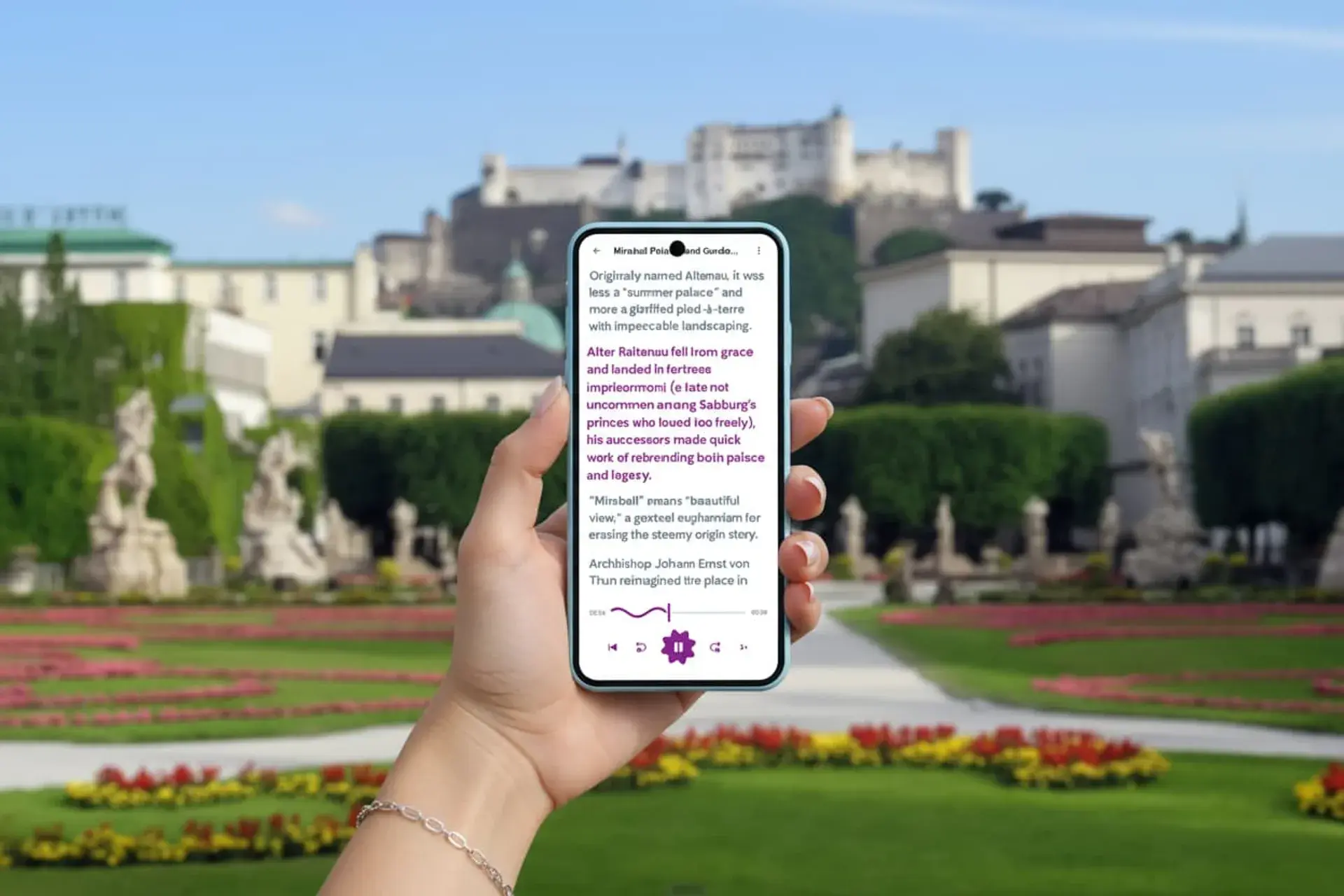
In Salzburg, even the scandals come landscaped. This refined city, threaded along the Salzach River and backed by snow-dusted hills, carries centuries on its shoulders like a well-tailored coat. You’ll find elegance in its Baroque façades, genius in its music halls, and a surprising amount of personality tucked between palaces and pastries. This walk invites you into the layered charm of Salzburg’s history. Not just the postcard version, but the winks, quirks, and human contradictions that fill its alleyways and bell towers. From ecclesiastical strongholds to twirling Do-Re-Mi meadows, local folklore shares pavement with world fame. And while the city’s most celebrated son—Mozart—makes frequent curtain calls, he’s far from the only story worth hearing. We begin with a garden that once bloomed for love, rumor, and a defiant archbishop’s family tree. It’s orderly now, but the roots remember. Mirabell was born out of scandal, which makes its present respectability all the more ironic. Around 1606, Prince-Archbishop Wolf Dietrich Raitenau built this palace—not for God, country, or cultural posterity—but for his mistress, Salome Alt, and their 15 children. Originally named Altenau, it was less a “summer palace” and more a glorified pied-à-terre with impeccable landscaping. After Raitenau fell from grace and landed in fortress imprisonment (a fate not uncommon among Salzburg’s princes who loved too freely), his successors made quick work of rebranding both palace and legacy. “Mirabell” means “beautiful view,” a genteel euphemism for erasing the steamy origin story. Archbishop Johann Ernst von Thun reimagined the place in the Baroque mode, adding a grand marble hall and sculpted gardens that today host weddings more politically correct than their namesake’s domestic arrangements. The gardens, a choreography of hedges and fountains, are more obedient than their original royal patron. You’ll spot the Pegasus fountain and the hedge theater, which now plays more Mozart sonatas than moral scandals. And of course, there’s the Dwarf Garden. Originally 28 strong, these bulbous stone figures were carved for amusement, then scandalized into storage. A few survivors now grin toothlessly for selfie-seeking tourists. Modern crowds remember it less for ecclesiastical gossip and more for Julie Andrews twirling to “Do-Re-Mi.” Mirabell now houses the mayor’s office rather than mistresses, and the Marble Hall doubles as one of Europe’s loveliest registry offices. It’s as buttoned-up as a civil servant—only with vastly better drapery. Children tell tales of the “Hexenkuss,” a tree bark formation they claim grants wishes if kissed. Botanically implausible, but charmingly persistent. Touch at your own peril—or promises. Come early. The only thing more surgically trimmed than the topiary are the tourists’ schedules. At sunrise, the scent of clipped yews and fresh blooms hangs in the air, unbothered yet by camera shutters. Raitenau would have hated the modesty. And just across the river, another Salzburg household brimming with sound and tension awaits—Mozart’s later home and creative crucible.
Residência de Mozart – gênio em proximidade

<p>Makartplatz 8 is surprisingly sedate for a house that once echoed with symphonies, family quarrels, and the squawks of a pet starling with suspiciously refined taste. This is where the Mozarts moved in 1773 when their old apartment—above a busy street and below their increasing fame—could no longer contain their ambitions or elbows.<br><br>Leopold Mozart, ever the stage father with a manuscript in one hand and a travel itinerary in the other, designed an octagonal music room here, ideal for shaping Austria’s most precocious export. Wolfgang, by this point just 17, already had the posture of a man weary of small talk and provincial rituals. Many early masterpieces were composed beneath these ceilings.<br><br>WWII bombings shattered much but didn’t silence it. The residence was meticulously reconstructed, giving the building a faintly ghostly feel—the kind of place where the past hangs behind the plaster like a second wallpaper. Within, there’s Mozart’s own fortepiano (still sturdier than his finances ever were) and family instruments that saw more rehearsals than reconciliations.<br><br>The house is heavy with father-son tension, sibling talent (Nannerl, brilliant in her own right, mortally overshadowed), and creative genius caged. Even the alleged starling gets a mention—a bird who memorized Mozart’s tunes and maybe improved them. That kind of feedback loop is hard to come by on Spotify.<br><br>Today, hushed visitors drift through the rooms, headphones on, reverently peering at compositions like naturalists observing a rare fossil. Out the window, the modern city carries on with buses and bratwurst carts, oblivious to internal arias.<br><br>You leave realizing two truths: one, even Mozart needed better acoustics; and two, no genius is ever at home in a house for long.<br><br>From domestic dramas to defensive grandeur, before crossing the bridge we’ll pause by the riverbank and look south to the Hohensalzburg Fortress, which rises above the city like a stone crown still keeping watch over every note and rooftop.</p>

Fortaleza de Hohensalzburg – a vista do poder

<p>You are not climbing it today, just admiring it from afar. Perched on Mönchsberg since 1077, Hohensalzburg began as a holy man’s backup plan: if diplomacy failed, build higher walls. It still dominates the skyline, a pale fortress that has outlasted its founders and the arguments that built it.</p> <p>Over centuries, each Prince-Archbishop added another layer, tower, or torture implement, crafting Europe’s fortification equivalent of a bureaucratic nesting doll. Archbishop Leonhard von Keutschach was especially fond of upgrading, adding princely apartments, self-aggrandizing crests, and what can only be described as medieval flexes. His family’s radish emblem appears in more places than is strictly necessary.</p> <p>Centuries passed. Empires fell. Hohensalzburg remained stubbornly unconquered. Even Napoleon, usually so skilled at turning castles into smoking ruins, declined the invitation. It served as a prison, a bastion, and, ironically, a symbol of safety from the men who built it.</p> <p>Inside, visitors now find museums devoted to war, puppetry, and princely taste, because Salzburg believes in categorizing its ghosts. Then there is the Salzburg Bull, not livestock but a wheezing mechanical organ built to psych out attackers by pretending the fortress had endless cattle. It plays daily, a moody soundtrack that seems to suggest, “We hear you down there, and we are incredibly unbothered.”</p> <p>The Torture Tower, once a medieval HR office, still looms beside the princely rooms, proof that splendor and dread often share hallways. From below, the panorama is just as grand. The fortress that once kept peasants out now welcomes them three times a day via guided tours. Even ramparts lose their edge after a few centuries.</p> <p>You can climb it after the tour if you wish, either on foot or by funicular from the Old Town. For now, keep the fortress in your sight as you head toward the river, where Salzburg’s quieter side glints ahead over a bridge heavy with declarations of love and locks.</p>

Ponte Makartsteg – cadeados, chaves e boas intenções

Getreidegasse – viela do comércio e da memória

Getreidegasse is Salzburg’s answer to the question: what happens when centuries of commerce squeeze into an alley no wider than a marching band? Answer: gorgeously compressed chaos, with an aroma of strudel and capitalism. The name translates to “Grain Lane,” a nod to its Middle Ages functionality. But let’s not be quaint. This was a business street, where grain, shoes, cheese, and possibly gossip were traded with equal vigor. The street’s real genius lies in its signage: wrought-iron symbols so elaborate, even McDonald’s bowed to tradition and swapped out its golden arches for curlicues. Above the shops, you’ll spot the narrow, high-gabled houses reaching for sun like Florentine tenements. Hidden courtyards nestle behind archways, once secret merchant passageways and now Instagram catnip. At No. 9, Mozart entered the world and promptly began upstaging everyone else on the street. Today, Getreidegasse is more boutique than Baroque premise, but the bones remain: uneven cobbles, iron hooks where pigs once hung, and windows designed for window-shopping long before display ads existed. Locals tell whispered tales of passageways between buildings—an anecdotal labyrinth for evading taxes or love triangles. True or not, they track with the street’s mercantile cunning. If you listen, there’s a particular sound: expensive heels clip-clopping over stones worn by generations of bargains and schemes. It’s the soundtrack of a street that’s survived Romans, revolutions, and rent hikes—and still sells leather handbags at full markup. Among all these facades, one address hums a little louder—just ahead is the modest apartment where Mozart first heard the world.

A Casa Natal de Mozart – pequenos cômodos, grandes ecos

It’s not especially big. Or lavish. Or noticeably purple, which is to say, it’s not how we usually imagine a genius’s nursery. But Getreidegasse 9 is where Wolfgang Amadeus Mozart was born on January 27, 1756—a third-floor tenant above a grocery shop, with a view of shopkeepers, street noise, and destiny. The Mozarts lived here for over 15 years. The apartment, by all accounts, was snug—a polite way of saying Leopold’s violin might’ve occupied more space than a sibling. It was here that infant Wolfgang banged keys and then promptly rewrote the instruction manual for European music. Inside, the museum displays aren’t glitzy. That’s the point. There’s his childhood violin (less than half his adult height), a battered clavichord, and family letters that read like dispatches from a very musical, very tense powder keg. There’s something uncanny about the reconstructions: a silent kitchen barely big enough for elbows, a modest living space drowned in foot traffic from fans with iPhones. Even legends start small—sometimes three rooms and a view of bakers. Legend says loud trumpet blasts once made baby Mozart burst into tears. Not fear—ear pain. Even at one year old, he was already critiquing the brass section. You leave realizing this: Mozart didn’t grow up in a palace. He grew up in a rental unit, squeezed in with parental ambition and melodic instincts. And that makes his music feel less divine and more miraculous. From a prodigy's cradle to a prince-archbishop’s front yard—next, we enter Residenzplatz, where religion, rule, and fountain drama converge.

Residenzplatz – teatro dos arcebispos

Catedral de Salzburgo – pedra, som e salvação

Kapitelplatz – ordem, arte e um orbe dourado

O teu guia particular, no bolso

Pronto para percorrer estas paragens?

  • Autoguiado, começa quando quiseres
  • Áudio offline, 7 idiomas
  • Reembolso garantido em 30 dias
  • eSIM global de 500 MB incluído

a partir de

€ 5,00

1 tour autoguiado em Salzburg

Ver os tours

Planear os dias

Quantos dias em Salzburg? O itinerário perfeito de 1 dias

Dia 1

O centro histórico de Salzburgo a partir de Mirabell

Atravesse o Salzach a partir de Mirabell rumo à Altstadt pedonal e recorra aos tróleis para deslocações mais longas.

€ 5,00

Tempo e multidões

Melhor altura para visitar

Julho é o mês habitualmente mais quente em Salzburgo, atingindo os 25,0 °C, mas de junho a agosto decorre também o período mais chuvoso, superando sempre os 180 mm em Freisaal. Setembro combina uma média máxima de 20,4 °C com menos chuva do que no verão; de dezembro a fevereiro os dias são mais tranquilos, mas frios.

Recomendado

Inverno frio e tranquilo

dez.–fev.

-3–7°C/ 27–45°F

Poucos visitantesChuva ocasional
  • Ambiente de Advento
  • Mínimas abaixo de zero em dezembro e janeiro

Não perca

  • Mercado de Natal de Salzburgo

Primavera

mar.–mai.

1–20°C/ 34–69°F

Vai enchendoChuvoso
  • Tardes amenas em maio
  • Precipitação de maio atinge os 169,7 mm

Não perca

  • Festival da Páscoa de Salzburgo

Verão de festivais

jun.–ago.

12–25°C/ 54–77°F

Época altaChuvoso
  • Festival de Salzburgo
  • Média superior a 180 mm de chuva por mês de junho a agosto

Não perca

  • Festival de Salzburgo

Outono fresco

set.–nov.

1–20°C/ 34–69°F

Muito movimentadoChuva ocasional
  • Dias amenos em setembro
  • Máxima média desce aos 9,2 °C em novembro

Não perca

  • Rupertikirtag

Transportes

Como chegar e circular em Salzburg

Aeroporto de Salzburgo

Como chegar e circular em Salzburg
Autocarro urbano 2 para Hauptbahnhofaprox. 23 min€ 3,00
Autocarro 10 até ao centro da cidadeaprox. 15 min€ 3,00

Obus e autocarro urbano

A melhor opção geral

O bilhete de 1h da zona central da Salzburg Verkehr custa 2,60 € nas máquinas, online ou na app; o de 24h custa 5,20 €. Valide os bilhetes comprados com antecedência, tal como exigido.

Guest Mobility Ticket

Grátis para hóspedes

Quem pernoita na cidade tem transportes grátis no estado federado. A taxa de mobilidade é de 0,50 € por noite para maiores de 15 anos, de 1 de maio de 2025 a 30 de abril de 2027.

A pé

Ideal na Altstadt

O centro de Salzburgo é compacto e muitos percursos fazem-se melhor a pé; a contrapartida são as ruas empedradas, as pontes e as subidas íngremes nas colinas da cidade.

Bicicleta

Plano à beira do rio

Andar de bicicleta funciona muito bem ao longo do Salzach e entre os bairros periféricos, mas preste atenção à sinalização local no centro histórico protegido e nas zonas pedonais antes de avançar.

Explore a Altstadt a pé e o Obus para distâncias maiores. Para quem pernoita, o Guest Mobility Ticket cobre toda a rede do estado federado, superando em muito os bilhetes avulsos.

Orçamento

Quanto custa visitar Salzburg?

Ficar no centro de Salzburgo não sai barato: os transportes têm preços razoáveis, mas o orçamento de quem visita sofre com a forte procura hoteleira na época dos festivais em julho e agosto, além da taxa combinada geral e de mobilidade de 3,50 € por noite tributável, à qual acresce a contribuição autónoma de 0,05 € para o fundo de turismo.

Quanto custa visitar Salzburg?
Bilhete 1 hora zona central Salzburgo€ 2,60–€ 3,00
Bilhete 24 horas zona central Salzburgo€ 5,20–€ 6,40
Bilhete de 5 viagens de Salzburgo€ 12,50
Combinado P+R, até cinco pessoas€ 7,50–€ 15,00
Estacionamento P4 do aeroporto, um dia€ 37,00–€ 39,00

Cash or card?

A Salzburg Verkehr vende bilhetes da zona central em máquinas, online e na aplicação móvel; o tarifário do operador para 2026 não garante que todos os veículos aceitem cartões estrangeiros, pelo que convém comprar antes de embarcar sempre que possível.

Onde ficar

Onde ficar em Salzburg

Altstadt

Primeira visita

O centro histórico é ideal para explorar a pé as margens e a oferta cultural. Conte com ruas em calçada, restrições ao trânsito automóvel e preços bem mais altos durante o festival.

Neustadt / Andräviertel

Central, noites mais calmas

A este do Salzach, Neustadt permite chegar facilmente ao centro a pé, oferecendo um traçado mais residencial do que a Altstadt. As linhas de Obus facilitam as deslocações mais longas.

Schallmoos

Acesso a comboios, económico

A nordeste do centro e próximo da Salzburg Hauptbahnhof, Schallmoos troca as ruas de postal ilustrado pela comodidade dos transportes e pelo pulsar do dia a dia local.

Elisabeth-Vorstadt

Comboios, estadias curtas

A zona da estação central é ótima para viagens de manhã em comboios regionais, com autocarros diretos ao centro. Menos positiva é a azáfama da estação e o ambiente pouco histórico.

Maxglan / Riedenburg

Residencial, lado do aeroporto

A oeste do Salzach, Maxglan e Riedenburg têm autocarros diretos ao centro e aeroporto. São bairros tranquilos, mas menos convenientes para regressar a pé ao centro histórico.

Os tours

Salzburg, uma história de cada vez

Raspa e ganha

Raspa lá

Aí por baixo pode estar algo bom. Se ganhares, dizemos-te como usá-lo.

Um prémio por viajante. Válido 2 anos.

O passa-palavra

O que dizem os viajantes

Segurança

Salzburg é segura?

Salzburgo é segura. Tenha atenção a peões e transportes no centro histórico, ao trânsito condicionado na Altstadt desde julho de 2026, ao tempo nos trilhos das colinas e a furtos nas zonas concorridas de chegadas ou do festival. Linhas de emergência: 112, 133, 144 e 122.

Tráfego condicionado no centro

Desde 1 de julho de 2026, o trânsito automóvel comum na Altstadt é muito restrito. Não confie cegamente no GPS rumo aos pilaretes; se vai para um hotel, peça instruções de acesso ao alojamento antes de chegar.

Multidões do festival

O Festival de Salzburgo decorre em julho e agosto e atrai multidões. Mantenha telemóveis e carteiras bem guardados nas filas, nos autocarros cheios e nas imediações das salas de espetáculos, sobretudo ao circular pela Altstadt.

Trilhos molhados nas colinas

A chuva média supera 180 mm entre junho e agosto em Freisaal. Após chover forte, abrande na calçada molhada e nas colinas íngremes. O número geral de socorro é o 112; para ambulâncias, use o 144.

Ciclistas e peões

Nem toda a zona pedonal é ciclável. Cumpra a sinalização de Salzburgo na Altstadt e desmonte sempre que exigido; há mais conflitos nas pontes estreitas e nas travessias mais concorridas do rio.

Assistência médica urgente

Ligue o 144 para chamar uma ambulância. O posto de turismo de Salzburgo orienta os visitantes para o 1450 para aconselhamento de saúde e triagem; o serviço médico de urgência responde no 141.

Informações úteis

Bom saber

Guest Mobility Ticket

Quem tem 15+ anos paga taxa de mobilidade de 0,50 € de 1 de maio de 2025 a 30 de abril de 2027, tendo direito a transportes públicos gratuitos em todo o estado federado de Salzburgo durante a estadia.

Pilaretes no centro histórico

As regras de acesso automóvel em Salzburgo mudam a 1 de julho de 2026: o centro histórico fecha praticamente ao trânsito comum, ficando o acesso a hotéis sujeito ao sistema de autorização de cada alojamento.

Origem do Festival de Salzburgo

O Festival de Salzburgo teve a sua certidão de nascimento a 22 de agosto de 1920, dia em que a peça Jedermann, de Hugo von Hofmannsthal, subiu ao palco em Salzburgo sob a encenação de Max Reinhardt.

Perguntas

Perguntas sobre Salzburg

Sim. A Salzburg AG confirma que a água da cidade pode ser bebida diretamente da torneira com toda a segurança; cerca de 90% provém de aquíferos subterrâneos protegidos e o restante de nascentes.

Pronto para ir?

Tours de áudio autoguiados por toda a Salzburg.

Ver os tours em Salzburg