Grisia Street: Rovinj's Historic Artist Lane
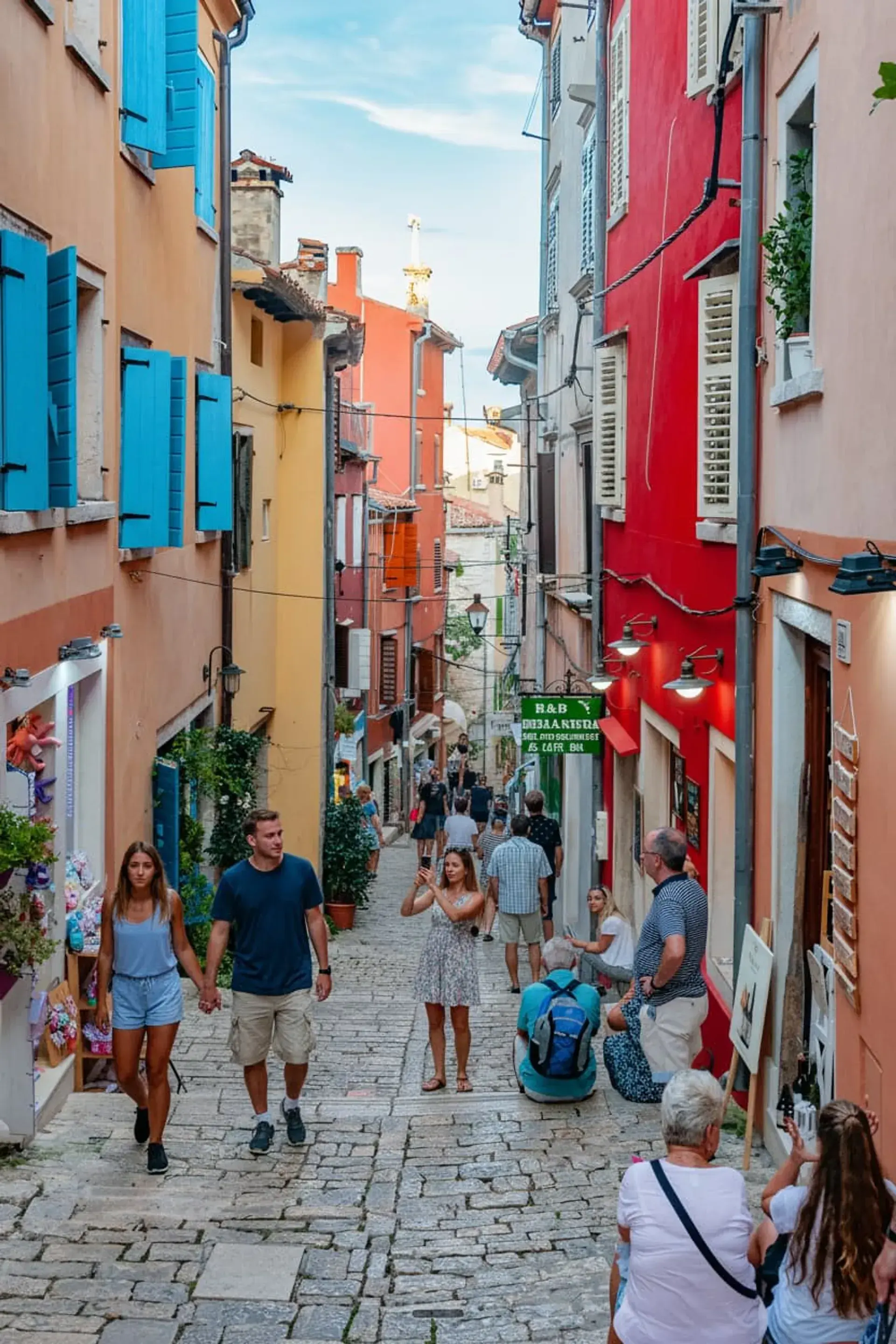
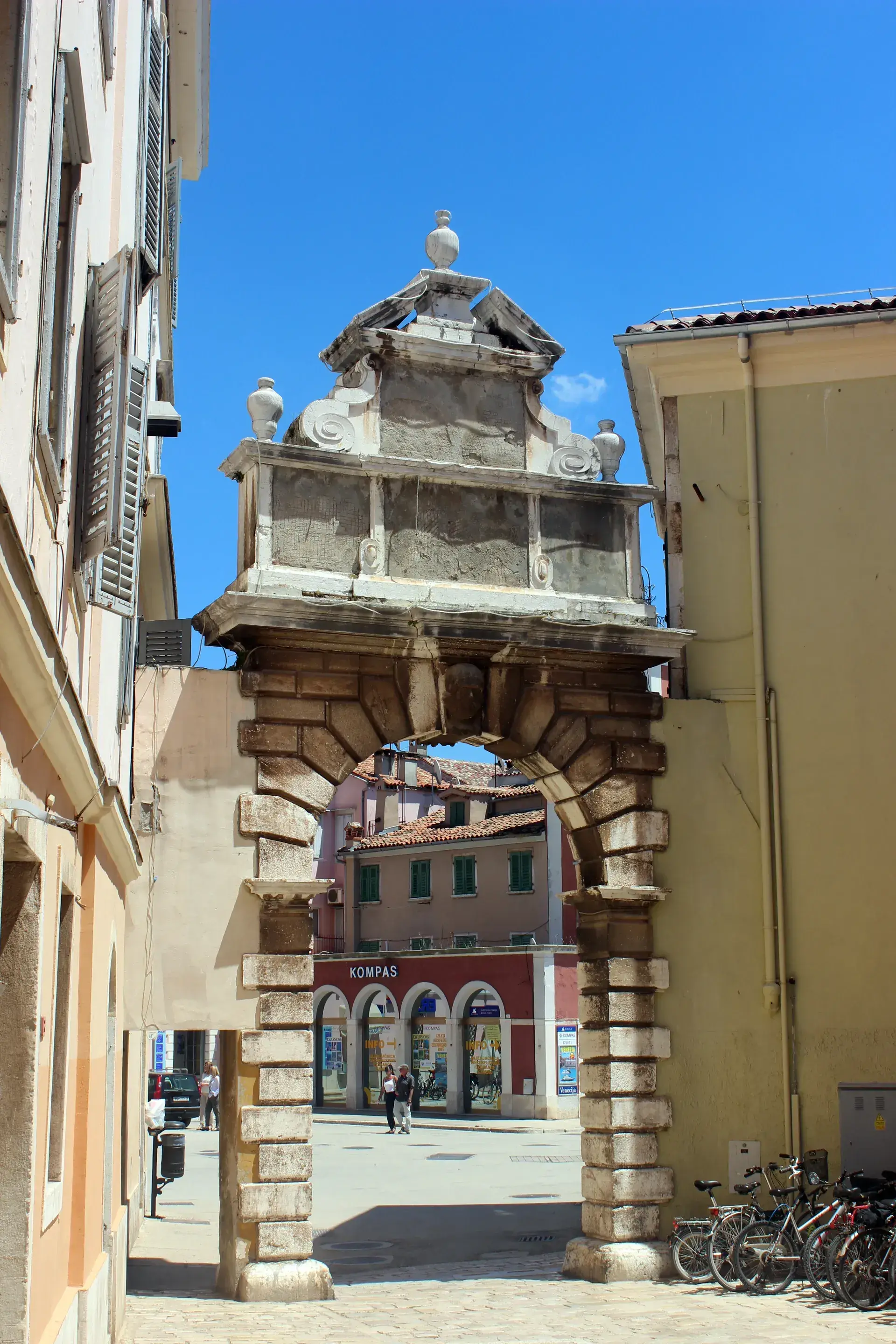
Grisia Street is the longest, steepest, and most famous pedestrian thoroughfare in Rovinj's Old Town. Because the historic center rises in a cone shape, this path acts as a direct, straight-up artery climbing from the lower town near Balbi's Arch to the city's crowning landmark, the Church of St. Euphemia.
A Medieval and Venetian Streetscape
The street's stepped layout dates back to medieval times when Rovinj was a fortified island settlement. The name Grisia derives from the Latin word for grey, referencing the original color of the paving stones. The thoroughfare is tightly framed by tall, narrow Venetian-style houses featuring arched doorways and small balconies. During the Venetian period from 1283 to 1797, a small Jewish community was established near the bottom of the climb at the intersection of Grisia and Porecka Street. Near the beginning of the thoroughfare, a historic courtyard known locally as "the butcher's" remains one of Rovinj's best-preserved examples of original medieval townscape.
The Artist Street of Rovinj
Grisia is widely celebrated as Rovinj's "artist street." Independent galleries, working studios, and shops selling handmade ceramics and jewelry populate the buildings year-round. This creative reputation is cemented by the Grisia Art Exhibition, a famous one-day event organized by the Rovinj Heritage Museum continuously since 1967.
The Grisia Art Exhibition
During the annual exhibition, the entire street transforms into an open-air gallery with paintings hung on stone walls, wooden shutters, and cascading stairs. The event is radically egalitarian, allowing anyone who registers that morning to exhibit their work. Academic artists display their pieces alongside amateurs and children. Participants compete for traditional regional prizes, such as a whole prosciutto or a large cheese wheel.
Historic Istrian Stone
The physical path of Grisia Street features some of the historic center's oldest surviving paving. The streetscape consists of cascading stone steps, shallow landings, and polished Istrian limestone cobbles. Centuries of continuous foot traffic have worn the stones slick, giving them a smooth, heavily polished texture. Near the top of the climb, just before reaching the church plateau, the paving stones shift into a distinct herringbone pattern.
FAQ
Where does Grisia Street lead?
Grisia Street acts as a direct path connecting the lower town near Balbi's Arch to the summit plateau of the Church of St. Euphemia.
Why is Grisia Street famous for art?
It is filled year-round with independent galleries and studios. Since 1967, it has also hosted the annual Grisia Art Exhibition, an open-air event where academic artists and amateurs display their work together.
How old is Grisia Street?
The street's stepped layout dates back to medieval times when Rovinj was a fortified island. Its polished Istrian limestone cobbles are some of the oldest surviving paving in the historic center.