Tips and tours for explorers and travellers
Aarhus City Guide
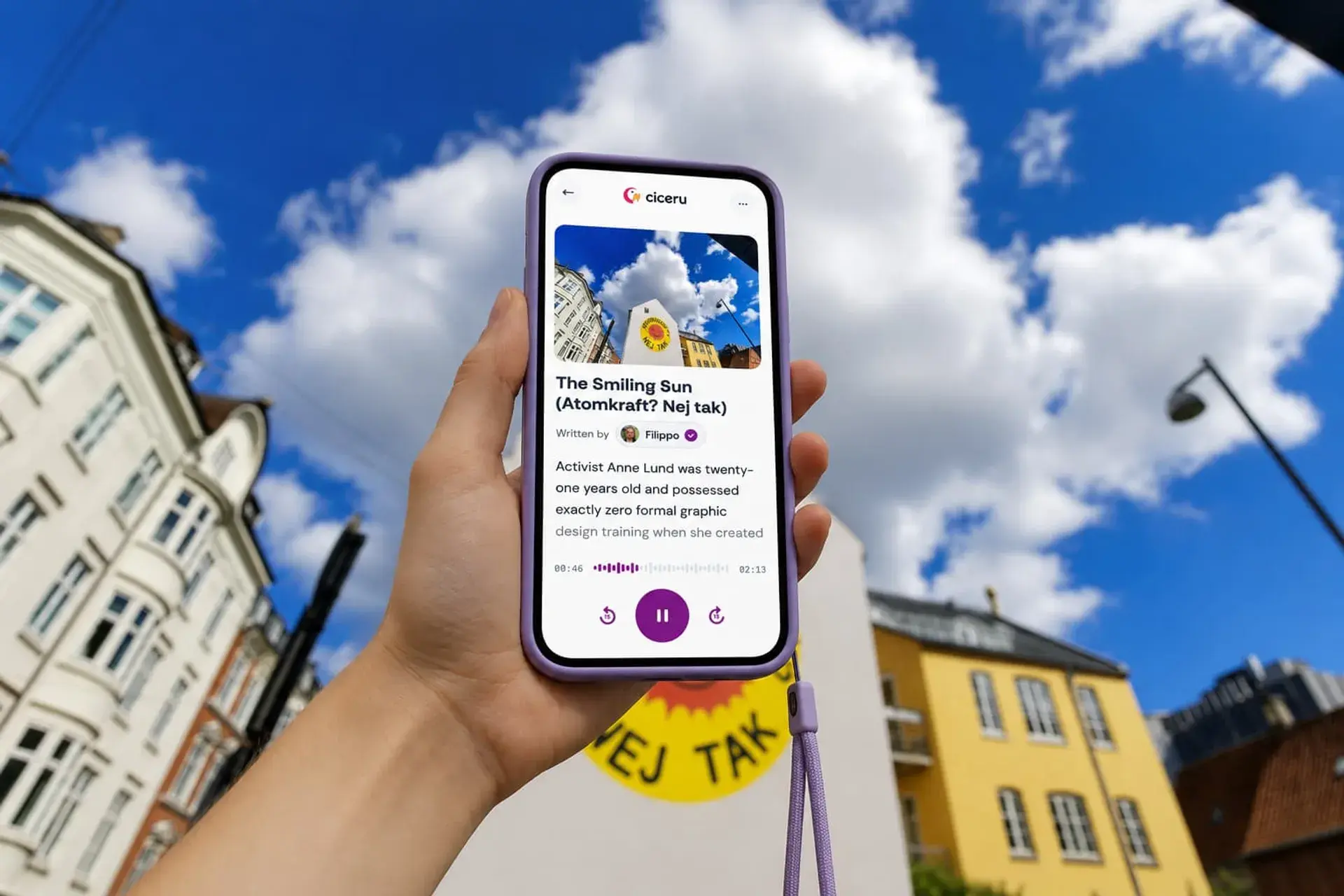
Ciceru walks Aarhus through the Latin Quarter's half timbered lanes, over Vadestedet on the Åboulevarden river, past the grinning Smiling Sun anti nuclear mural near Klostertorv, and up to ARoS, where Your Rainbow Panorama rings the roof in the colours of the spectrum.
- Country
- Denmark
- Language
- Danish
- Currency
- Danish Krone (DKK)
- Plug
- type C
- Time zone
- Europe/Copenhagen
- Emergency
- 112
- Tap water
- Generally safe
- Dialling code
- +45
The stops
Things to do in Aarhus
Our Aarhus routes concentrate on the old town around the Cathedral and Latin Quarter, the Åboulevarden riverside down to the harbourfront and Dokk1, and the walk up to ARoS and Your Rainbow Panorama.
The Latin Quarter
Aarhus Cathedral (Domkirke)
Vadestedet & the Åboulevarden River
Lille Torv (the Little Square)
The Smiling Sun (Atomkraft? Nej tak)
The Church of Our Lady (Vor Frue Kirke)
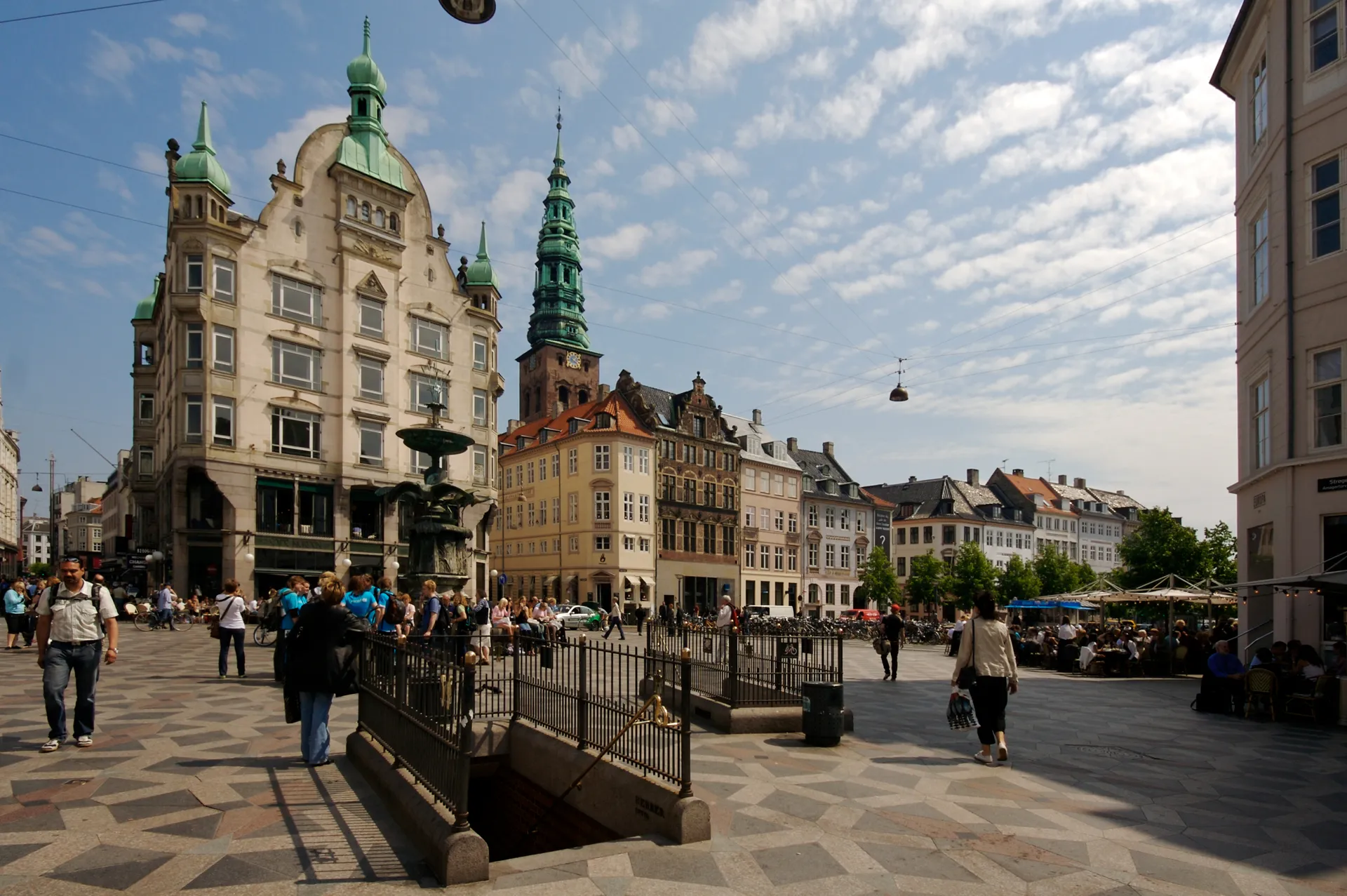
Strøget (the Pedestrian Street)
Strøget serves as the baseline geographic anchor of Aarhus, Denmark. This vibrant, 850-metre pedestrian corridor physically bridges the city's 19th-century railway developments in…
ARoS & Your Rainbow Panorama
Your private guide, in your pocket
Ready to walk these?
- Self-guided, start now or laterSelf-guided, start now or later and pause whenever you like
- Offline audio, 7 languagesOffline audio stories in 7 languages
- 30-day money-back guarantee30-day money-back guarantee
- 500MB global eSIM included500MB global eSIM included
from
€7.00
1 self-guided tour in Aarhus
Weather & crowds
Best time to visit
May and June give the mildest light before the Danish summer holiday fills the harbour bath and hotel rates peak around Aarhus Festuge in late August, when highs average 20.4°C. September is the wettest month at 73.3mm, almost twice April's 38mm, and by November highs fall to 7.6°C with barely eight hours of daylight.
Winter
Dec–Feb0–4°C/ 31–39°F
Few visitorsOccasional rain
- Christmas markets
- ARoS queues shortest
- Dark by 16:00, cold harbour wind
Don't miss
Christmas markets across the city (December)
Spring
Mar–May3–11°C/ 38–52°F
Getting busierDry
- Marselisborg cherry blossom
- Harbour bath still too cold to swim
Summer
Jun–Aug12–20°C/ 53–69°F
Peak seasonOccasional rain
- Aarhus Festuge finale
- Harbour bath swims
- Warmest, most crowded weeks of the year
- Hotel rates peak for Festuge
Don't miss
Aarhus Festuge, weeks 35 to 36 (late Aug to early Sept)
Autumn
Sep–Nov6–12°C/ 43–54°F
Getting busierWet
- Wettest months: September averages 73.3mm
- Days shorten fast after October
Transport
How to get to & around Aarhus
Aarhus Airport
| Airport bus 925X to Aarhus C | 45-50 min | DKK 128.00 |
|---|---|---|
| Metered taxi to Aarhus C | 35-45 min | ~DKK 525.00 |
Billund Airport
| Airport bus 912X to Aarhus | 90-95 min | DKK 166.00 |
|---|
Copenhagen Central
| DSB InterCityLyn, Orange fare | 2h38 to 2h55 | DKK 119.00 |
|---|
Bus & Letbane
One zone ticketA single zone 1-2 ticket is 26 kr and covers bus and Letbane together. The Aarhus City day ticket is 59 kr for unlimited rides, worth it after two trips in a day.
Walking
Compact old townThe Latin Quarter, Cathedral and Åboulevarden sit within 15 minutes of each other, and the 850 metre Strøget links the old railway era streets on foot.
Cycling (Donkey Rep)
App rental, no IDUnlock a Donkey Republic bike by app with no deposit, ID card or local registration needed. Flat, wide cycle lanes reach the harbour and the Riis Skov woods.
Taxi
Metered, cards workAarhus Taxa charges a 45 kr start fee plus 12 kr per km on weekdays 6am to 6pm. Useful late at night or for the 40km run to Aarhus Airport.
Hop-on-hop-off bus
Not worth it hereThe sightseeing loop covers 7 to 8 stops in under an hour, the same ground you can cover on foot or with one 59 kr day ticket in a city this compact.
Walk the old town, buy the 59 kr Aarhus day ticket for anything further, and skip the hop-on-hop-off bus: the whole loop is walkable in less time than you would wait for it.
Budget
How much does it cost to visit Aarhus?
Aarhus stays cheap on foot and on transit: a day ticket covers the whole city for 59 kr and a dagens ret lunch runs 75-150 kr. It gets expensive the moment you need a taxi to the airport, 40km out, at 500-650 kr against a 128 kr airport bus. There is no tourist tax yet, though a 20 kr per night charge has been proposed.
| Coffee at a cafe | DKK 30.00–DKK 45.00 |
|---|---|
| Lunch (dagens ret) | DKK 75.00–DKK 150.00 |
| Draft beer, 0.5L | DKK 45.00–DKK 65.00 |
| Single bus/Letbane ticket | DKK 26.00 |
| Aarhus City day ticket | DKK 59.00 |
| Taxi across the centre | ~DKK 90.00–~DKK 150.00 |
| Taxi from Aarhus Airport | ~DKK 500.00–~DKK 650.00 |
Cash or card?
Cards and MobilePay cover nearly every purchase: cash is under a tenth of retail payments and falling. Danmarks Nationalbank still recommends keeping around 250 kr per person in cash and a second card as backup, after payment outages briefly hit card terminals nationwide in 2025 and 2026.
Where to stay
Where to stay in Aarhus
Latinerkvarteret (Latin Quarter)
First visit, walkable centreHalf timbered lanes around the Cathedral and Lille Torv, five minutes from Strøget. Central and expensive, and the narrow streets get loud on weekend nights.
Frederiksbjerg
Local feel, near the stationSouth of the tracks on Jægergårdsgade and M.P. Bruunsgade, redeveloped with independent shops. A 10 minute walk to Aarhus H, but few large hotels.
Trøjborg
Budget stays, studentsNorth of the centre near the Riis Skov woods, with university driven cafes and lower rates. Letbane and bus connect it, but it is 20 minutes on foot to the Cathedral.
Aarhus Ø
Waterfront, new buildsThe old harbour rebuilt around Dokk1 and the Isbjerget apartments, 15 minutes on foot from the Cathedral. Close to the Ø-bus stops, but still under construction, and quiet after dark.
Risskov
Beach and forest, quieterBeside the Den Permanente sea bath and beech woods, 15 minutes out by bus. Furthest from the Latin Quarter, so plan around bus times if you are out late and want more than a taxi back.
The tours
Aarhus, one story at a time
€71.5 hours
Aarhus: a self-guided walking tour of the old town, cathedral and ARoS rainbow, with audio, quizzes & free eSIM
 Filippo Anzivino
- Audio
- Quizzes
- Multiplayer
- Free eSIM
Scratch to win
Give it a scratch
Something good might be under there. If you win, we'll show you how to use it.
One prize per traveller. Good for 2 years.
Word of mouth
What travellers say

Safety
Is Aarhus safe?
Aarhus has one of Denmark's lower crime rates for a city this size. The everyday hazard is not theft, it is stepping into a cycle lane without checking behind you first. Bag and phone theft follows the pattern seen across Denmark: crowded platforms, festivals and busy cafes, not any one district.
Cycle lanes
Cycle paths run beside the pavement, marked by a curb or different paving, and carry fast commuter traffic. Denmark's Road Safety Council warns visitors to look both ways, keep to the right, and signal before stopping or turning.
Bag and phone theft
UK government travel advice for Denmark flags crowded public transport, station concourses and busy cafes and restaurants as where distraction theft happens, not any specific Aarhus neighbourhood.
Reporting a theft
Report a theft online at politi.dk or at an Østjyllands Politi station to get the police report your travel insurer will ask for. Do it the same day, while the details are fresh.
Medical help
Call 112 for a life threatening emergency. For anything urgent but not critical, call 70 11 31 31, the Central Denmark Region's Lægevagten, which runs evenings, nights, weekends and public holidays.
Good to know
Good to know
Airport bus needs its own ticket
The 925X and 912X airport buses are not covered by a normal Midttrafik zone ticket or Rejsekort. Buy the dedicated fare, 128 kr from Aarhus Airport or 166 kr from Billund, in the Rejsebillet app or on board.
Store Bededag is a normal workday now
Denmark scrapped the Store Bededag public holiday from 2024. Shops, offices and transport now run a normal schedule on the day that used to close the city in late April or early May.
English gets you almost everywhere
Midttrafik, DSB and most menus run in English as well as Danish, but announcements on some older buses are Danish only. Download Rejseplanen or Rejsebillet before you need it.
Tipping is not expected
Service is already built into restaurant, hotel and taxi bills. VisitDenmark says any extra tip is entirely optional, with no set percentage or etiquette to follow.
Questions
Aarhus FAQ
Yes. Aarhus Vand tests drinking water for bacteria, pesticide residue, PFAS and nitrates more than 1,500 times a year and it meets Danish standards with room to spare. Expect it to taste mineral rich: the water is classed as moderately hard to hard, 11 to 20 dH, mainly noticeable in kettles and washing machines rather than in the glass.
From Aarhus Airport, the 925X bus meets every flight and takes 45 to 50 minutes to Aarhus C for 128 kr, with departures timed to flights rather than a fixed timetable. From Billund, the 912X takes 90 to 95 minutes for 166 kr via Skanderborg and Horsens. A metered taxi from Aarhus Airport, 40km out, runs roughly 500 to 650 kr.
For a short stay, the Aarhus City day ticket at 59 kr covers unlimited bus and Letbane rides across the city, cheaper than three single tickets at 26 kr each. It only covers zones 1-2 inside Aarhus, not the airport buses or trips out to Billund.
Not yet. Denmark has no general tourist tax as of September 2026. The government has proposed a 20 kr per person per night charge on hotel stays in Copenhagen and Aarhus to help fund tax cuts, but it still needs parliamentary backing before it can take effect.
Yes. The Latin Quarter, Cathedral, Åboulevarden and the 850 metre Strøget pedestrian street sit within about 15 minutes' walk of each other, and Aarhus H train station is a similar distance from most of the old town. The harbourfront around Dokk1 adds another 10 to 15 minutes on foot. The Letbane and buses cover anything further, such as Risskov or Aarhus Ø.
Yes, by the standards of a university city its size. The main risk after dark is stepping into a cycle lane without looking, not crime, since cycle traffic keeps running well past midnight. Keep valuables zipped away in crowds at the station and around Aarhus Festuge in late August, and use the same care you would in any European city centre.
Almost always. Cash makes up under a tenth of retail payments in Denmark and is still falling, and MobilePay and cards work in cafes, buses and taxis. Danmarks Nationalbank still advises keeping some cash and a backup card, after payment outages briefly affected card terminals nationwide in 2025 and 2026.
May and June: mild days around 16-19°C, long light evenings, and ahead of the Danish summer holiday crowds. Plan around September if you dislike rain, it is the wettest month at 73.3mm, unless you are here for Aarhus Festuge in late August.