
Tips and tours for explorers and travellers
Barcelona City Guide
Ciceru walks Barcelona through Gaudí's Eixample and the Raval — the Block of Discord, where three rival architects built on one block, Palau Güell's chimneys, and the streets around Rambla del Raval where Catalan rumba was born. Routes built from our own guides' walking notes.
- Country
- Spain
- Language
- Catalan and Spanish
- Currency
- Euro (EUR)
- Plug
- type C/F
- Time zone
- Europe/Madrid
- Emergency
- 112
- Tap water
- Safe to drink
- Dialling code
- +34
The stops
Things to do in Barcelona
Our Barcelona routes concentrate on two areas: the Modernisme corridor from the Block of Discord up to Park Güell, and the Raval's streets around Rambla del Raval, Bar Marsella and the Keith Haring mural.
Faith and power
The church of the people
The rise of modernisme
Experience the 'total work of art' at Palau de la Música Catalana, a UNESCO World Heritage site known for its stunning stained glass, mosaics, and unique central skylight.
The genius of Gaudí
Immerse yourself in Gaudí's imaginative Casa Batlló, famous for its organic design, vibrant facade, and unique representation of the Sant Jordi legend.
A changing city
Catalan identity
The soul of Barcelona
Gateway to the world
Your private guide, in your pocket
Ready to walk these?
- Self-guided, start now or laterSelf-guided, start now or later and pause whenever you like
- Offline audio, 7 languagesOffline audio stories in 7 languages
- 30-day money-back guarantee30-day money-back guarantee
- 500MB global eSIM included500MB global eSIM included
from
€3.00
4 self-guided tours in Barcelona
Weather & crowds
Best time to visit
May, June and September are the best trade-off: warm enough for the coast, short of July's queues. September is warm but wet — 86 mm, more than three times July. October is wetter still. January and February stay mild at 14 °C and are the only months you will see the Gaudí houses without a queue.
Winter
Dec–Feb6–14°C/ 43–58°F
Few visitorsOccasional rain
- Gaudí houses without queues
- Clear, cold light
- Dark by 18:00
- Sea too cold to swim
Don't miss
Cavalcada de Reis (5 January)
Festes de Santa Eulàlia (February)
Spring
Mar–May11–19°C/ 51–66°F
Getting busierOccasional rain
- Best walking weather
- Sant Jordi fills the streets
- Showers, and room rates climb from April
Don't miss
Diada de Sant Jordi: books and roses (23 April)
High summer
Jun–Aug20–28°C/ 68–82°F
Peak seasonDry
- Beach evenings till late
- Festa Major de Gràcia
- Humid 28°C afternoons and the year's worst queues
Don't miss
Sant Joan: bonfires on the beaches (23 June)
Festa Major de Gràcia (mid-August)
Early autumn
Sep–Oct16–24°C/ 61–76°F
BusyWet
- Sea still warm in September
- La Mercè takes over the city
- Wettest months: 86mm in September, 82mm in October
Don't miss
Festes de la Mercè (around 24 September)
Late autumn
Nov9–18°C/ 48–64°F
Few visitorsOccasional rain
- Lowest visitor numbers
- Cooler and greyer, with 46mm of rain
Transport
How to get to & around Barcelona
BCN T1 & T2
| Aerobús A1 / A2 to Plaça Catalunya | 35 min | €7.75 |
|---|---|---|
| Metro L9 Sud (needs airport ticket) | 32 min | €5.90 |
BCN Terminal 2
| Rodalies R2 Nord to Passeig de Gràcia | 26 min | €4.60 |
|---|
BCN Airport
| Official metered taxi | 20–35 min | ~€35.00 |
|---|
Metro & bus (TMB)
Best defaultA single is €2.90, but a T-casual gives 10 trips for €13.00 and lets you change between metro, bus and urban rail inside 75 minutes as one journey.
Walking
Central BarcelonaThe Eixample grid and the old city are flat and close together. Passeig de Gràcia to the Block of Discord is quicker on foot than going down into the metro and changing lines.
Taxi
Metered, cards workMetered, with a green roof light when free, and legally obliged to take cards. Worth it late at night and for the climb up to Park Güell, which puts people off the visit on foot.
Bicing
Residents onlyThe red-and-white municipal bikes need Spanish ID, a local bank account and a Catalan address. Visitors cannot register. Use a commercial rental — there are several along the seafront.
Walk the centre, buy a T-casual for everything else, and ignore Bicing — the municipal bikes are residents-only and you cannot register as a visitor.
Budget
How much does it cost to visit Barcelona?
Barcelona stays cheap while you are moving and eating like a local — a menú del día and a T-casual cover most of a day. It gets expensive the moment you go indoors: the Gaudí houses are among the priciest single tickets in Europe, and the tourist tax adds up to €12 per person per night before you have bought anything.
| Coffee at a neighbourhood bar | €1.40–€2.20 |
|---|---|
| Menú del día (weekday lunch) | €13.50–€18.50 |
| Caña of draught beer | €2.00–€3.80 |
| Single metro or bus ticket | €2.90 |
| T-casual, 10 journeys | €13.00 |
| Taxi across the centre | €8.50–€13.00 |
| Taxi from the airport | €21.00–€45.00 |
| Tourist tax, per person per night | €6.00–€12.00 |
Cash or card?
Cards work almost everywhere, including metro gates, taxis and small bars — taxis are legally required to accept them. Keep €20–30 in cash for market stalls and older counters in the Raval. Always decline the machine's offer to charge you in your own currency; the rate is worse.
Where to stay
Where to stay in Barcelona
Dreta de l'Eixample
First visit, best transportWide grid streets with Casa Batlló and La Pedrera a few blocks apart, and the airport train at Passeig de Gràcia. Expensive, and the big avenues carry traffic noise all night.
El Born
Eating and going outMedieval lanes east of Via Laietana, dense with bars and small shops, fifteen minutes' walk from the beach. Rooms facing the street hear the bars until well after midnight.
Vila de Gràcia
Village feel, local lifeA separate town until 1897 and it still behaves like one — small squares, independent cinemas, terraces used by people who live there. Direct L3 to the centre, few large hotels.
Poblenou
Beach and spaceA former industrial district with a wide pedestrian Rambla, modern hotels and the beach at the end of the street. About twenty minutes to the old centre on the L4.
El Raval
Central, cheap, realThe most mixed part of the old city, with MACBA, the Antic Hospital and the best cheap eating in the centre. Its reputation is worse than the reality, though the usual care applies late at night.
The tours
Barcelona, one story at a time
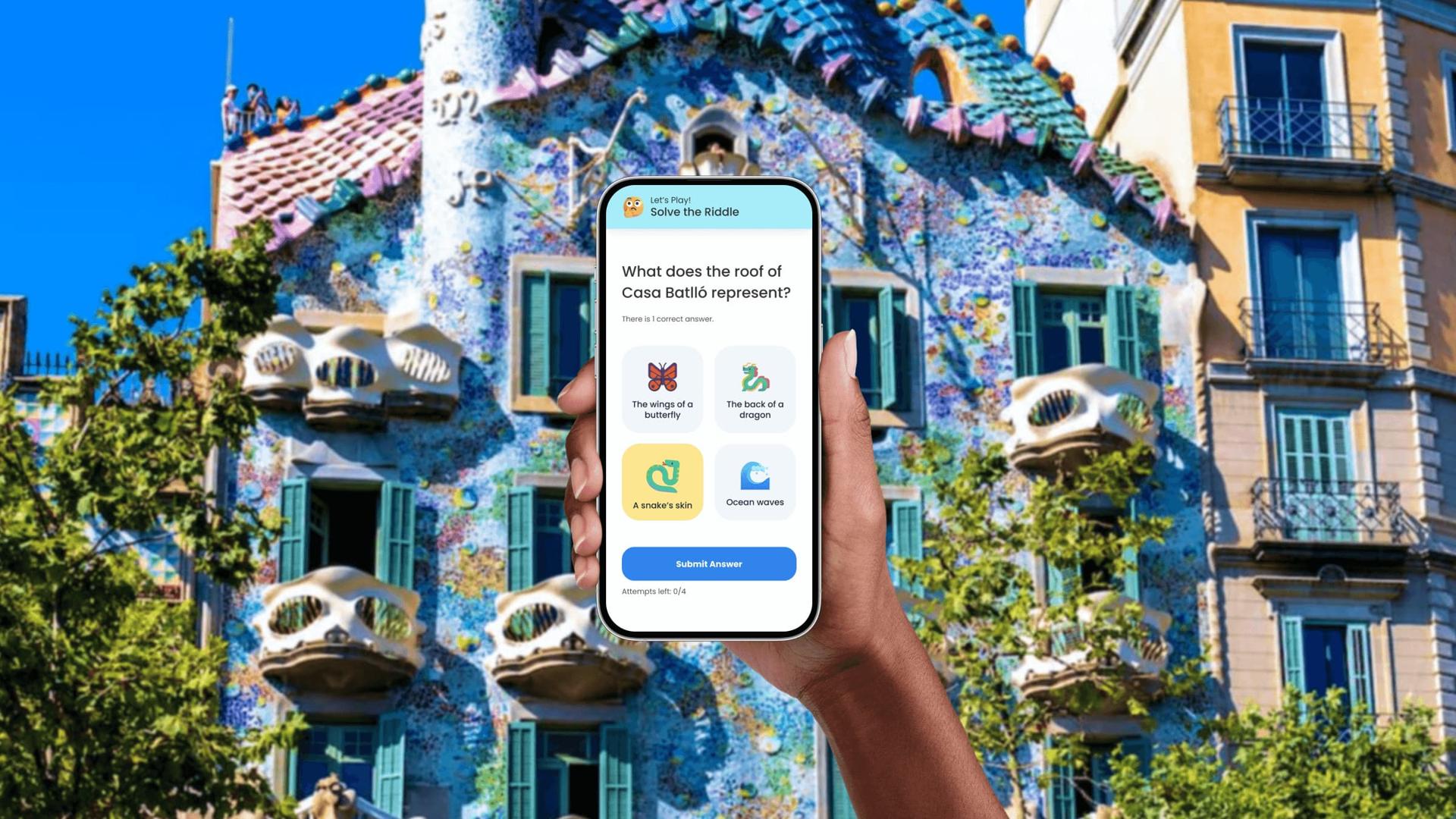
€72.5 hours
Barcelona interactive self-guided historical walking tour
 Filippo Anzivino
- Audio
- Quizzes
- Multiplayer
- Free eSIM
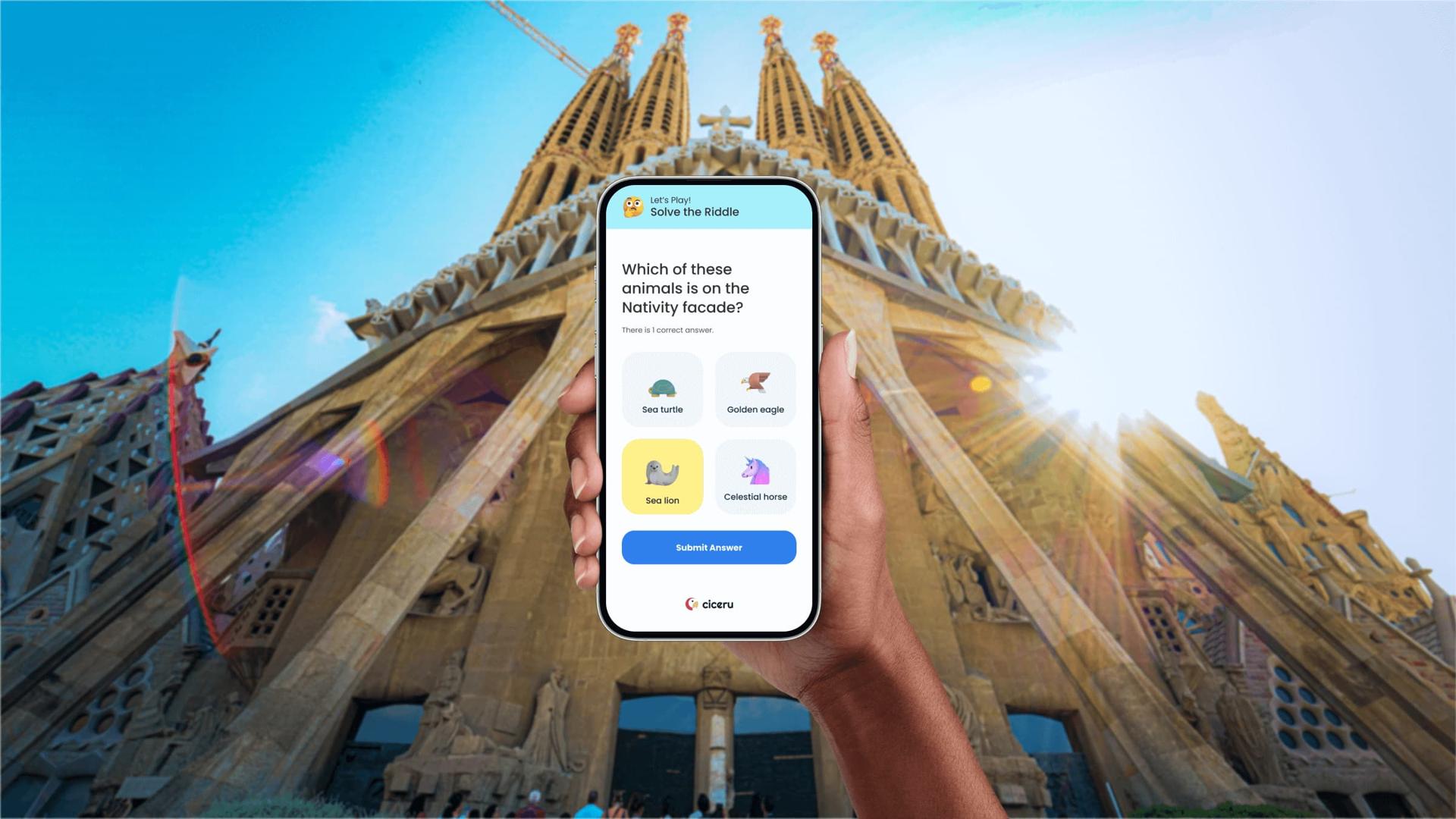
€31 hour
Sagrada Familia: secrets and hidden wonders of the 3 façades
 Stefano Manzi
- Audio
- Quizzes
- Multiplayer
- Free eSIM
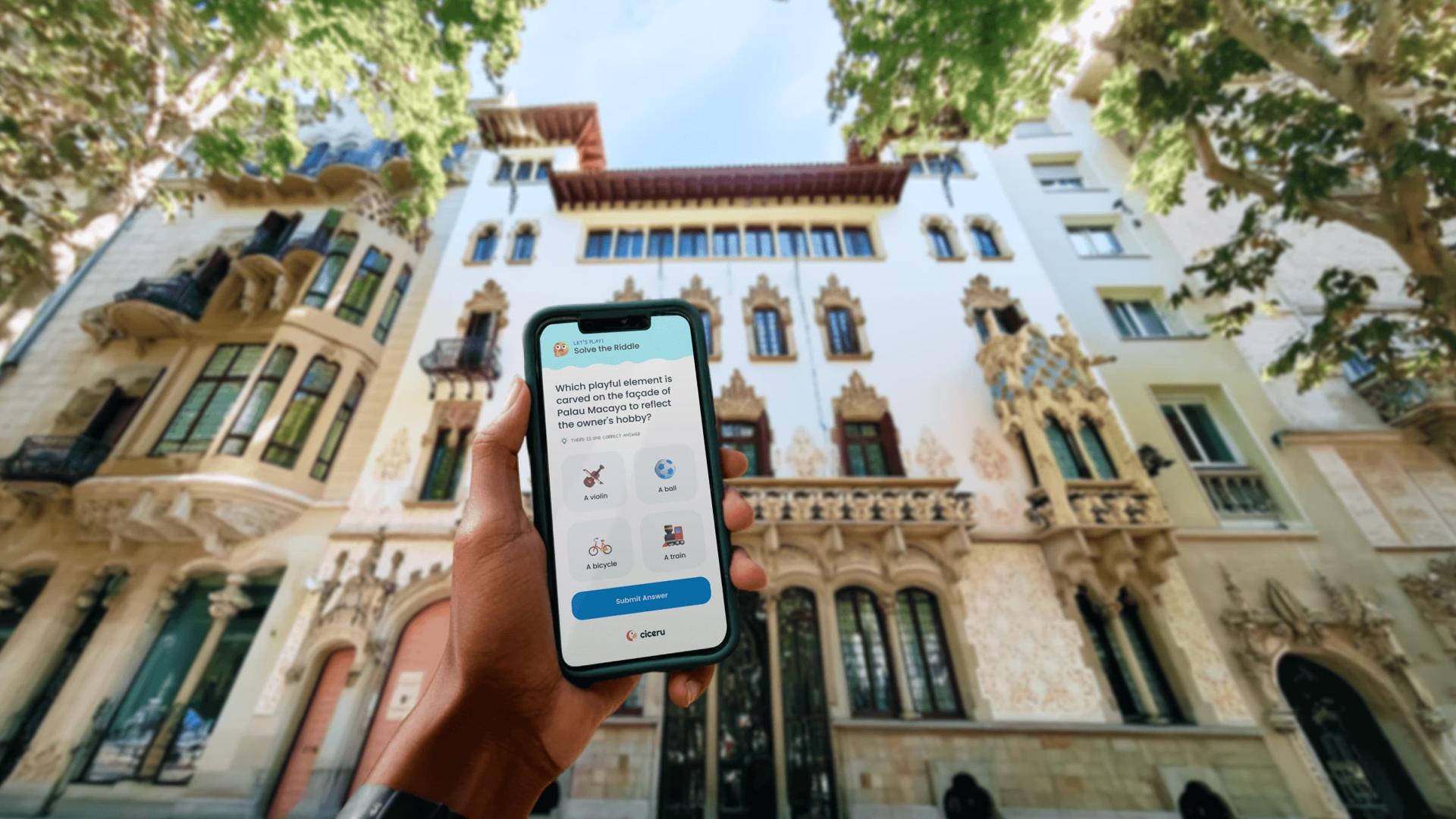
€73 hours
Barcelona unplugged - The ultimate modernist tour
Stefano Manzi- Audio
- Quizzes
- Multiplayer
- Free eSIM
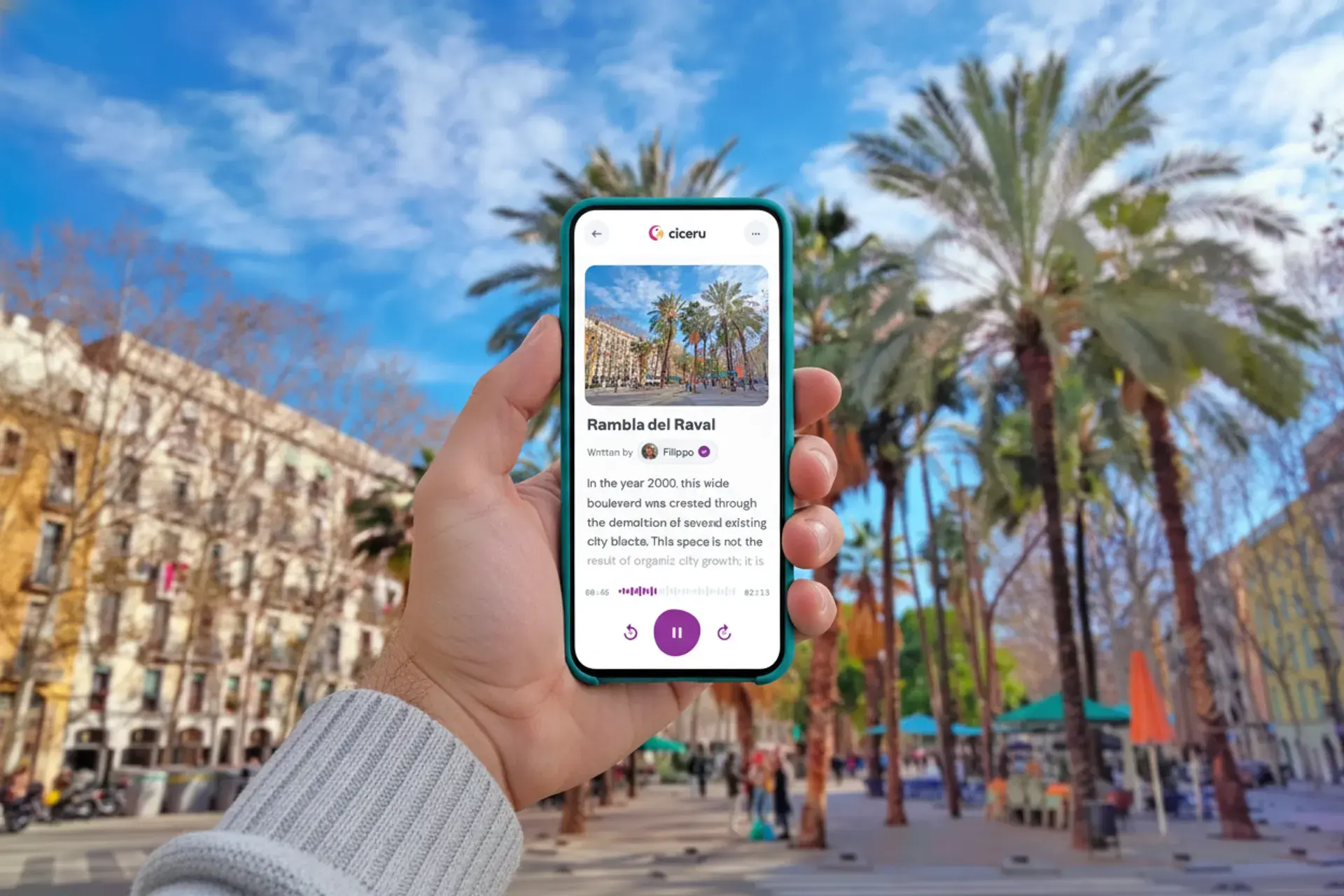
€71.5 hours
Barcelona: raval's rebel heart, a self-guided walking tour with audio and quizzes
Filippo Anzivino- Audio
- Quizzes
- Multiplayer
- Free eSIM
Scratch to win
Give it a scratch
Something good might be under there. If you win, we'll show you how to use it.
One prize per traveller. Good for 2 years.
Word of mouth
What travellers say

Safety
Is Barcelona safe?
Violent crime against visitors is rare. Pickpocketing is not: it is organised, non-confrontational, and concentrated in a small number of predictable places — metro interchanges, the beaches, and crowded tourist corridors. Official advice names those settings rather than any one district, and visitors who know them lose almost nothing.
Metro and station crowds
Interchanges are where it happens — teams work the doors as they close, staging a push or a dropped item. Move your phone and wallet before you reach the platform, not after you feel the crush.
Distraction theft
It is almost always two people: one asks directions, spills something or holds out a petition while the other takes the bag. Never hang a bag on the back of a chair or set a phone on an outdoor table.
Beaches
Official advice names Barcelona's beaches specifically. Bags left on the sand while you swim are the single most common loss. Take what you need, use a locker, or leave someone with the things.
Reporting a theft
Insurance needs the denúncia — the official police report. Get it the same day; a claim without it usually fails. Ask at any Mossos d'Esquadra station, where English-speaking officers are available.
Medical help
Call 112 in an emergency. For urgent but non-critical problems, 061 Salut Respon runs 24 hours and will direct you to the right CAP or send an ambulance.
Good to know
Good to know
Two separate tourist taxes
Your accommodation adds the Catalan regional tax plus a Barcelona municipal surcharge — €6 to €12 per person per night, capped at seven nights. It is not in the booking price; you pay it at the property.
The airport metro is separate
L9 Sud runs to both terminals, but your normal ticket will not open the gate there. It needs the dedicated €5.90 airport ticket. Catching this before you land saves an argument at the barrier.
Nobody eats at seven
Lunch runs 13:30 to 16:00 and dinner kitchens open around 20:30, busiest after 21:30. A restaurant serving a full dinner at 18:30 on a tourist street is telling you exactly who it is for.
Worth reading
Read more about Barcelona

Story5 min read
The food lover’s guide to authentic paella in Barcelona (updated for 2025–2026)
Most paella in Barcelona is bad. Here’s where to find the real thing.
Read moreStory5 min read
Beyond the Ramblas: 5 unmissable dedieval towns near Barcelona for a 2025 weekend escape
You have done the Sagrada Familia. You have walked the crowded streets of the Gothic Quarter. Now, drive 90 minutes to find the Catalonia that existed before Gaudí was even born.…
Read moreStory10 min read
Barcelona on a Budget: A Practical 2026 Guide
Last updated: September 2026
Read moreStory7 min read
Free and Cheap Coworking Spaces in Barcelona for Laptop Work (2026 Update)
Last updated: August 2026
Read moreStory4 min read
Barcelona anarchica: when the city belonged to its people
Let me take you back to a different Barcelona. Not the one of Gaudí’s curves or the beachside buzz, but a city draped in red and black flags, where trams ran without bosses and…
Read moreStory4 min read
Where to find snow and mountains near Barcelona in winter
A practical guide to the Pyrenees, trains, buses, and real choices
Read moreStory1 min read
Unveiling the Secrets of Santa Maria del Mar, Barcelona's Gothic Marvel
Dive into the Mysteries and Wonders of this Iconic Basilica
Read moreQuestions
Barcelona FAQ
Yes. Barcelona's tap water meets Spanish and EU drinking-water standards and is monitored continuously by Aigües de Barcelona. It is hard and noticeably chlorinated, so it tastes mineral compared with bottled water, which is why plenty of residents still filter it. That is a taste preference, not a safety issue.
The Aerobús reaches Plaça Catalunya in about 35 minutes for €7.75, running 24 hours — A1 from Terminal 1, A2 from Terminal 2. From Terminal 2 the R2 Nord train reaches Passeig de Gràcia in around 26 minutes for €4.60. A taxi is €35–45 depending on where you are going, with a €21 minimum fare from the airport.
The T-casual: €13.00 for 10 journeys across metro, bus, tram and urban rail in Zone 1, which works out at €1.30 a trip against €2.90 for a single. Two things to know: it is single-person, so two travellers need two cards, and it is not valid at the L9 Sud airport stations, which need their own ticket.
The L9 Sud airport stations are outside the normal fare structure. A T-casual is rejected at Aeroport T1 and T2 even though it works everywhere else on the metro. You need the dedicated airport ticket at €5.90, or a Hola Barcelona pass, which does include airport travel.
Between €6.00 and €12.00 per person per night, depending on the type of accommodation — €6.00 in a youth hostel, €9.50 in a tourist apartment, €12.00 in a five-star hotel. It combines the Catalan regional tax with Barcelona's municipal surcharge, applies to guests aged 17 and over, and is capped at seven consecutive nights. The property collects it at check-in or check-out.
No. Bicing is for registered residents only — it needs a Spanish identity document, a local bank account and a Catalan address. It is one of the most common visitor mistakes, because the stations are everywhere and look like a public rental scheme. Use a commercial rental shop instead.