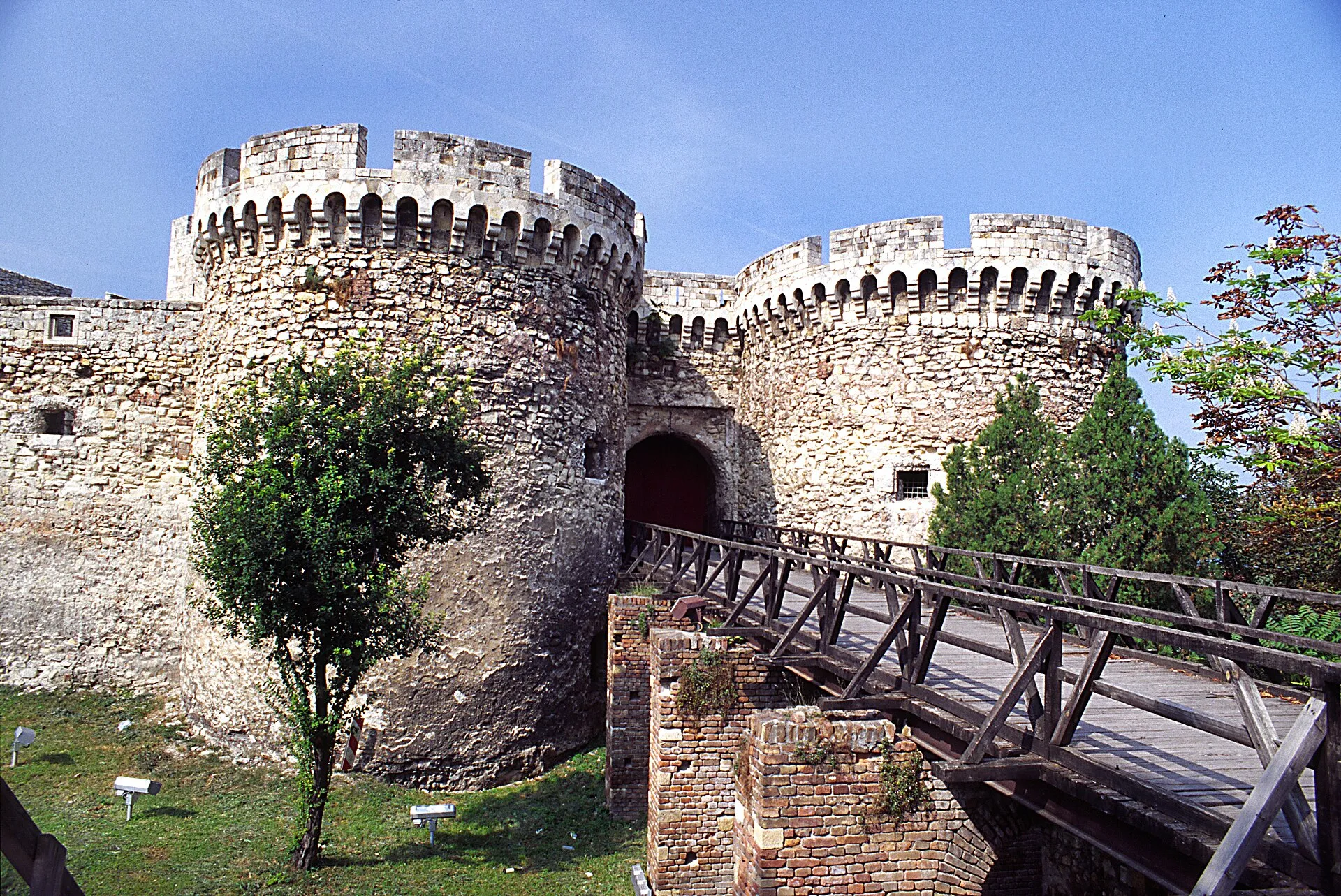
Belgrade Fortress (Kalemegdan)

Tips and tours for explorers and travellers

Belgrade City Guide

Where the Sava meets the Danube, Belgrade pairs historic fortress ridges and lively neighborhood streets with an integrated public transport network that is completely free to ride.

Country
Serbia
Language
Serbian
Currency
Serbian Dinar (RSD)
Plug
type C/F
Time zone
Europe/Belgrade
Emergency
112, 192, 194, and 193
Tap water
Safe to drink
Dialling code
+381

The stops

Things to do in Belgrade

Belgrade centers around the high ridge overlooking the confluence of the Sava and Danube rivers, stretching from the fortifications of Kalemegdan down through central pedestrian boulevards, historic palaces, and the bohemian quarters of Dorćol and Skadarlija.

Belgrade Fortress (Kalemegdan)

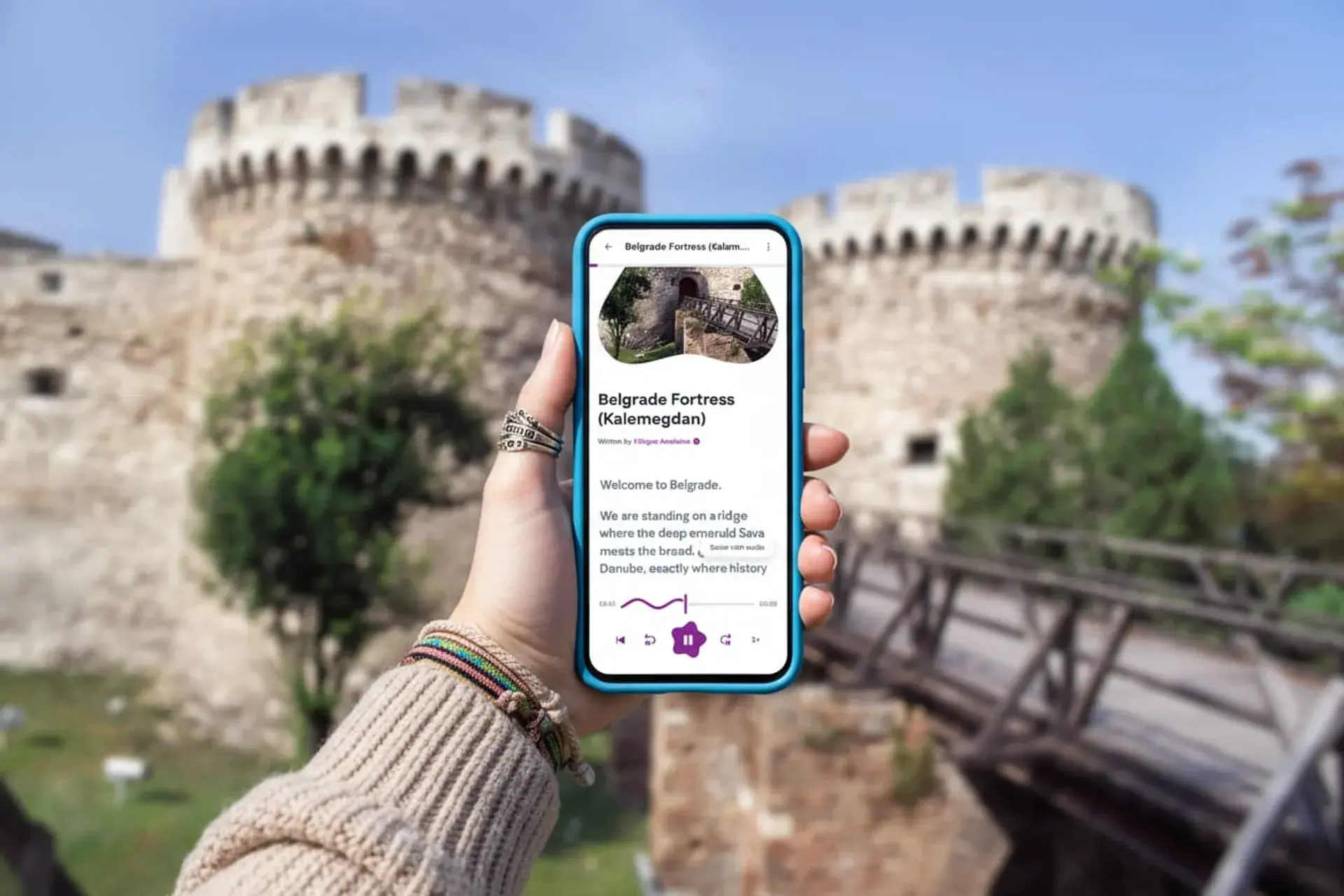
Welcome to Belgrade. We are standing on a ridge where the deep emerald Sava meets the broad, grey-blue Danube, exactly where history has converged for thousands of years. You are standing on a ridge overlooking a view that has been coveted by almost every empire you have ever heard of. This is the Belgrade Fortress, or Kalemegdan, and beneath the gravel under your shoes lies the very foundation of the city. Take a moment to feel the wind coming off the water. It is the same breeze that Roman legionnaires and Ottoman conquerors felt centuries ago while standing on this exact 122-meter cliff. This isn't just a park. It is a scars-and-all biography of the Balkans. Look at the walls surrounding you. They are a chaotic, beautiful mosaic of stone. In some sections, you will see the sturdy, utilitarian work of Roman military engineers from the first century, when this was the castrum of Singidunum. In others, you will spot the refined, almost elegant Baroque gates from the Austro-Hungarian occupation, or the rough-hewn medieval bastions from the time of Despot Stefan Lazarević. The name Belgrade itself, or 'Beli Grad,' means 'White City.' If you look at the older fortifications from here, you can still see traces of that pale hue in the limestone, though centuries of gunpowder and smog have given it a rugged, weathered patina. There is a specific smell here when it rains, a mix of damp earth, old limestone, and the fresh, green scent of the mature trees in the park. From the outer ramparts, you might notice the Grand Staircase or the iconic Pobednik monument, known as The Victor, standing guard over the confluence. This site has been destroyed and rebuilt dozens of times. It has been Celtic, Roman, Byzantine, Bulgarian, Hungarian, and Ottoman before finally becoming the heart of modern Serbia. Every layer of stone represents a different language spoken by the guards on these ramparts. But the most fascinating part of this fortress might be what you cannot see. Local legends whisper that somewhere beneath this ground, near the junction of the two rivers, lies the lost grave of Attila the Hun. Known as the 'Scourge of God,' Attila repeatedly sacked the Roman camp here in the fifth century. Some historians and dreamers believe he was buried in a triple coffin of gold, silver, and iron right under these very cliffs. You are literally walking over centuries of secrets, from Roman dungeons to the possible resting place of history’s most feared conqueror. Today, the military significance has faded, replaced by the sounds of rustling leaves and the chatter of locals. What was once a closed military frontier is now a fragile, beautiful oasis. It is a reminder that while empires are temporary, the strategic beauty of this ridge is eternal. Take one last look at that river junction. It is the reason this city has died and been reborn more times than almost any other in Europe. From this ancient strategic high point, let's move closer to the figure that stands as the ultimate sentinel of the city.
Victor Monument

Look up, way up. Standing 46 feet above the stone ramparts of the Belgrade Fortress, you’re looking at Pobednik, or 'The Victor.' He is arguably the most photographed man in Serbia, a bronze sentinel perched on a Doric column, staring out over the confluence of the Sava and Danube rivers. He looks stoic, even a bit lonely out here on the edge of the world, but don't let the calm fool you. This statue is the product of two wars, one world-renowned sculptor, and a public scandal that nearly saw him banned from the city sights entirely. Take a moment to really look at him. Designed by the visionary Ivan Meštrović, the figure is a masterclass in tension. In his right hand, he grips a sword, pointed downward but ready, which is a symbol of the fierce military power that drove out the Ottoman and Austro-Hungarian empires. In his left, he cradles a falcon, representing the watchful eyes of peace. The bronze has weathered a century of Balkan winds, turning that distinctive deep patina that glows when the sun hits it. Beneath his feet, the column designed by Petar Bajalović rests on a massive cubic base, elevating the hero far above the mortal concerns of the park below. If you listen, you’ll hear the wind whipping up from the Pannonian plain and the distant cries of gulls from the rivers. It feels like the edge of a kingdom because, for centuries, it was. The history here is written in scars. Though he was cast in 1913, the First World War delayed his debut for fifteen years. When he was finally ready in 1928, he was supposed to live in the center of town at Terazije Square. But there was a problem because he was naked. The high society 'ladies of Belgrade' were absolutely scandalized by the idea of a giant, nude bronze man standing in the middle of their shopping district. They protested with such fervor that the city relented. Their solution was the ultimate 'out of sight, out of mind' move. They banished him here, to the furthest corner of the fortress, and shoved him onto a fifty-six-foot pedestal so the locals wouldn't have to look him in the eye, or anything else. In 2019, the Victor actually took a short vacation. He was removed from his perch for the first time in ninety years to undergo a massive restoration. When experts got him on the ground, they found he was riddled with bullet holes from World War Two. He was patched up, cleaned, and returned on Valentine’s Day in 2020. Even after a century of being tucked away on the edge of the cliff, he remains the undisputed heart of Belgrade’s identity. The Victor was meant to be a fountain in a town square, but he became a symbol of defiance instead. He stands facing West, away from the city that once rejected him, forever watching the horizon for the next empire to cross those rivers. He’s a reminder that sometimes, being pushed to the edge just gives you a better view of the world. While the Victor watches the horizon for political shifts, the next stop reflects the spiritual heart that kept the city alive during those same struggles.

Cathedral Church of St. Michael the Archangel

Take a breath and look up. That belfry isn't just a clock tower, it’s a centuries-old guardian. You are standing before the Saborna Crkva, Belgrade's spiritual anchor. While most tourists are busy hunting for the perfect coffee shop in the old city, you’re looking at a building that essentially told the Ottoman Empire that they were still here and were not going anywhere. It’s tall, it’s proud, and it’s arguably the most important witness to the birth of modern Serbia. Look closely at the facade. This isn't your typical Byzantine-style Eastern Orthodox church. Prince Miloš Obrenović, the man who commissioned this in 1837, had a very specific vision. He wanted something that looked like the grand churches in Sremski Karlovci, leaning into Neoclassical lines with those ornate, late Baroque flourishes. The result is a building that feels both elegant and intimidating. The design was meant to mark a transition, capturing that moment in the mid-19th century when Belgrade was shaking off centuries of Turkish rule and trying to find its own European identity. The stone and plaster you see have survived more drama than a Balkan opera, including battles, burnings, and constant rebuilding. It’s one of the few standing survivors from the first half of the 1800s. While you’re standing out here, imagine what’s resting just a few feet away inside those walls. This place isn't just a church, it’s a royal necropolis. The sacred relics of Prince Lazar are housed within, alongside the heavyweights of the Obrenović dynasty. Even from the street, you can practically feel the weight of that history. The air around the entrance often carries a faint, sweet ghost of old incense that has soaked into the stone over the decades, mixing with the city’s contemporary hum. It’s a sensory bridge between the 1840s and today. Now, for the bit most people walk right past. Deep inside the treasury lies a collection of 'portable' history, which includes items that had to be small enough to be hidden or carried away when the next army showed up. These aren't just gold and jewels, they are survivors. Think about it. During the 17th and 18th centuries, if you were a priest here, your most valuable treasures had to be ready to move at a moment's notice. The fact that these items still exist after centuries of plunder and war is a minor miracle in itself. Every time the city burned, these objects were tucked away in cellars or carried into the woods, waiting for the smoke to clear. The Cathedral of St. Michael isn't just a monument to a saint, it’s a monument to resilience. It stands as a silent reminder that while empires might come and go, a people's identity is much harder to tear down. Having seen the city's spiritual anchor, let’s transition from the sacred silence to the bustling main artery of Belgrade’s daily life.

Knez Mihailova Street

You are standing on Belgrade’s central nervous system. Knez Mihailova isn't just a pedestrian zone or a place for fancy window shopping. It is a kilometer-long timeline of survival. Listen to the rhythm of the footsteps on the pavement. You are following a path that hasn't changed its basic shape in nearly two thousand years. Take a breath and you’ll smell it, the Belgrade signature. In the summer, it’s the sugary scent of popcorn and melting ice cream. In the winter, the air turns heavy and sweet with roasted chestnuts and steamed corn. This is the city’s grand promenade, its living room, and its most resilient artifact. Look up at the architecture surrounding you. It’s a beautifully messy clash of styles. You’ll see the sharp, disciplined lines of Neoclassicism standing right next to the floral, organic curves of Art Nouveau. Keep an eye out for the iconic green and cream facade of Hotel Moskva just nearby, or the ornate balconies that look like they were plucked from 19th-century Paris. This character was largely defined in the 1870s by Emilijan Josimović, the man tasked with turning a chaotic Ottoman trading route into a modern European capital. He replaced crooked alleys with this grand, straight spine, creating a space for Belgrade’s elite to build their marble-laden mansions and show off their newfound prosperity. But here is the real secret. As you walk along this path, you aren’t just walking on a modern street. You are hovering directly on top of the ghost of the Roman Empire. This street follows the 'via cardo,' the main access road of the ancient city of Singidunum. Every time someone digs a hole here, history pushes back. When they built the Rajićeva shopping mall at the end of this stretch, they uncovered third-century trenches filled with coins, oil lamps, and ceramics. Beneath the corner of the street you’re likely standing on or near, specifically at Kralja Petra, lies a massive public space paved with second-century cobblestones. It sits right there, just a few feet below the soles of your shoes, perfectly preserved under the modern bustle. This street has seen it all. It has been a Roman military artery, a dusty Ottoman trading post, and a target for Austrian demolition crews. It officially went pedestrian-only in 1987, but Belgrade locals have been using it as their main bypass for centuries. It functions as the psychological bridge between the contemporary energy of Republic Square and the ancient, brooding silence of the Belgrade Fortress. Everything that makes Belgrade what it is, from its imperial scars to its stubborn love for a slow afternoon coffee, is concentrated right here on this single stretch of stone. This long promenade eventually spills out into the city's main stage, where Belgrade meets to celebrate, protest, and remember.

Republic Square

You are standing at the absolute center of Belgrade, though the city didn't always see it that way. Look around. This square, with its grand neoclassical facades and the constant hum of conversation, is where the city catches its breath. But before you get swept up in the modern energy, take a moment to realize that less than two centuries ago, this wasn't a place for meeting friends or grabbing coffee. It was the edge of the world. Specifically, it was the site of the Stambol Gate, a massive and imposing stone structure where the Ottoman authorities once meted out harsh justice under the sun. Today, the gate is gone, replaced by a theater and a museum, but the weight of history still sits right under your shoes. Look up at the rider on the bronze horse. That is Prince Mihailo Obrenović, and he is the unofficial king of Belgrade social life. If you hear a local say, 'meet me at the horse,' this is exactly where they mean. The statue, cast by Enrico Pazzi in 1882, points south toward the lands Serbian forces liberated from the Turks. Notice the pedestal, as it is decorated with the names of those cities. Behind him stands the National Museum, a stoic building that once replaced a beloved old tavern called Dardaneli. To your left, the National Theatre mimics the design of Milan’s La Scala, which was a deliberate attempt by 19th-century Belgrade to prove it was a European cultural capital and not just an outpost on the frontier. You can almost smell the strong espresso from the nearby cafes and the faint scent of fresh pastries from the bakeries on Knez Mihailova. Now, for the part they didn't teach in the history books. While this square looks like a product of the 19th and 20th centuries, it is actually a massive grave site. When workers began digging the foundations for Prince Mihailo's monument back in 1882, they didn't just find dirt and rock. They broke into ancient Roman tombs dating back to the first century. The most bizarre discovery was a series of 'well-tombs,' which were narrow pits plunging thirty feet into the earth. Archaeologists think these were a tradition brought here by Celtic tribes from Gaul. It is a strange, slightly eerie thought that while you are watching the crowds or waiting for a friend by the horse, you are standing directly above a silent, 2,000-year-old city of the dead that has been resting since Belgrade was known as Singidunum. From Ottoman executions to pro-democracy protests in the nineties, Republic Square has seen Belgrade at its most defiant and its most hopeful. It has changed names from Theatre Square to Republic Square, and seen regimes rise and fall, yet it remains the city's living room. It is a place where the ancient Roman ghosts and the modern Belgrade youth share the same few acres of stone. Take a final look at the ornate details of the theater and the museum. They are the skin of a city that has been rebuilt more times than almost any other in Europe. As we leave the central 'living room,' we move toward another pivotal square famous for its grand hotels and its history as an engineering marvel.

Terazije Square

Stand here for a moment and just listen. You are currently in the vibrant heart of Belgrade, the city’s undisputed main intersection. To your left, the emerald-tiled facade of the Hotel Moskva gleams like a jewel, while ahead, the Albania Palace towers over the pavement. It feels like a standard metropolitan hub, but Terazije is actually an urban paradox. It is a square that isn't really a square, but rather a wide, noble boulevard that carries the weight of five different eras of history on its shoulders. From Ottoman water towers to socialist skyscrapers, this is where Belgrade grew up. If you look around the central fountain, you are standing on the site of a literal water system. The name Terazije comes from the Turkish word for scales, referring to the tall water towers that once stood here to balance the pressure of the city’s pipes. In the mid 1800s, Prince Miloš Obrenović decided this hillside was the future of Serbia. He practically forced craftsmen to move their shops here to pull the city away from the old Turkish quarter. By 1911, the water towers were gone, replaced by the grand, noble ambiance of the Atina and Igumanova palaces. Notice the sheer architectural ego on display, especially the Albania Palace. When it was finished in 1939, it was the tallest building in the Balkans, and a defiant statement of modernism just as the world was about to catch fire. There is a deeper, more somber layer to this pavement though. While the air today smells like roasted coffee and car exhaust, in 1941, the atmosphere held a terrifying silence. During the German occupation, the Gestapo publicly hanged five citizens from the lamp posts here to discourage resistance. If you look for the bronze monument nearby, you’ll find a poignant memorial to those victims. It is a jarring contrast to the square’s usual joy, like the memory of the first ever film screening in Belgrade which took place at the nearby 'Kod Zlatnog Krsta' cafe in 1896. This square has seen the absolute best and worst of the human spirit, often on the same street corner. Take a look at the ground beneath you. Underneath these busy sidewalks is a massive network of subterranean passages and shopping centers. It’s almost as if the city couldn’t fit all its energy on the surface and had to start carving deeper. The constant ebb and flow of people moving toward the Knez Mihailova pedestrian zone or the Kalemegdan Fortress makes this a threshold. It’s the place where Belgrade stops being a collection of neighborhoods and becomes a unified, breathing capital. Terazije is more than just a transit point or a place to catch a bus. It is Belgrade’s soul in architectural form, beautiful, resilient, and occasionally scarred. It reminds us that cities aren't just built of stone and ceramic tiles, they are built of the stories of the people who were brave enough to move their lives here two centuries ago. Leaving the commercial energy of Terazije, we head toward the building that defines the political power and architectural ambition of the nation.

House of the National Assembly of Serbia

Take a look at that massive dome rising over Nikola Pašić Square. You’re standing in front of the House of the National Assembly, a building that spent nearly thirty years watching Serbia try to decide what kind of country it wanted to be. It is grand, imposing, and undeniably beautiful, but if these stones could talk, they’d probably sound a bit exhausted. This isn't just a government office. It is a three-decade-long architectural saga that survived wars, depressions, and the rise and fall of entire nations before those doors even opened. Scan the facade and you will see a masterclass in what architects call academic traditionalism. It is a heavy, rhythmic blend of neo-Renaissance grace and neo-Baroque drama. The construction began in 1907, when King Peter the First laid the cornerstone, but progress was anything but smooth. Work was constantly halted by the Balkan Wars, then World War One, and eventually the Great Depression. By the time it was finished in 1936, the Kingdom of Serbia had transformed into the Kingdom of Yugoslavia, requiring the architects to scramble and redesign the interior for a two-house parliament rather than one. Before you move on, look at the entrance. Those two powerful bronze sculptures of men struggling with wild steeds are known as the 'Playful Black Horses,' installed by Toma Rosandić in 1938. They are a fitting metaphor for the political energy that has surged through this square for a century. While the exterior was the work of local masters Jovanović and Ilkić, the soul of the interior belongs to a Russian architect named Nikolai Krasnov. Here is the secret: Krasnov was so obsessed with the aesthetic harmony of the building that he didn't use standard technical blueprints for the decor. Instead, he hand-painted every lamp, every door handle, and every grand chandelier in delicate watercolors first. He treated the building’s 100 offices and four stories less like a construction site and more like a massive, livable canvas. The ground you are standing on has a memory older than the assembly itself. This square was once the site of the Batal mosque, and in 1830, this was the exact spot where a historic meeting recognized Prince Miloš as a hereditary leader, marking a massive leap toward Serbian autonomy. Even the library tucked inside that wing across from you holds over 60,000 volumes, representing a heavy paper trail of a nation constantly rewriting its own story. Today, this building is the permanent seat of the National Assembly of an independent Serbia, finally returning to the original purpose its founders imagined in 1907. It stands as a stone-and-mortar chronicle of a century of upheaval. Whether it is bathed in the golden glow of night-time floodlights or standing gray against a Belgrade storm, it remains the city’s most resilient witness to the art of statehood. From the grand halls of power, we take a turn into the narrow, winding streets where the city's artists and poets once ruled the night.

Skadarlija (Bohemian Quarter)

Welcome to the bohemian heart of Belgrade. If the uneven, ankle-turning cobblestones beneath your feet feel like they have a story to tell, it is because they do. We are standing in Skadarlija, a four hundred meter stretch of history that flows from Republic Square down toward Dušanova Street. Often called the Montmartre of Belgrade, this place smells of woodsmoke, grilled meats, and the kind of creative nostalgia you can only find in a city that has been rebuilt as many times as this one. It is a living museum, protected since the late sixties, where the architecture remains stubbornly, beautifully archaic. Before the poets and the actors claimed these streets, Skadarlija looked very different. In the 1830s, this was a settlement for Romani families living in abandoned trenches outside the city walls. A stream once ran through here called the Bibija, named after a Romani deity. You cannot see the water today, but it shaped the very layout of this quarter. In fact, a notable resident named Čiča Ilija Stanojević filmed Serbia’s first short documentary right here in 1911, capturing a Romani holiday. That film eventually made it all the way to Paris, long before Skadarlija was known for its upscale taverns. Look at the houses around you. They represent a transition from those early days into the sophisticated urban organization of the late nineteenth century. The real shift happened because of the National Theatre just up the road. When the curtain fell, the actors didn't go home. They came here to argue about art and politics over glasses of rakija. By 1872, the street officially became Skadarska, and its reputation as a haven for the creative class was sealed. As you look at the flower-filled balconies and the lantern-lit terraces, imagine the ghosts of painters and writers huddled at these tables. If you are here in the evening, you will hear the ‘tamburica’ orchestras, which are folk musicians who wander between the tables playing traditional strings. It is loud, it is crowded, and it is exactly how it has been for over a hundred years. There is a specific grit to this beauty. During the First World War, under Austro-Hungarian occupation, they tried to change the name to Ružina Street. But the neighborhood refused to let the new name stick. This place has always known exactly what it is. Today, it is the city’s second-most visited site, trailing only the Kalemegdan Fortress, and it generates a massive chunk of Belgrade’s tourism income. Yet, despite the crowds, it remains a place where locals come to celebrate their own milestones. It is not a tourist trap, it is the city's soul, held together by mortar, music, and a lot of stubborn pride. Take a moment to simply listen to the hum of the quarter. Skadarlija is more than just a street. It is a testament to Belgrade's ability to take a muddy trench and turn it into a cathedral of culture. Whether it is the quiet, serene afternoon air or the chaotic energy of a weekend night, you are standing in the one place where the old Belgrade never truly went away. From all of us at Ciceru, thank you for letting us share Belgrade's story with you. We hope you enjoyed the legends, the layers, and the vibe. We cannot wait to walk with you again soon. Živeli!

Belgrade Fortress (Kalemegdan)

You’re standing on a ridge 125 meters above the point where the Sava and Danube rivers collide, and if the ground beneath your feet feels heavy, that’s because it’s soaked in the blood of 115 battles. This is the White City, or Beograd, a name earned from the pale Tašmajdan limestone walls you see rising up around you. It isn't just a fortress. It is the very DNA of Belgrade. From this vantage point, you can feel the weight of empires that fought, failed, and eventually faded into the dust of these ramparts. It’s imposing, slightly weathered, and entirely unapologetic about its violent past. Look closely at the patchwork of stone. You aren’t looking at a single era of history, but a vertical timeline of survival. The Scordisci Celts first established the settlement of Singidunum here as a primitive site in the 3rd century BCE, but it was the Romans of Legio IV Flavia Felix who laid the first stone castrum at the turn of the 2nd century AD, the base of which survives in the lower layers. Since then, it’s been torn down and rebuilt by Byzantines, Bulgarians, and Serbians. The medieval gates and rugged ramparts you see today were largely the work of Despot Stefan Lazarević in the 15th century, though they’re layered with the Baroque flourishes left behind by Austrian occupiers. The air here usually carries a mix of river mist and the scent of old stone, often punctuated by the sound of distance traffic or a lone street musician playing for the ghosts of the Upper Town. Beyond the architecture, there is a legendary darkness hidden just out of sight. Somewhere nearby sits the so-called Roman Well, which is neither Roman nor a well. Built by Austrian engineers in the 1700s, it’s a 35,meter deep cistern that has become Belgrade’s premier site for urban nightmares. During the Nazi occupation, three divers sent down to find hidden gold never resurfaced. Decades later, a real,life crime of passion involving a mistress thrown into the depths inspired a classic Serbian film. Even now, the well remains a place of mystery, where bizarre, never,before,seen crustaceans have been discovered living in the dark. It is a reminder that the fortress doesn’t just keep enemies out, it keeps secrets tucked safely away in its belly. As you look toward the modern city sprawl on one side and the thick trees of Great War Island on the other, you’ll notice the Victor monument standing proud against the horizon. He’s the guardian of the confluence, overlooking the sweeping panoramic views of the water. The fortress survived the Romans, the Ottomans, and the World Wars, yet today it serves as the city's living room. It’s a place where locals meet for a drink or a walk, proving that even a site defined by war can eventually find a path to peace, provided its walls are thick enough to hold the weight of the story. Belgrade Fortress isn't a museum piece tucked behind glass. It is a living, breathing landscape that has been the heart of this city for over two thousand years. Whether it’s the quiet solemnity of the medieval ruins or the vibrant energy of the park today, this ridge remains the ultimate witness to the resilience of the White City. Take a breath, look out at the rivers, and realize you’re standing on the most contested piece of dirt in Europe.

Your private guide, in your pocket

Ready to walk these?

  • Self-guided, start now or later
  • Offline audio, 7 languages
  • 30-day money-back guarantee
  • 500MB global eSIM included

from

€5.00

1 self-guided tour in Belgrade

See the tours

Plan the days

How many days in Belgrade? A perfect 1-day itinerary

Day 1

Fortress ridge and riverside city

Walk Belgrade from the fortress and river confluence through the pedestrian core, with time for steep streets, crowded crossings and an evening in the historic centre.

Weather & crowds

Best time to visit

Choose May or September for Belgrade's average highs of 23.5°C and 23.9°C; June is warmer but averages 101.2 mm of rain. July and August average highs near 29°C, while December–February bring average lows around or below freezing.

Recommended

Cold winter

Dec–Feb

-1–7°C/ 30–45°F

Few visitorsOccasional rain
  • Belgrade New Year events
  • Belgrade lows fall below 0°C in January

Don't miss

  • Belgrade New Year

Warming spring

Mar–May

4–24°C/ 39–74°F

Getting busierOccasional rain
  • Mild May afternoons
  • May averages 58.0 mm of rain

Don't miss

  • Belgrade Marathon

Wet early summer

Jun

16–26°C/ 60–79°F

BusyWet
  • 26.2°C average high
  • June averages 101.2 mm, Belgrade's wettest normal

Hot summer

Jul–Aug

18–29°C/ 64–84°F

Peak seasonOccasional rain
  • Warm July–August nights
  • August average daily high reaches 28.7°C

Don't miss

  • Belgrade Beer Fest

Cooling autumn

Sep–Nov

4–24°C/ 40–75°F

BusyOccasional rain
  • 23.9°C September high
  • November average daily low falls to 4.2°C

Don't miss

  • Belgrade Book Fair

Transport

How to get to & around Belgrade

Nikola Tesla Airport

How to get to & around Belgrade
Public Transportation Line 7230–40 minRSD 0.00
Public Transportation Line 60030–40 minRSD 0.00

Beograd centar station

How to get to & around Belgrade
Public Transportation Line 60030–40 minRSD 0.00

Bus, tram, trolleybus

Free city network

Belgrade's integrated city and suburban services have cost 0 RSD since 1 January 2025; board without buying a ticket. A1 and express minibuses sit outside the free tariff.

Walking

Best in the core

Central Stari Grad, Savski venac and Vračar adjoin one another, but Belgrade's central ridge, broad traffic corridors and river-level changes make some walks steeper or longer than the map suggests.

BG Voz

Cross-city rail

BG Voz is included in Belgrade's free integrated transport. It is useful where its stations match the journey, but official current frequency evidence was not recovered.

Taxi

Check TX and meter

Use a registered Belgrade taxi with a plate ending TX and insist on the meter. At Nikola Tesla Airport, obtain the official fixed-price voucher before approaching a vehicle.

Express minibus

Paid exception

Belgrade express minibuses are outside the integrated tariff; fares were not officially published in the checked sources. Ordinary buses, trams, trolleybuses and BG Voz cost 0 RSD.

Vrabac shuttle

Free pedestrian ride

Belgrade's Vrabac electric vehicles serve the pedestrian zone free of charge, but no current official timetable was found.

Walk in central Belgrade and use the free bus, tram or trolleybus when distances grow. Use BG Voz for station trips and registered TX taxis only when public transport is impractical.

Budget

How much does it cost to visit Belgrade?

Verified central-Belgrade menus place espresso at 225–350 RSD and 0.5 L draught beer at 355–560 RSD, while integrated public transport costs 0 RSD. Insufficient primary evidence was found to classify Belgrade's overall visitor cost level.

How much does it cost to visit Belgrade?
EspressoRSD 225.00–RSD 350.00
Draught beer 0.5 LRSD 355.00–RSD 560.00
Integrated public transport rideRSD 0.00
Airport bus Line 72 rideRSD 0.00
Airport bus Line 600 rideRSD 0.00

Cash or card?

Belgrade Airport's A1 minibus requires RSD cash; registered taxis should use their meter. Cards are widely accepted in Belgrade, but official advice recommends retaining some dinars and using banks, post offices or authorised exchange offices.

Where to stay

Where to stay in Belgrade

Stari Grad

First visit

Stari Grad suits a car-free Belgrade visit. Busiest pedestrian and nightlife streets bring evening noise, so verify the exact street location rather than relying on the district label alone.

Dorćol

Central, lived-in feel

Dorćol lies within Stari Grad and keeps central Belgrade walkable. Lower sections sit closer to river level, so returning toward the central ridge can involve an uphill walk.

Vračar

Cafés and residential base

Vračar is a compact municipality adjoining central Belgrade with bus, trolleybus and tram access. Addresses farther south add travel distance to Stari Grad despite remaining central.

Savski venac

Transport connections

Savski venac offers river-level terrain and links to Beograd centar station. Large roads and steep elevation changes make the exact lodging address important for walking.

Novi Beograd

Business and airport links

Novi Beograd is served by airport Line 72, Line 600 and BG Voz. Its superblocks and broad avenues make it less convenient for a first-time visit focused on walking.

Zemun

Quieter local base

Zemun offers rail and bus connections along the Danube, but sits outside the central Stari Grad–Vračar cluster and adds travel time to central sightseeing plans.

The tours

Belgrade, one story at a time

Scratch to win

Give it a scratch

Something good might be under there. If you win, we'll show you how to use it.

One prize per traveller. Good for 2 years.

Word of mouth

What travellers say

Safety

Is Belgrade safe?

Belgrade is generally manageable with normal city precautions, but the current U.S. advisory is Level 2 because petty crime and pickpocketing are common. Demonstrations in Belgrade can form with little notice, disrupt transport and mobile networks, and occasionally escalate.

Demonstrations

Avoid announced and spontaneous gatherings in central Belgrade; monitor local news and leave if crowds become disorderly. Recent demonstrations have disrupted public transport and mobile networks.

Pickpocketing

Secure phones and wallets at Nikola Tesla Airport, on Belgrade public transport and in crowded tourist areas. Official advice identifies airports, public transport and visitor-heavy locations as recurring pickpocket settings.

Airport taxis

Ignore drivers soliciting an unmetered fare at Nikola Tesla Airport. Obtain the fixed-price voucher from an arrival-hall e-kiosk; elsewhere use a registered taxi, check the TX plate and insist on the meter.

Sports crowds

Avoid confrontations and large supporter groups around Belgrade sports events. FCDO advice records violence associated with organised groups and high-profile fixtures in Serbia.

Road crossings

Belgrade motorists may not reliably yield at pedestrian crossings; look both ways even with priority. Dial 194 for an ambulance or 112 generally.

Good to know

Good to know

Register within 24 hours

Foreign visitors must register their Belgrade address within 24 hours. Paid accommodation providers normally submit the registration; guests in private homes must ensure the host completes it.

Public transport is free

Since 1 January 2025, Belgrade's integrated buses, trams, trolleybuses and BG Voz have cost 0 RSD. A1 and other express minibuses are separate paid services.

BAS moved to Novi Beograd

Belgrade's main bus station operates at Antifašističke borbe 46–48, not the obsolete Železnička 4 address. BAS says online tickets may need secure-paper printing at its station kiosk.

June is the wet outlier

RHMZ's Beograd station records 101.2 mm average June rainfall, versus 40.0–63.0 mm in every other month of its 1981–2010 table.

Questions

Belgrade FAQ

Yes. Belgrade's integrated city and suburban buses, trams, trolleybuses and BG Voz have cost 0 RSD for every passenger since 1 January 2025. The A1 airport minibus and other express minibuses are outside that tariff.

Ready to go?

Self-guided audio tours across Belgrade.

See the tours in Belgrade