
Baumhaus an der Mauer: Berlin's Cold War Treehouse
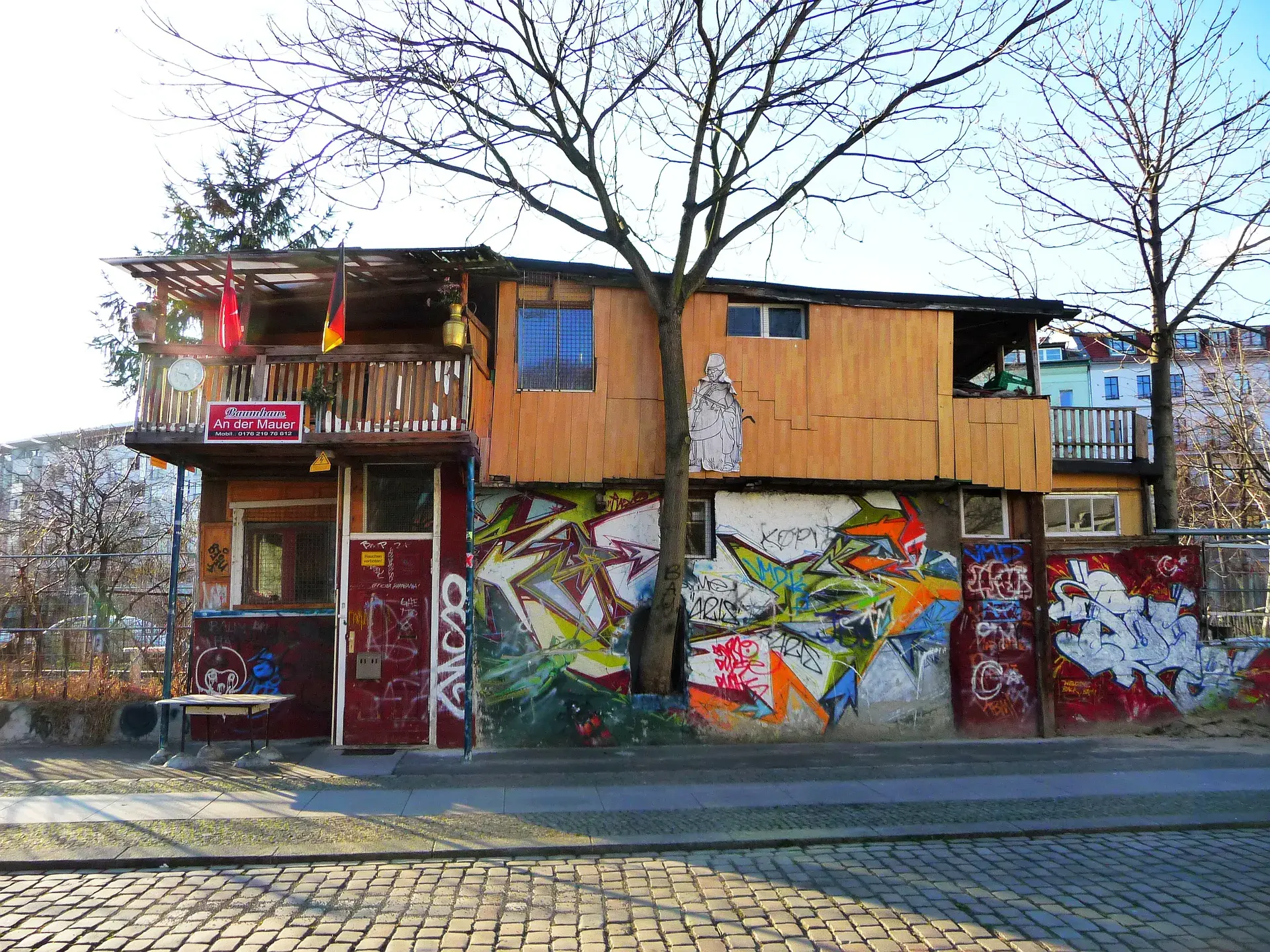
In the heart of Berlin's Kreuzberg district stands the Baumhaus an der Mauer, or Treehouse on the Wall, a quirky symbol of rebellion and resilience. This makeshift, two-story structure was built from scrap materials by Turkish immigrant Osman Kalin, beginning in 1983. It is a testament to individual creativity flourishing in the shadow of a divided city, a 'gecekondu' (a quickly built, unauthorized dwelling) that became a beloved landmark.
A Garden in No-Man's-Land
The story of the treehouse began in 1983 when Osman Kalin, who had moved to Berlin in 1980, decided to clean up a neglected triangular plot of land adjacent to the Berlin Wall. This small patch of ground had a unique status: it was officially East Berlin territory but was situated physically on the West Berlin side. This jurisdictional anomaly meant neither authority initially claimed responsibility for the rubbish-strewn space.
Kalin began cultivating a vegetable garden and built a small, single-story hut. His activities drew the attention of East German (GDR) border guards, who suspected he might be digging an escape tunnel. However, in a surprising turn, Kalin eventually received an official permit from the GDR's Central Committee of the SED to use the land, an act that inadvertently protected his project from West Berlin authorities.
Post-Wall Struggles and Community Support
After the fall of the Berlin Wall in 1989, the treehouse's existence was threatened. Kalin expanded the structure to two stories with a concrete foundation, but the Mitte district council, which now had jurisdiction, attempted to evict him. In a dramatic act of defiance, Kalin cemented his furniture to the floor to declare his refusal to leave.
His plight garnered significant local support. The adjacent St. Thomas Church provided crucial aid, presenting an old map from the 1780s to argue the land was historic church property. This public outcry led to the land being officially redrawn into the Kreuzberg district, which then issued Kalin a special permit to stay.
A Legacy of Resilience
The Baumhaus has endured significant hardship, surviving two separate arson attacks in 1991 and 2003, being rebuilt each time. Osman Kalin, often seen tending his garden, became a local icon. He passed away in April 2018, leaving the care of the treehouse and garden to his son, Mehmet Kalin.
Today, the Baumhaus an der Mauer remains a cherished landmark. It functions as a local attraction and a living monument to Berlin's history of division and reunification. Mehmet Kalin is actively working towards preserving his father's legacy by transforming the site into a museum or an official monument.
FAQ
Who built the Treehouse on the Wall in Berlin?
The Baumhaus an der Mauer was built by Osman Kalin, a Turkish migrant worker, starting in 1983. After his passing in 2018, his son, Mehmet Kalin, took over its maintenance.
Why was the Treehouse on the Wall allowed to be built?
It was constructed on a plot of land that was technically East Berlin territory but located on the West Berlin side of the Wall, creating a jurisdictional void. Osman Kalin eventually received an official permit from the East German government to cultivate the land.
What is the status of the Treehouse on the Wall today?
It is a cherished local landmark in Berlin's Kreuzberg district. The founder's son, Mehmet Kalin, maintains the site and is working to turn it into a museum to preserve its unique history.

More places in Berlin
berlin, germany
Beethoven-Haydn-Mozart Memorial
Beethoven-Haydn-Mozart Memorial
berlin, germany
Victims of the Berlin Wall Window of Remembrance
Victims of the Berlin Wall Window of Remembrance
berlin, germany
Denkmal Friedrich II. von Preußen