
East Side Gallery: Berlin's Monument to Freedom
The East Side Gallery is a permanent open-air gallery located on the longest surviving section of the Berlin Wall. Stretching for 1,316 meters, this historical monument features over 100 murals and stands as a powerful symbol of freedom, reunification, and artistic expression.
From Division to Expression
Following the fall of the Berlin Wall on November 9, 1989, artists David Monty and Heike Stephan initiated a project to transform a segment of the barrier. They received permission to use the eastern side of the Wall along Mühlenstraße—a surface previously kept stark and sterile by the East German regime to provide an unobstructed view for border guards. This section of the wall was primarily the 'Hinterlandmauer' or inner wall.
The gallery officially opened on September 28, 1990. The project, coordinated by Christine MacLean, involved 118 artists from 21 countries. Their work captured the political changes of the era, expressing both the joy of reunification and anxieties about the future.
Iconic Murals and Artists
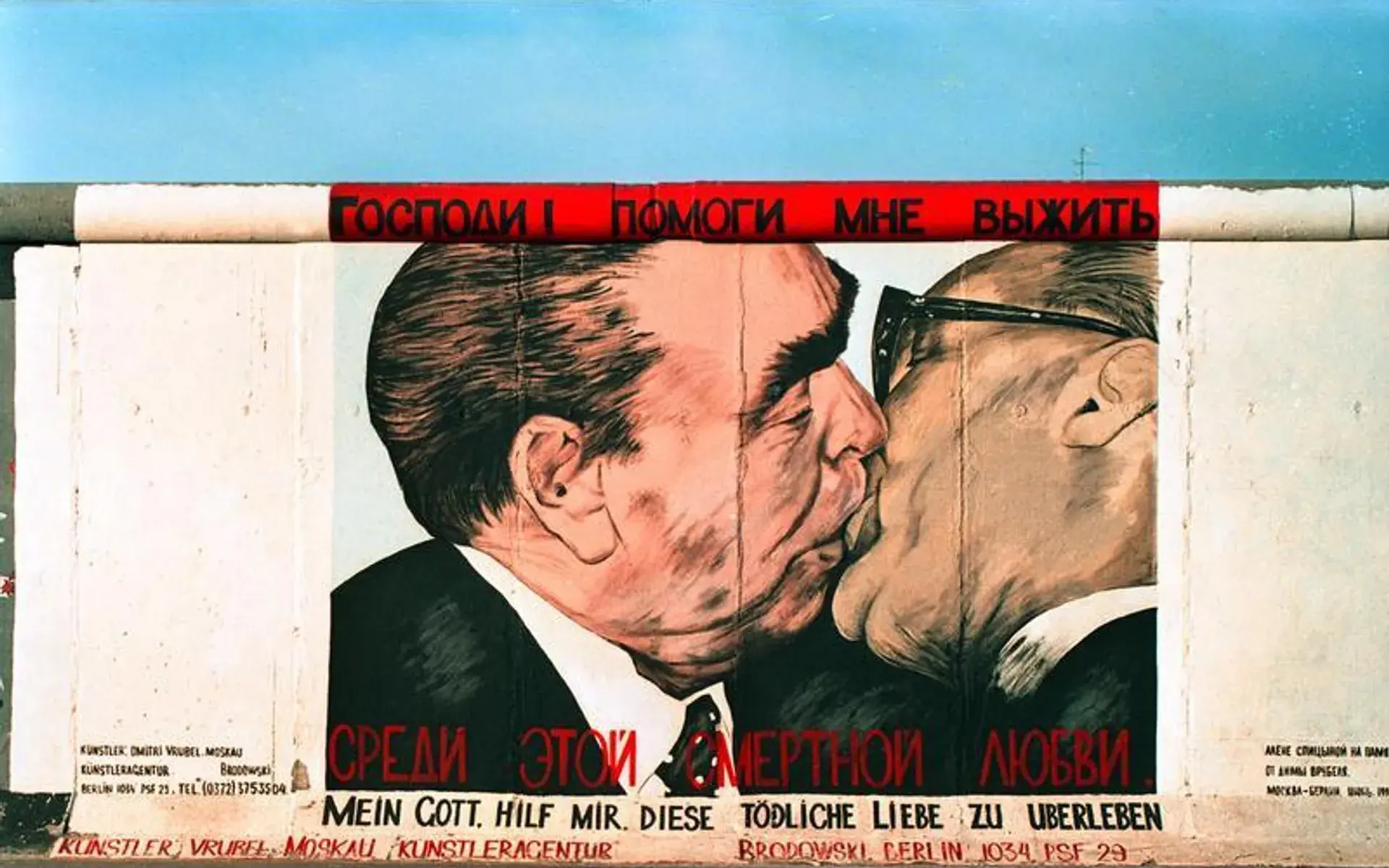
The gallery is renowned for several iconic works that have become symbols of Berlin itself. Dmitri Vrubel's "My God, Help Me to Survive This Deadly Love" famously depicts the 'fraternal kiss' between Soviet leader Leonid Brezhnev and East German leader Erich Honecker. Another well-known piece is Birgit Kinder's "Test the Rest," which shows a Trabant car breaking through the wall, symbolizing newfound freedom for East Germans.
Kani Alavi, an Iranian-born artist who painted "It Happened in November," later became a key advocate for the gallery's preservation as chairman of the Artists' Initiative East Side Gallery.
A Living Memorial Today
Attracting over three million visitors annually, the East Side Gallery is the world's longest open-air gallery. It was granted protected memorial status in November 1991, and since 2018, its preservation has been managed by the Berlin Wall Foundation. The site is now framed by modern urban development, including offices and luxury apartments, reflecting the ongoing transformation of the city.
As a stark reminder of its original purpose, the side of the Wall facing the Spree River is intentionally maintained as a blank white surface by monument conservation authorities.
Preservation and Authenticity
Over time, the original 1990 murals deteriorated significantly due to weather and vandalism. This led to a major restoration project in 2009, during which many of the artworks were repainted. Consequently, most of the murals visible today are not the originals but authorized reproductions.
This restoration was complex, as some of the original artists refused to participate, while others chose to alter their work when repainting it. The process highlights the ongoing challenges of preserving ephemeral street art on a historic monument.
FAQ
How long is the East Side Gallery?
The East Side Gallery is 1,316 meters (approximately 1.3 kilometers) long, making it the longest surviving section of the Berlin Wall.
When did the East Side Gallery open?
The open-air gallery officially opened on September 28, 1990, less than a year after the fall of the Berlin Wall.
Are the murals at the East Side Gallery the originals from 1990?
No, most of the murals seen today are not the originals. Due to significant deterioration, a major restoration took place in 2009 where many of the artworks were repainted.
Who is responsible for the East Side Gallery?
The East Side Gallery was granted protected memorial status in 1991. Since November 2018, the Stiftung Berliner Mauer (Berlin Wall Foundation) has been responsible for its preservation and management.

More places in Berlin
berlin, germany
Beethoven-Haydn-Mozart Memorial
Beethoven-Haydn-Mozart Memorial
berlin, germany
Victims of the Berlin Wall Window of Remembrance
Victims of the Berlin Wall Window of Remembrance
berlin, germany
Denkmal Friedrich II. von Preußen