
Köpiplatz 137: Berlin's Iconic Anarchist Squat
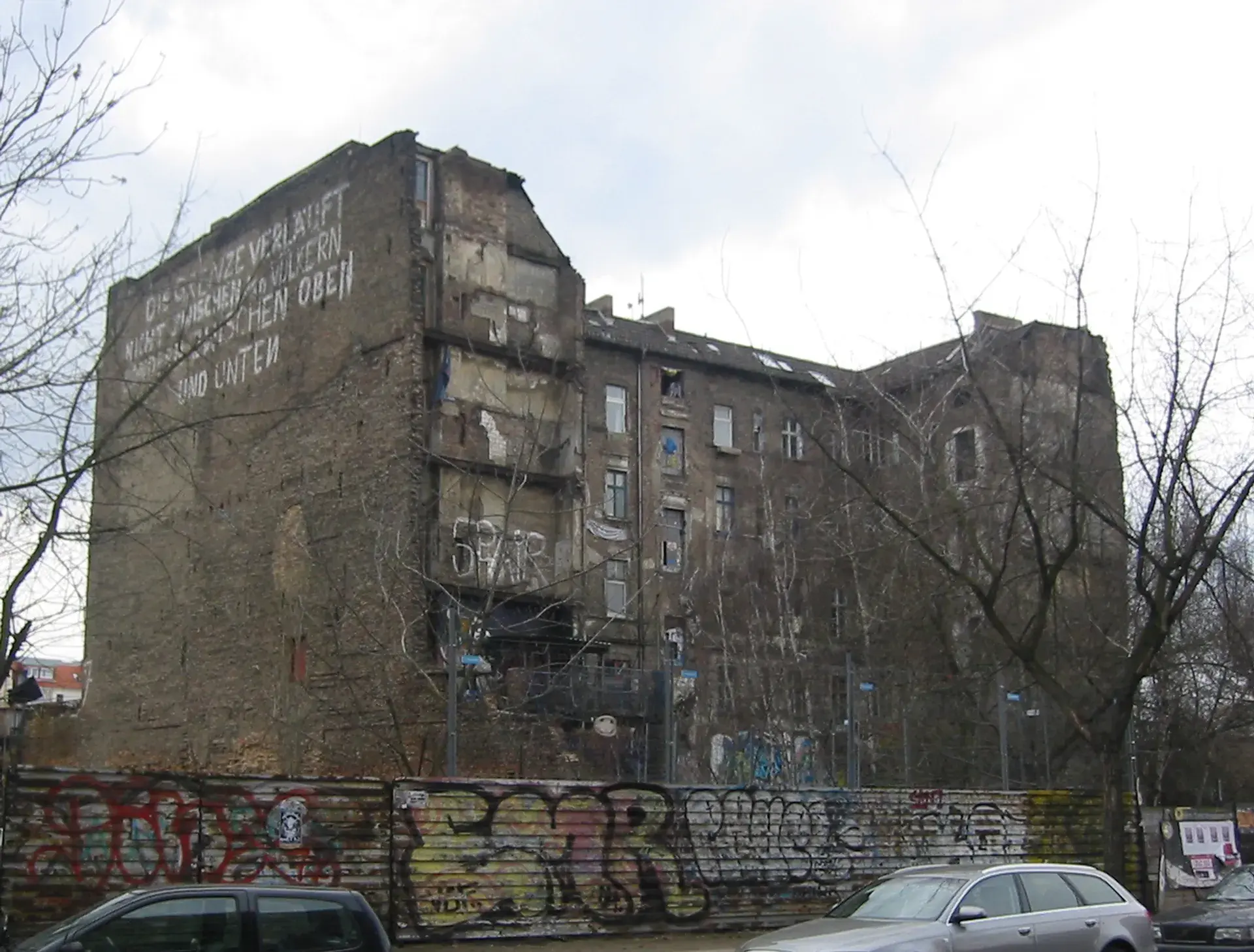
At 137 Köpenicker Straße in Berlin's Mitte district stands Köpiplatz 137, a five-story building whose fortified, graffiti-covered facade has become a potent symbol of the city's anti-establishment and counter-cultural movements. As one of Europe's most famous and enduring anarchist squats, Köpi represents a continuous struggle against gentrification and commercialization.
A History of Destruction and Reclamation
The building's story begins in 1905 with its construction as a Gründerzeit-style residence by a Jewish businessman. A dramatic turn occurred during World War II when the front half of the structure was destroyed by bombing. It was never rebuilt, meaning the iconic street-facing facade seen today is actually the original rear of the building. Under the German Democratic Republic, the building was used for sports activities.
By 1990, the building was vacant and scheduled for demolition. On February 23, 1990, shortly after the fall of the Berlin Wall, it was occupied by Autonomen (autonomous activists) from West Berlin, marking one of the first such squats in East Berlin. The occupation was successfully legalized with the district council in 1991, establishing Köpi as a self-managed social center and housing project.
A Hub for Autonomous Culture
Köpiplatz 137 operates as a vibrant cultural hub and autonomous living space. It is home to a diverse community of punks, anarchists, and activists who manage the project through weekly plenary meetings. The building houses a concert venue known for metal, punk, and rock music, a bar, a vegan café, a cinema called Video Pelikuloso, an infoshop, a gym, a printing workshop, and even a climbing wall. Its unique atmosphere attracts international visitors drawn to Berlin's alternative scene.
The Ongoing Battle for Survival
The history of Köpi is marked by persistent legal challenges and threats of eviction. The site has endured multiple forced auctions and conflicts with various owners. A significant development came in 2008 when residents, represented by attorney Moritz Heusinger, negotiated a 30-year lease, seemingly securing its future.
However, the struggle continues. In October 2021, the adjacent Wagenplatz, a mobile encampment for residents, was evicted in a massive police operation that sparked widespread protests. The main building itself faces renewed legal threats from its owner, Startezia GmbH, with residents actively campaigning under the slogan "Køpi bleibt" (Köpi stays).
FAQ
What is Köpiplatz 137?
Köpiplatz 137, also known as Köpi, is one of Berlin's oldest and most famous squatted buildings. It functions as an autonomous housing project and a self-managed social and cultural center in the Mitte district.
Why does the front of Köpiplatz 137 look like a fortress?
The building's current street-facing facade is actually the rear of the original structure. The front half was destroyed by bombing during World War II and was never rebuilt, leaving a physical scar that has been transformed into a canvas for street art and a symbol of resilience.
Is Köpiplatz 137 still active?
Yes, it remains an active housing project and cultural hub with a concert venue, bar, cinema, and other facilities. However, it faces ongoing legal challenges and eviction threats from property developers.
When was Köpiplatz 137 first occupied?
The building was squatted on February 23, 1990, by 'Autonomen' from West Berlin. This was a significant event, as it was one of the first times a building in East Berlin was occupied after the fall of the Berlin Wall.

More places in Berlin
berlin, germany
Beethoven-Haydn-Mozart Memorial
Beethoven-Haydn-Mozart Memorial
berlin, germany
Victims of the Berlin Wall Window of Remembrance
Victims of the Berlin Wall Window of Remembrance
berlin, germany
Denkmal Friedrich II. von Preußen