
SO36: History of Berlin's Legendary Punk Club
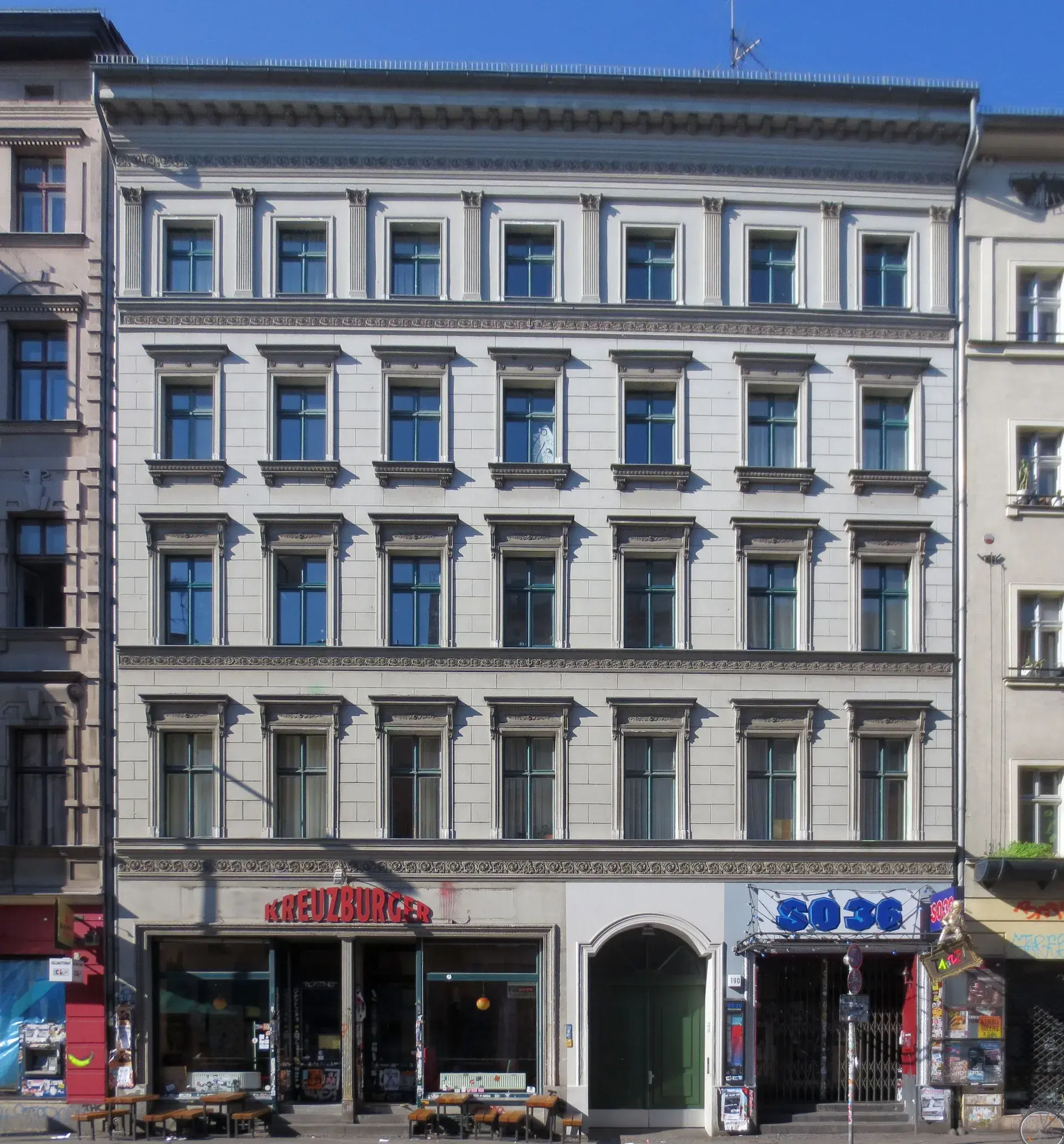
The SO36 music club on Oranienstraße is an icon of Berlin's counter-culture, lending its name to the surrounding area of Kreuzberg. The name itself derives from the historic postal code for this part of the city, 'Südost 36' (Southeast 36).
A Building with a Rebellious Past
The site occupied by SO36 has a long and varied history. Established as a beer garden and pub in 1861, it later became a cinema. After World War I, the cinema operated until it was burned out in 1966. In a surprising turn, the building housed a Penny's discount supermarket in the 1970s, which failed because local residents were reportedly too poor to shop there. This vacancy paved the way for its next chapter.
In the summer of 1978, three immigrant men leased the empty building and opened it as a concert space, tapping into the burgeoning squatters' movement in Kreuzberg. The club's identity was significantly shaped from 1979 by artist Martin Kippenberger, who fostered a crossover between punk, new wave, and visual arts.
The Heart of West Berlin's Underground
During the 1970s, West Berlin's Kreuzberg district, isolated by the nearby Berlin Wall, became a haven for left-wing and alternative societies. Its affordable living attracted artists, punks, and outsiders. SO36 quickly became the pivotal hub for the city's punk and New Wave movements, influencing the development of German genres like 'Neue Deutsche Welle' and 'Deutschpunk'.
Its reputation grew internationally, drawing comparisons to New York's famed CBGB. During their influential Berlin years from 1976 to 1978, David Bowie and Iggy Pop were known to frequent SO36, immersing themselves in the city's underground nightlife.
Closure, Squatting, and Rebirth
The club faced a major turning point in 1983 when it was forced to close due to bankruptcy and being structurally unsafe. The building was subsequently squatted by various alternative groups until police cleared it in 1987.
Following the fall of the Berlin Wall, SO36 was renovated and officially reopened in 1990. Under the management of Turkish businessman Hilal Kurutan, the club diversified its program. While steadfastly maintaining its punk roots, it began hosting Turkish weddings, gay nights, discos, and hip-hop events.
SO36 Today
Today, SO36 remains a highly active and influential venue on Oranienstraße. It continues its legacy as a center for Berlin's alternative music and counterculture, renowned for its inclusive and anti-discriminatory atmosphere. The programming is eclectic, featuring everything from punk concerts and electronic music to queer parties like Gayhane, roller discos, and literary readings. The club's gritty, graffiti-covered entrance and no-frills interior are a testament to its decades-long history as a bastion of rebellious spirit.
FAQ
Why is the area called SO36?
The area gets its name from the historic postal code 'Südost 36' (Southeast 36), which was used for this part of the Kreuzberg district in Berlin.
What was the SO36 building before it became a famous club?
The building has a long history. It was originally a beer garden and pub in 1861, later a cinema, and even briefly a Penny's discount supermarket in the 1970s before being transformed into a concert venue.
Were any famous musicians associated with SO36?
Yes, David Bowie and Iggy Pop were known to frequent SO36 during their time in Berlin between 1976 and 1978. The club was also managed by influential artist Martin Kippenberger in 1979.
Is SO36 still just a punk club?
While SO36 maintains its punk roots, it now offers a very diverse program. Its schedule includes electronic music, queer parties, roller discos, hip-hop, literary readings, and various community-focused events.

More places in Berlin
berlin, germany
Beethoven-Haydn-Mozart Memorial
Beethoven-Haydn-Mozart Memorial
berlin, germany
Victims of the Berlin Wall Window of Remembrance
Victims of the Berlin Wall Window of Remembrance
berlin, germany
Denkmal Friedrich II. von Preußen