
The Ghost of Blu's 'Pink Man' Mural in Berlin
On a building wall in Berlin's Kreuzberg district stands a stark, black void where iconic street art once thrived. This is the ghost of 'Pink Man,' a monumental mural by the anonymous Italian artist Blu, which was deliberately erased by its creator in a powerful act of protest.
The Iconic Kreuzberg Murals
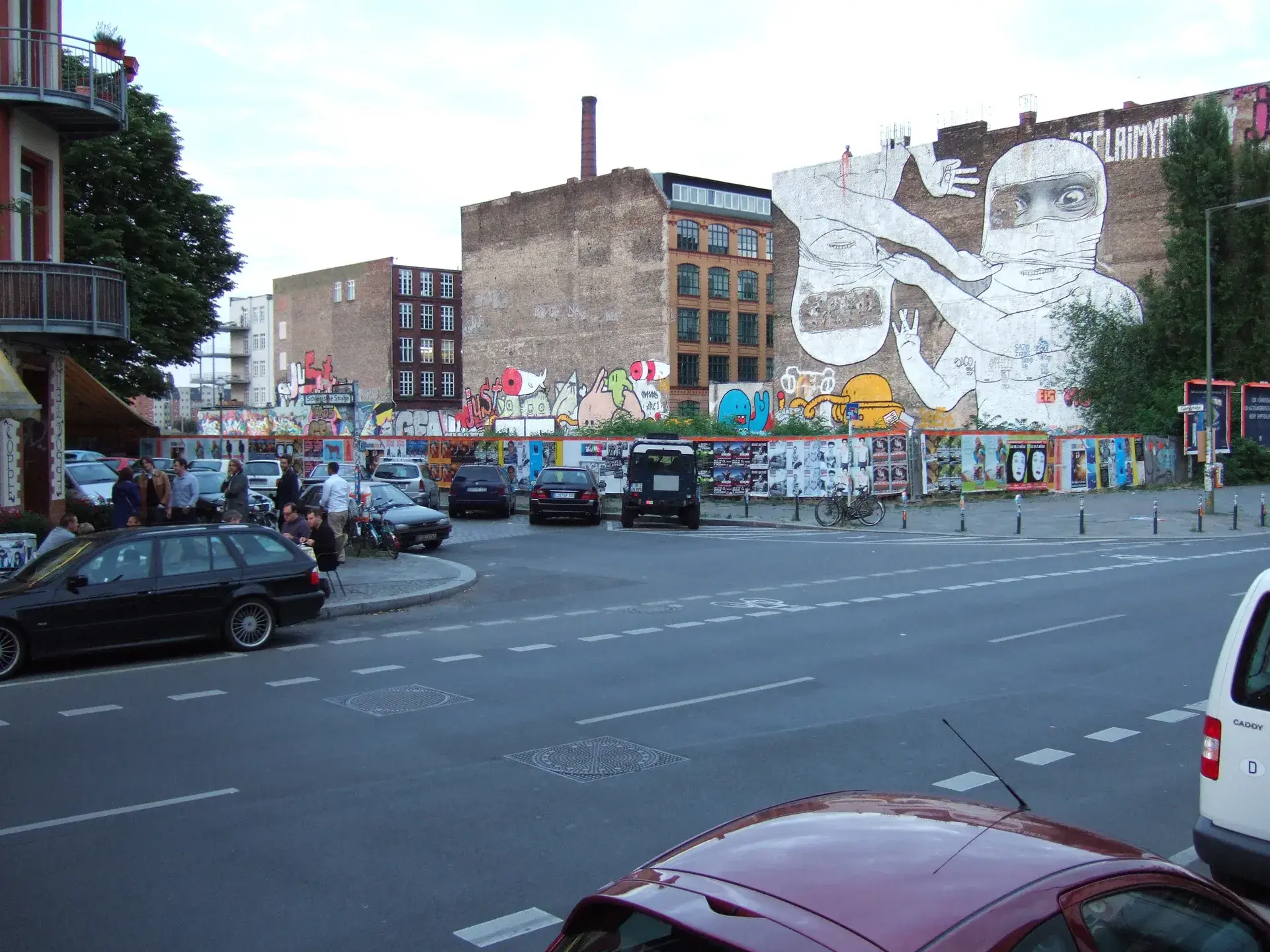
Between 2007 and 2008, Blu created three significant murals at Cuvrystraße, near the Oberbaum Bridge, that became symbols of Berlin's alternative, 'poor but sexy' identity. The most famous was 'Pink Man,' also known as 'Leviathan,' a five-story creature meticulously composed of hundreds of smaller, intertwined human figures.
Adjacent to it was a collaboration with French artist JR, showing two masked figures trying to unmask each other while making 'East' and 'West' gang signs. The third mural depicted a businessman with gold watches chained like handcuffs, a critique of capitalist greed. These works drew global attention, representing the city's rebellious spirit and creative energy.
An Act of Artistic Protest
As Berlin's popularity grew, the very counter-culture aesthetic that Blu's art represented began to fuel gentrification in Kreuzberg. The murals, with their anti-capitalist messages, were ironically exploited on greeting cards, book covers, and in the city's own marketing campaigns. The final straw was the planned development of luxury apartments on the plot of land facing the art.
In December 2014, Blu and his collaborators, including Lutz Henke, made a controversial decision. To prevent their art from being used to increase property values and displace the local community, they painted over all three murals with black paint. The act was a direct political statement against commercialization, asserting artistic integrity over capital gain.
A Final, Defiant Gesture
During the process of erasing the murals, the artists temporarily left one detail uncovered: a hand with its middle finger extended. This fleeting gesture was widely interpreted as Blu's final, defiant message to the property developers and the forces of gentrification transforming the neighborhood.
The Wall Today: A Deliberate Void
The murals are now gone, replaced by a solid black wall. The site at Falckensteinstraße 47/48 is no longer a destination for street art fans but a memorial to what was lost. The blank canvas serves as a deliberate void, a permanent commentary by the artist on the tension between art, urban development, and social change in modern Berlin.
FAQ
Why did the artist Blu destroy his own murals in Berlin?
Blu painted over his murals in December 2014 as a protest against the gentrification of Berlin's Kreuzberg district. He felt his anti-capitalist art was being commercially exploited to fuel the very urban development he opposed.
Can you still see the 'Pink Man' mural in Berlin?
No, the 'Pink Man' mural and two adjacent works by Blu were completely painted over with black paint by the artist in December 2014. The wall at Falckensteinstraße 47/48 is now a blank, black surface.
What did the 'Pink Man' mural look like?
The 'Pink Man', also called 'Leviathan', was a five-story tall mural depicting a monstrous creature. Upon closer inspection, the giant figure was intricately composed of hundreds of smaller, intertwined human figures.
Who is the artist Blu?
Blu is the pseudonym of an anonymous Italian street artist known for his large-scale, politically charged murals. He gained further notoriety for deliberately erasing his own iconic Berlin works as an act of protest.

More places in Berlin
berlin, germany
Beethoven-Haydn-Mozart Memorial
Beethoven-Haydn-Mozart Memorial
berlin, germany
Victims of the Berlin Wall Window of Remembrance
Victims of the Berlin Wall Window of Remembrance
berlin, germany
Denkmal Friedrich II. von Preußen