Blue Domed Churches of Oia: Santorini Guide
The Architectural Illusion of Oia's Blue Domes
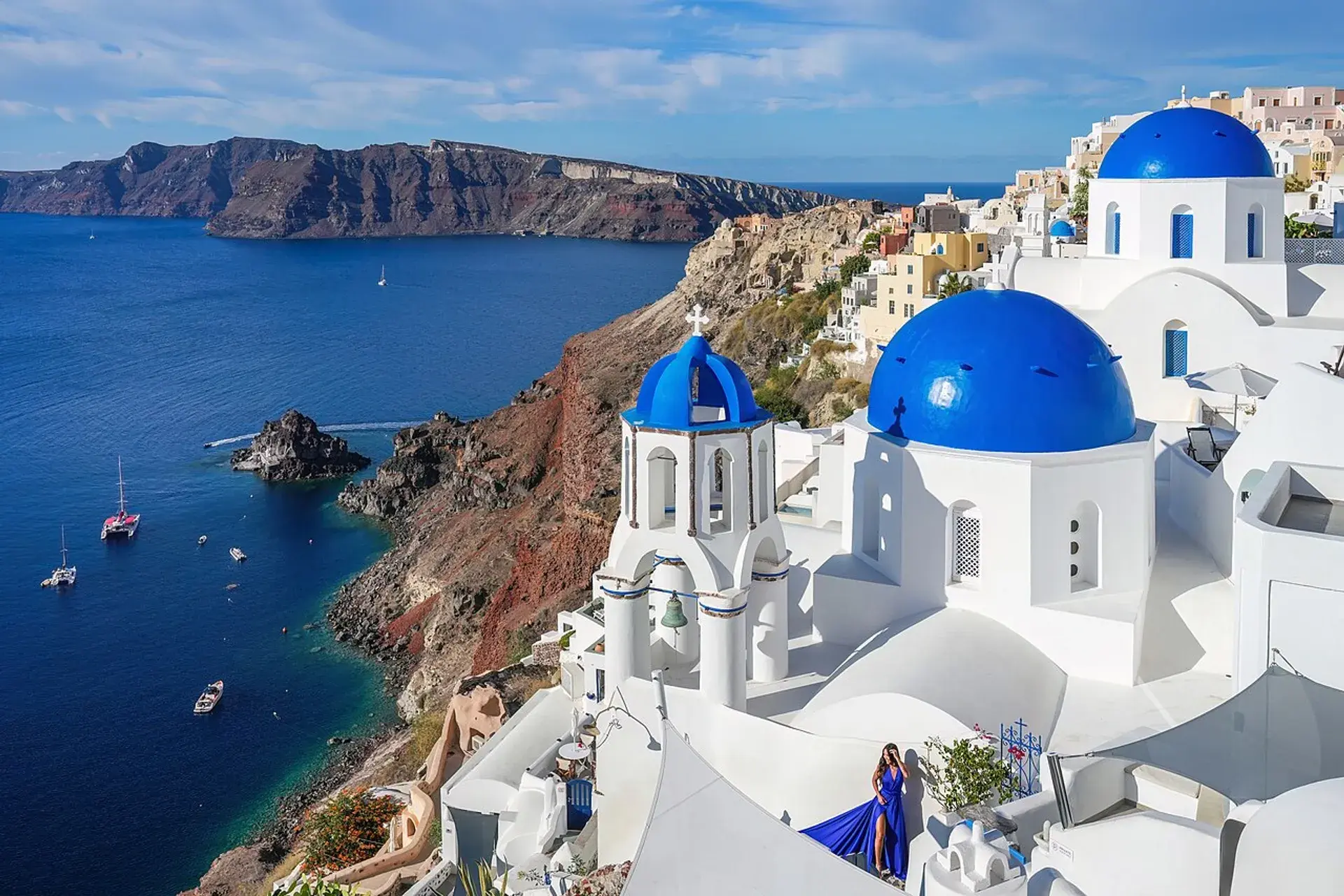
The globally recognized silhouette of Santorini's blue-domed church complex is an optical illusion. Rather than a single large cathedral, the classic postcard composition aligns two separate Greek Orthodox chapels—the Church of Panagia Anastasi and the Church of Agios Spyridon—along with an adjacent belfry. Built roughly 10 meters apart on staggered cliffside terraces, the buildings visually compress from public viewpoints to resemble a single unified compound.
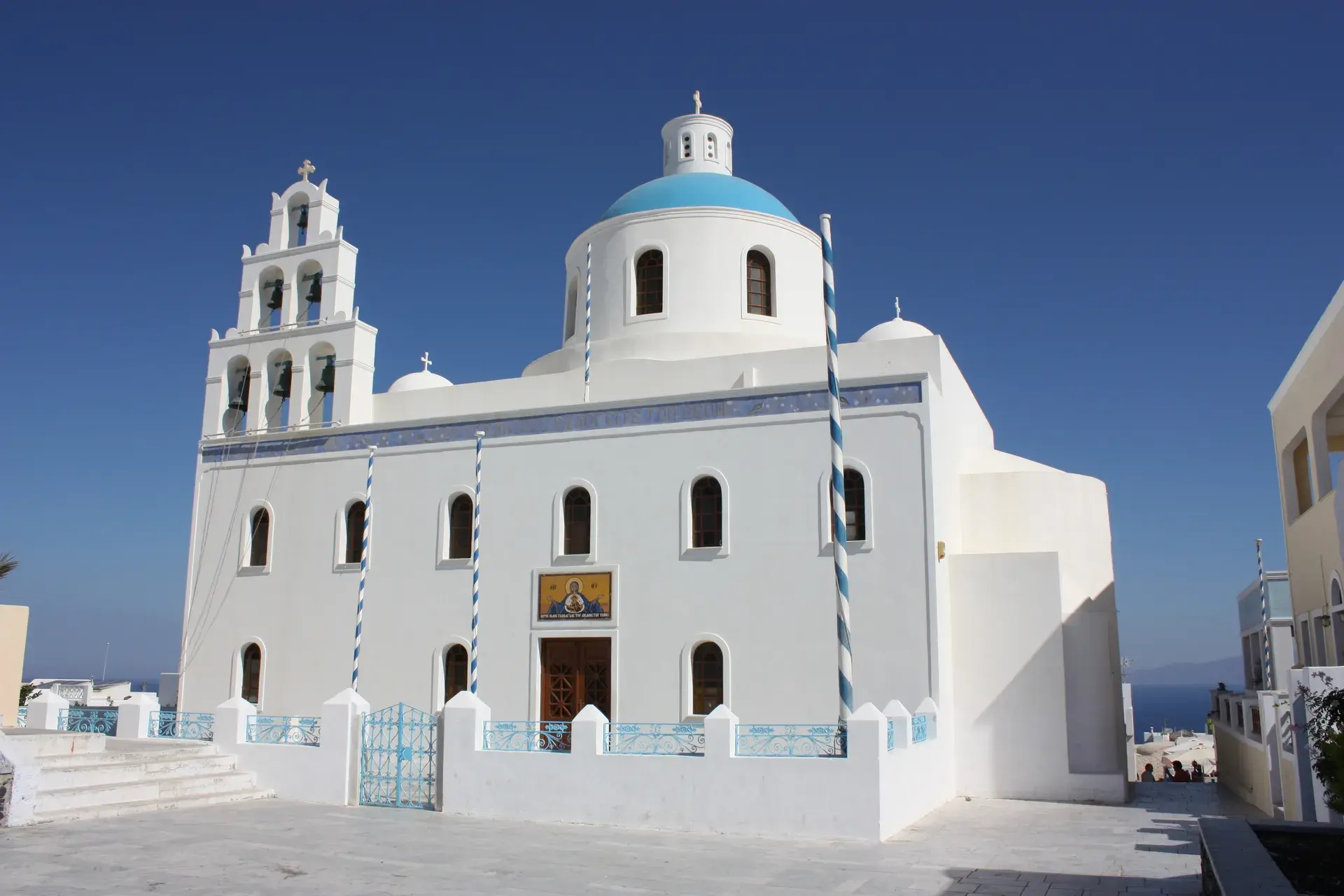
Panagia Anastasi, constructed in 1865, features a cobalt-blue hemispherical dome complemented by an ornate ochre-and-pink bellcote. Agios Spyridon, built two years later in 1867, features twin campaniles, one of which is topped by a small blue cupola. Because travel guides frequently apply generic labels like "The Blue Dome Church," these Oia landmarks are often conflated with other sites on the island, such as the Three Bells of Fira in Firostefani or Anastasi Church in Imerovigli.
Maritime Wealth and Island Heritage
Both chapels were constructed during the 1860s, a period when Oia flourished as a wealthy Aegean shipping and merchant trading center. Local seafaring families and affluent ship captains funded the chapels as votive offerings. Anastasi is dedicated to the Resurrection of Christ, while Agios Spyridon honors the patron saint and protector of mariners. These structures form part of Santorini's dense religious landscape, which encompasses more than 600 private and votive chapels scattered across the volcanic terrain.
On July 9, 1956, a magnitude 7.7 earthquake centered near Amorgos devastated much of Oia's cliffside architecture. Both chapels survived or were repaired during the village's subsequent rehabilitation, preserving their traditional 19th-century Cycladic masonry.
Cycladic Design and the Origin of the Palette
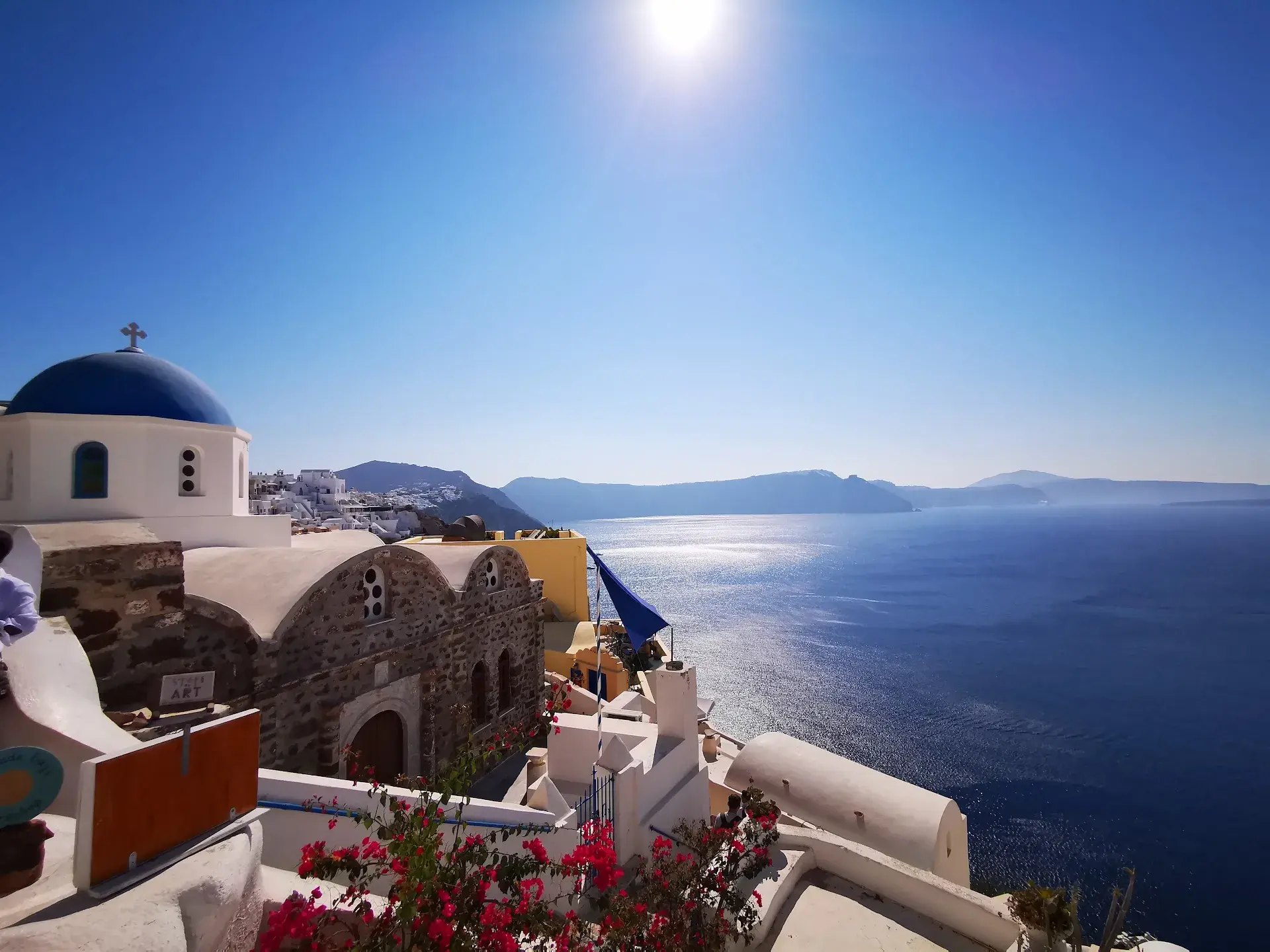
The chapels showcase traditional Cycladic forms, marked by barrel-vaulted roofs and whitewashed walls. Visually, the smooth cobalt domes create a stark contrast against the chalk-white lime plaster, the deep blue waters of the flooded caldera, and the dark reddish-black volcanic basalt forming the cliff face.
Santorini's signature blue-and-white color scheme is not an ancient standard. Lime whitewash was originally applied as a natural cooling technique and an antibacterial measure, which was codified across the island during a 1938 sanitation mandate. The vivid blue tint was traditionally produced using loulaki, an inexpensive laundry bluing agent. The uniform blue-and-white palette was later strictly enforced throughout the Aegean by the Greek military junta between 1967 and 1974 to reflect the colors of the national flag, eventually becoming an internationally recognized trademark of Greek island architecture.
Location and Access
Positioned on the caldera slope just seaward of the central pedestrian street, Nikolaou Nomikou, the chapels sit midway along the path connecting the main square of Panagia Platsani with the ruins of the Byzantine Castle.
Both sites remain consecrated, active houses of worship. Interior access is generally restricted to scheduled liturgies, religious ceremonies, and feast days. Surrounding stepped pathways, terraces, and rooftops are private property and are gated off to preserve the structures and protect local residential areas. The domes and campaniles are viewed and photographed from the designated public pedestrian thoroughfares above.
FAQ
Are the blue domes in Oia part of one church?
No. The famous vista captures two distinct 1860s chapels—Panagia Anastasi and Agios Spyridon—along with an adjacent bell tower, which appear aligned as a single compound from higher viewing points.
Can visitors enter Panagia Anastasi and Agios Spyridon?
Interior access is restricted because both buildings remain active consecrated chapels. They are typically open only during scheduled liturgies, feast days, and official religious ceremonies.
Why are Santorini's churches painted blue and white?
The white lime plaster was historically applied for cooling and antibacterial sanitation, while the blue was sourced from an affordable laundry agent called loulaki. The combination was later enforced Aegean-wide during the 1967–1974 Greek military junta to match the national flag.