Basilica di San Giacomo in Bellagio: History & Guide
A Romanesque Landmark in Upper Bellagio
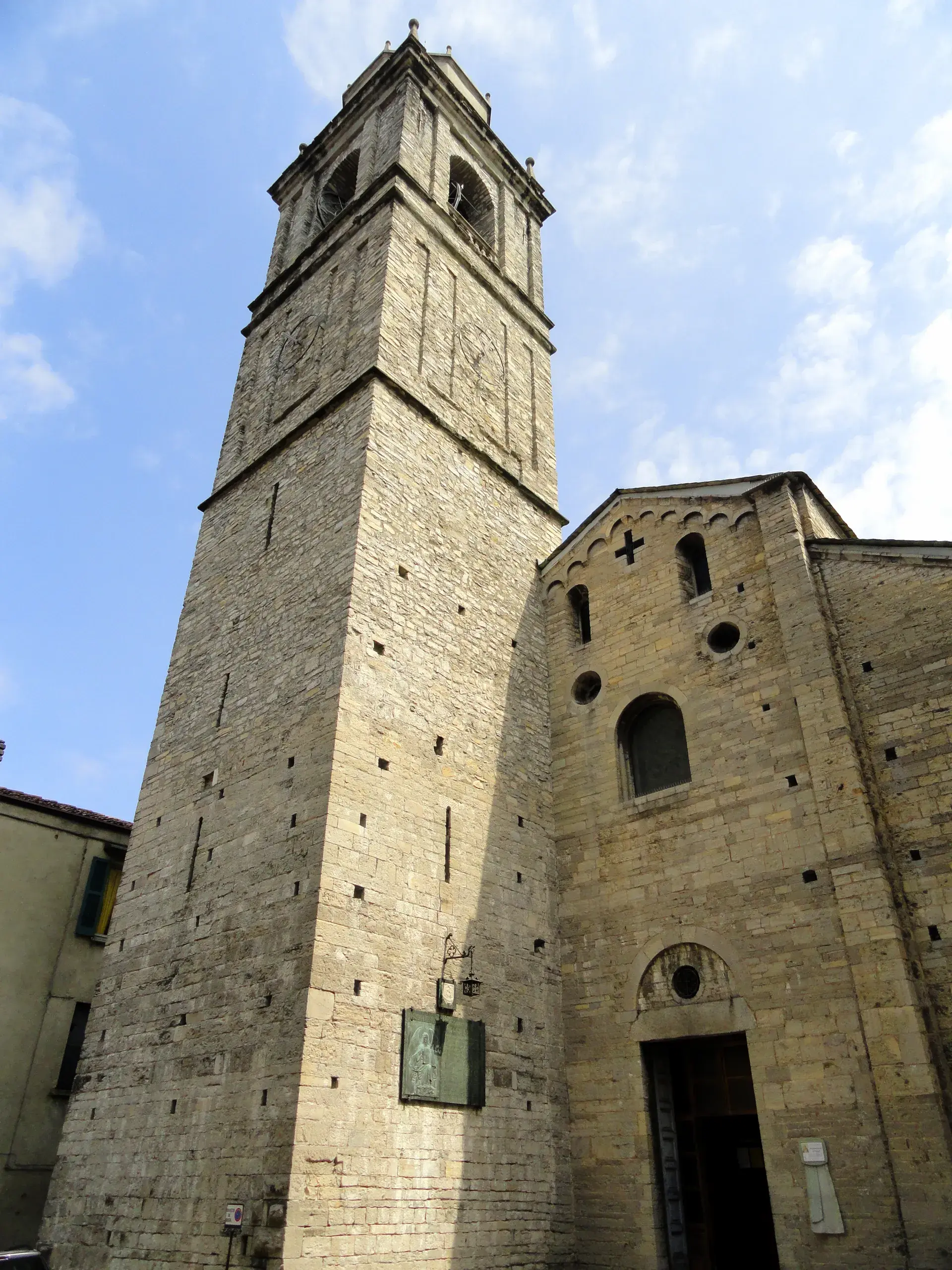
Presiding over Piazza della Chiesa in the upper Borgo of Bellagio, the Basilica di San Giacomo stands as the architectural crowning point of the town’s steep, stone-stepped stairways. Built in the Como-Lombard Romanesque style between the late 11th and early 12th centuries—traditionally dated between 1075 and 1125—the church was constructed by the Maestri Comacini, a renowned guild of regional stonemasons. Recognised for its historical and architectural significance, the basilica was designated an Italian National Monument in 1904.
From the outside, the church presents a severe, unadorned facade made from courses of dark grey Moltrasio limestone punctuated by narrow Romanesque slit windows. Inside, a rectangular three-nave floor plan terminates in three semicircular apses, organized beneath rounded stone arches and heavy pillars.
Glacial Stone and Interior Architecture
One of the most notable geological details of the basilica lies within its structural supports. The capitals and bases of the interior columns were not carved from bedrock quarried on site. Instead, the medieval masons fashioned them from granodiorite and granite glacial erratics—large boulders carried down from the central Alps during ancient ice ages and left scattered across the hills surrounding Lake Como.
Stepping through the church's single stone portal into the dim nave reveals a cool atmosphere and an immediate acoustic hush that contrasts with the bustling, sunlit lanes outside.
Centuries of Fortification and Transformation
Constructed during an era of commercial growth for Bellagio, the basilica was originally integrated into the settlement's medieval defensive perimeter. The lower portion of the current bell tower reuses the thick stone masonry of an ancient defensive watchtower. Later additions crowned the tower with an 18th-century lantern housing five bells cast in the towns of Sondrio and Grosio.
In 1657, under the patronage of the ruling Sfondrati family, the church attained prepositural parish status and underwent a sweeping Baroque transformation. The exterior and interior surfaces were covered in heavy decorative plaster, concealing the original medieval character. In the early 20th century, conservators carried out an extensive restoration that stripped away the Baroque layers, excavated the original floor level, and recovered the Romanesque masonry visible today.
Sacred Art and Religious Heritage
The interior houses several important religious works, notably a 16th-century panel painting of the Deposition of Christ in the left nave, attributed to the workshop of Umbrian painter Pietro Perugino. The basilica also preserves a 17th-century Spanish-Baroque polychrome wooden sculpture of the Dead Christ (Cristo Morto), which remains an active devotional object brought out each year for traditional Good Friday processions.
Today, the Basilica di San Giacomo remains an active prepositural parish within the Roman Catholic Diocese of Como, holding regular masses and religious services while remaining open daily to visitors exploring the historic center of Bellagio.
FAQ
When was the Basilica di San Giacomo built?
The basilica was built between the late 11th and early 12th centuries, traditionally dated from 1075 to 1125, by the Maestri Comacini stonemasons guild.
What makes the interior columns unique?
The column bases and capitals were carved directly from Alpine glacial erratic boulders of granite and granodiorite found in the Lake Como hills, rather than from quarried bedrock.
Why was the church restored in the 20th century?
During the 17th century, the basilica was remodeled in the Baroque style and covered in plaster. An early 20th-century restoration reversed these alterations to expose the original Romanesque stonework and excavate the medieval floor level.