Catedral de Mérida: Oldest Mainland Cathedral
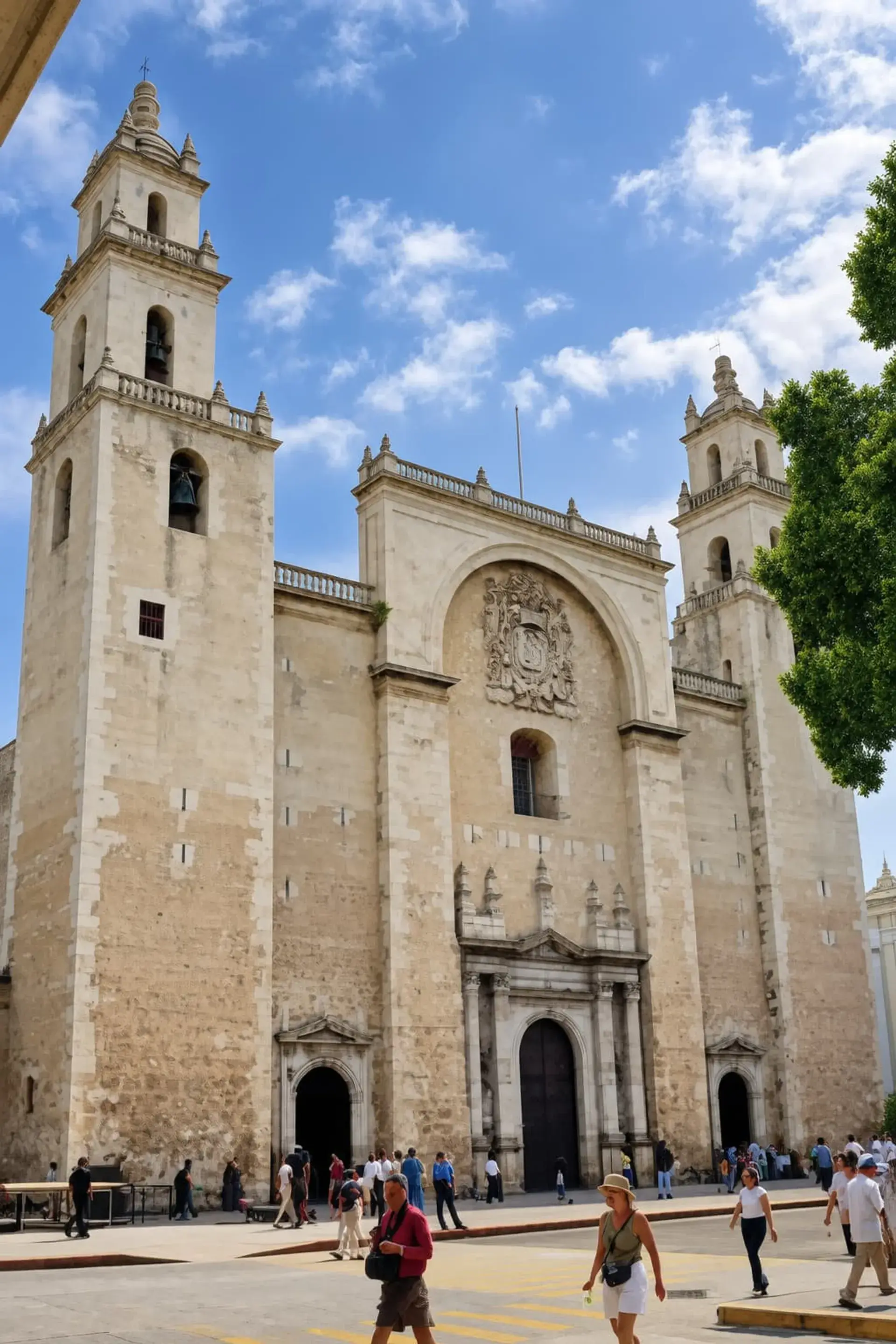
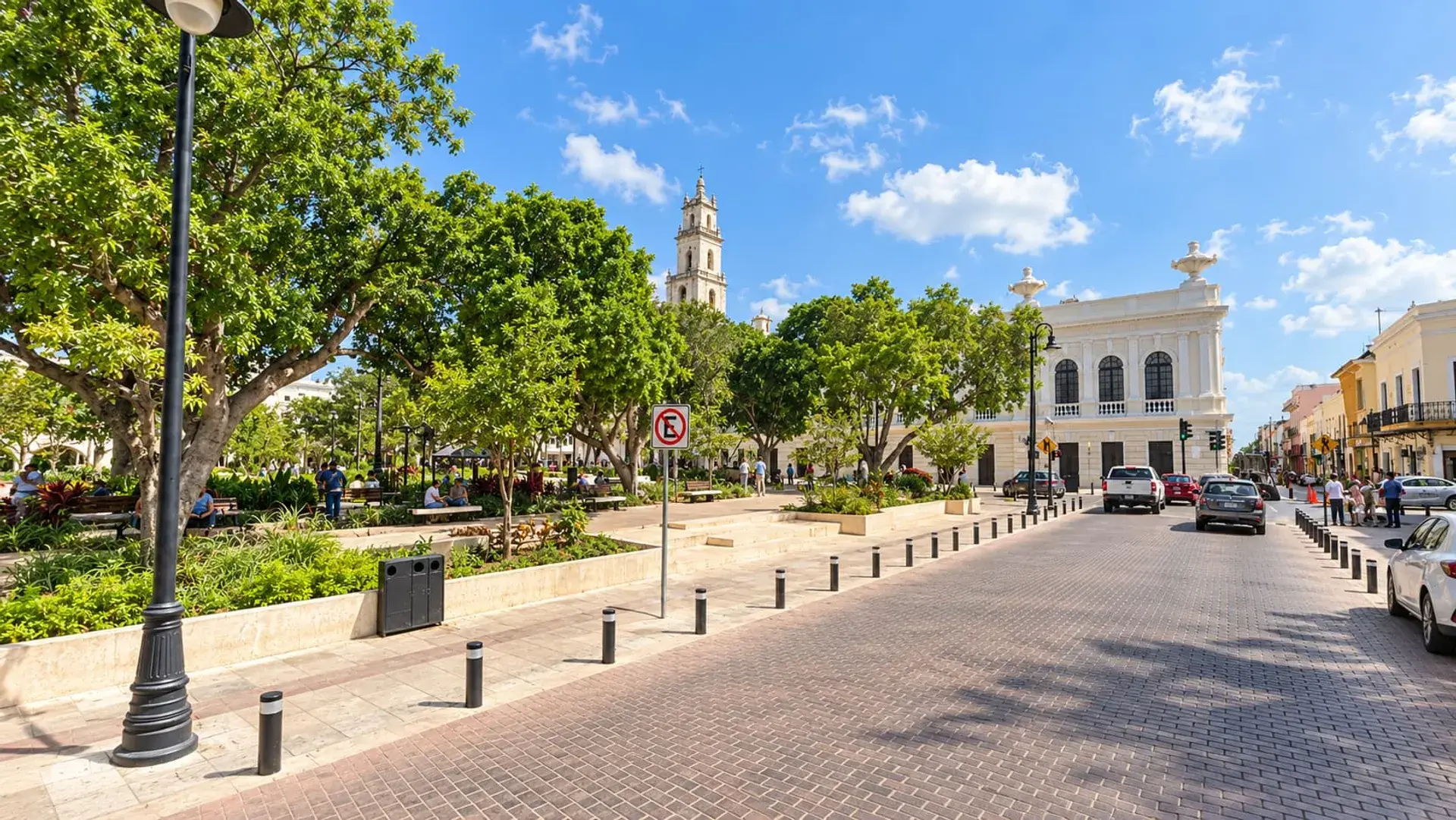
Built directly from the dismantled pyramids of an ancient Maya city, the Catedral de Mérida stands as an imposing fortress of early colonial power. Anchoring the east side of the Plaza Grande, it is the monumental centerpiece of Mérida's founding square. Dedicated to Saint Ildefonsus of Toledo, it holds the distinction of being the oldest cathedral completed on the continental mainland of the Americas.
A Cathedral Built from Maya Pyramids
Following the 1542 foundation of Mérida on the ruins of the ancient Maya city of T'hó, the cathedral was constructed between 1561 and 1598. The structure was built directly over ancient temple foundations using reclaimed cut limestone blocks from dismantled Maya pyramids.
Builders intentionally placed many carved Maya temple stones face inward into the mortar to conceal indigenous iconography. Despite this deliberate concealment, some subtle pre-Hispanic markings remain discernible in the masonry today.
Fortress-Like Renaissance Architecture
Designed primarily by master builder Pedro de Aulestia and completed by architects Juan Miguel de Agüero and Gregorio de la Torre, the cathedral features a Spanish Renaissance and Herrerian style. Its austere massing and narrow window slits were deliberately designed to project authority and double as a secure stronghold during early colonial conflicts.
The exterior features twin towers reaching 43.5 meters high. The central entrance, known as the Puerta del Perdón (Gate of Forgiveness), is flanked by stone statues of Saint Peter and Saint Paul, which are the only human religious figures sculpted directly onto the exterior.
Revolution Scars and Interior Art
The cathedral has endured significant historical turbulence. A visible impact mark from a 1915 revolutionary cannon or gunfire remains preserved on the exterior entrance doors. During this period of the Mexican Revolution, troops under General Salvador Alvarado ransacked the interior, resulting in the burning and total loss of its original baroque wood altarpieces and historical furnishings.
Today, the thick limestone walls and soaring 22-meter-high Moorish-style vaulted stone ceilings create a noticeably cool and echoey refuge from Mérida’s intense tropical midday heat.
The high altar now features the 6.65-meter-tall "Cristo de la Unidad" (Christ of Unity). Carved from birchwood in 1967 by Spanish sculptor Ramón Lapayese, the crucifix symbolizes reconciliation between Maya and Spanish heritage.
The Legend of Cristo de las Ampollas
A side chapel inside the cathedral houses the venerated "Cristo de las Ampollas" (Christ of the Blisters). Local religious tradition dictates that the original image was carved from a tree that glowed in lightning without charring. It miraculously survived a 1651 church blaze in Ichmul, leaving blister-like marks on the wood before it was brought to Mérida.
Ongoing Spiritual Significance
The Catedral de Mérida continues to serve as the active ecclesiastical seat of the Roman Catholic Archdiocese of Yucatán. The landmark is open daily to the public for worship, masses, and cultural visits.
FAQ
When was the Catedral de Mérida built?
The Catedral de Mérida was constructed between 1561 and 1598, making it the oldest completed cathedral on the continental mainland of the Americas.
What is the architectural style of the Catedral de Mérida?
The cathedral was designed in a Spanish Renaissance and Herrerian style with Moorish-style vaulted stonework. Its austere, fortress-like appearance was meant to serve as a secure stronghold during colonial times.
What is the Cristo de la Unidad?
The Cristo de la Unidad is a 6.65-meter-tall birchwood crucifix located on the cathedral's high altar. Carved in 1967 by Ramón Lapayese, it symbolizes reconciliation between the region's Maya and Spanish heritage.
Is the Catedral de Mérida still an active church?
Yes, it serves as the active seat of the Roman Catholic Archdiocese of Yucatán and is open daily to the public for masses, worship, and cultural visits.