Parque de Santa Lucía: Mérida's Historic Musical Hub
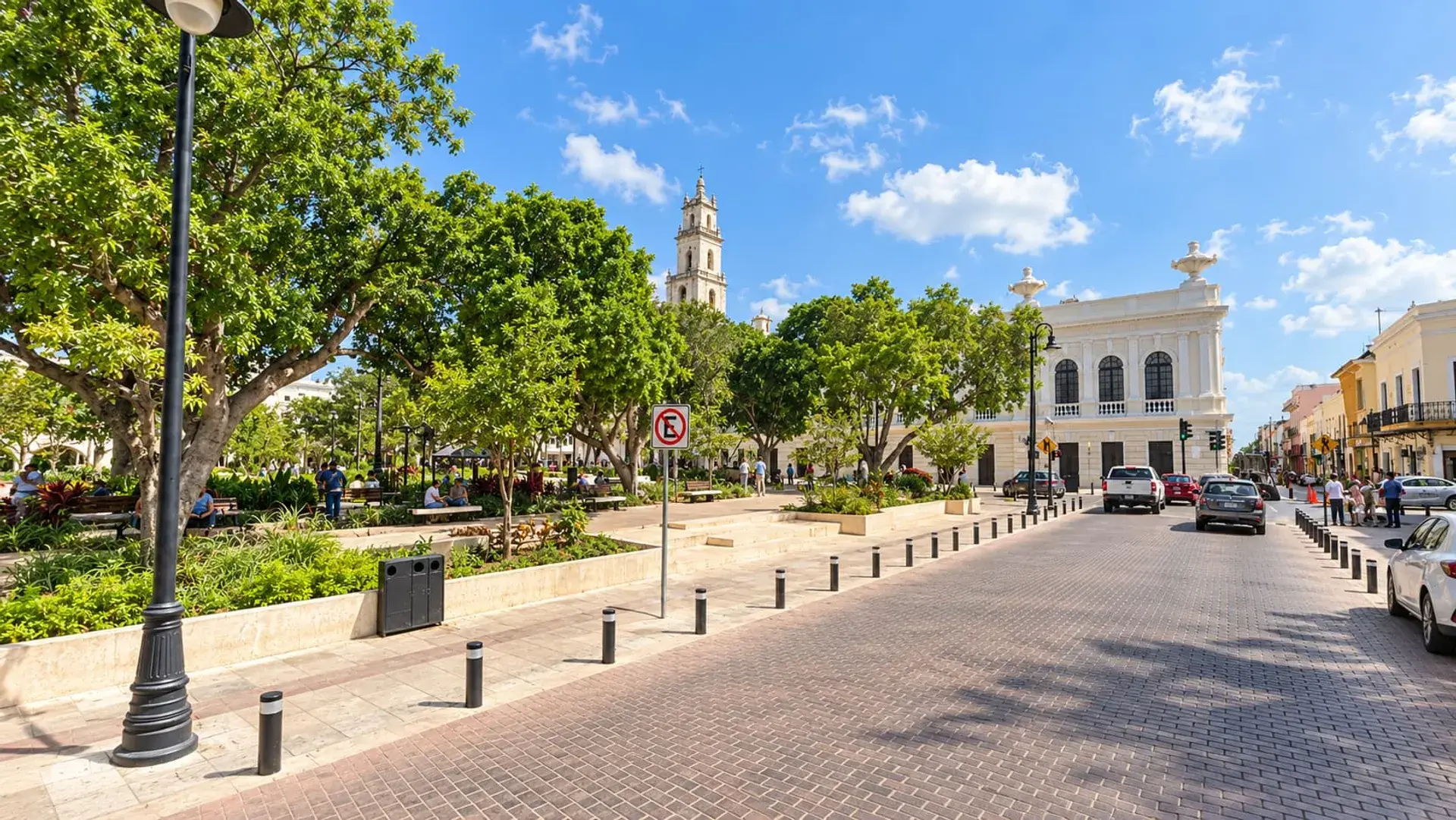
Beneath the lively restaurant terraces and the stage of Mérida's most famous musical serenade lies the soil of the city's segregated colonial cemetery. Positioned at the intersection of Calle 60 and Calle 55, Parque de Santa Lucía serves as a pedestrian connector between the 16th-century Plaza Grande to the south and the 19th-century Paseo de Montejo to the north. Today, the park embodies Mérida's transition from a strictly divided colonial grid into a unified public gathering space.
Colonial Origins and Segregation
Laid out during the founding of Mérida in 1542, Parque de Santa Lucía is one of the city's two oldest public squares. Spanish authorities originally designated this plot on the northern edge of the colonial core for Mérida's enslaved and free Black and Afro-descendant populations. Because this segregated community was barred from worshiping in the main cathedral, encomendero Pedro García built a chapel dedicated to Saint Lucy in 1575. For centuries, the church atrium and surrounding grounds operated as the city's primary municipal cemetery until 19th-century public health reforms ended intra-urban burials.
A 19th-Century Transformation
Governor Benito Pérez Valdelomar ordered the creation of a formal public square on the site in 1804 to beautify the city. The space was officially inaugurated in 1878, featuring brick pavers and the arched stone colonnade that still frames the plaza. In 1887, a central broken-column obelisk was erected in honor of Colonel Sebastián Molas. Following the installation of this memorial, the square was historically renamed Parque de los Héroes, though the public universally continued to call it Parque de Santa Lucía.
Architecture and Landmarks
The park is distinguished by the deep reddish-ochre facade of the Iglesia de Santa Lucía, which contrasts with the white limestone arches of the colonnade. Scattered throughout the plaza are traditional white "sillas confidentes," also known as lovers' chairs. These iconic S-shaped benches were designed so two people could sit face-to-face and converse without physical contact. The square also features a monumental, super-sized version of these chairs, which serves as a prominent photographic landmark.
The Home of the Serenata Yucateca
In 1965, the city established the weekly Serenata Yucateca, cementing Parque de Santa Lucía as the definitive open-air home of regional folklore. Every Thursday evening, acoustic guitar chords and three-part vocal harmonies echo off the stone arches. The free performances feature a live regional orchestra, traditional trova trios, and the clacking heels of jarana folk dancers dressed in traditional Yucatecan attire. Today, the square operates as a primary dining and nightlife hub, where visitors and locals gather at terrace tables spilling out beneath the illuminated colonnade.
FAQ
When does the Serenata Yucateca take place at Parque de Santa Lucía?
The Serenata Yucateca is held every Thursday evening. It is a free public performance featuring a live regional orchestra, traditional trova trios, poetry declamation, and jarana folk dancers.
What is the history beneath Parque de Santa Lucía?
Beneath the paved plaza and dining terraces lies the soil of Mérida's early colonial municipal cemetery. The area was originally designated in 1542 for the city's segregated Black and Afro-descendant populations.
What are the unique white chairs in Parque de Santa Lucía?
The square features "sillas confidentes" (lovers' chairs), which are iconic S-shaped benches designed so two people can sit face-to-face without physical contact. The park includes a monumental, super-sized version of these chairs.