Museum of the City of Skopje: 1963 Earthquake Memorial
A Frozen Clock at 5:17 AM
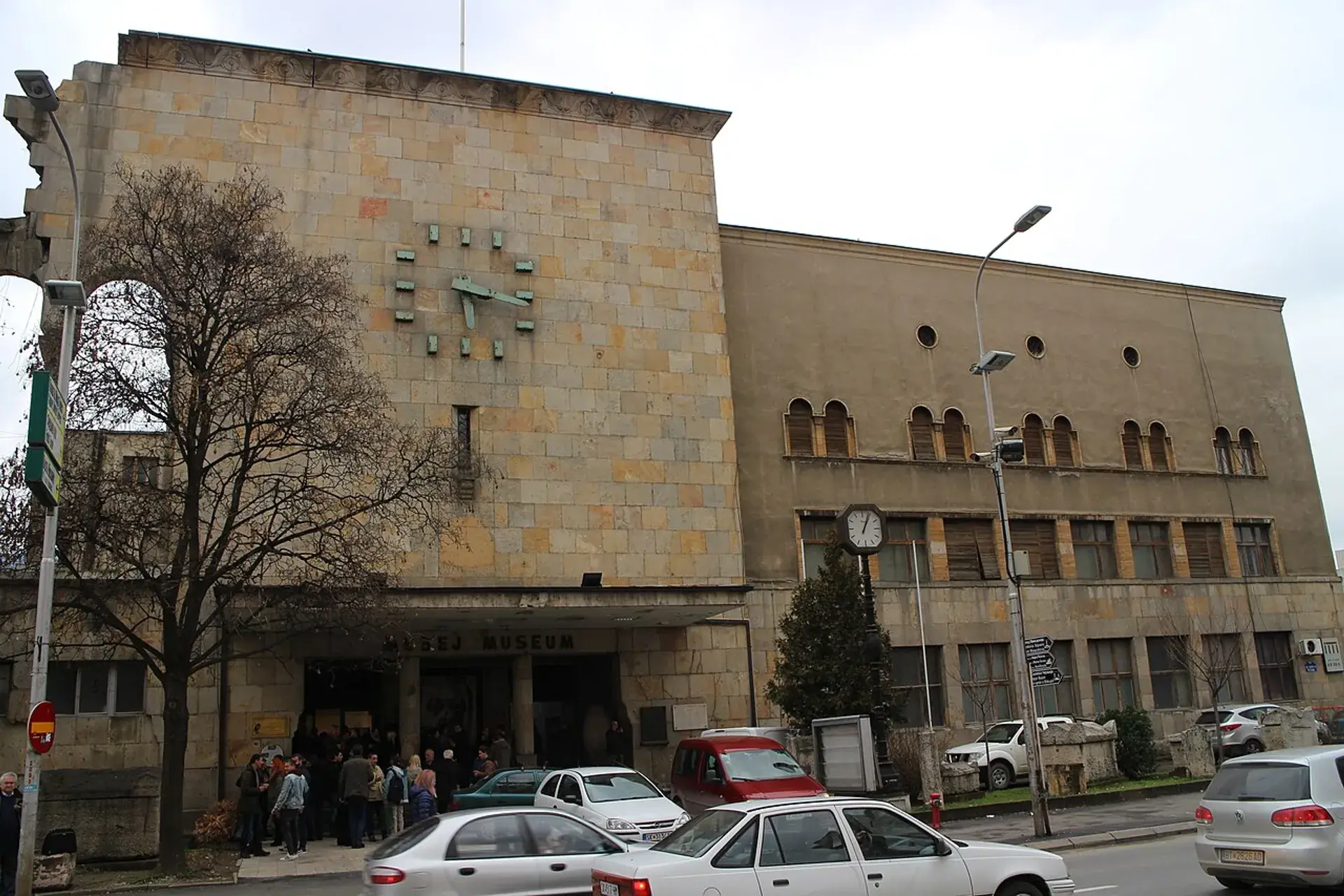
A black-and-white clock frozen at exactly 5:17 AM marks the moment Skopje's history was permanently fractured. Anchoring the southern end of Macedonia Street, the Old Railway Station stands as central Skopje's primary public monument to the devastating July 26, 1963 earthquake. Today, the surviving western wing of this historical structure houses the Museum of the City of Skopje, representing the pivotal dividing line between the city's pre-1963 historical identity and its post-disaster modernist reconstruction.
The 1963 Skopje Earthquake
Designed by architect Velimir Gavrilovic in an interwar modernist style, the station was constructed between 1938 and 1940 to replace an older 1873 rail terminal. On the morning of July 26, 1963, a magnitude 6.1 earthquake struck the city. Lasting just 17 to 20 seconds, the disaster killed over 1,070 people, injured thousands, and left more than 200,000 residents homeless as roughly 80 percent of the city was destroyed.
The earthquake sheared away approximately two-thirds of the station, including the entire eastern wing. The massive impact stopped the main clock mechanism on the central facade at the precise minute the quake began. Rather than demolishing the damaged complex, authorities deliberately retained the fractured facade and the remaining western wing in their ruined state. A stark visual contrast remains today between the structured surviving architecture and the raw, abrupt concrete fractures where the eastern side collapsed.
From International Transit to City Museum
Prior to its destruction, the station was considered one of the most modern transit terminals in the Balkans, handling major international rail lines that included the Orient Express. In 1970, the Museum of the City of Skopje, originally established in 1949, formally relocated into the preserved station building.
The municipal museum now offers approximately 2,000 square meters of exhibition space. The collections span local history from prehistory to the present, featuring extensive archaeological, historical, ethnological, and art history artifacts.
The City of International Solidarity
Inside, the museum houses a permanent memorial exhibition dedicated to the 1963 disaster. The exhibits feature historical photographs, personal records, and urban reconstruction archives, notably including Japanese architect Kenzo Tange's master plan for rebuilding the city.
Following the destruction, international relief efforts brought aid from over 70 countries across Cold War divisions. This unprecedented global cooperation earned Skopje the moniker City of International Solidarity. The trauma of the event deeply influenced the local culture; decades after the disaster, residential real estate listings in Skopje still routinely specify a building's level of earthquake resistance.
FAQ
Why is the clock on the Museum of the City of Skopje stopped at 5:17?
The clock is permanently frozen at 5:17 AM, the exact moment a devastating magnitude 6.1 earthquake struck Skopje on July 26, 1963. The impact sheared away the eastern wing of the building and stopped the main clock mechanism.
What was the Museum of the City of Skopje building before the 1963 earthquake?
Before the earthquake, the building functioned as the city's main railway terminal. Constructed between 1938 and 1940, it was considered one of the most modern transit hubs in the Balkans and serviced major international routes, including the Orient Express.
What exhibits are inside the Museum of the City of Skopje?
The museum features 2,000 square meters of exhibition space holding archaeological, historical, ethnological, and art history collections. It also houses a permanent memorial exhibition on the 1963 earthquake, displaying personal records, historical photographs, and archives of the city's master reconstruction plan by architect Kenzo Tange.