St. Michael's Chapel in Košice: History & Facts
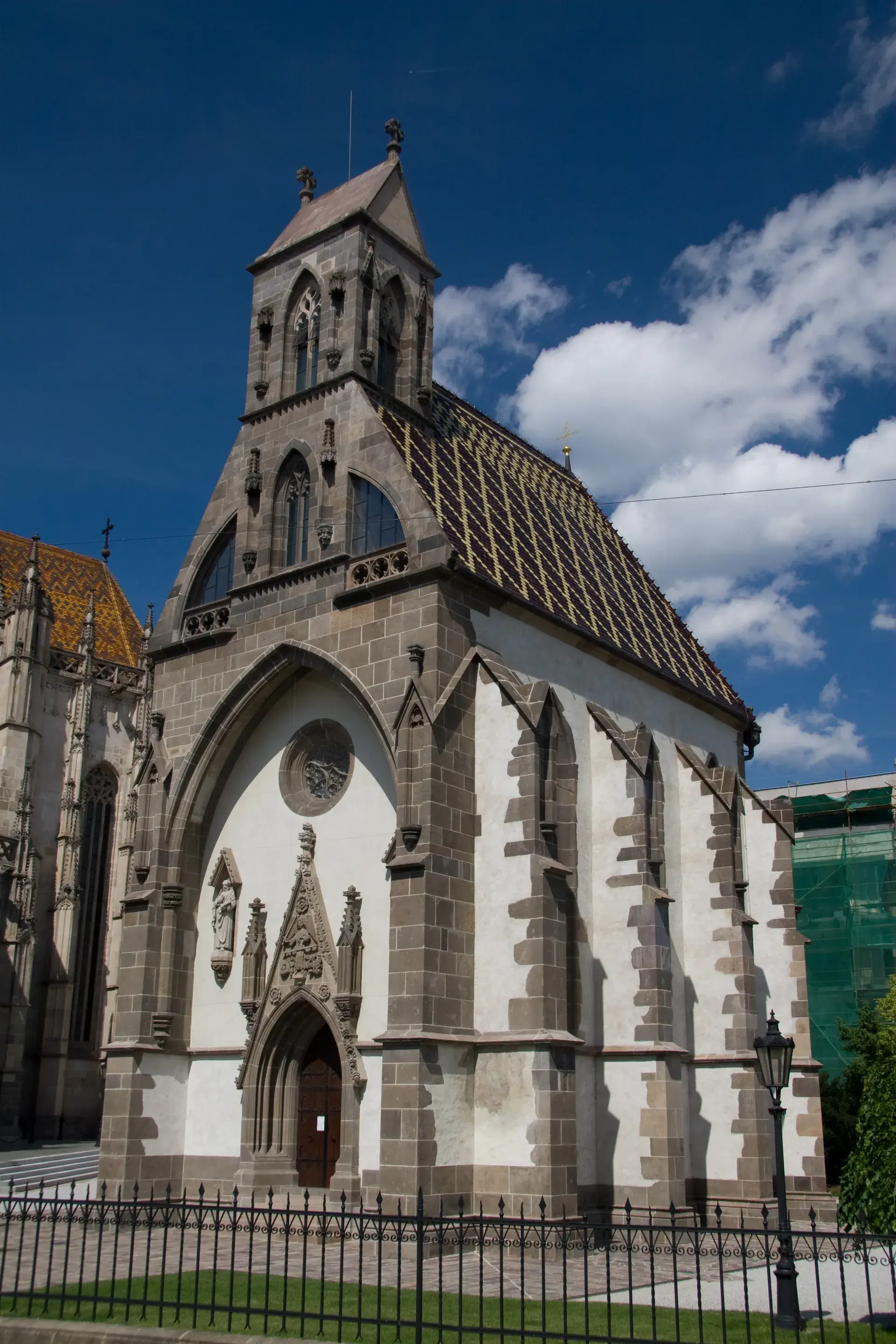
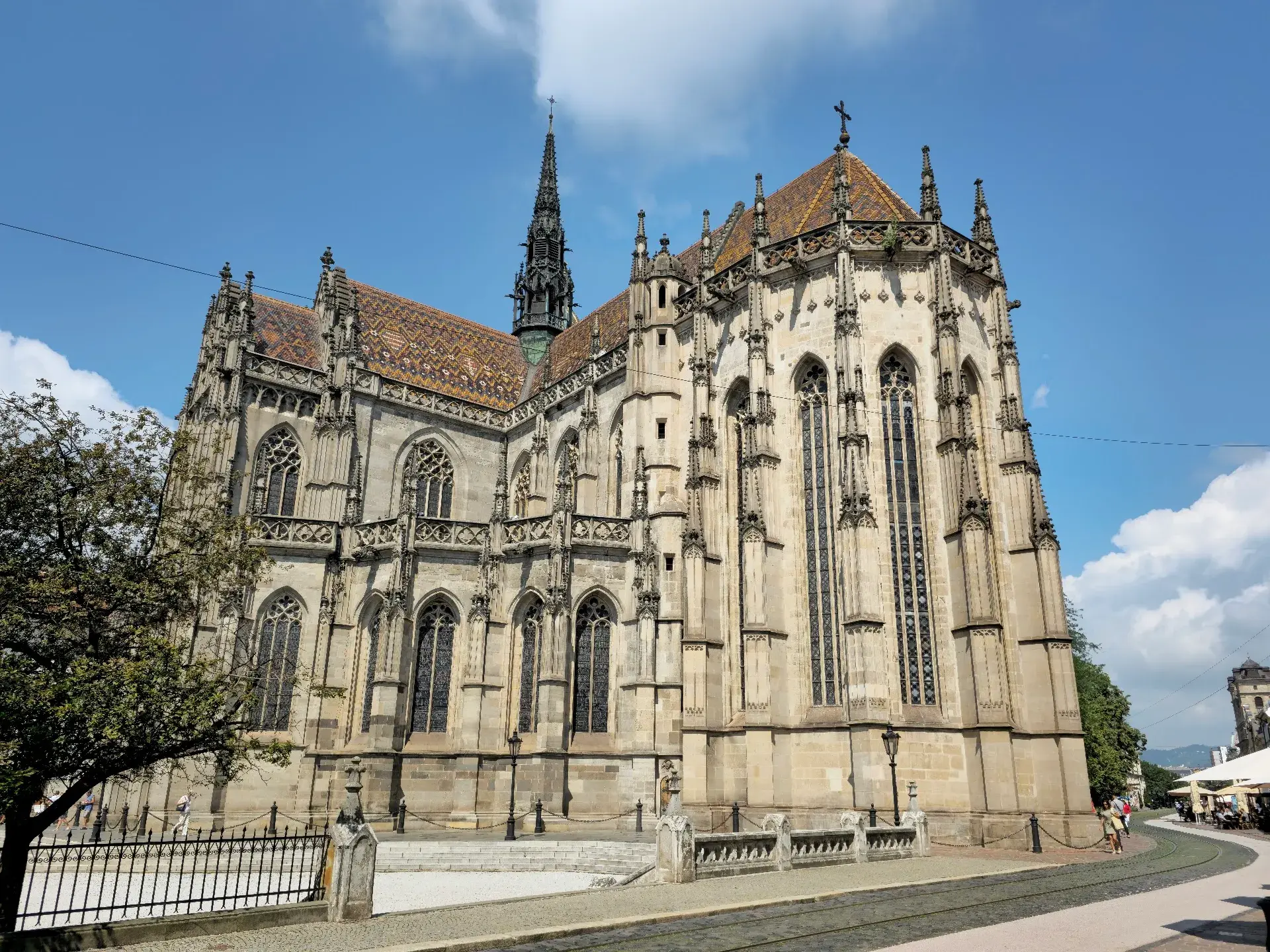
Before Košice's central park was a place for leisurely strolls, it was a crowded medieval cemetery where a 14th-century chapel guarded the remains of the dead. Located on Hlavná ulica directly south of St. Elizabeth's Cathedral, St. Michael's Chapel—officially reclassified as St. Michael Church in 2006—is the second-oldest standing building in the city. Built between 1340 and 1380, the structure offers a vivid glimpse into early urban burial practices.
Medieval Origins and Mortuary Design
Constructed within Košice's fortified medieval walls, the chapel was originally designed as a mortuary facility for the town's central cemetery. It operated on two distinct levels. The upper floor was reserved for funeral rites and prayers for the deceased, while the subterranean level functioned as an ossuary. This underground space was used to store human bones that were exhumed when cemetery plots had to be reused.
The building displays classic Gothic architectural elements, including a single-nave design, pointed traceried windows, cross-rib vaulting, stepped outer buttresses, and an embedded western tower. Above the entrance portal, a stone tympanum relief depicts the chapel's patron, Archangel Michael, weighing souls. The detailed carving portrays a saved soul as a child on one scale, while damned souls are guarded by a goat-like demon on the other.
A History of War, Fire, and Division
The chapel has survived significant historical turmoil. It endured Polish-Lithuanian artillery fire in the 15th century and sustained severe damage during the great Košice fire of 1556. During the 17th century, the building gained a distinct cultural role when it became known as the "Slovak church." It hosted Catholic masses in the Slovak language, accommodating local worshippers while the adjacent cathedral served the city's German and Hungarian parishioners.
In 1771, town center burials were banned for sanitary reasons. The surrounding churchyard was subsequently cleared and eventually converted into a public park.
Gothic Restorations and Preserved Artifacts
Between 1902 and 1904, architect Ottó Sztehlo led a Gothic purist restoration of the site. As part of the project, a 16th-century northern aisle was demolished to restore the building's original medieval footprint. To preserve the history of the former burial ground, 17 rescued medieval and early modern gravestones were embedded directly into the chapel's exterior masonry. The rough texture of these historic stone markers creates a striking visual contrast with the smooth stone walls, pointed Gothic arches, and surrounding greenery.
Inside the chapel, another piece of history is mounted above the sacristy doorway. The artifact is Košice's oldest surviving municipal coat of arms. Granted in 1369 by King Louis I of Anjou, it is recognized as the earliest recorded municipal coat of arms granted to any European town.
Modern Use and Local Legends
Following extensive reconstructions between 1998 and 2006, the building was re-consecrated as an active Roman Catholic church. It remains open to local worshippers and tourists who wish to view the Gothic interior and the historical underground ossuary.
Despite its current status as a cultural monument, local superstitions persist. According to local tradition, the multi-layered burial ground created a negative energy zone on the chapel's southern exterior. It is widely considered a bad omen for couples to walk past this section together, as the legend claims it inevitably leads to arguments and breakups.
FAQ
What was the original purpose of St. Michael's Chapel?
Built between 1340 and 1380, the chapel served as a mortuary facility for Košice's central cemetery. The upper floor was used for funeral rites, while the subterranean level was an ossuary for storing exhumed bones.
Why are there gravestones in the exterior walls of the chapel?
During a restoration project between 1902 and 1904, architect Ottó Sztehlo embedded 17 medieval and early modern gravestones into the chapel's exterior masonry to protect them from destruction after the surrounding cemetery was cleared.
What historical artifact is inside St. Michael's Chapel?
Mounted above the sacristy doorway is Košice's oldest surviving municipal coat of arms, granted in 1369 by King Louis I of Anjou. It is the earliest recorded municipal coat of arms granted to any European town.
Is St. Michael's Chapel still active?
Yes, following modern reconstruction from 1998 to 2006, the building was officially reclassified as St. Michael Church and functions as an active Roman Catholic church within the Archdiocese of Košice.