The Peace Bridge Derry: History, Design & Crossing
Connecting Derry Across the River Foyle
The Peace Bridge is a self-anchored, cable-supported pedestrian and cycle crossing spanning the River Foyle in Derry/Londonderry. Officially opened on 25 June 2011, it links the historic Cityside near Guildhall Square to Ebrington Square and St Columb's Park on the Waterside. Built at a cost of roughly £14 to £14.7 million, the bridge was largely financed through the European Union's SEUPB PEACE III Programme, alongside contributions from Northern Irish and Irish government departments.
Representing Derry's third crossing over the River Foyle—following the 1933 Craigavon Bridge and the 1984 Foyle Bridge—the Peace Bridge is the first dedicated solely to active, non-motorised transit. In addition to crossing the tidal waters of the river, its eastern approach extends directly over active railway tracks that connect to Derry's Waterside train station.
Architectural Design and the Structural Handshake
Designed by WilkinsonEyre Architects in collaboration with engineering firm AECOM, the bridge features a unique curved layout. Rather than following a direct line, it traces an S-curve supported by two 36-metre-tall inclined steel pylons that lean in opposite directions from piers embedded in the river. At mid-river, the structural cables and walkways overlap, an arrangement conceptualised as a physical handshake across the water.
The main river span of the bridge is approximately 235 metres long, reaching a total structural length of up to 312 metres. Its deck width ranges between 3.5 and 4.5 metres, with integrated bench seating along the pathway allowing pedestrians to pause over the water. The exposed path over the tidal river subjects visitors to prominent river breezes and the sound of currents below, all undisturbed by motor traffic.
Regeneration and Symbolic Significance
Historically, the River Foyle functioned as both a physical barrier and a line of communal separation during decades of conflict, dividing the predominantly nationalist Cityside from the predominantly unionist Waterside. On the east bank, Ebrington Barracks served as an enclosed British military base and star fort for more than 160 years until its decommissioning in 2003 under the Peace Process.
To integrate the former military site into civilian life, the Ilex urban regeneration company championed the bridge project. The construction process faced notable challenges, including a period during the harsh winter of 2010–2011 when heavy snow and river ice halted construction for nearly three weeks. Following its completion, the crossing became recognized as an enduring civic symbol of the Good Friday Agreement era.
Current Civic Use
Operating 24 hours a day, the Peace Bridge acts as a primary thoroughfare connecting transit links, the historic 17th-century walled city, and modern cultural hubs. Millions of crossings have taken place since its opening.
The eastern landing at Ebrington Square serves as a major venue for outdoor concerts, markets, exhibitions, and public events, with the Peace Bridge functioning as the central pedestrian corridor carrying visitors to and from the heart of the city.
FAQ
When did the Peace Bridge open?
The bridge was officially opened on 25 June 2011.
Who designed the Peace Bridge?
It was designed by WilkinsonEyre Architects in partnership with the engineering firm AECOM.
What is the meaning behind the bridge's design?
The bridge features an S-curve with two 36-metre-tall steel pylons leaning in opposite directions. The cables and paths overlap mid-river to create an intentional 'structural handshake' across the historically divided banks of the River Foyle.
What historical site sits at the eastern end of the Peace Bridge?
The eastern approach leads to Ebrington Square, previously the site of Ebrington Barracks, an enclosed British military base and star fort used for over 160 years until its decommissioning in 2003.
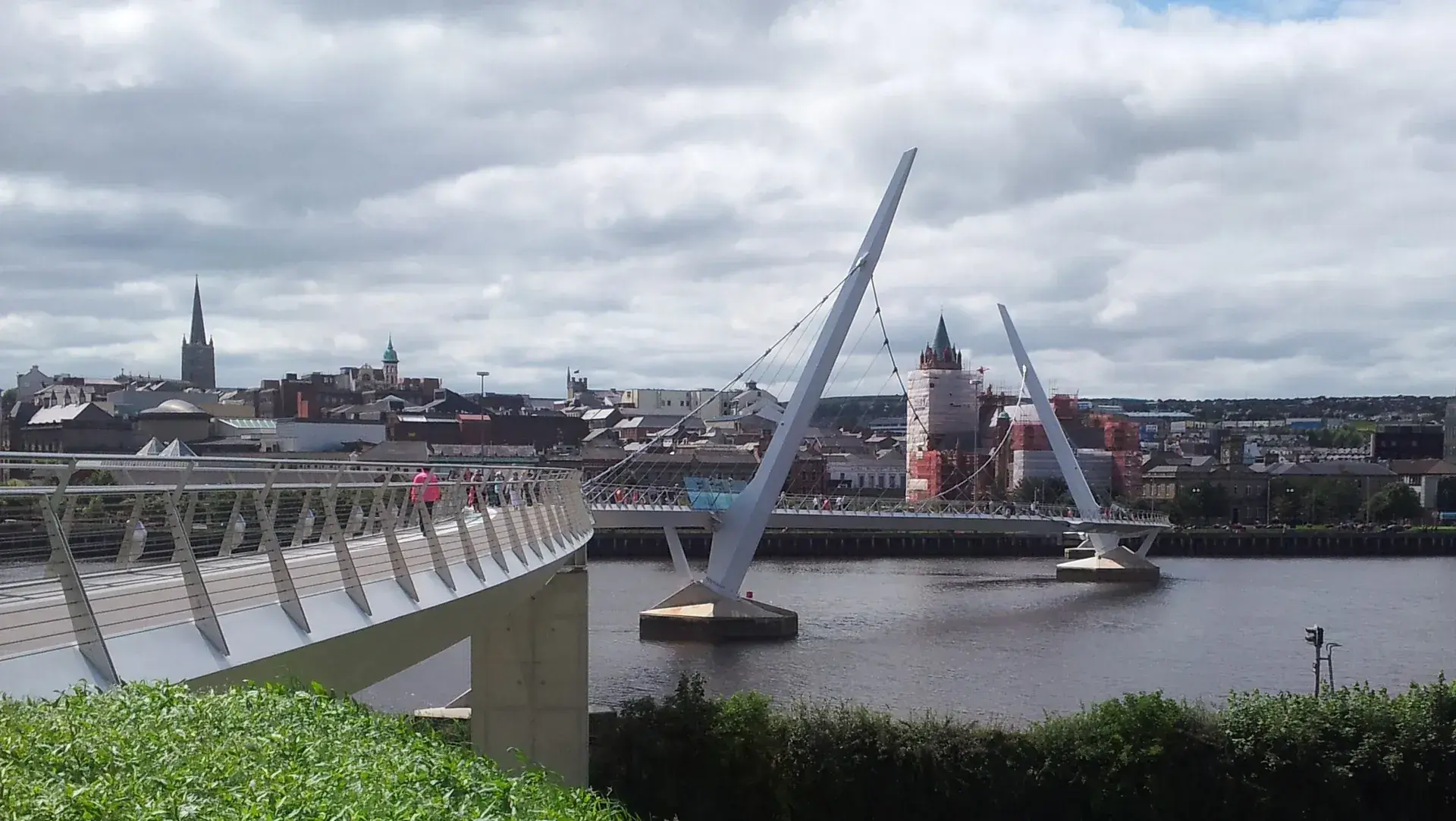

Tours featuring The Peace Bridge: the 2011 footbridge across the Foyle
More places in Derrylondonderry
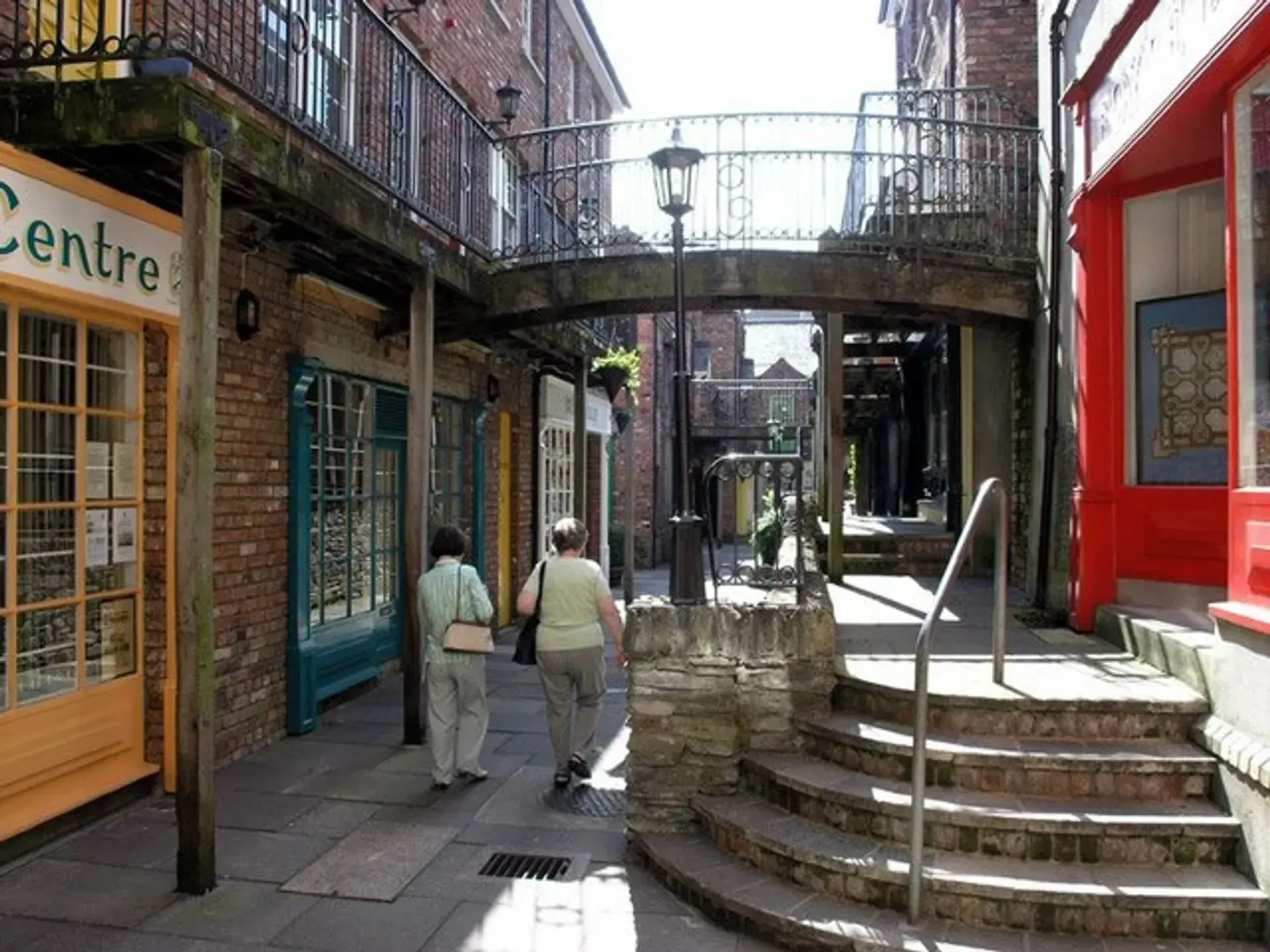
Craft Village: a small square of shops tucked inside the walls
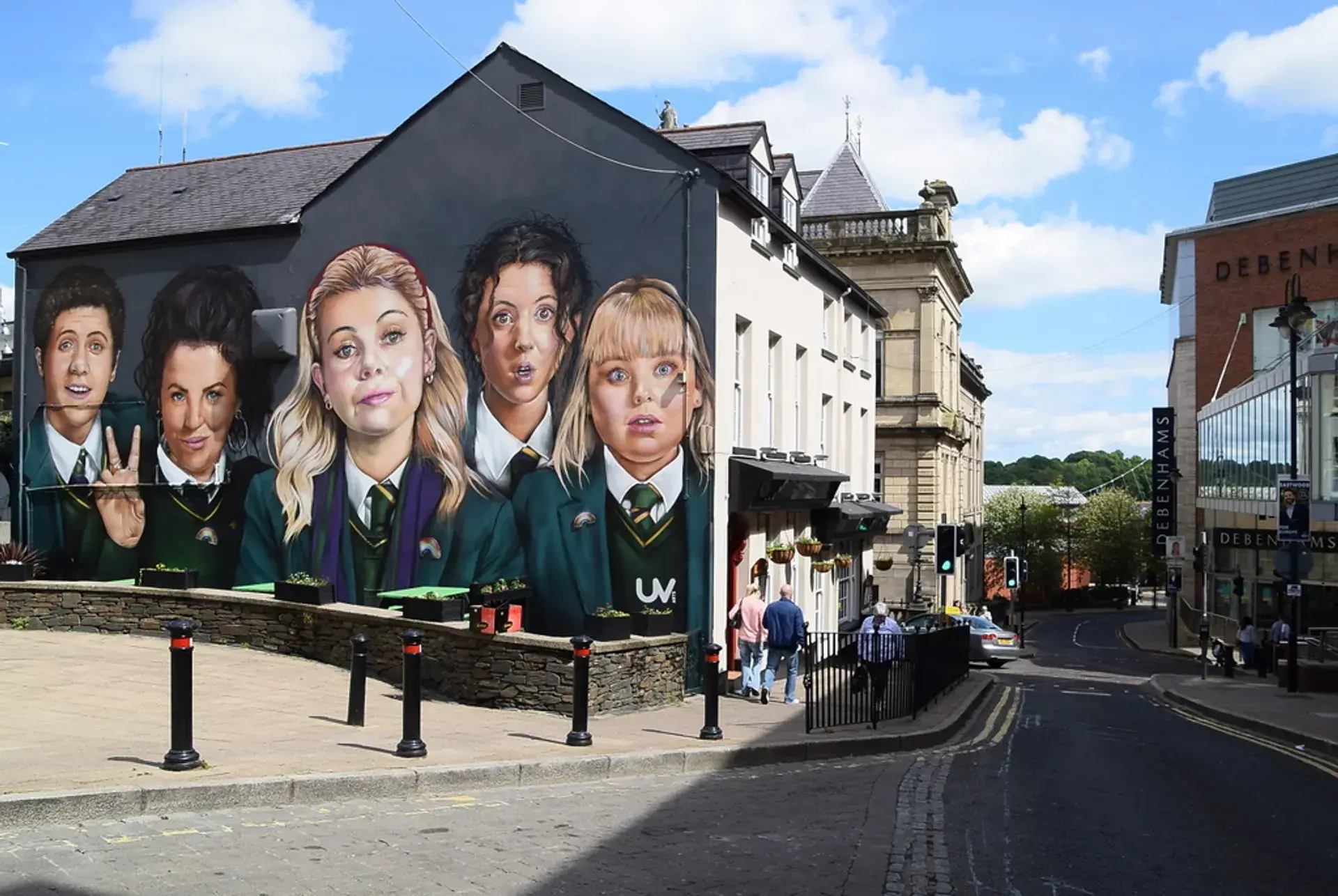
Derry Girls Mural: the sitcom’s five friends on Orchard Street