Grove Court: From Pig's Alley to a Private NYC Oasis
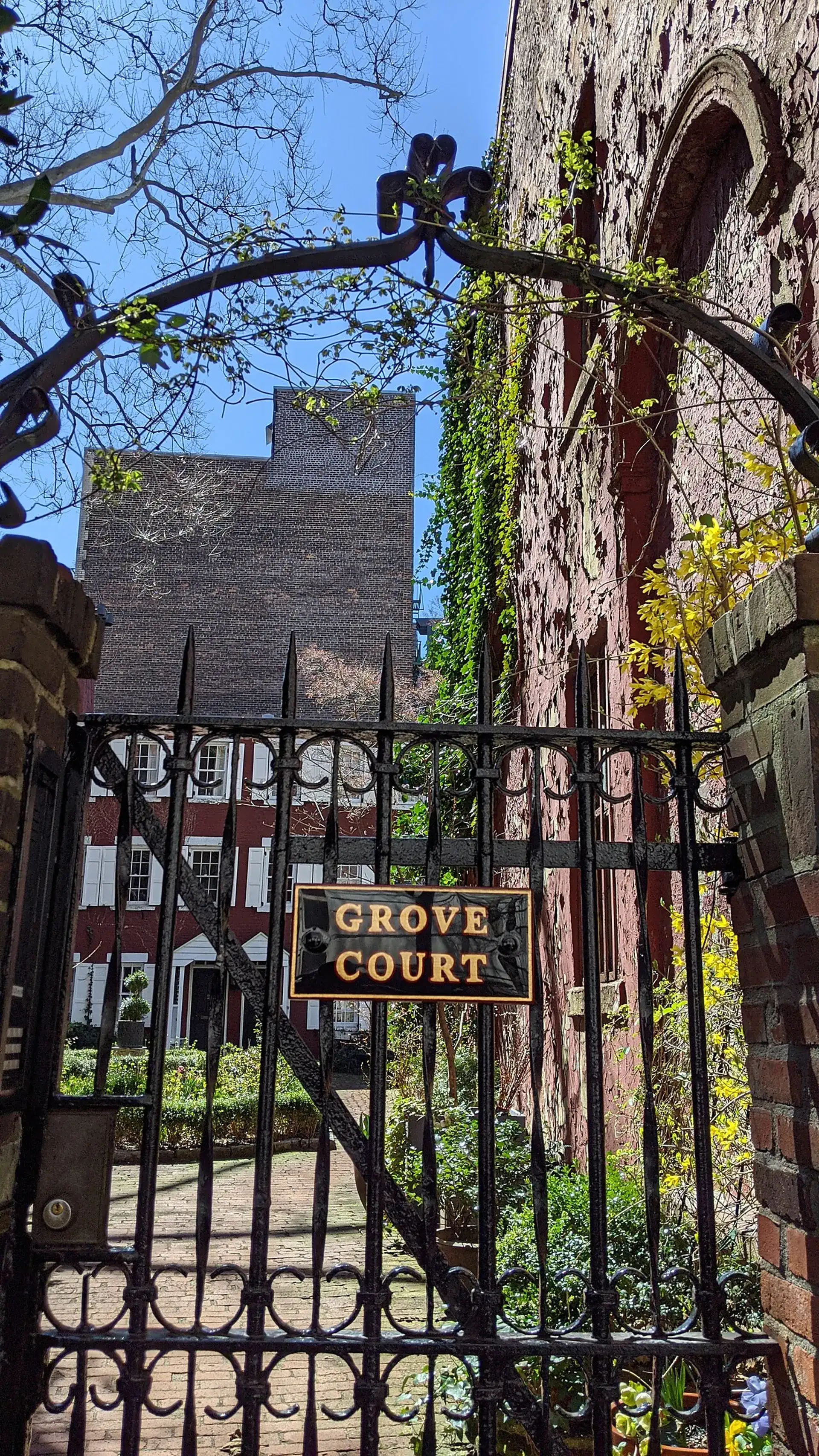
Tucked away behind an iron gate in New York City's West Village lies Grove Court, a private enclave of six charming Federal-style townhouses. Located off Grove Street between Bedford and Hudson Streets, this picturesque court represents a dramatic transformation, a story that mirrors the evolution of Greenwich Village itself.
Humble Origins and 'Pig's Alley'
The court was first laid out in 1848, with the six three-story houses constructed between 1853 and 1854 by local grocer Samuel Cocks. These small homes, each about 990 square feet, were originally intended for working-class people, including Irish families. For decades, the six separate houses were even taxed as a single property under the address 10 1/2 Grove Street.
In the 19th century, the court's secluded location was not a mark of prestige but rather an indicator of the low social status of its residents. Respectable families preferred homes fronting the main street. The alley earned unflattering nicknames like "Pig's Alley," due to pigs roaming the garden, and "Mixed Ale Alley," a possible reference to impoverished residents pooling beer dregs.
A Literary and Artistic Transformation
Grove Court gained literary significance in 1907 as the setting for O. Henry's famous short story, "The Last Leaf." This brought a new kind of attention to the once-obscure alley, which was later adapted into a 1952 film.
A major turning point came between 1920 and 1921 when the Alentaur Realty Company purchased the property. The company undertook a significant renovation, transforming the once-squalid area into an attractive residential court. Their goal was to create a colony for artists and literary workers, and the court soon attracted a new demographic of teachers, office workers, and single women.
Grove Court Today: An Exclusive Oasis
Today, Grove Court is one of the West Village's most exclusive and private residential enclaves. The meticulously maintained brick townhouses are now valued in the millions, with one selling for $4.2 million in 2011. Residents collectively care for a shared garden courtyard, known for its ivy, flowers, and festive Halloween pumpkin displays.
While private, the court's historic charm attracts tourists, who often peer through the iron gate between 10 and 12 Grove Street. Its location near other neighborhood landmarks, including the building used for exterior shots in the TV show Friends at the corner of Grove and Bedford, adds to its allure. The court's survival was not always certain; it successfully weathered a plan in the 1950s that would have demolished it for a playground.
FAQ
Can you visit Grove Court?
Grove Court is a private, gated residential enclave and is not open to the public. Visitors can peer through the iron gate on Grove Street to see the courtyard and townhouses from a distance.
Why is Grove Court famous?
Grove Court is famous for its picturesque charm, its dramatic history transforming from working-class housing known as 'Pig's Alley' to an exclusive enclave, and for being the setting of O. Henry's 1907 short story, 'The Last Leaf'.
What was Grove Court originally?
Grove Court was originally built between 1853 and 1854 to provide housing for working-class people. Its secluded location denoted a low social status, and it was known by unflattering nicknames like 'Pig's Alley' and 'Mixed Ale Alley'.