Discover Grote Markt & Leuven Town Hall
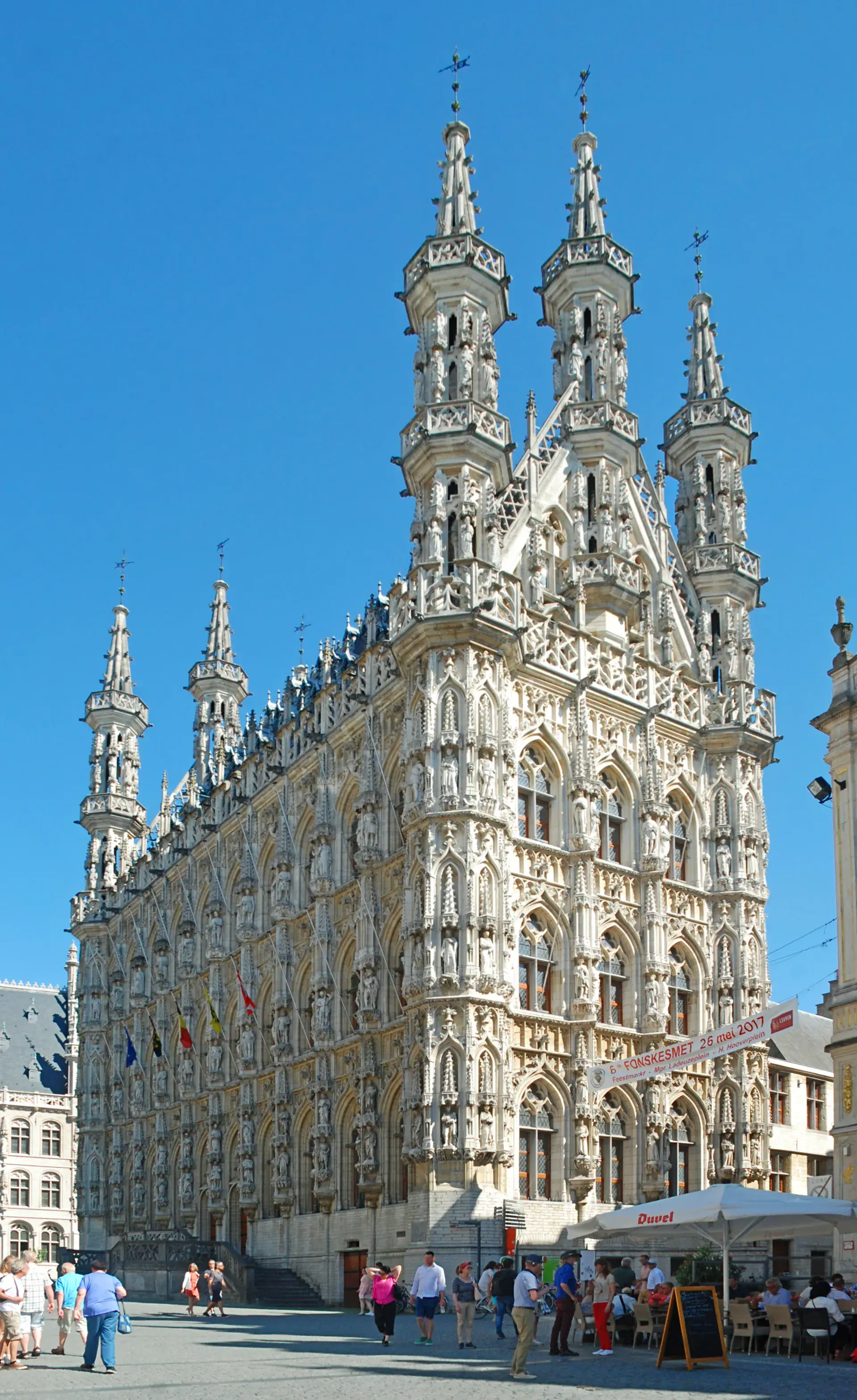
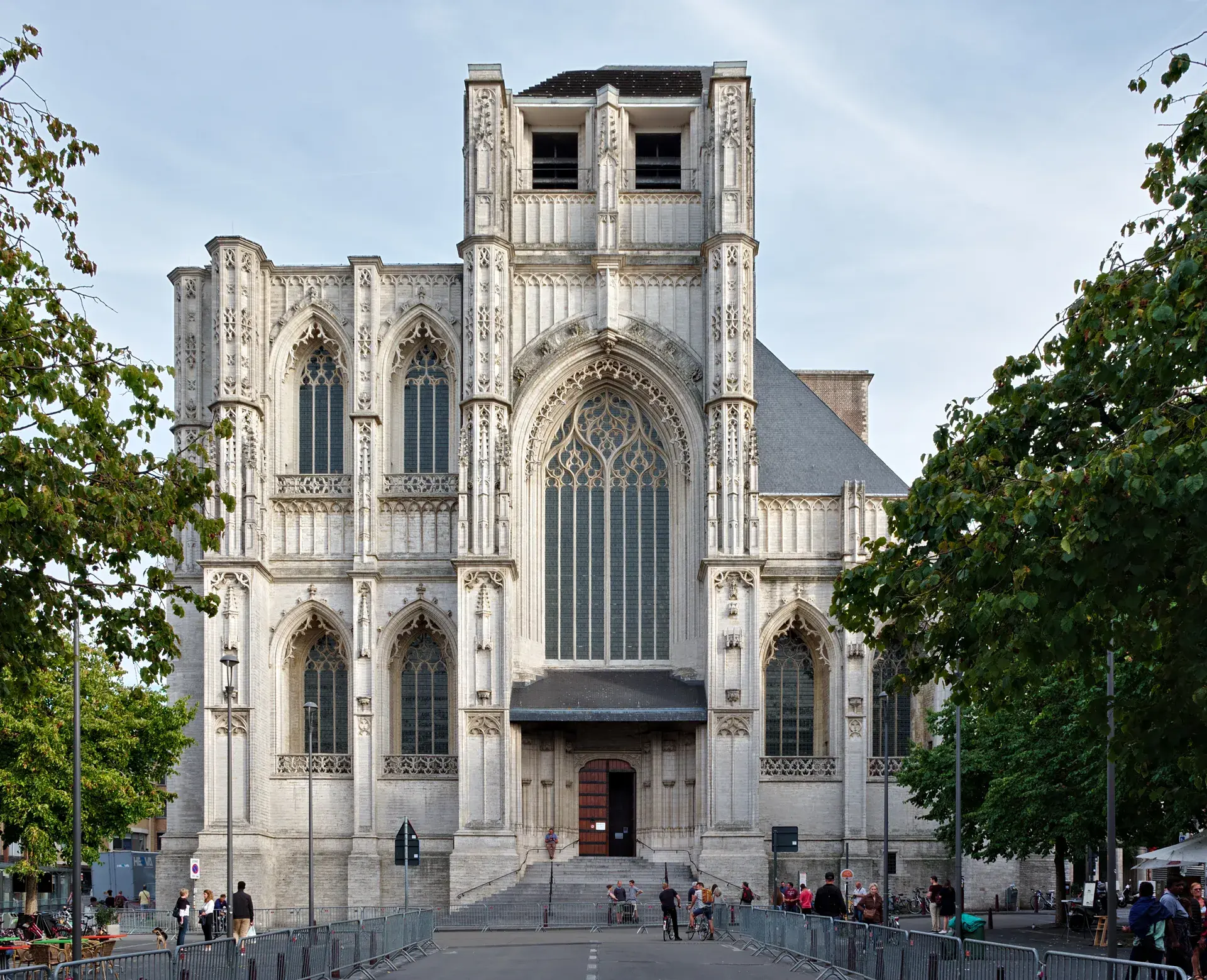
An intricate Late Gothic masterpiece, Leuven's Town Hall was built as an act of architectural rivalry, designed to prove the city's enduring power after losing its ruling dukes to Brussels. The Grote Markt serves as the formal civic anchor of Leuven, centered between the Town Hall, the Gothic Saint Peter's Church, and the Neo-Gothic Tafelrond.
A Masterpiece of Brabantine Gothic Architecture
Built between 1439 and 1469, the Leuven Town Hall is a prime example of Brabantine Late Gothic architecture. Often described as "Gothic lace in stone," the rectangular, three-story building features dense fretwork, openworked balustrades, and blind tracery. Standing in the pedestrian square emphasizes the verticality of the structure against the horizontal cobblestones of the Grote Markt.
The initial design by master builder Sulpitius van Vorst mimicked the Brussels Town Hall with a single massive belfry tower. However, when master mason Matheus de Layens took over the project in 1448, he pivoted to a symmetrical, reliquary-style structure crowned with six slender, openworked octagonal turrets.
The 236 Statues and Stone Corbels
The exterior of the Town Hall is world-renowned for its 236 intricately carved stone niches. Surprisingly, these niches remained completely empty for roughly 400 years. The figures seen today were only installed beginning in 1847 during a 19th-century romantic revival.
The statuary follows a strict civic hierarchy. The first floor features local scholars, artists, scientists, and notable citizens. The second floor displays patron saints and municipal guilds, while the third floor honors the Counts of Leuven and Dukes of Brabant. In 2020, a statue of King Leopold II was removed from its niche amid reappraisals of Belgium's colonial history.
Beneath the 19th-century statues sit original 15th-century stone brackets, or corbels. These are carved in high relief with biblical scenes depicting sin and divine justice, originally intended as visual moral lessons for medieval city magistrates and passersby.
Survival and Restoration on the Grote Markt
The Town Hall has survived significant historical conflicts. It sustained only minor damage during the devastating 1914 sack of Leuven in World War I. Later, a World War II bomb blast in the Grote Markt caused facade damage that required extensive restorations, which concluded in 1983.
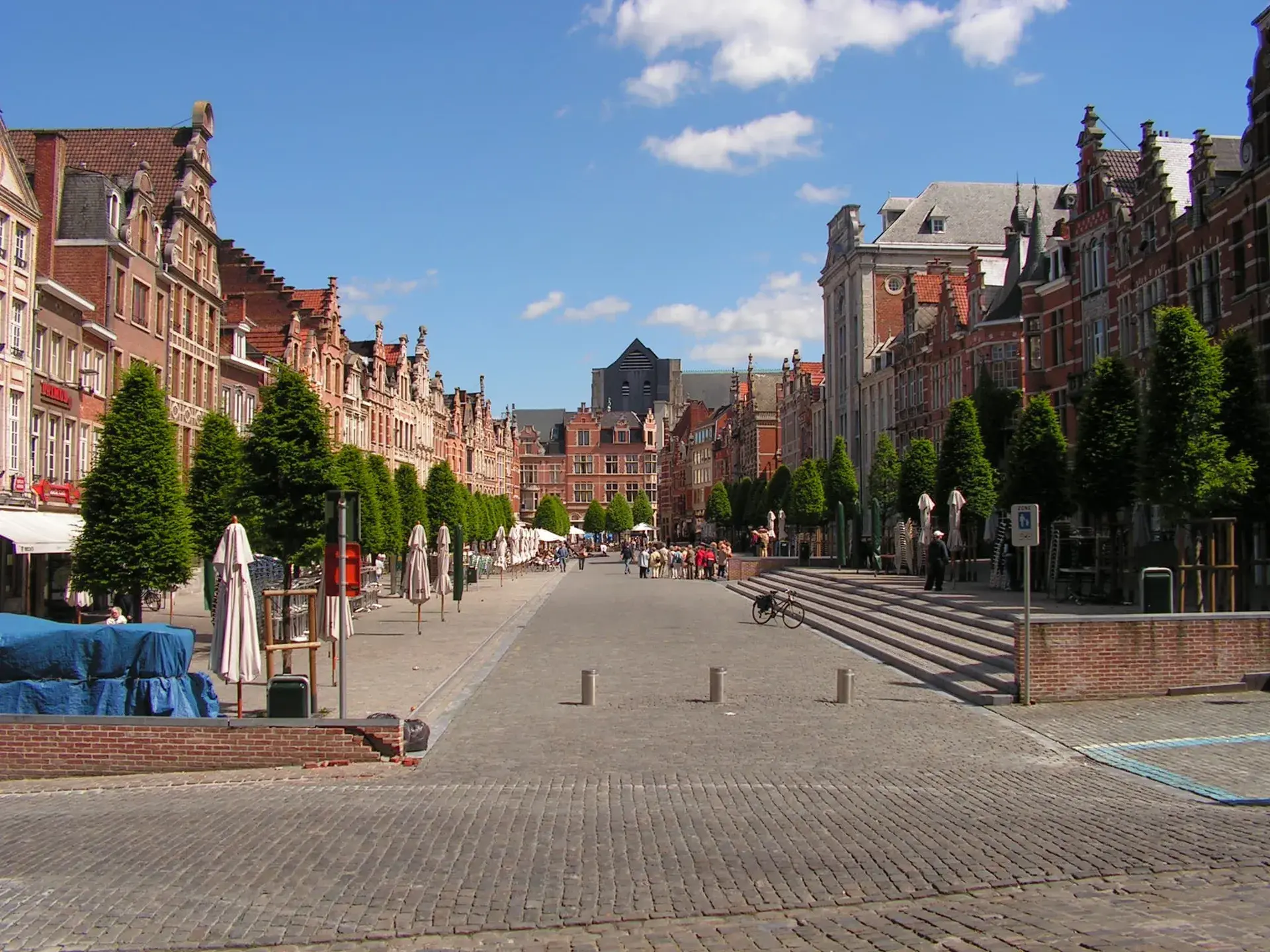
Today, the Grote Markt remains a monumental square that provides a deliberate contrast to the nearby Oude Markt, the city's modern social epicenter. While the Town Hall's ornate exterior is fully visible from the cobblestones, the interior is currently closed for a comprehensive restoration. Expected to reopen in 2029, the building will serve as a civic visitor center, narrative museum, and ceremonial venue.
FAQ
Can visitors go inside the Leuven Town Hall?
The interior of the Town Hall is currently closed for a comprehensive multi-year restoration project. It is expected to reopen in 2029 as an open civic visitor center, narrative museum, and ceremonial venue. However, the exterior facade remains fully visible from the Grote Markt.
When were the statues added to the Leuven Town Hall?
Although the Town Hall was completed in 1469, its 236 stone niches remained empty for roughly 400 years. The statues were installed starting in 1847 during a 19th-century romantic revival.
What do the carvings under the statues represent?
The original 15th-century stone corbels beneath each statue niche feature high-relief carvings of biblical scenes depicting sin and divine justice. These were intended as visual moral lessons for medieval city magistrates.