Vismarkt: Leuven's Historic Fish Market & Vibrant Square
Vismarkt stands as a lively historic square in central Leuven, recognized as the city's oldest marketplace. Once a bustling inland harbor, the site originally featured an arm of the River Dijle that now runs completely hidden in a 19th-century culvert beneath the cobblestones.
From Ducal Harbor to Fish Market
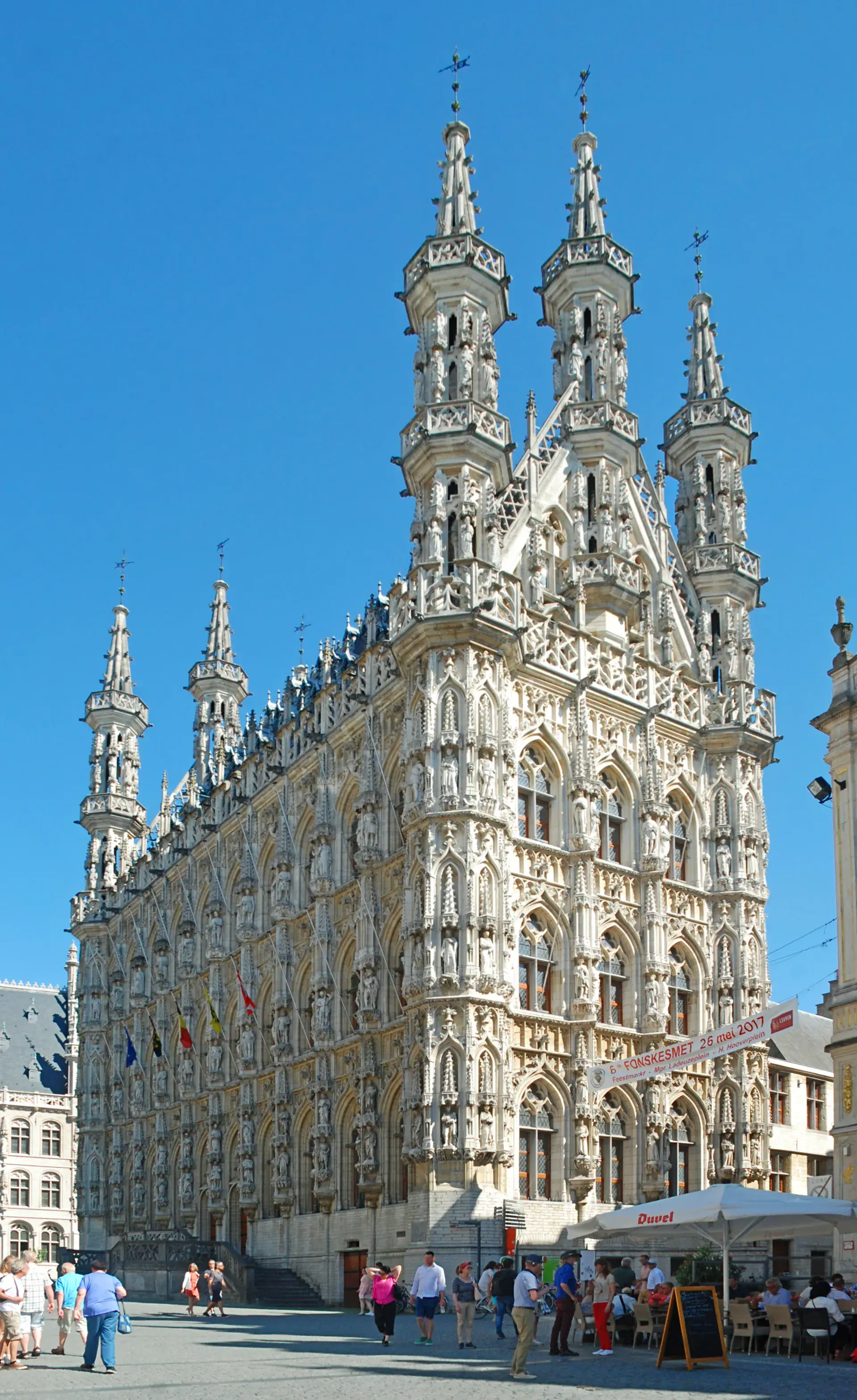
During the Middle Ages, this site operated as a ducal harbor where transport boats arriving from the Scheldt region would unload fish and goods. In 1327, Duke John III of Brabant ceded harbor rights to the city. The square was once home to a 13th-century Augustinian monastery and a 15th-century palace constructed by Duke John IV. The masonry from this palace was later reused to build the famous Leuven Town Hall.
In the 18th century, the construction of the Leuvense Vaart canal shifted heavy shipping north, but the Vismarkt retained its prominent seafood stalls. An impressive covered fish market hall stood on the square from the 1880s until its demolition in the early 1970s. Following a brief stint as an open-air car park, the space was eventually pedestrianized.
Historic Facades and Hidden Renaissance Roots
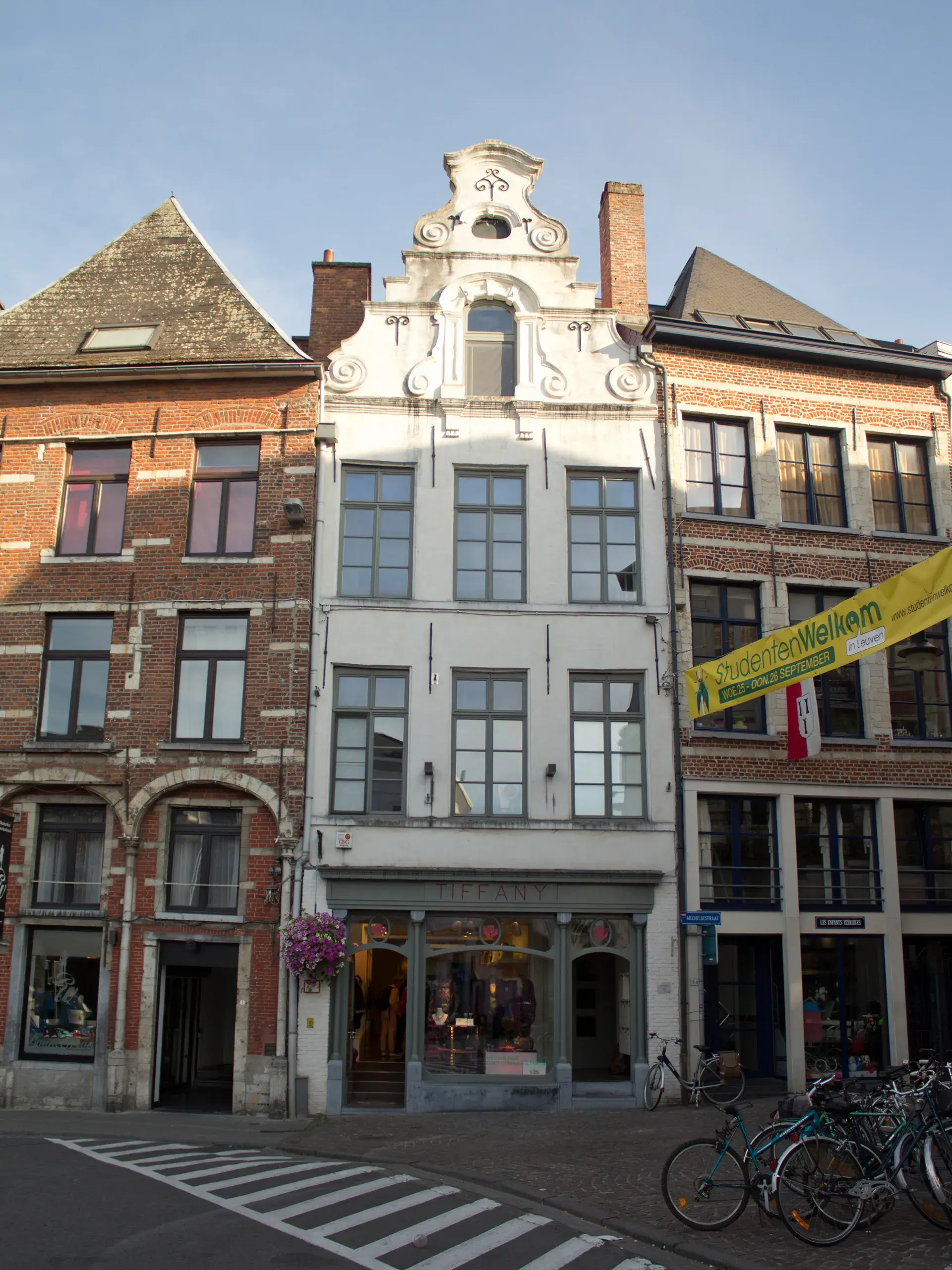
Today, the Vismarkt is an enclosed cobblestone expanse ringed by asymmetric historical facades. Several gables still bear names honoring the square's trading past, such as 'In de Dry Schepen' (In the Three Ships) and 'De Drye Heringen' (The Three Herrings). The building known as Huis Sint-Andries features a facade depicting two fish alongside Saint Andrew, the patron saint of fishermen.
Tucked just off the southern edge of the square, down the narrow Busleydengang alley, lies the birthplace of the Collegium Trilingue. Founded in 1517 and guided by humanist Desiderius Erasmus, this pioneering Renaissance center was dedicated to the study of Hebrew, Greek, and Latin directly from original texts.
A Hub for Gastronomy and Nightlife
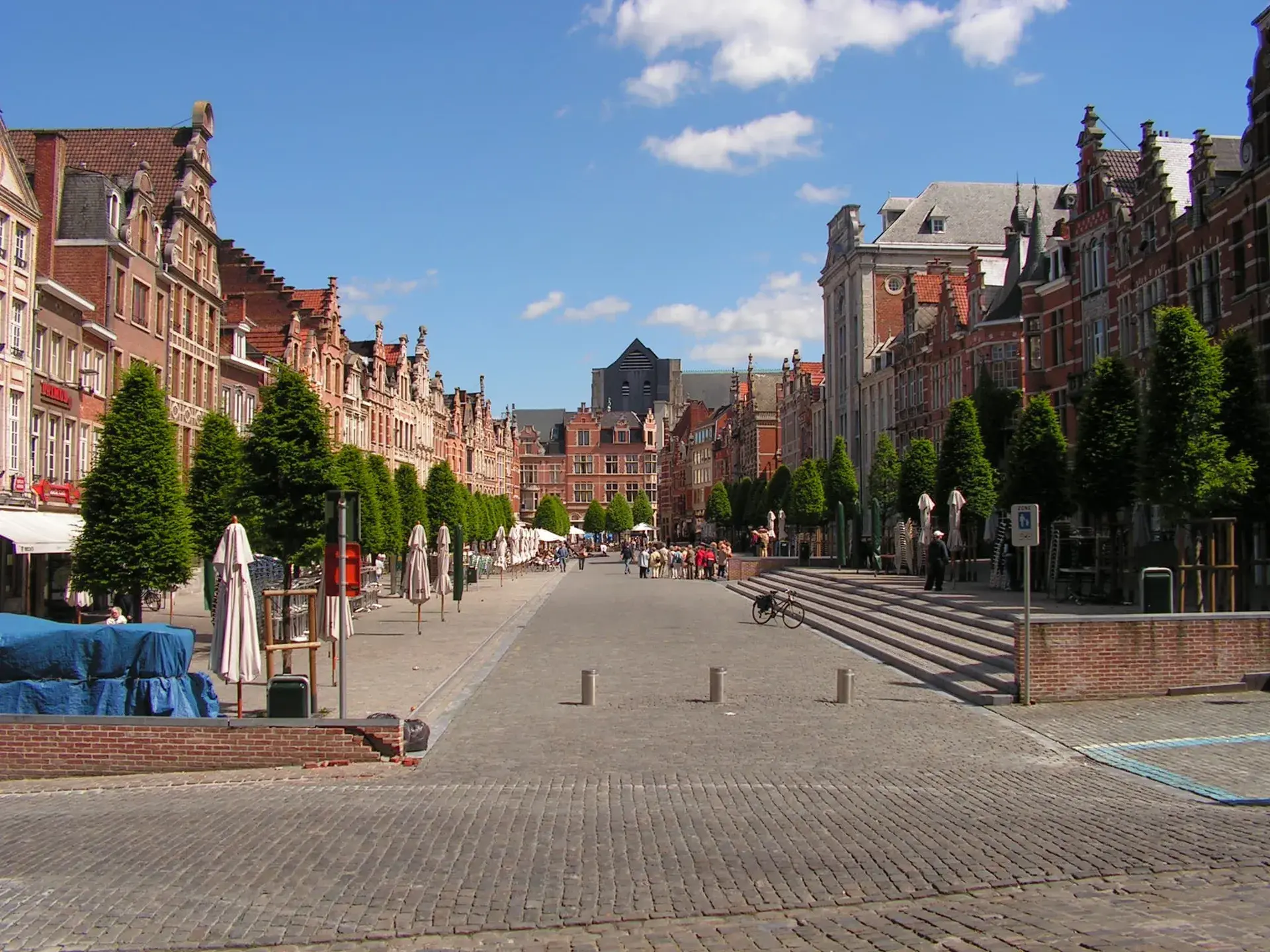
Representing the city's medieval inland merchant trade, the Vismarkt offers a relaxed, gastronomic contrast to the civic Gothic architecture of the Grote Markt and the student-heavy nightlife of the Oude Markt. It has evolved into a vibrant pedestrian lounge and dining hub.
The square is characterized by prominent bars and food-sharing restaurants with expansive outdoor terraces. The surrounding historic architecture creates an intimate acoustic courtyard where the chatter of diners and the clinking of glasses resonate throughout the afternoon and evening.
FAQ
Why is the square in Leuven called Vismarkt?
Vismarkt translates to 'fish market.' The square originally served as an inland harbor on the River Dijle where transport boats unloaded fish. It maintained a seafood market for centuries and featured a covered fish market hall from the 1880s until the 1970s.
Can you still see the river at the Vismarkt?
No, the arm of the River Dijle that once flowed through the Vismarkt was enclosed in a culvert beneath the square during 19th-century realignments.
What historic buildings can be seen around the Vismarkt?
The square is ringed by asymmetric historical facades with names linked to its trading history, such as 'In de Dry Schepen' (In the Three Ships). The Huis Sint-Andries also features a depiction of Saint Andrew and two fish.