The Old University Hall: Historic Heart of KU Leuven
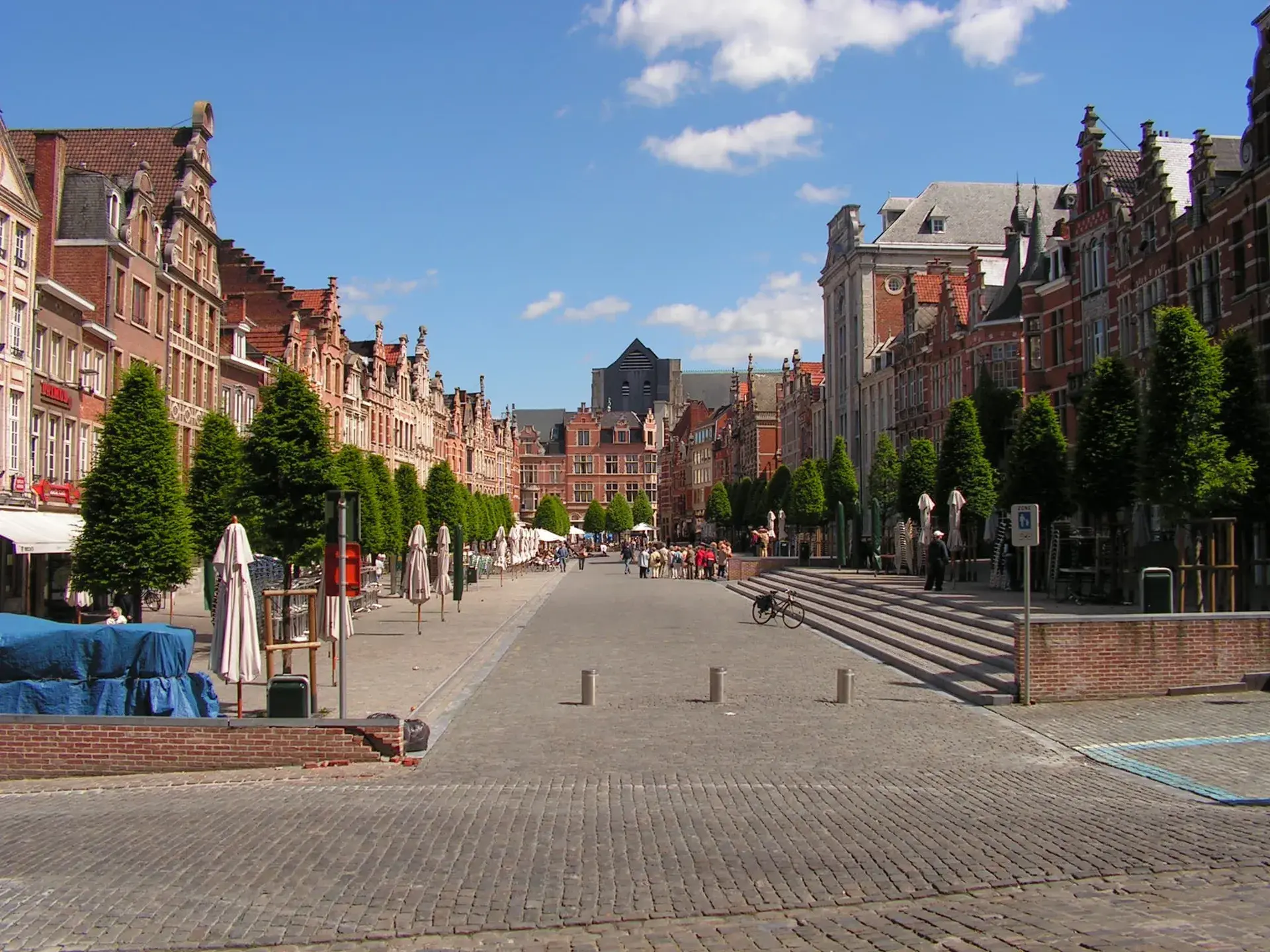
Situated directly between Naamsestraat and the Oude Markt, the Old University Hall exemplifies the dual identity of historic Leuven. For over two centuries, it was a place where university scholars and cloth weavers worked side-by-side, capturing the city's transition from an economic trade hub to an intellectual center.
A Shared Space for Scholars and Weavers
Construction on the building originally began in 1317 under the direction of architects Jan Stevens, Arnout Hore, and Goert Raes. Built as a covered municipal market and warehouse featuring twelve gates, it served as the bustling center of Leuven's textile trade.
In 1431, following the foundation of the University of Leuven, the city granted the Faculty of Theology lecture space on the southern half of the ground floor. Weavers and academics shared the building until 1679, when the waning cloth industry led the university to assume full ownership of the property.
Architectural Evolution and Curiosities
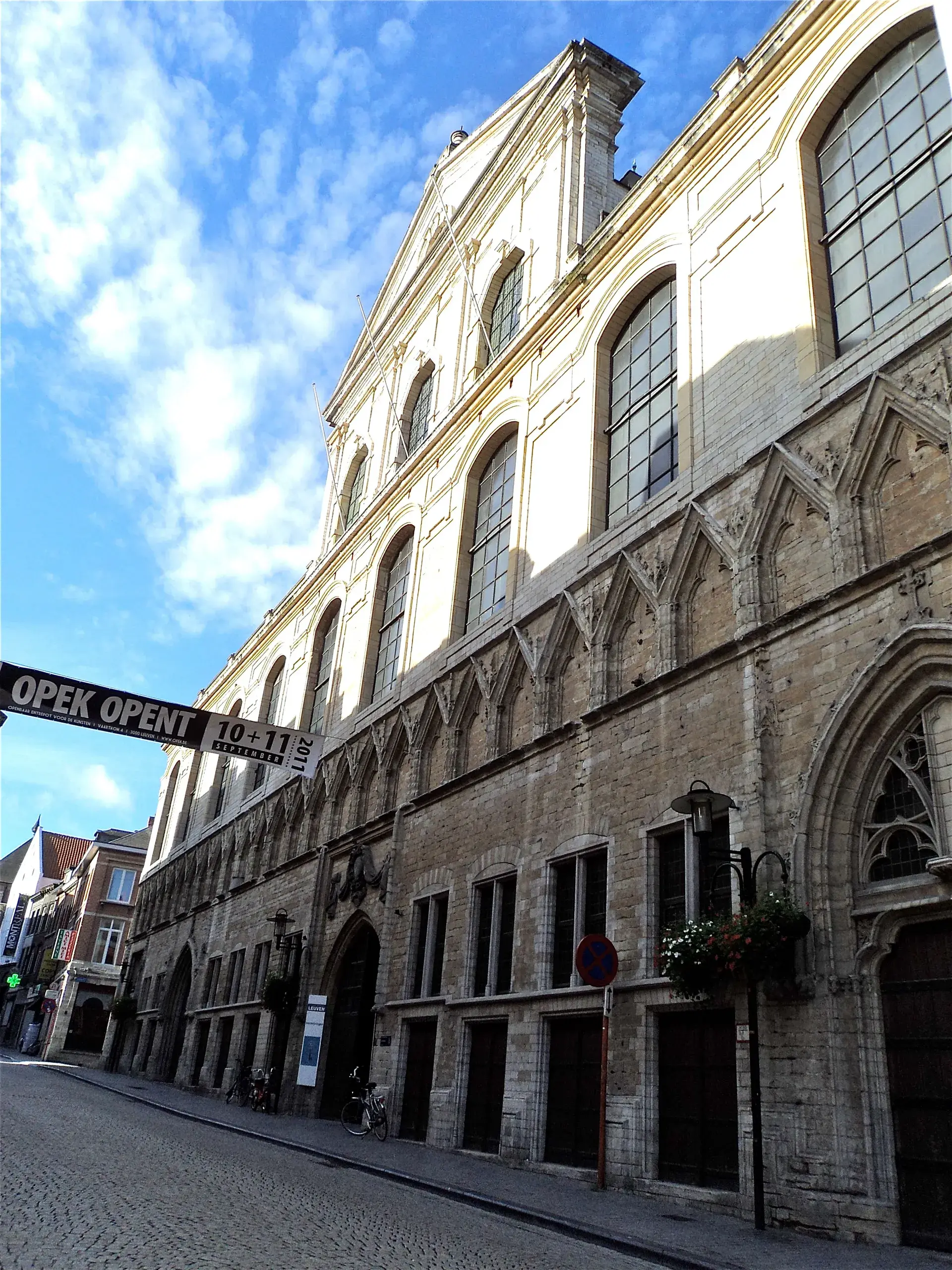
The structure showcases a striking visual contrast between its heavy 14th-century Brabant Gothic sandstone arcades at the base and the lighter, decorated Baroque window frames on the upper floors, which were added starting in 1680. Between 1723 and 1733, the classicist Baroque Rega Wing was constructed facing the Oude Markt.
During the 18th century, the university operated a commercial beer and wine cellar in the basement of this wing. The profits from liquor sales were used to fund the purchase of books for the academic library located directly above. Above the Naamsestraat entrance, a carved Latin Baroque cartouche reads Sapientia aedificavit sibi domum (Wisdom has built herself a house).
Fire, Destruction, and Resurrection
The building suffered catastrophic damage on the night of August 25, 1914, when occupying German troops deliberately set it ablaze. The resulting fire destroyed the central university library, incinerating over 230,000 historic volumes and leaving only the exterior walls standing.
Between 1921 and 1926, architecture professor Raymond Lemaire supervised the careful reconstruction of the hall to its pre-war design. A stone salvaged from the damaged hall later found a new home at Lovanium, the university's 20th-century sister campus in the Democratic Republic of the Congo.
The University Hall Today
Protected as a historic monument since 1942, the building now serves as the central policy headquarters and administrative rectorate for KU Leuven. Its echoing stone corridors lead from the street through vaulted arcades toward an open terrace.
Today, the facility houses the traditional enrollment center for incoming students, a university shop, and the KUp coffee bar. It is also home to the Promotion Hall, the prestigious venue for public PhD dissertations.
FAQ
What was the original purpose of the Old University Hall in Leuven?
The building was originally constructed in 1317 as a Cloth Hall. It served as a covered municipal market and warehouse with twelve entrance gates for Leuven's bustling textile trade.
When did the university take over the building?
The university first began using the ground floor for theology lectures in 1431. It eventually took full ownership of the building in 1679 as the local cloth industry declined.
What happened to the Old University Hall during World War I?
In August 1914, occupying German troops deliberately set fire to the building. The blaze destroyed the central university library and over 230,000 historic volumes, leaving only the exterior walls intact before its post-war reconstruction.