Marian Plague Column in Brno: History & Guide
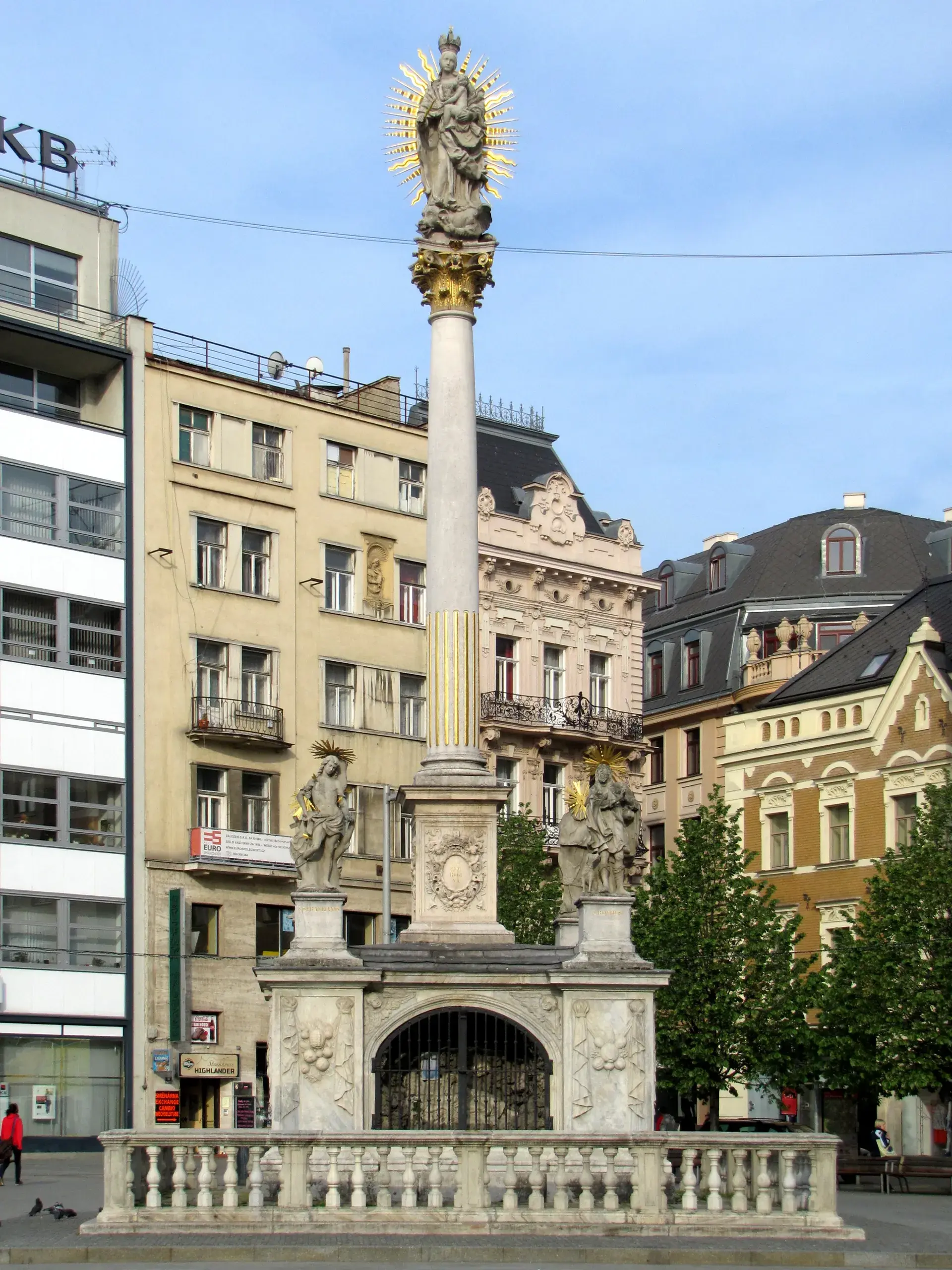
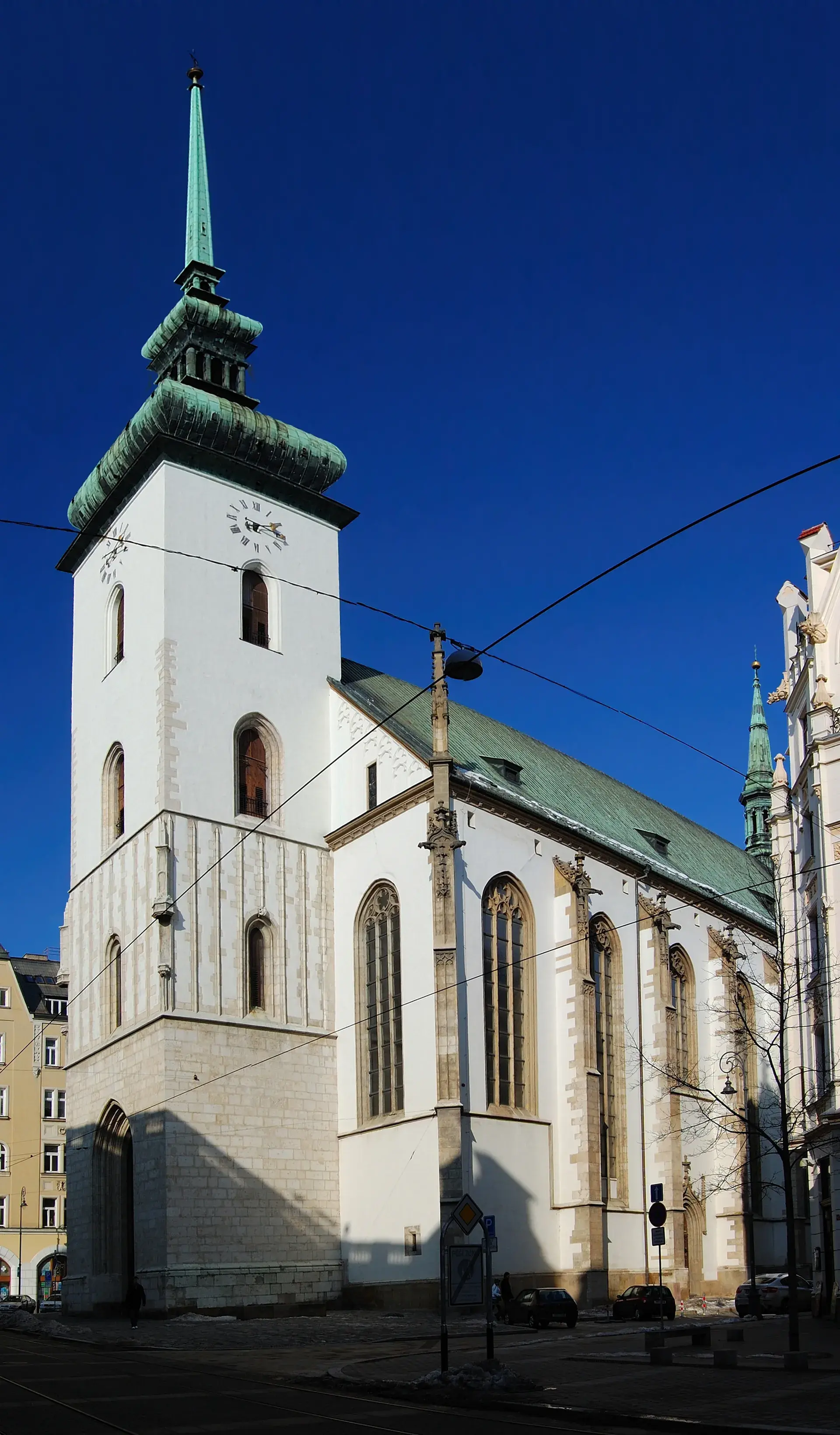
In the center of Brno's main square stands a towering 17th-century promise, made by a desperate city council to spare its citizens from the plague. Located on Náměstí Svobody (Freedom Square), the Marian Plague Column is a prominent public vow and a stark reminder of resilience and religious devotion.\n\n## Origins and Construction\n\nDuring the severe plague epidemic of 1679 to 1680, Brno's city council made a solemn vow at the Church of St. James to erect a memorial if the city survived. Commissioned on September 28, 1679, the monument was modeled after the early Baroque Marian column on Am Hof square in Vienna. Construction spanned a decade, finally reaching completion in 1689.\n\nThe project faced numerous setbacks. Lead sculptor Ferdinand Pfaundler died in 1681 shortly after starting the work. In 1686, the main central column cracked and required replacement. Furthermore, disputes arose between the city council and local artisan guilds when council members hired an Italian journeyman, Jakub Conenall, to complete the composite column capital.\n\n## Architectural Details and Symbolism\n\nBuilder Jan Křtitel Erna led the masonry for the Baroque monument, utilizing white-grey marble from the Pernštejn mines and Eggenburg limestone for the statues. Art historians observe that the column bridges two artistic eras: the architectural core retains 17th-century Baroque forms, while the surrounding saint sculptures showcase 18th-century stylistic shifts.\n\nThe intricately carved grotto set low inside the pedestal displays the recumbent stone figure of Saint Rosalia resting within sculpted folds. Four corner pedestals on the balustrade hold statues of the plague patron saints: Saint Sebastian, Saint Roch, Saint Charles Borromeo, and Saint Francis Xavier. At the summit, the statue of the Virgin Mary holding the Christ Child uniquely fuses three distinct Marian artistic traditions into a single depiction: the Immaculata (Immaculate Conception), the Assumpta (Assumption), and the Virgo lactans (Nursing Virgin).\n\n## Modern Restorations and City Context\n\nNáměstí Svobody serves as the historical center of gravity for Brno. Local tradition holds that the column was erected directly on or adjacent to the site of the medieval city's historic pillory. Today, the cool white-grey marble shaft contrasts against the modern granite paving of Freedom Square, juxtaposing 17th-century religious devotion with modern municipal interventions like the 2010 black granite Astronomical Clock and the Skácel bronze fountain.\n\nDuring a major restoration of the square in 2006, structural testing revealed the central column could not support a heavy stone replacement. Restorers installed a lighter hollow cast of the Virgin Mary at the top and corrected the posture of the statue's right hand. The restored column was blessed by the Bishop of Brno on October 15, 2006, and remains a protected cultural monument and freely accessible historic anchor for pedestrians.
FAQ
When was the Marian Plague Column in Brno built?
The column was commissioned by the city council on September 28, 1679, and constructed primarily between 1679 and 1689.
What statues are featured on the Marian Plague Column?
The monument is topped by a statue of the Virgin Mary holding the Christ Child. The base includes a grotto with Saint Rosalia of Palermo, and the four corners feature plague patron saints: Sebastian, Roch, Charles Borromeo, and Francis Xavier.
Why was the top statue of the Virgin Mary replaced in 2006?
During a 2006 restoration, structural testing revealed that the central column could not support a heavy stone replacement. As a result, restorers installed a lighter hollow cast of the Virgin Mary.