The Cabbage Market & Parnas Fountain in Brno
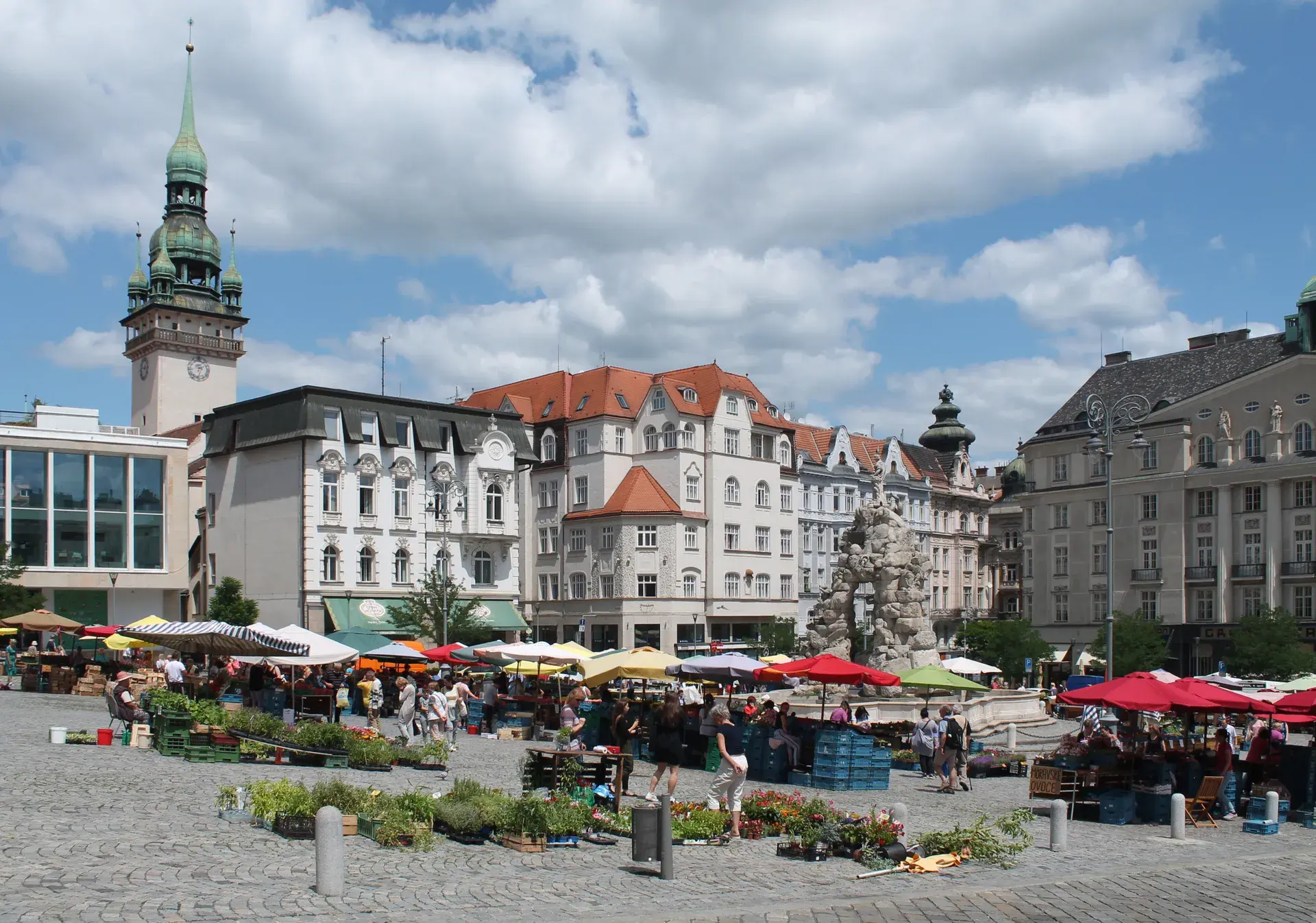
Zelný trh, also known as the Cabbage Market, is a historic 0.6-hectare sloping public square in Brno's old town center. It embodies over 700 years of continuous market culture, where vendors have traded fresh produce above ground while a hidden labyrinth of medieval storage cellars sits below.
A Marketplace Through the Centuries
The square originated in the 13th century as the Upper Market, a space that preceded Brno's formal legal establishment. By the 15th century, it was renamed Zelný trh due to the predominance of fruit and vegetable trading in the area. Historically, the lower section of the square served as a site for public justice and housed a pillory.
Over the centuries, there were several official attempts to rename the space, including the Square of Brotherhood in 1848 and February 25th Square during the socialist era. Despite these efforts, local residents continuously maintained the informal name "Zelňák."
The Baroque Parnas Fountain
At the center of the square stands the Parnas Fountain, a Baroque monument built between 1690 and 1696. Commissioned to replace an older Renaissance fountain, it was designed by architect Johann Bernhard Fischer von Erlach and sculpted by Tobias Kracker and Antonín Riga. The fountain served as both a civic monument and a practical water supply for the market. Today, the sound of splashing water flowing from dolphin-shaped spouts down a limestone cave into a star basin blends continuously with the ambient noise of the square.
The fountain's name, "Parnas," was coined by local Jesuit college students who mistakenly believed the monument's allegorical statues represented the Muses of Mount Parnassus. In reality, the statues depict ancient empires: Greece is represented with a wyvern, Babylonia with a crown and winged lion, and Persia with a cornucopia and bear.
Historic Landmarks and Hidden History
Several key historic landmarks border the Cabbage Market, including Dietrichstein Palace, Hausperský Palace, the Malý Špalíček complex, and the Reduta Theatre. The Reduta Theatre has been the site of prominent historical events. In December 1767, an 11-year-old Wolfgang Amadeus Mozart performed a Christmas concert at the venue. Decades later, on June 10, 1841, Professor Bedřich Franz took a daguerreotype of a Corpus Christi procession across the square from one of the theater's windows. This image is recognized as one of the world's earliest surviving reportage news photographs.
Beneath the surface of the square lies another layer of history. Starting in the Middle Ages, shopkeepers constructed multi-level cellars and tunnels beneath the market for food storage, beer brewing, and wartime refuge. Since 2011, this subterranean network has functioned as the "Labyrinth under Zelný trh," offering guided historical tours.
The Market Today
Today, Zelný trh operates as a daily outdoor market for fresh fruit, vegetables, and flowers. A renovated indoor market hall named Tržnice Brno supplements the outdoor stalls with specialty shops. During the winter season, the daily produce stalls transition into a major location for Brno's annual Christmas market.
FAQ
What is the Parnas Fountain in Brno?
The Parnas Fountain is a Baroque stone fountain built between 1690 and 1696 in the center of the Cabbage Market. It features allegorical statues representing the ancient empires of Greece, Babylonia, and Persia.
What lies beneath the Cabbage Market?
Beneath the Cabbage Market is a network of multi-level medieval cellars and tunnels known as the Labyrinth under Zelný trh. Originally used for food storage, beer brewing, and refuge, the cellars have been open for guided historical tours since 2011.
Why is it called the Cabbage Market?
Originally established as the Upper Market in the 13th century, the square was renamed Zelný trh (Cabbage Market) in the 15th century because the trading of fruit and vegetables became the predominant activity in the area.