Cathédrale Saint-Gatien: Tours' Gothic Masterpiece
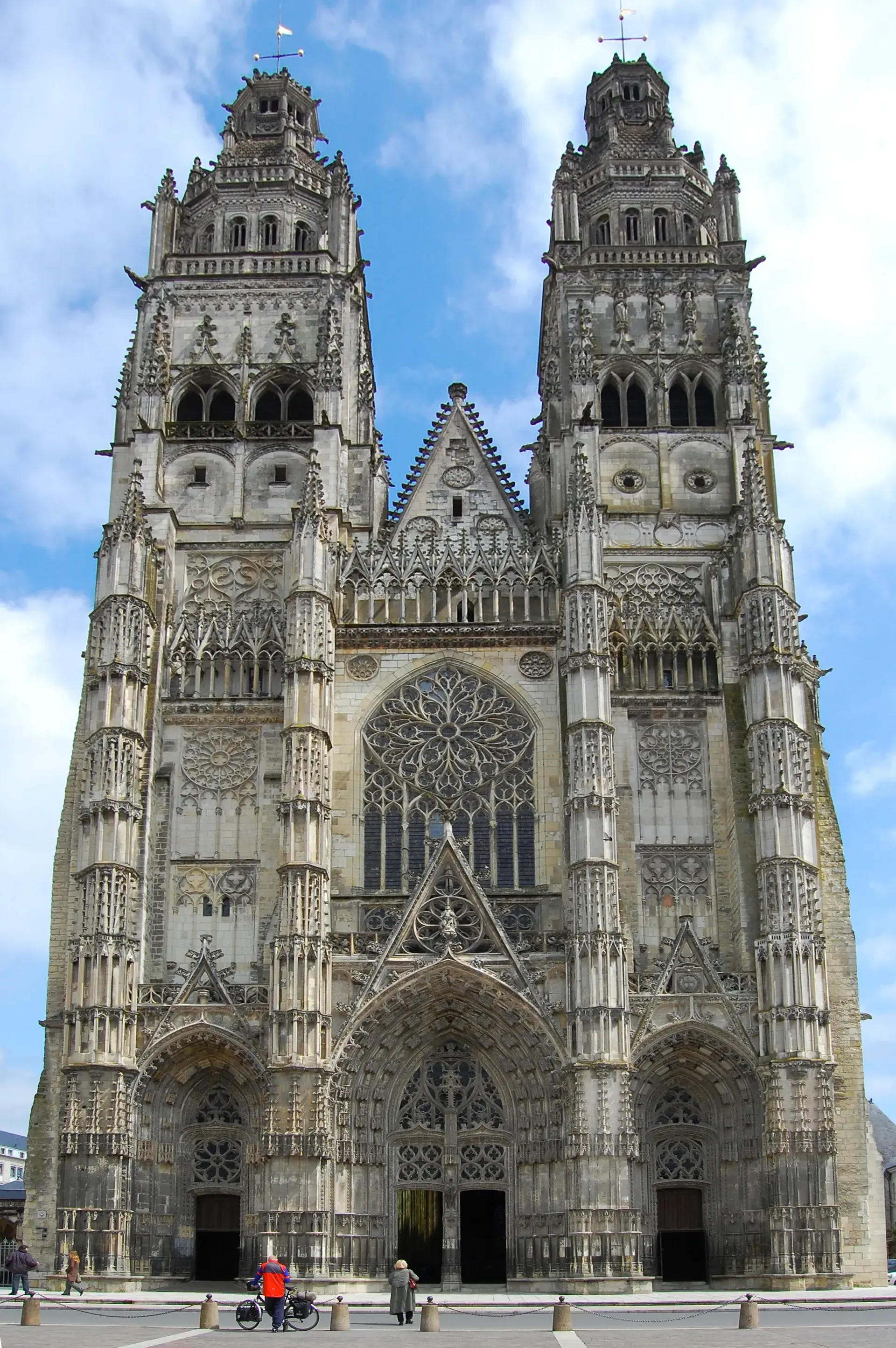
Cathédrale Saint-Gatien stands as the spiritual and architectural heart of Tours, a breathtaking Flamboyant Gothic cathedral whose construction took nearly 400 years to complete. This extended timeline produced a building that serves as a living textbook of architectural history, classified as a Monument Historique in 1862.
An Architectural Tapestry Through Time
The cathedral's construction began around 1170 and was not finished until 1547. This notoriously long building period became so well-known that it inspired a local saying: "as long as the construction of Saint-Maurice," its original name. The result is a fascinating blend of styles. The bases of the towers show Romanesque foundations, while the choir and transept, rebuilt between 1240 and the early 14th century with financial aid from King Louis IX, are Rayonnant Gothic. The upper nave and the elaborate western facade showcase the later Flamboyant Gothic style, and the two towers are crowned with early French Renaissance features.
A Site of Deep Historical Significance
The cathedral is built upon layers of history, with its foundations resting on the remains of the Gallo-Roman city of Caesarodunum. The site has housed a sanctuary since the 4th century. Earlier structures were destroyed by fire, including an 11th-century building burned during conflicts between Louis VII of France and Henry II of England. The current Gothic cathedral's construction was interrupted by events like the Hundred Years' War. Originally dedicated to Saint Maurice, it was rededicated in 1356 to Saint Gatianus, the first bishop of Tours. During the French Revolution, it was temporarily repurposed as a 'Temple of Reason,' and many of its statues were destroyed.
Notable Treasures and Features
Inside, the cathedral houses a monumental tomb made of Carrara marble, containing the remains of the two infant sons of King Charles VIII and Anne of Brittany. Originally from another basilica, the tomb was moved here in 1834, having been spared destruction during the Revolution due to its artistic beauty.
Adjoining the cathedral is the Cloister of La Psalette, a peaceful space that holds the distinction of being the only cathedral cloister preserved in its entirety in the Centre-Val de Loire region. The cathedral's great pipe organ, with a buffet dating to the 16th century, is unusually placed in the south transept, filling the vast interior with what has been described as a "celestial sound."
The Cathedral Today
Cathédrale Saint-Gatien remains an active Roman Catholic place of worship, serving as the seat of the Archbishops of Tours. It regularly hosts religious services, concerts, and cultural events that attract both locals and international visitors. The adjacent former archbishop's palace now houses the Musée des Beaux-Arts de Tours, making the area a significant cultural hub in the city.
FAQ
How long did it take to build Saint-Gatien Cathedral?
The construction of Cathédrale Saint-Gatien was a protracted process that spanned nearly four centuries, beginning around 1170 and reaching its final completion in 1547. The long duration even inspired a local saying in Touraine.
What is unique about the architecture of Saint-Gatien Cathedral?
Its exceptionally long construction period resulted in a unique blend of architectural styles. The cathedral showcases an evolution from Romanesque foundations to Rayonnant and Flamboyant Gothic, culminating in early French Renaissance elements on its towers.
Who is buried in the marble tomb inside the cathedral?
The tomb contains the remains of Charles and Charles-Orland, the two infant children of King Charles VIII of France and Anne of Brittany. The Italian-style Carrara marble tomb was moved to the cathedral in 1834 and was spared destruction during the French Revolution due to its artistic value.
What is the Cloister of La Psalette?
The Cloister of La Psalette is a peaceful cloister adjoining the cathedral. It is notable for being the only cathedral cloister that is still preserved in its entirety across the five cathedrals of the Centre-Val de Loire region.