Château de Tours: Royal Fortress & Modern Art Center
Located on the banks of the Loire River, the Château de Tours stands as a significant monument to the city's long and layered history. Though its current form is more modest than the grand châteaux of the surrounding valley, its origins trace back to a powerful medieval stronghold that played a crucial role in the history of France.
A Foundation of Power
The castle's story begins in the 11th century, with its first stones laid between 1044 and 1060 by the Counts of Anjou. Built under Geoffroy Martel, the structure was strategically positioned to control the primary bridge over the Loire, making it a vital entry point to the city. Its foundations are even older, resting upon the remains of Gallo-Roman public baths that dated from the late 1st to early 4th centuries.
A Royal Fortress
In 1204, when the Touraine region was annexed to the French royal domain by Philip II, the castle's purpose shifted. It was significantly enlarged between 1230 and 1240 into a formidable defensive fortress, a project possibly initiated by Louis IX or his mother, Blanche of Castille. This expansion was a clear assertion of royal power and a defense against potential English incursions.
Throughout the medieval period, the château served as a residence for French kings and hosted major historical events. Joan of Arc was received here by Charles VII in 1429 before and after her victory at the Siege of Orléans. In 1436, the marriage of Margaret Stewart to the future Louis XI was celebrated within its walls. The castle's prominence as a royal seat began to wane after 1470, when Louis XI favored more comfortable residences.
Decline and Transformation
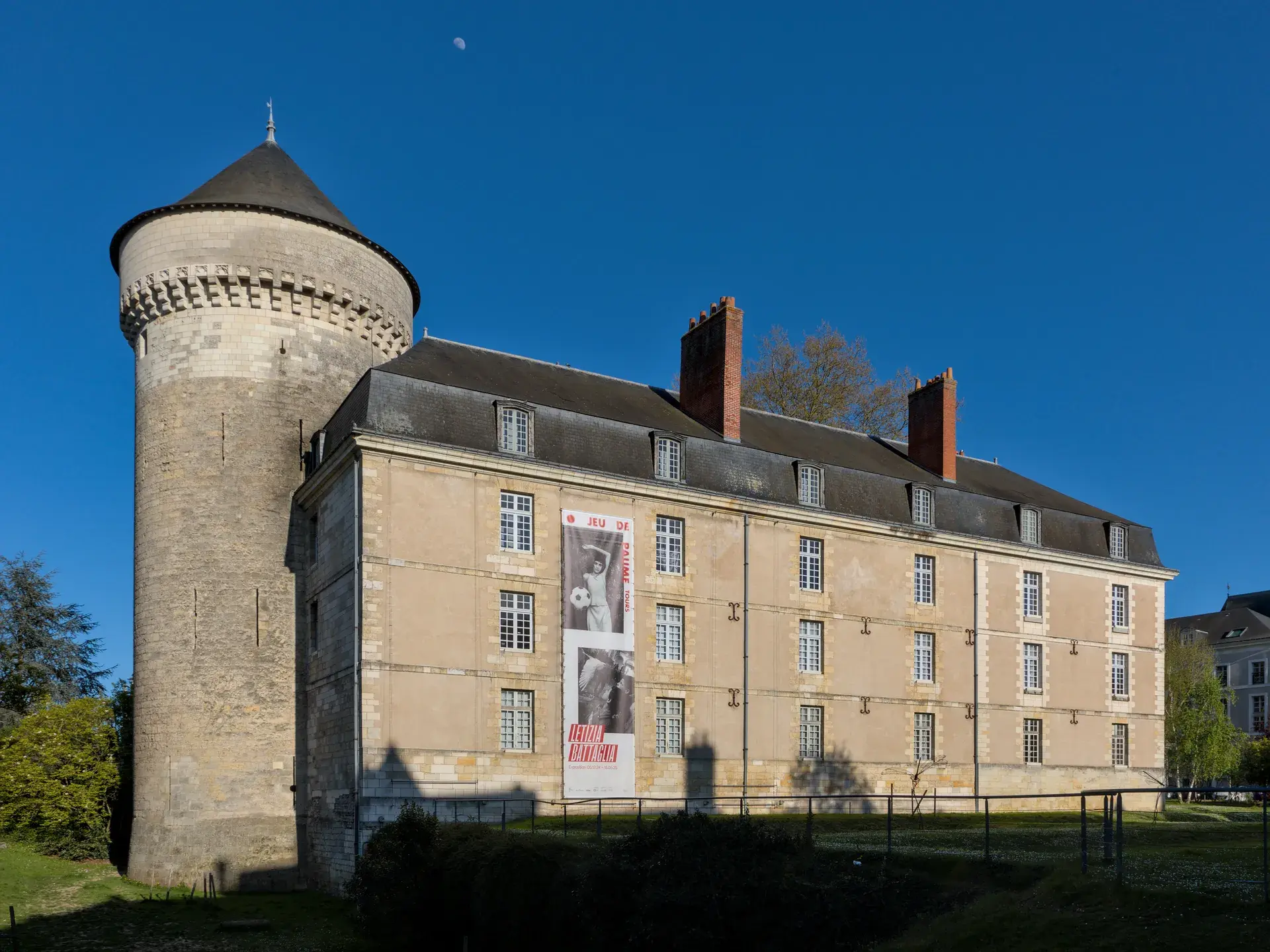
The castle's history is marked by periods of conflict and change. During the French Wars of Religion, it was seized by Huguenots in 1562. One of its most famous towers, the Tour de Guise, earned its name from Charles, Duke of Guise. He was imprisoned there for nearly three years before making a daring escape in 1592. By the 17th century, the castle had lost its strategic importance. Around 1780, much of the structure was dismantled, its stones repurposed to build the quays along the Loire and military barracks. Today, the surviving medieval elements include the Tour de Guise, alongside the 18th-century Mars Pavilion built between the remaining towers.
A Modern Cultural Hub
In a remarkable modern chapter, the Château de Tours was repurposed to house a large public aquarium until the early 2000s. Today, it has been reborn as a vibrant cultural center. It primarily hosts contemporary painting and photography exhibitions, maintaining a prestigious partnership with the Jeu de Paume museum in Paris, which has brought works by artists like Joan Miró and Robert Capa to Tours.
In addition to art, the château houses a workshop dedicated to the history of Tours, presenting archaeological finds, models, and films that chronicle the city's evolution. Through its exhibitions and educational programs, the Château de Tours continues to be a dynamic part of the city's cultural life, blending its rich heritage with contemporary expression.
FAQ
What is the Château de Tours used for today?
The Château de Tours is a cultural center that hosts contemporary art exhibitions, often in partnership with Paris's Jeu de Paume museum, and features a permanent workshop on the history of Tours.
Who was the Tour de Guise named after?
The Tour de Guise is named for Charles, Duke of Guise, who was imprisoned there for nearly three years before making a famous escape in 1592 at the age of 15.
What is a surprising fact about the Château de Tours?
Until the early 2000s, the historic castle was repurposed to house a large public aquarium containing approximately 1,500 fish of 200 different species.
When was the Château de Tours built?
Construction began in the 11th century (1044-1060) by the Counts of Anjou. It was significantly expanded into a royal fortress in the 13th century.