Musée des Beaux-Arts de Tours: Art in an Archbishop's Palace
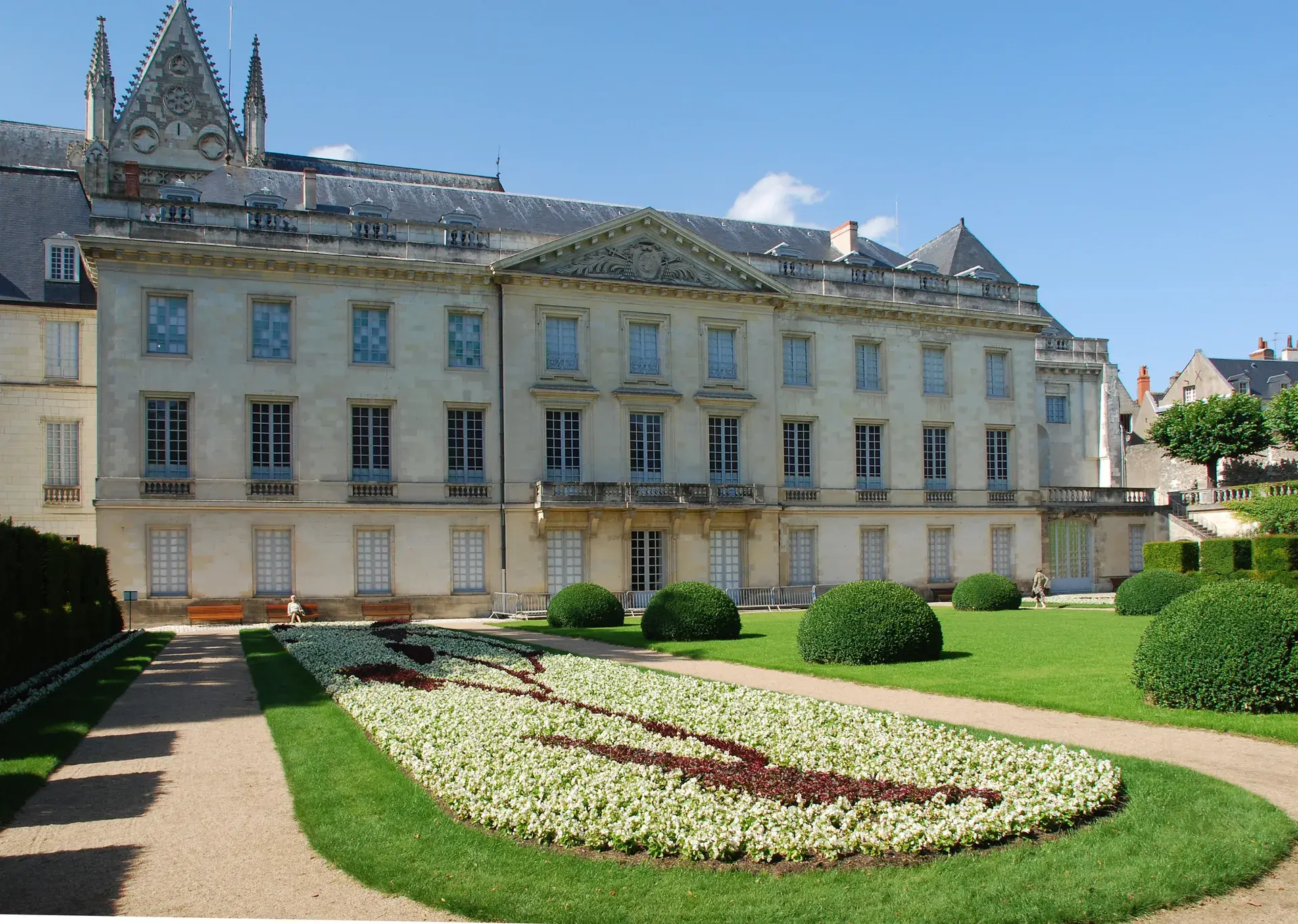
Located near the Cathédrale Saint-Gatien in Tours, the Musée des Beaux-Arts occupies the historic former Archbishop's Palace. This site layers centuries of history, from Roman foundations to its current role as a major cultural institution in the Loire Valley. The building, classified as a Monument Historique in 1983, offers visitors a journey through both architectural and art history.
A Palace Through the Centuries
The site's origins trace back to the 4th century when the first bishops of Tours established their residence along the city's Roman rampart. The building's foundations incorporate Gallo-Roman substructures, including vestiges of the ancient city of Caesarodunum. A chapel first built in the 4th century was reconstructed in 591 by order of the historian Gregory of Tours.
Significant architectural evolution continued over the centuries. The 12th-century Synod wing, a grand hall, was constructed and later hosted the States General of France in 1468 and 1484. In the 17th century, Bishop Bertrand d'Eschaux led a reconstruction that added a classical tufa wing. The 18th century brought further enhancements, including a semicircular main courtyard and an imposing portal commissioned by Monseigneur de Conzié in 1775.
From Palace to Public Museum
Following the French Revolution, the palace was seized and repurposed, temporarily housing a theater and a library. It also served as a depot for artworks confiscated during the period. The museum was officially created in 1801, with Charles-Antoine Rougeot, founder of the city's drawing school, playing a key role in its establishment.
Despite its early creation, the museum's collections were moved several times before the city of Tours acquired the building. The artworks permanently returned to the former archiepiscopal palace in 1910, establishing the institution as it is known today.
Art Collections and Unique Exhibits
The Musée des Beaux-Arts de Tours showcases a diverse collection of paintings, sculptures, and art objects from antiquity to the present. It is particularly renowned for its collection of Italian Primitives, established by a major bequest from collector Octave Linet in 1963. This collection is considered the second largest in France, after the Louvre's. The museum also features significant Flemish, Dutch, and French paintings.
Beyond the traditional artworks, the museum holds a truly unique exhibit: Fritz, a taxidermied Asian elephant. Fritz was a circus elephant with Barnum & Bailey who, after a bout of madness during a parade, was killed in the streets of Tours on June 10, 1902. His preserved remains were installed in the palace's former stables the following year.
The Palace Grounds
The museum's courtyard and gardens contain their own historical points of interest. A majestic Cedar of Lebanon, planted in 1804 during the time of Napoleon I, dominates the main courtyard. This tree, standing 31 meters tall with a span of 33 meters, was designated a 'Remarkable Tree of France' in 2001. The grounds also include a French-style garden and terraces that follow the curve of an ancient Roman amphitheater.
FAQ
What is the most unusual exhibit at the Musée des Beaux-Arts de Tours?
The museum's most unusual exhibit is Fritz, a full-size taxidermied Asian elephant. Fritz was part of the Barnum & Bailey circus and was killed in Tours in 1902. His remains have been on display in the palace's former stables since 1903.
What is the history of the building that houses the museum?
The museum is located in the former Archbishop's Palace (Palais des Archevêques), a site with a history that began in the 4th century. The building showcases a mix of architectural styles, including Gallo-Roman, medieval, and classical elements.
What is the significance of the large tree in the museum's courtyard?
The courtyard features a majestic Cedar of Lebanon planted in 1804 under Napoleon I. In 2001, it was designated a 'Remarkable Tree of France' due to its impressive size, with a height of 31 meters and a branch span of 33 meters.
What kind of art is the Musée des Beaux-Arts de Tours known for?
The museum is particularly known for its extensive collection of Italian Primitives, one of the most significant in France. It also holds important collections of Flemish, Dutch, and French paintings from various centuries.