Holy Church of Saint Spyridon: Corfu Landmark
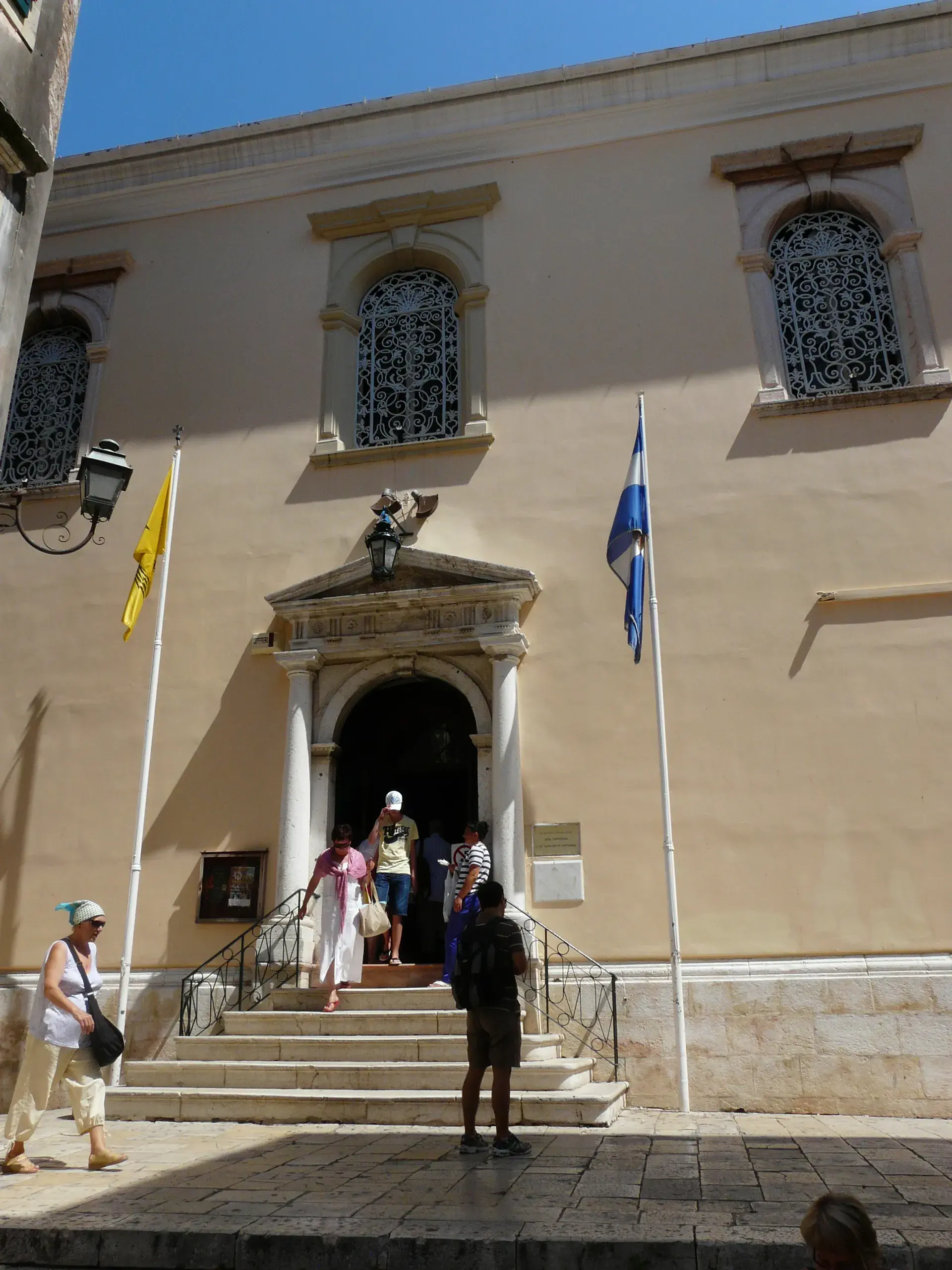
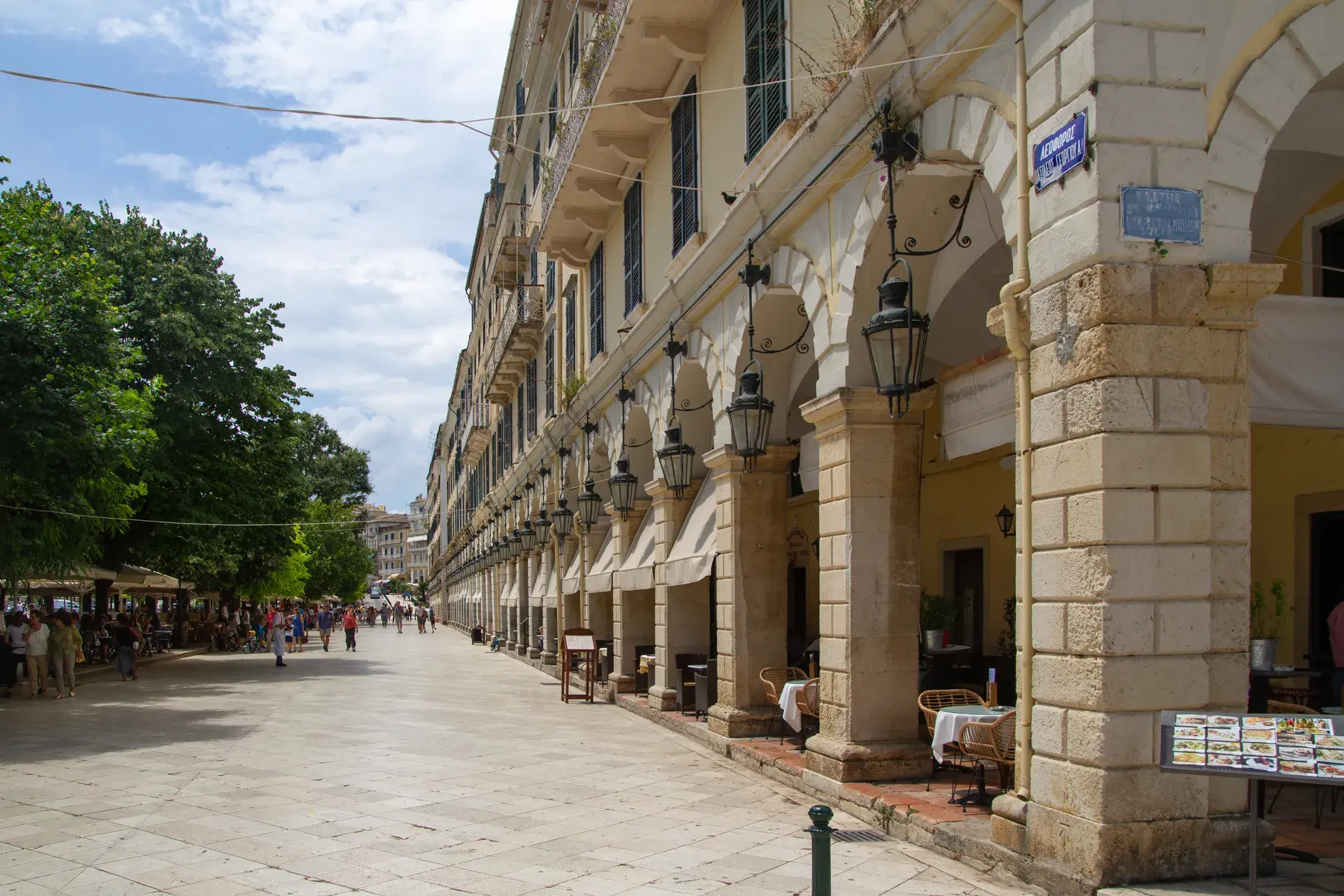
The tallest bell tower in the Ionian Islands crowns a church where a patron saint's slippers are said to wear out from his nightly wanderings. Situated in the narrow cobblestone alleys behind the Liston arcade and Spianada square, the Holy Church of Saint Spyridon stands as a central anchor of Corfu's Old Town.
Venetian Architecture and Design
Built between 1589 and 1590, the single-nave basilica exhibits strong Venetian architectural influence. Its most prominent feature is the red-domed campanile, completed around 1620. Modeled after the campanile of San Giorgio dei Greci in Venice, it remains the tallest structure in the Ionian Islands and serves as a visible landmark for ships approaching the port.
Inside the church, the coffered ceiling draws immediate attention. Originally painted by Panagiotis Doxaras in 1727, the intricate artwork was later restored by Nikolaos Aspiotis after sustaining moisture damage. Over the west door, the imperial coat of arms of the House of Romanov commemorates a period of Russian diplomatic protection in the 19th century.
The Relics of a Patron Saint
Saint Spyridon, a 4th-century shepherd and bishop from Cyprus, is revered as the protector of Corfu. After the fall of Constantinople in 1453, a Greek monk smuggled the saint's incorrupt relics to the island to protect them from the Ottomans. The relics were relocated to the current church after an earlier sanctuary was dismantled to expand Venetian fortifications.
Today, the relics rest in a chapel within an ornate double sarcophagus, featuring a velvet-lined inner casket and an outer wooden chest clad in silver leaf. The heavy scent of frankincense fills the air in the relic chamber, emanating from 53 silver and gold oil lamps and thuribles suspended from the ceiling.
The Legend of the Worn Slippers
According to local belief, Saint Spyridon is known as the "Walking Saint." Tradition holds that he leaves his casket at night to roam the world healing the sick. Because of these nocturnal journeys, the embroidered silk and velvet slippers covering his feet regularly wear out.
To accommodate this, the sarcophagus was designed with a removable bottom panel so clergy can easily replace the footwear. The worn slippers are subsequently cut into tiny fragments and distributed to pilgrims as blessed relics.
Cultural Significance and Litanies
The church operates as an active Greek Orthodox place of worship and Corfu's primary pilgrimage shrine. Local tradition credits Saint Spyridon with saving the island four times: from famine, twice from the plague, and from the 1716 Ottoman siege. A Venetian senate tribute inside the church commemorates this 1716 deliverance.
Devotion to the saint is deeply embedded in the local culture, making "Spyridon" (or Spiros) and "Spyridoula" the most common given names on the island. Four times a year, the saint's upright reliquary is carried through the streets in grand public processions accompanied by Corfu’s renowned brass marching bands.
FAQ
Why is Saint Spyridon known as the "Walking Saint"?
Local tradition claims that Saint Spyridon leaves his casket at night to roam the world healing the sick, which regularly wears out his embroidered silk and velvet slippers.
What is the architectural style of the Holy Church of Saint Spyridon?
Built between 1589 and 1590, the church is a single-nave basilica that exhibits strong Venetian architectural influence. Its towering red-domed bell tower was modeled after San Giorgio dei Greci in Venice.
Where did the relics of Saint Spyridon come from?
Saint Spyridon was a 4th-century shepherd and bishop from Cyprus. His relics were smuggled to Corfu in 1453 by a Greek monk to protect them from the Ottomans after the fall of Constantinople.