Corfu Old Fortress: Historic Venetian Citadel
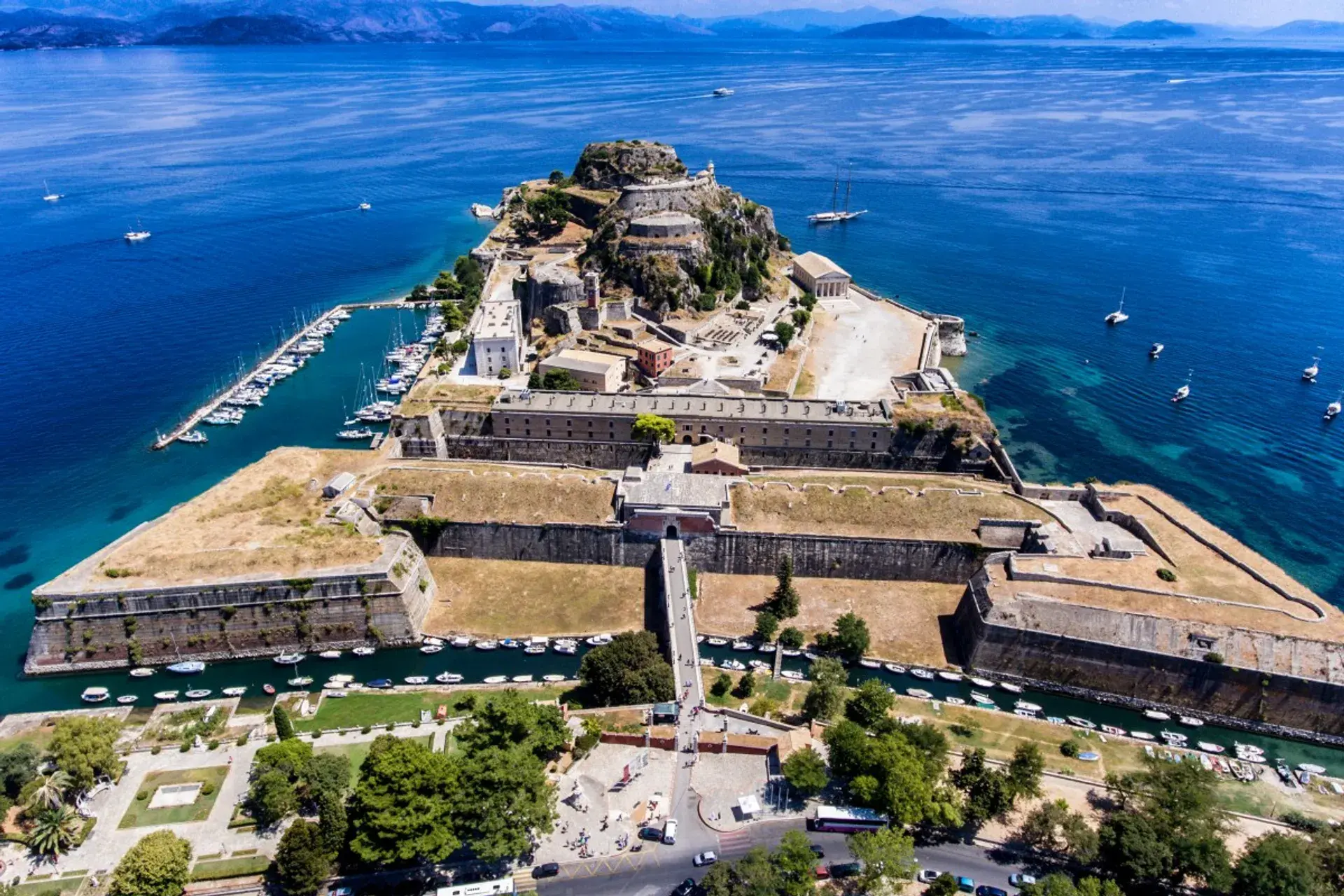
Standing sentinel over ancient sea fortifications, the historic Old Fortress Lighthouse crowns a massive seaside citadel. The Old Fortress, or Palaio Frourio, anchors the eastern end of Corfu Town opposite Spianada Square. Built on a twin-peaked rocky promontory, the site literally gave the island its modern name; 'Corfu' derives from the Byzantine word Koryfo, meaning peaks or crests. Together with the New Fortress at the western end of the city, this citadel defines the protected footprint of the UNESCO World Heritage site.
A Legacy of Defense
The site’s defensive history began in the 6th century CE. Following the destruction of the ancient city of Palaiopolis by Visigoth incursions, the local population relocated to this naturally fortified promontory. During Venetian rule from 1386 to 1797, military engineers Michele and Gian Gerolamo Sanmicheli transformed the settlement into a formidable island citadel. Their design featured major 16th-century bastions and an artificial seawater moat known as the Contrafossa, which still separates the fortress from Corfu Town.
The fortress successfully secured naval trade routes and withstood multiple Ottoman sieges in 1537, 1571, and 1716. A marble statue outside the Spianada entrance honors Saxon Field Marshal Count Johann Matthias von der Schulenburg, who famously directed the successful defense during the 1716 siege.
British Additions and Later History
During the British Protectorate between 1814 and 1864, significant infrastructure was added to the Old Fortress. The British military constructed large barracks, a hospital, and a 60-metre-long permanent access bridge in 1819, which replaced an earlier Venetian wooden drawbridge.
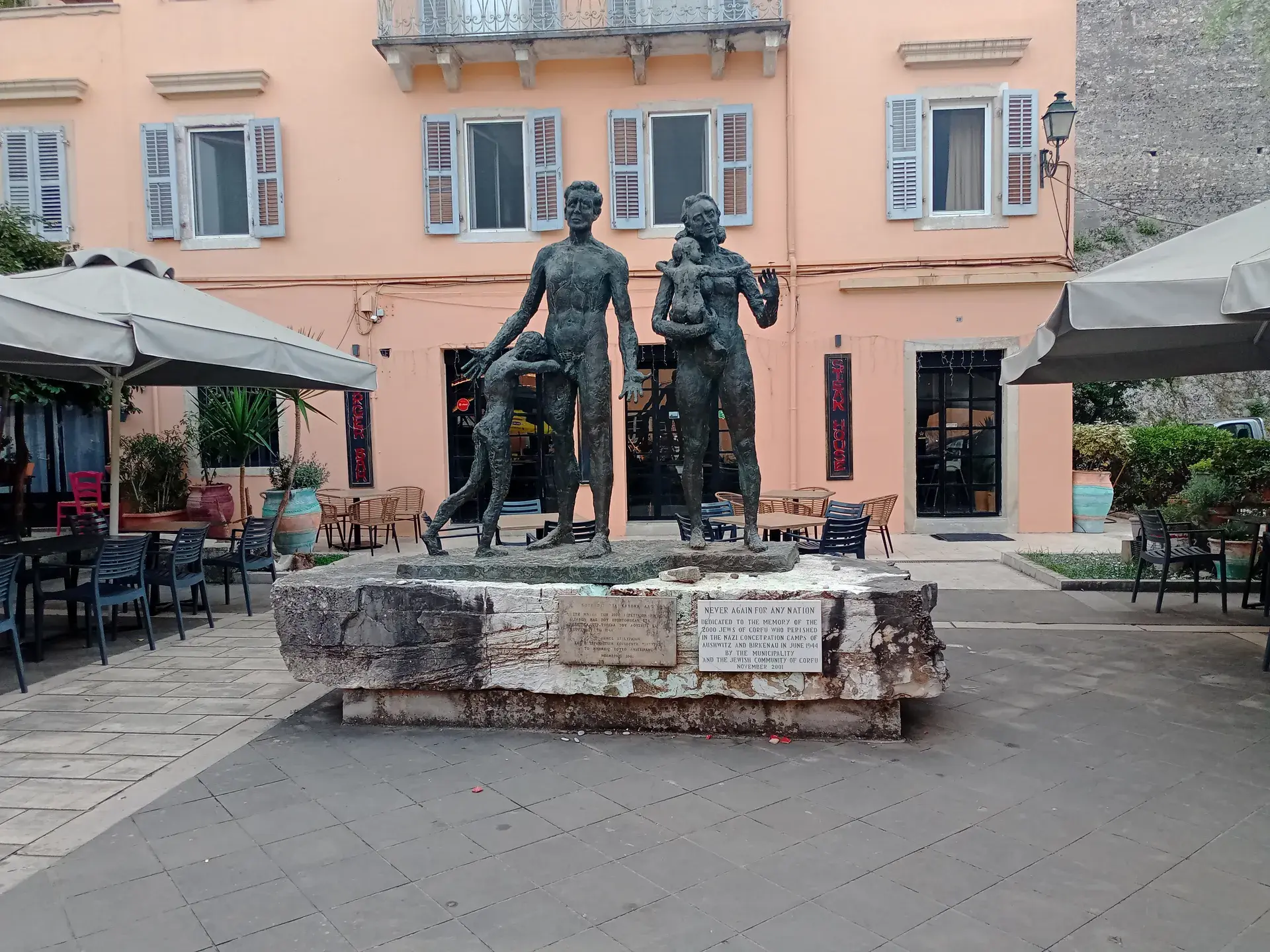
One of the most striking British additions is the Church of Saint George. While it appears to be an ancient Greek Doric peristyle temple, it was actually constructed in 1840 as an Anglican military chapel. Following the British departure when the site was ceded to Greece in 1864, the building was converted into an Orthodox church. Later in the 20th century, the fortress witnessed a dark chapter; during World War II, occupying Axis forces used the grounds to detain Corfu's Jewish community prior to their deportation in 1944.
The Citadel Today
Today, the Old Fortress operates as a ticketed archaeological site managed by the Hellenic Ministry of Culture. The grounds feature a museum exhibiting Byzantine icons and sculptures. The former British hospital now houses the Department of Music Studies of the Ionian University and the Corfu Historical Archive.
Accessing the site requires crossing the elevated stone bridge over the Contrafossa, where small boats moor in the shimmering green-blue seawater channel, and passing beneath an arched stone portal bearing the weathered marble Lion of Saint Mark. Inside, a steep stone pathway leads past a visitor café and seasonal open-air concert spaces up to the lighthouse lookout. At this high vantage point, exposed winds sweep across the peak, offering panoramic views of the sea channel, the Albanian coastline, and the historic rooftops of Corfu Town.
FAQ
Where does the name Corfu come from?
The island's modern name derives from 'Koryfo' (meaning peaks or crests), which was the Byzantine settlement founded in the 6th century. This name directly refers to the two natural rocky hilltops on which the Old Fortress was built.
What is the ancient-looking temple inside the Old Fortress?
The building that resembles an ancient Greek Doric peristyle temple is actually the Church of Saint George. It was built much later, in 1840, by the British as an Anglican military chapel and was converted into an Orthodox church in 1865.
What is inside the Old Fortress today?
Today, the Old Fortress is a ticketed archaeological site managed by the Hellenic Ministry of Culture. It contains a museum of Byzantine icons and sculptures, the Corfu Historical Archive, a university music department, a visitor café, and panoramic walking paths leading up to the lighthouse lookout.
Discover Corfu like never before
Dive into Corfu hidden stories and secret spots with Ciceru interactive tours.
Explore tour
Audioguide
Quizzes
Maps
Solo
Couples
Groups & families

© Photo by George Karidis via Google Maps · Google Places