Cathedral of Saint Sabinus: Bari's Romanesque Marvel
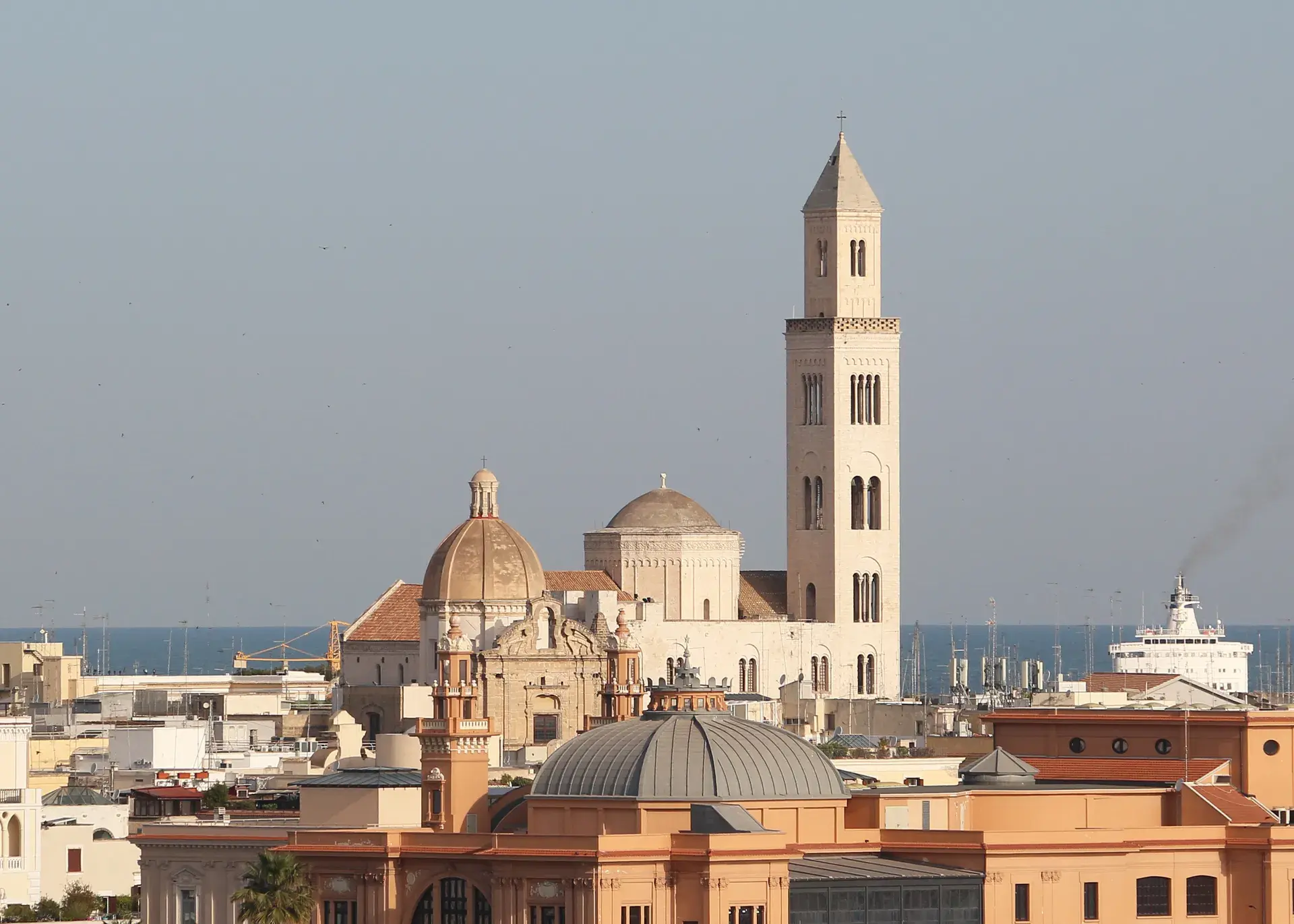
The Cathedral of Saint Sabinus, also known as the Duomo di Bari, serves as the seat of the Archbishop of Bari-Bitonto. This impressive structure is a significant example of the Apulian Romanesque architectural style, reflecting the layered history of this Mediterranean crossroads city. While often overshadowed by the nearby Basilica of Saint Nicholas, the cathedral holds profound local religious importance and stands as a testament to Bari's resilience.
History of Destruction and Rebirth
The site has been a place of worship since at least the 6th century, with traces of an early Christian basilica found beneath the current nave. A later Imperial Byzantine cathedral stood here until 1156, when it was destroyed along with most of the city by William I of Sicily, known as 'the Wicked'.
Reconstruction began shortly after under Archbishop Rainaldo, utilizing materials from the destroyed cathedral and other razed buildings. The new Romanesque church was largely built in the late 12th century and was formally consecrated on October 4, 1292. In the 18th century, the interior and façade underwent a significant Baroque refurbishment designed by Domenico Antonio Vaccaro. However, a major restoration project in the 1950s stripped away many of these later additions, returning the interior to its original, austere Romanesque appearance.
Architectural Highlights
The cathedral's design incorporates Roman, Byzantine, Arab, and Norman-Swabian influences. One of its most fascinating features occurs annually on June 21, the summer solstice. On this day, the sun's rays shine through the 18 segments of the large rose window on the façade, aligning perfectly with a corresponding marble rose mosaic on the nave floor.
Another curiosity is found on the cathedral's portal, which features a carving of King Arthur. This unusual detail points to Bari's historic connections with Celtic mythology and the Matter of Brittany, highlighting its role as a cultural crossroads.
Treasures Within and Below
The cathedral is dedicated to Saint Sabinus, a bishop of Canosa. His relics were brought to Bari in 844 by Saint Angelarius and are now venerated by pilgrims in the crypt. The interior's excellent acoustics also make it a fitting venue for occasional organ concerts.
Beneath the main floor lies the Museo del Succorpo, an archaeological area extending five meters deep. Excavations revealed Roman-era remains from the 1st to 4th centuries, including a paved road. The area also preserves parts of the 6th-century early Christian basilica, which features the polychrome 'Mosaic of Timothy' depicting aquatic life like octopuses and fish.
The Cathedral Today
Today, the Cathedral of Saint Sabinus remains an active Roman Catholic church, central to the local community for baptisms, weddings, and festivals. It continues to be the episcopal seat for the Archbishop of Bari-Bitonto and welcomes visitors and pilgrims who come to admire its architecture and venerate the relics of its patron saint.
FAQ
What is the Cathedral of Saint Sabinus famous for?
It is a prominent example of Apulian Romanesque architecture, holds the relics of Saint Sabinus, and is known for a unique light phenomenon that occurs on the summer solstice.
When was the Cathedral of Saint Sabinus built?
The present building was constructed primarily between the late 12th and late 13th centuries on the site of a previous Byzantine cathedral. It was consecrated on October 4, 1292.
What is the summer solstice event at Bari Cathedral?
On June 21, the sunlight that enters through the façade's rose window aligns perfectly with a corresponding rose mosaic on the nave's floor.
What can be seen under the Cathedral of Saint Sabinus?
An archaeological area, the Succorpo, lies beneath the cathedral. It contains a Roman-era road and remains of a 6th-century Christian basilica, including a well-preserved mosaic floor.