Via dei Portici: Bolzano's Historic Merchant Arcades
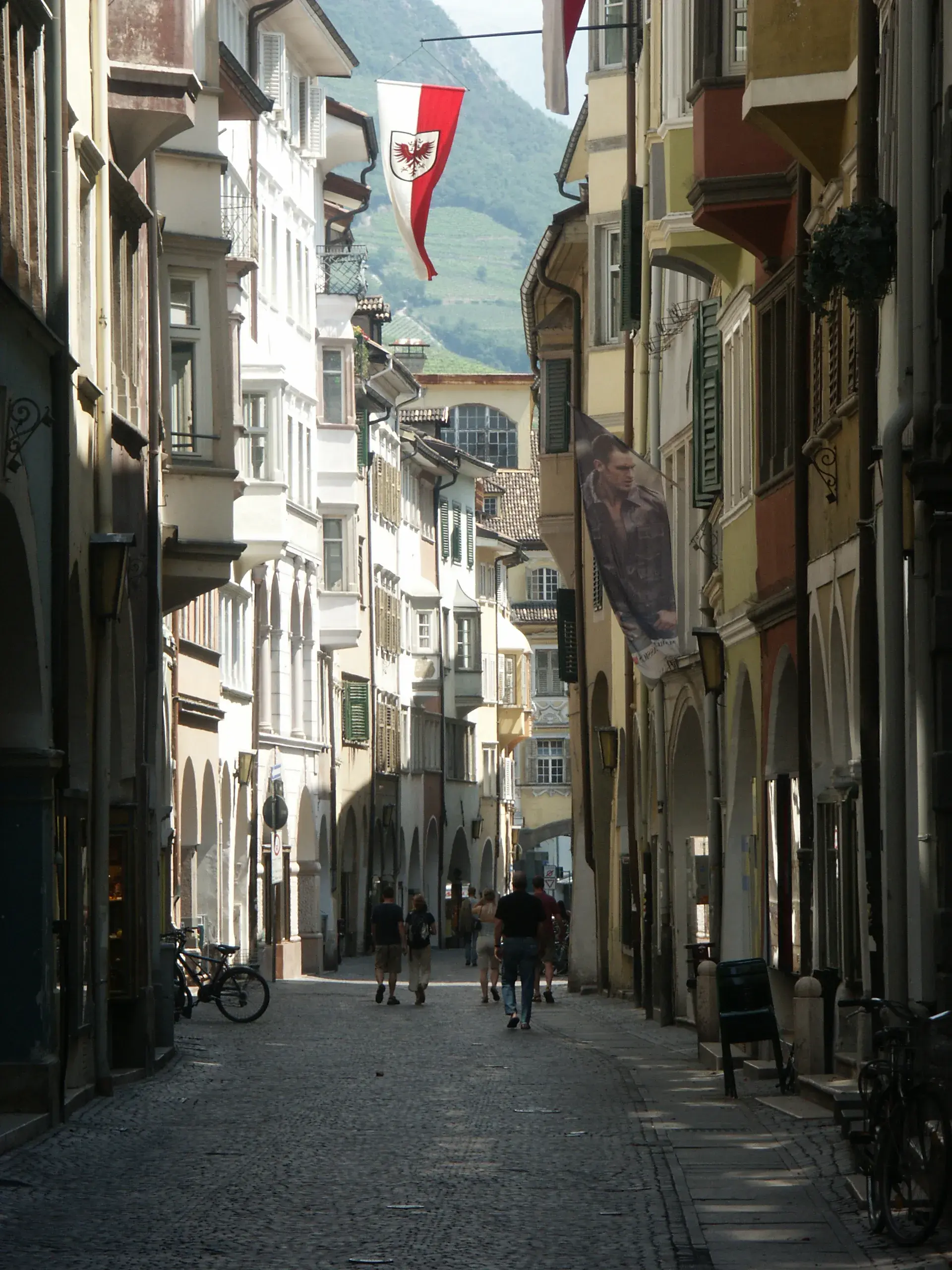
For over eight centuries, a single 300-meter street has served as the commercial spine of Bolzano, physically and culturally bridging Northern Europe with Italy. Known as Via dei Portici in Italian and Laubengasse in German, this pedestrianized thoroughfare forms the primary historical axis of the city's Centro Storico. Running east-to-west, it connects the agricultural markets at Piazza delle Erbe to the historical administrative district at Piazza del Municipio.
A Medieval Transalpine Trade Hub
Established around 1180 by the Prince-Bishops of Trento, the street was designed as a planned commercial nucleus for transalpine trade. Its creation facilitated international commerce along key corridors connecting northern Europe to the Italian peninsula. Local civic tradition reflects this dual cultural heritage, holding that the northern side of the arcades was historically associated with Germanic traders, while the southern side was used by Italian merchants.
The Architecture of the Laubenhaus
The street is lined with continuous vaulted arcades supported by stone pillars and arches. Behind these colonnades sit medieval townhouses known as Laubenhäuser. Because street frontage on this key market route was commercially critical, building plots were subdivided into ribbon-like parcels. Some facades measure just 4 meters wide, forcing merchants to build vertically and extend their properties up to 50 meters inward to maximize usable space.
These structures were functionally zoned for trade. Ground-floor arcades served as public display areas, while deep vaulted back rooms and multi-level cellars functioned as secure warehouses. Upper levels provided residential space for merchant families and visiting traders, centered around internal lightwells (Lichthöfe). Over the centuries, the original Gothic buildings received Renaissance, Baroque, and Rococo updates, incorporating wrought-iron balconies and protruding bay windows known as Erker.
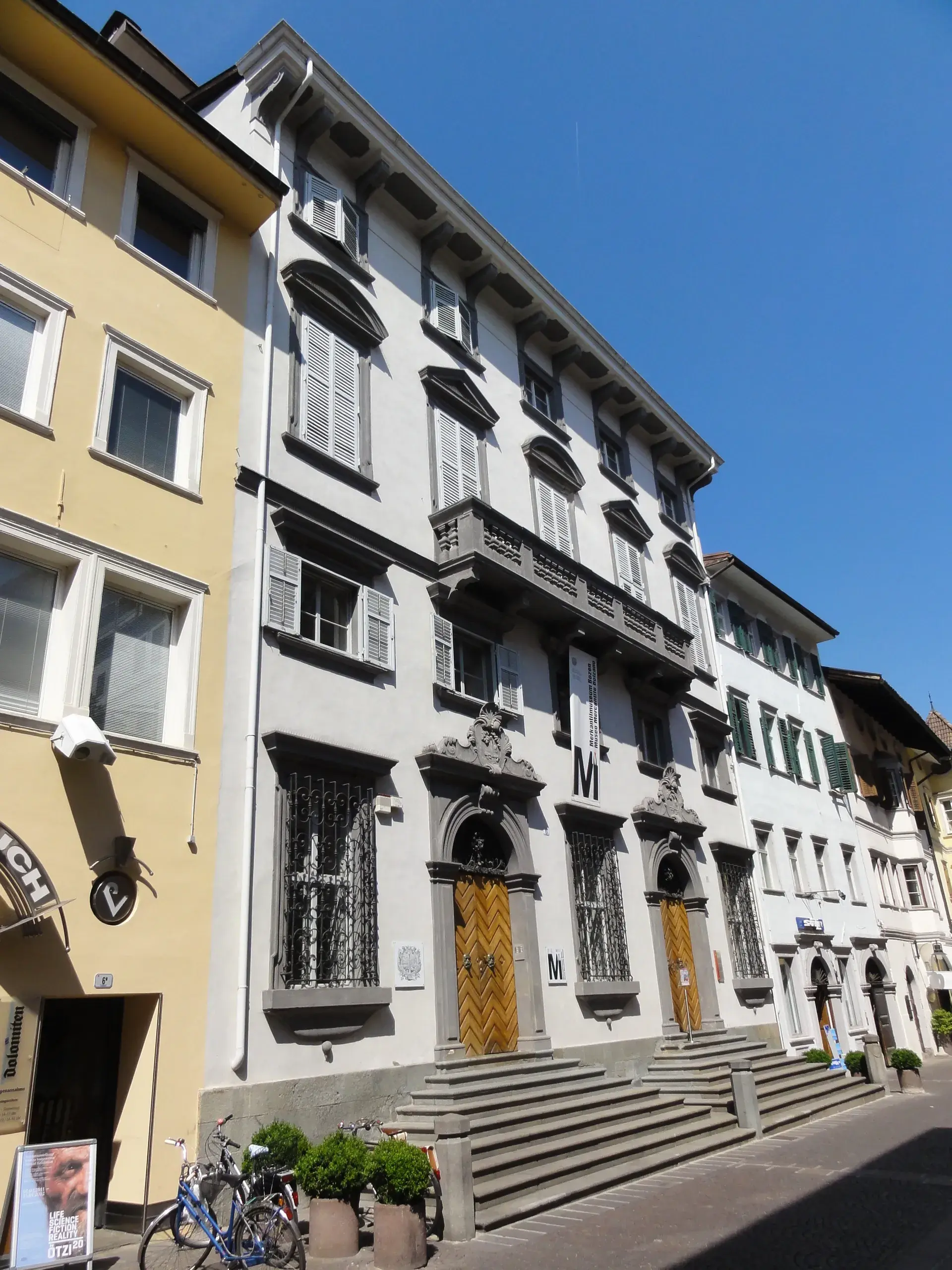
Prominent architectural landmarks along the route include the 18th-century Palazzo Mercantile and the Old Town Hall (Altes Rathaus), which features 15th-century fresco fragments attributed to Conrad Waider.
Hidden Curiosities and Modern Appeal
The enclosed stone colonnades create a distinct acoustic environment characterized by echoes, while natural light filters down through the deep archways and open inner lightwells. Beneath the modern street paving, traces mark the course of the Ritsch, a historic subterranean water channel that once supplied water and fire defense to the arcade houses.
Today, Via dei Portici remains open around the clock as Bolzano's central pedestrian shopping spine. The route houses a mix of international retail stores, cafés, and historic heritage retailers, including the Madonna and Schwarzer Adler pharmacies. It also serves as a central venue for public events, such as the annual Lorenzinacht wine festival held every August 10.
FAQ
Why are the buildings on Via dei Portici so narrow and deep?
Street frontage was commercially critical along this medieval market route, leading to properties being subdivided into parcels as narrow as 4 meters. Merchants expanded vertically and built up to 50 meters inward to maximize their usable warehouse and living space.
What is the historical significance of the northern and southern sides of the street?
According to local civic tradition, the northern side of the arcades was historically used by Germanic traders, while the southern side was associated with Italian merchants, representing Bolzano's dual cultural heritage.
What are the main landmarks to see on Via dei Portici?
Notable architectural structures include the 18th-century Palazzo Mercantile and the Old Town Hall, which features 15th-century fresco fragments by Conrad Waider. Heritage retailers like the historic Madonna and Schwarzer Adler pharmacies also operate along the street.