Cathedral Assumption of Mary: Bolzano's Gothic Gem
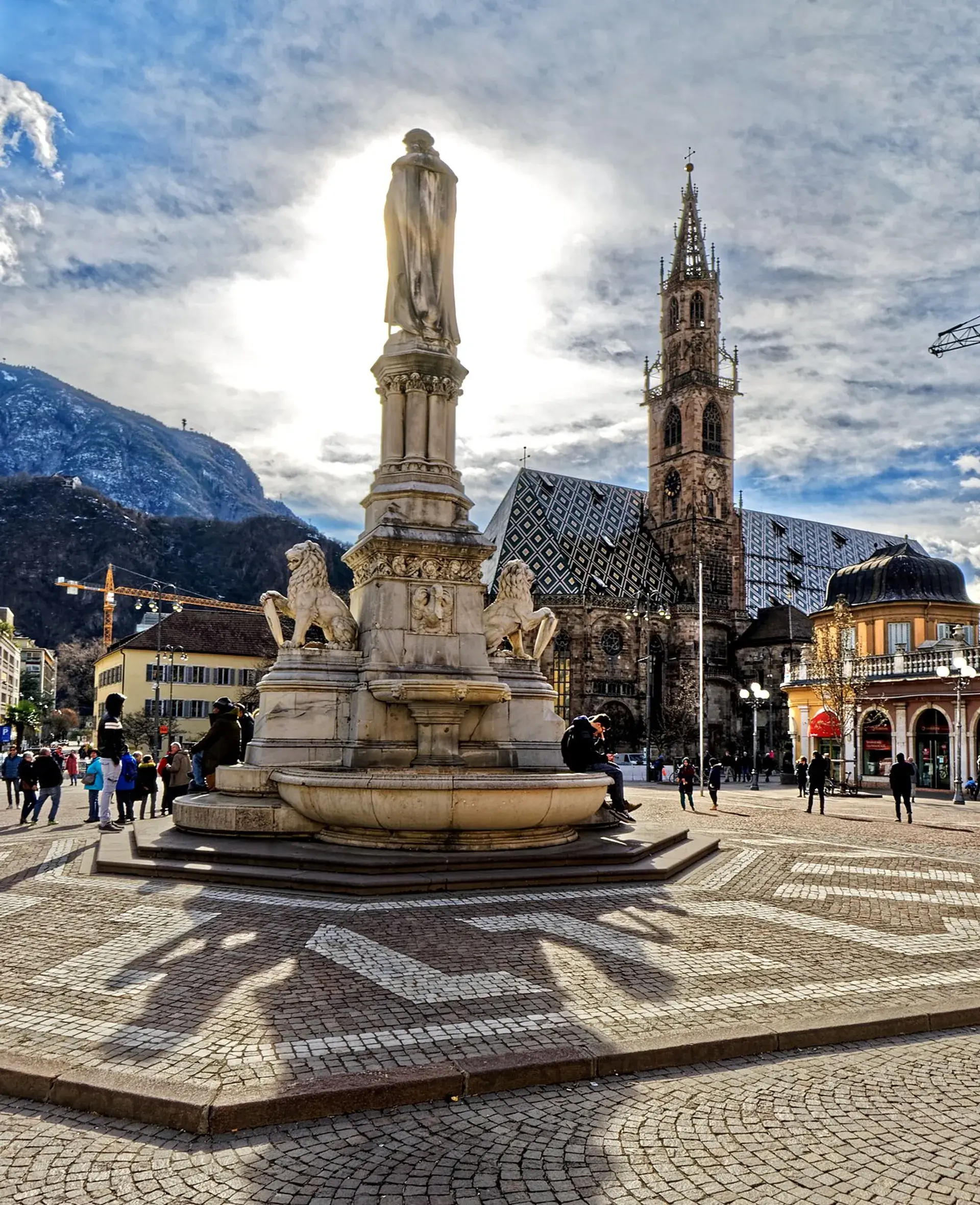
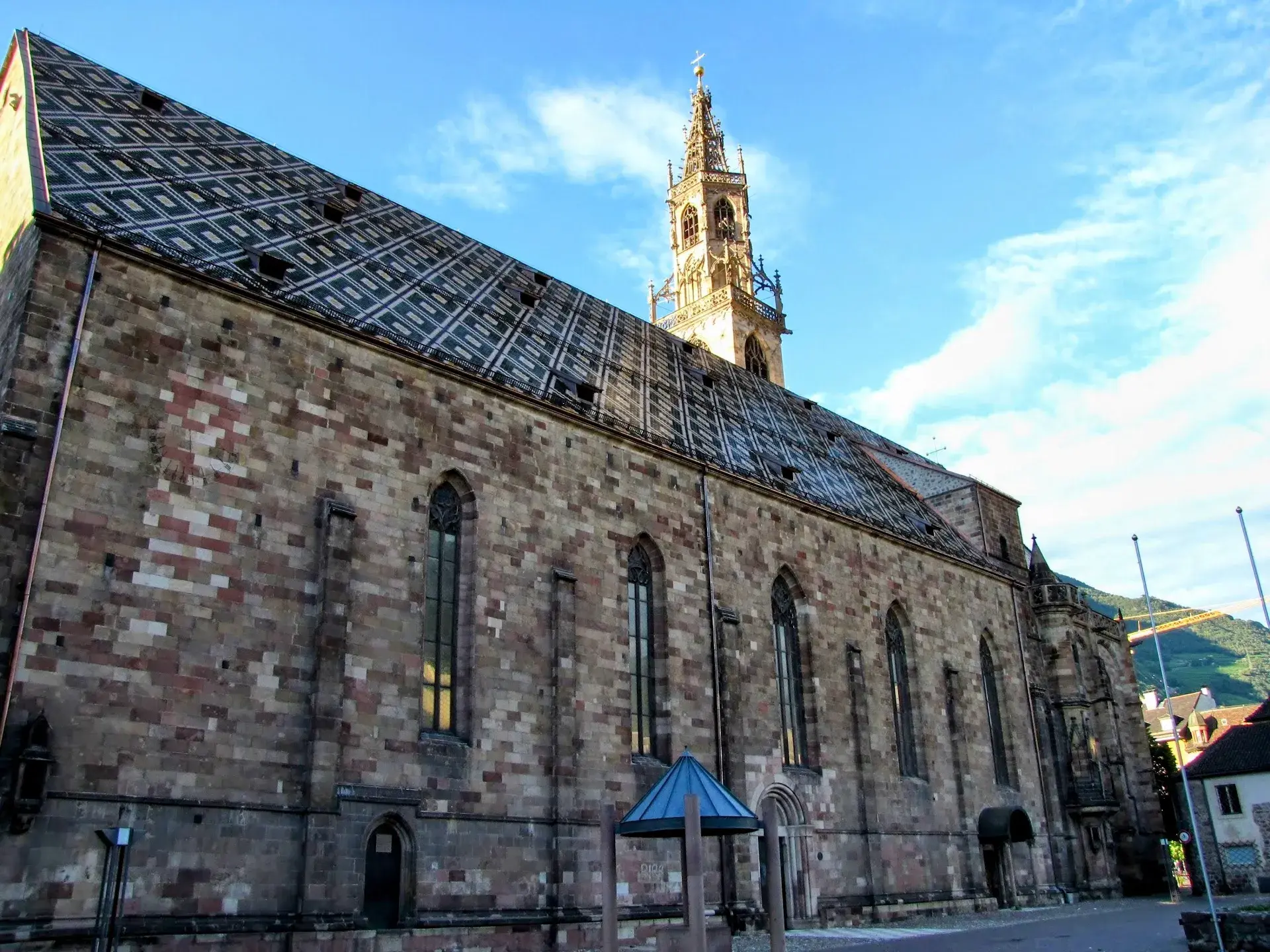
The Cathedral of the Assumption of Mary stands as a striking blend of civic pride and cultural fusion in the historic center of Bolzano. Anchoring the space between Piazza Walther and the medieval trading corridors of Via dei Portici, the structure embodies South Tyrol's hybrid identity. The building merges northern Germanic Gothic design and Swabian stone-carving with Italian Romanesque basework.\n\n## Polychrome Roof and Gothic Architecture\n\nThe defining feature of the cathedral is its steeply pitched late-Gothic roof, clad in polychrome glazed ceramic tiles. These tiles are arranged in prominent diamond and zigzag geometric patterns featuring vibrant green, golden-yellow, and white glazes. This design closely mirrors the Central European imperial Gothic roofing tradition, seen in structures like St. Stephen's Cathedral in Vienna, which provided weatherproofing while displaying civic prosperity.\n\nConstructed primarily from reddish Val Gardena sandstone and yellowish Bassa Atesina sandstone, the cathedral functions as a three-aisled hall church. A 65-meter-tall open-work sandstone spire crowns the structure. Designed by Burkhard Engelberg of Augsburg and executed between 1501 and 1519 by Swabian master stonemason Hans Lutz von Schussenried, the intricate filigree stone tracery serves as a major visual landmark in the city.\n\n## Centuries of Layered History\n\nThe cathedral rests on deep historical foundations, beginning with a 4th to 6th-century early Christian basilica. The site evolved through an 8th to 9th-century Carolingian church and a Romanesque parish church consecrated in 1180. Around 1300, Lombard and Swabian master builders transformed the structure into its current Gothic form.\n\nDuring World War II, Allied air raids in 1944 severely damaged the cathedral walls, roof, and interior. Subsequent post-war restorations in 1948 led to the excavation of the ancient foundations beneath the nave, revealing an ancient Roman votive inscription and the footprint of the original basilicas.\n\nIn a modern display of civic dedication, severe winter weather in 2008 caused several roof tiles to detach. The local parish launched a public campaign to fund the structural repair, allowing citizens to symbolically purchase replacement roof tiles for €25 each.\n\n## Hidden Curiosities and Treasures\n\nThe exterior features the Wine Door, or Leitacher Törl, a high-Gothic lateral portal facing Piazza Walther. Decorated with carvings of medieval vineyard workers, this entrance marks the historical location where town vintners held licenses to sell local wine.\n\nInside, the Baroque Chapel of Grace holds a 12th-century wooden statue known as Our Lady of the Bog (Liebe Frau vom Moos). According to local legend, a medieval coachman discovered the miraculous statue of the Virgin Mary in the marshlands of the nearby Isarco river.\n\nToday, the Cathedral of the Assumption of Mary remains an active Catholic place of worship and the co-cathedral of the Diocese of Bolzano-Bressanone. The adjoining former priory is home to the Cathedral Treasury Museum, which exhibits medieval and Baroque liturgical goldsmith work and vestments.
FAQ
What is the architectural style of Bolzano Cathedral?
The cathedral is a late-Gothic hall church built with reddish Val Gardena and yellowish Bassa Atesina sandstone, resting on earlier Romanesque and early Christian foundations.
Why does the Cathedral of the Assumption of Mary have a colorful roof?
The steeply pitched roof features green, golden-yellow, and white glazed tiles arranged in geometric patterns. This style reflects a Central European Gothic tradition designed for weatherproofing and showcasing civic wealth.
How was the cathedral roof repaired in 2008?
After heavy snowfall caused tiles to detach in 2008, citizens of Bolzano helped fund the structural restoration by symbolically purchasing individual replacement tiles for €25 each.
Discover Bolzano like never before
Dive into Bolzano hidden stories and secret spots with Ciceru interactive tours.
Explore tour
Audioguide
Quizzes
Maps
Solo
Couples
Groups & families

© Photo by laurentiu botez via Google Maps · Google Places