Chiesa dei Francescani: Bolzano's Gothic Cloister
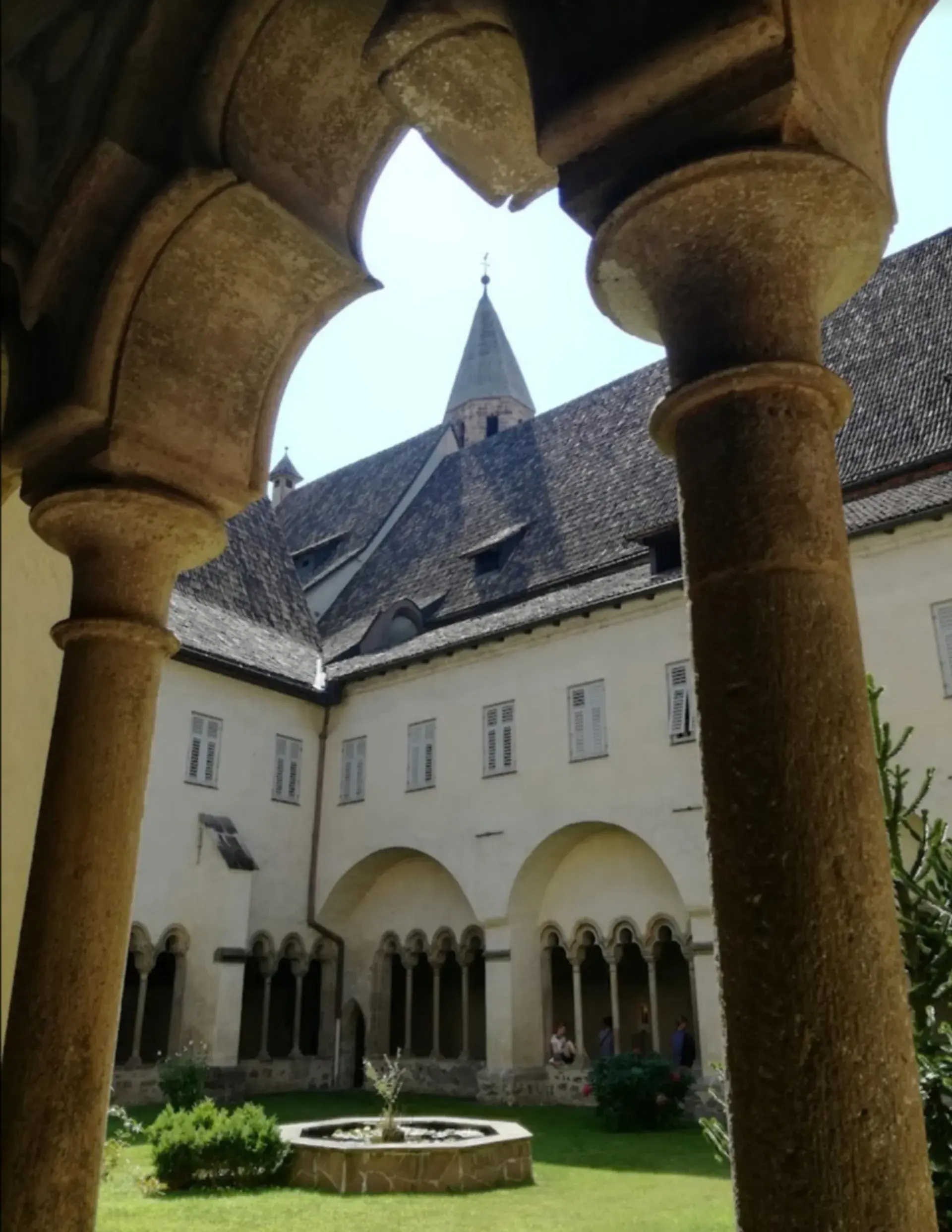
Step from a bustling fruit market directly into an enclosed 14th-century sanctuary of stone and muted pigment. Located just north of Piazza delle Erbe, the cloister of the Chiesa e convento dei Francescani presents an immediate shift from the busy outdoor commerce of central Bolzano into the hushed stillness of stone arcades and a central courtyard.
A History of Rebuilding and Resilience
The Franciscan Order established a community in Bolzano around 1221. After the original Romanesque friary and church were destroyed by fire in 1291, the complex was entirely rebuilt in the Gothic style between the 1320s and 1348. The cloister and its historic fresco cycles demonstrated remarkable resilience over the centuries, notably surviving aerial bombing in 1944 that caused significant damage to the main church.
Gothic Architecture and Giotto-School Frescoes
The cloister is defined by Gothic trefoil arcades supported by slender stone columns. During its construction, Bolzano's position as a cross-Alpine trade hub facilitated a rich exchange of artistic styles. This cultural intersection brought Italian Giottesque fresco painters directly to the friary. Alongside the Dominican Church, the cloister stands as a prime example of the early 14th-century wave of Giotto-influenced fresco painting across Bolzano. The site preserves fragmentary 14th-century frescoes as well as 18th-century lunettes depicting the life of St. Francis. The cloister also provides access to the medieval Chapels of St. Erhard and St. John.
Hidden Curiosities and Academic Debates
The complex houses unique and long-hidden artworks. A rare fresco from circa 1500 depicts sixteen Franciscan academic masters and theologians from universities like Oxford, Paris, Naples, and Heidelberg. Rather than portraying conventional static church fathers, the painting captures the scholars in animated academic debate. Additionally, a series of thirty painted medallions from 1609 depicting hermit saints remained completely concealed in the north wing until they were uncovered during restoration works in the 1970s.
An Active Monastic Sanctuary
Today, the cloister operates as an active Franciscan religious house and is open daily to visitors seeking quiet contemplation. The site also holds a deep connection to early Franciscan history through local folklore. According to tradition, a young Francis of Assisi once accompanied his cloth-merchant father, Pietro Bernardone, on a business trip to Bolzano, where he purportedly served mass and rang the bell in the Chapel of Saints Ingenuin and Erhard.
FAQ
When was the cloister of Chiesa dei Francescani built?
The current Gothic cloister was built between the 1320s and 1348, replacing an earlier 13th-century Romanesque structure that was destroyed by a fire in 1291.
What kind of artwork can be seen inside the cloister?
The cloister features 14th-century Giotto-school frescoes, 18th-century lunettes depicting the life of St. Francis, 17th-century hermit medallions, and a rare circa 1500 fresco showing Franciscan theologians engaged in academic debate.
Is Chiesa dei Francescani still an active religious site?
Yes, the cloister operates as an active Franciscan religious house and is open daily to tourists and visitors for quiet contemplation.
Discover Bolzano like never before
Dive into Bolzano hidden stories and secret spots with Ciceru interactive tours.
Explore tour
Audioguide
Quizzes
Maps
Solo
Couples
Groups & families

© Photo by Tiziana Visilli via Google Maps · Google Places