Piazza delle Erbe & Neptune Fountain in Bolzano
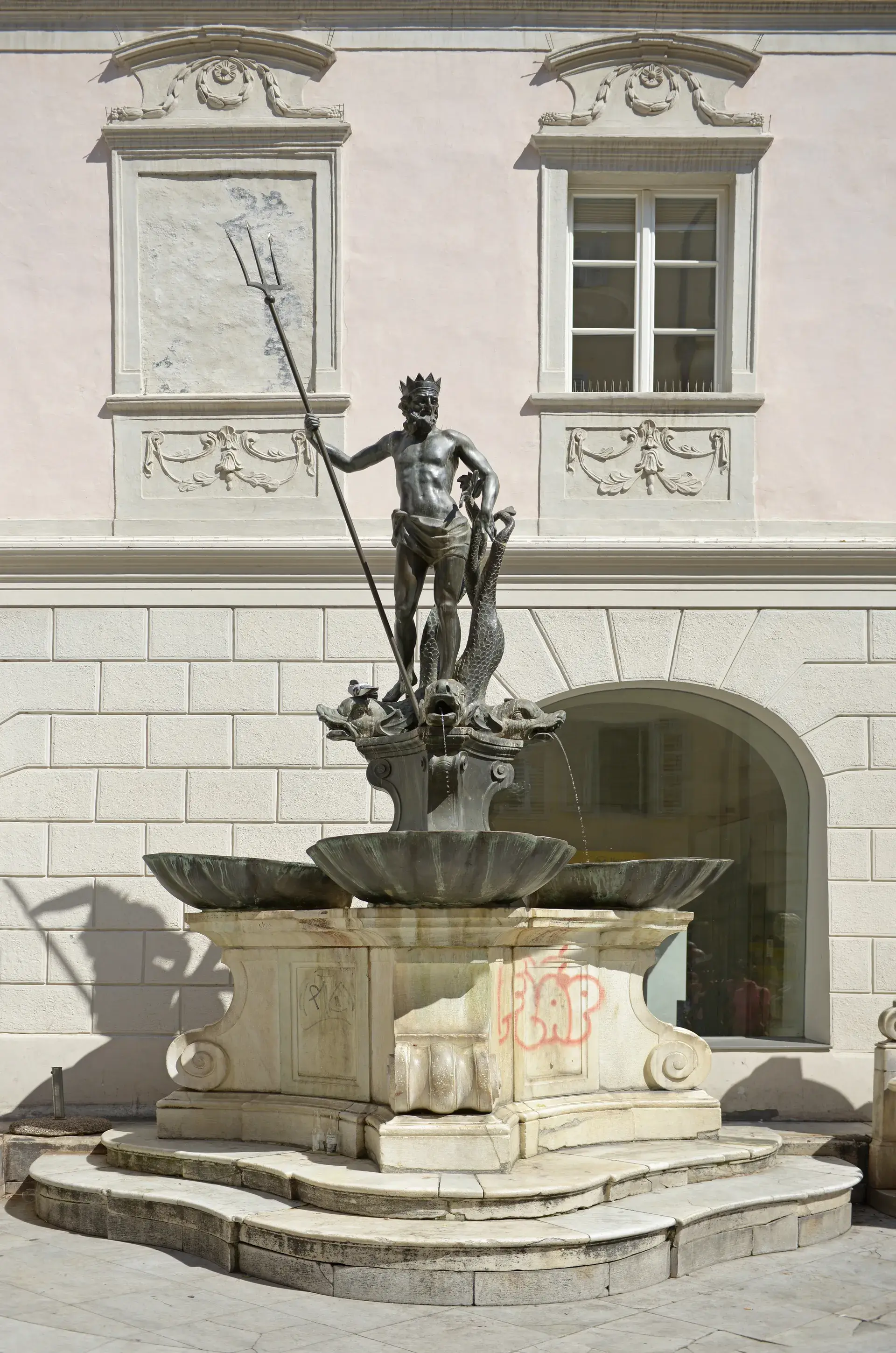
Where a medieval moat once divided the city, Bolzano's most vibrant food market has flourished for over seven centuries. Piazza delle Erbe, also known as Obstplatz or the Fruit Market, is an elongated, curved square in the heart of Bolzano's old town. At its center stands the Neptune Fountain, or Fontana del Nettuno, erected in 1777. Designed by Georg Mayr and cast in bronze by Joachim Reiss, the monument features the god of the sea alongside three dolphins, resting on a marble pedestal above bronze shell basins.
A Medieval Market Transformed
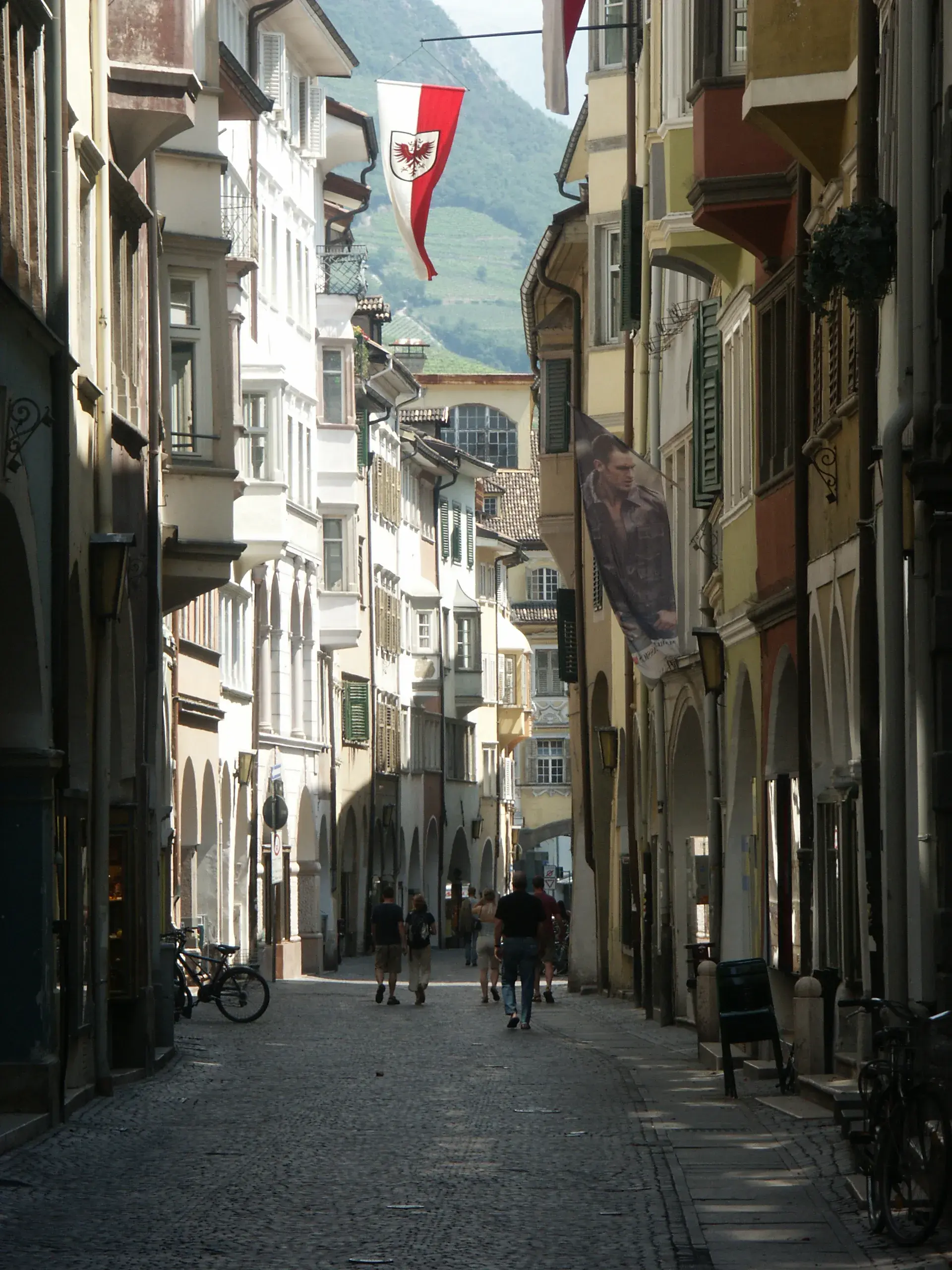
The establishment of Piazza delle Erbe dates back to 1277, when Count Meinhard II of Tyrol demolished sections of the medieval town wall and filled the moat. This created a new economic hub to compete directly with Piazza del Grano, which was controlled by the Prince-Bishops of Trent. By 1295, the area was officially documented as a trading marketplace. Today, the square serves as the western terminus of the medieval arcades, acting as a pedestrian threshold connecting Bolzano's historic commercial core to the modern museum quarter and the Talvera River promenade.
From Public Punishment to Public Health
Before the Neptune Fountain graced the square, the site served a much darker purpose. From 1578 until the late 18th century, a public pillory stood in its place, exposing criminals and disgraced debtors to public humiliation. In 1777, civic administrators replaced the pillory with Bolzano's only 18th-century monumental fountain. This project aimed to improve city sanitation and provide a fresh, reliable drinking water supply for market traders and residents.
The Innkeeper with the Fork
Historically, the square was densely packed with taverns and inns. This environment inspired a local nickname for the Neptune statue: the "Gabelwirt," or "the innkeeper with the fork." Residents joked that the sea god was actually an innkeeper holding a giant meat fork to serve boiled beef. Nearby, a commemorative plaque at the corner of Via Museo marks the former site of the Al Sole inn, which famously hosted figures like Emperor Joseph II, philosopher Johann Gottfried Herder, and Johann Wolfgang von Goethe during his Italian journeys.
A Thriving Culinary Destination
Piazza delle Erbe continues its legacy as a vital open-air market, operating Monday through Saturday morning under distinctive green canopies. The stalls offer fresh regional produce, flowers, and South Tyrolean specialty foods. In the autumn and winter months, the narrow, enclosed square fills with the scent of roasting chestnuts and warm spiced mulled wine. The perimeter of the square also acts as a social hub, with cafes, wine bars, and bistros operating throughout the day. Notably, the Neptune Fountain often stays active during freezing winter temperatures, a tradition stemming from when market vendors relied entirely on its spouts as their only direct source of running water.
FAQ
When was the Neptune Fountain in Bolzano built?
The Neptune Fountain was erected in 1777 to replace a public pillory, improving city sanitation and providing fresh drinking water to the market.
Why is the Neptune Fountain nicknamed 'the innkeeper with the fork'?
Because Piazza delle Erbe was historically surrounded by taverns, locals jokingly claimed the statue of Neptune was an innkeeper holding a giant meat fork to serve boiled beef.
What days is the market at Piazza delle Erbe open?
The open-air market operates Monday through Friday, and on Saturday mornings. It is closed on Sundays and public holidays.