South Tyrol Museum of Archaeology: Ötzi the Iceman
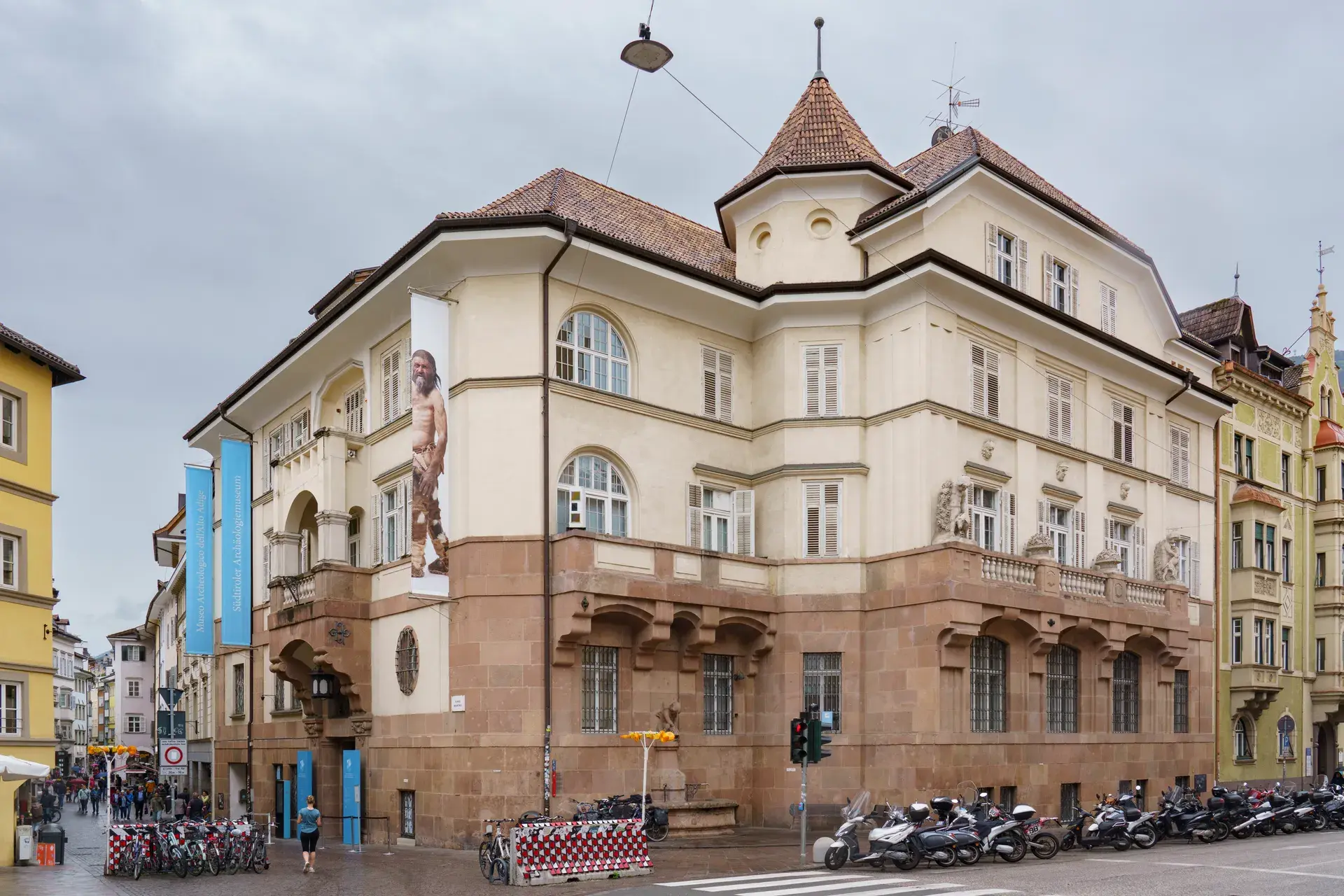
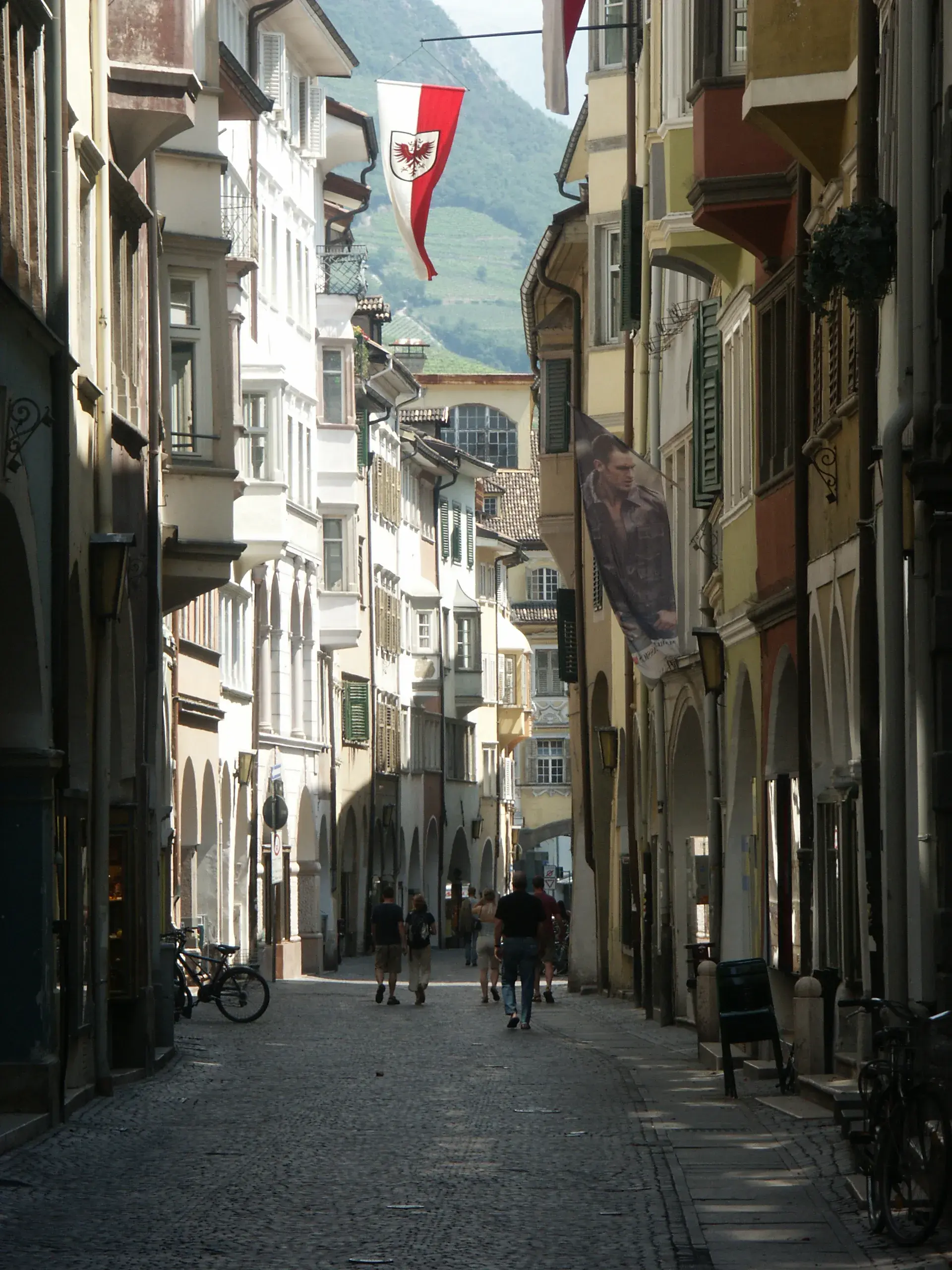
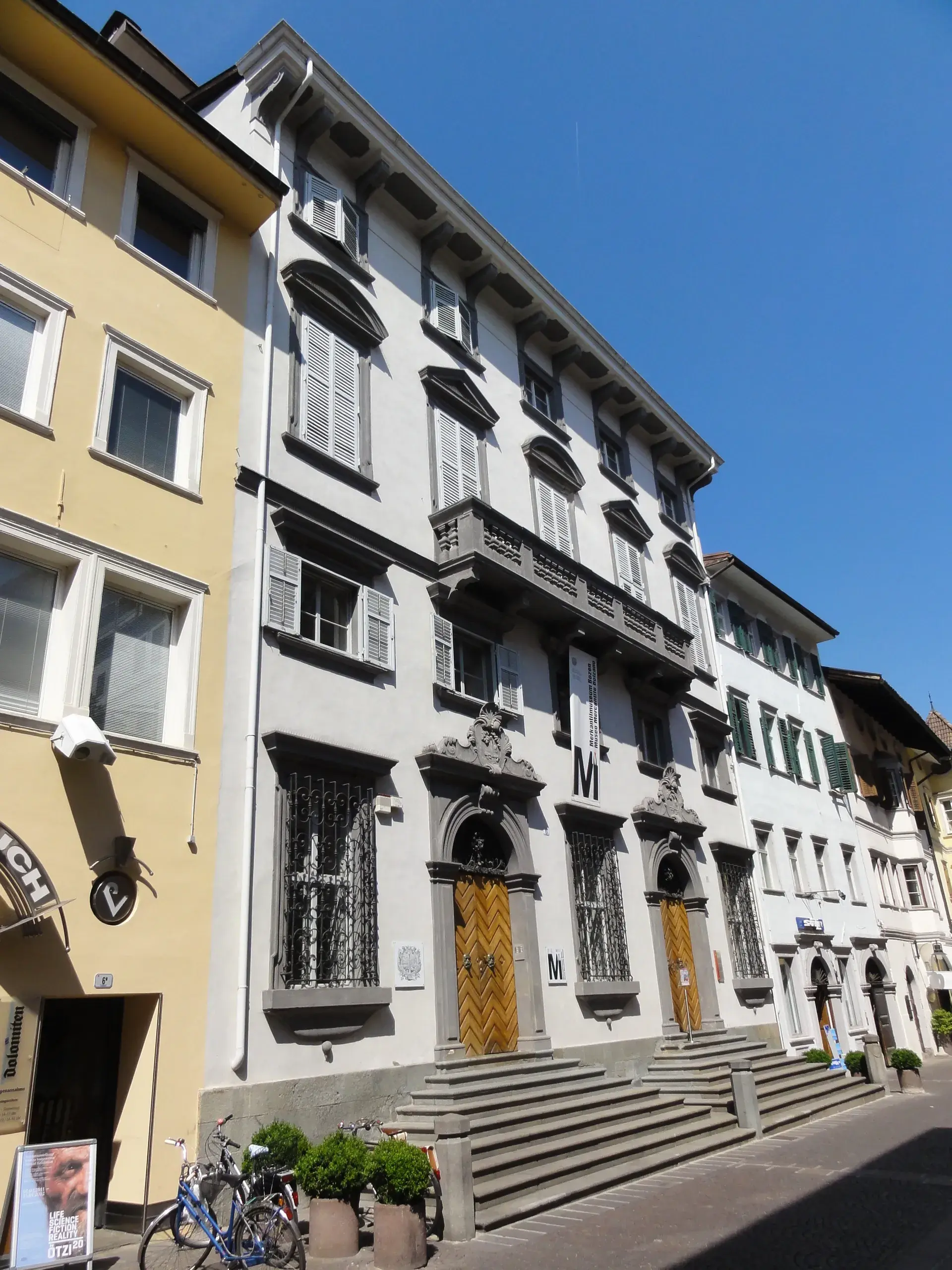
Via Museo 43 hosts an unassuming building where millions arrive to witness the permanent home of Ötzi the Iceman. Serving as a cultural anchor for the western edge of Bolzano's Old Town, the museum marks the transition from Via dei Portici and Piazza delle Erbe toward the Talvera River. Inside this early twentieth-century structure lies the perfectly preserved victim of a 5,300-year-old murder.
From Bank Vault to Museum
Designed by architect Rudolf Eisler, the Neo-Baroque and Art Nouveau building was constructed between 1912 and 1913 to serve as the regional branch of the Austro-Hungarian Bank. Following World War I, the structure operated as the Bank of Italy until the 1990s. The Autonomous Province of Bolzano subsequently acquired and renovated the building to house provincial archaeological collections, officially opening on March 28, 1998.
Meeting Ötzi the Iceman
The primary attraction of the museum is Ötzi the Iceman, a naturally preserved wet mummy dating back to approximately 3300 BCE. German mountaineers Erika and Helmut Simon accidentally discovered the exposed body on September 19, 1991, at an altitude of 3,210 meters on the Giogo di Tisa pass. The famous nickname "Ötzi" was later coined by Austrian journalist Karl Wendl as a media moniker derived from the Ötztal Alps.
Today, the mummy is conserved inside a custom dual-chamber cold cell that replicates glacial conditions, maintained at a constant negative six degrees Celsius and 98 to 99 percent relative humidity. The preservation facility features a single 40 by 40 centimeter glass aperture set into a darkened wall. Through the frosted condensation, the illuminated, pale body can be seen resting on a custom scale.
A Prehistoric Cold Case
Medical scans conducted on the mummy revealed that Ötzi died from severe internal bleeding caused by a flint arrowhead embedded deep below his left shoulder. Accompanied by defensive cuts on his hands sustained shortly before death, these injuries mark him as the victim of a prehistoric murder.
The museum also displays Ötzi's intact clothing and survival kit. This includes the world's oldest preserved complete Copper Age axe, featuring a 99.7 percent pure copper blade, a yew-wood haft, and leather lashings. Furthermore, the mummy bears 61 distinct tattoos made from charcoal soot rubbed into small incisions. Positioned mostly over worn joints, these markings suggest an early form of pain-relief treatment.
Exploring the Galleries
Beyond the Iceman, the museum spans three floors of permanent and rotating exhibits documenting human history in the southern Alpine region. The collections cover vast eras, from the Palaeolithic and Mesolithic periods through the Early Middle Ages. A lifelike 3D reconstruction of Ötzi is also on display alongside regional prehistoric finds.
Due to high visitor density, the museum operates with timed-entry online booking to manage queues. The province has also developed plans to relocate the institution to larger converted premises at the former ENEL site in Bolzano to accommodate its growing popularity.
FAQ
How was Ötzi the Iceman discovered?
Ötzi was accidentally discovered by German mountaineers Erika and Helmut Simon on September 19, 1991, at an altitude of 3,210 meters on the Giogo di Tisa pass in the Ötztal Alps.
How is the mummy preserved at the museum?
The mummy is kept in a custom dual-chamber cold cell maintained at negative six degrees Celsius and 98 to 99 percent relative humidity to perfectly replicate the glacial conditions where he was found.
Are advanced tickets required to visit the museum?
The museum operates with a timed-entry system bookable online to manage high visitor numbers and queueing.