Palazzo Ducale di Modena: Royal Court to Military Academy
Discover how a displaced royal family transformed a medieval fortress into a Baroque masterpiece that now trains Italy's military officers. Anchoring the northern end of Modena's historic center, the Palazzo Ducale stands as a monumental testament to the city's ducal power axis, contrasting sharply with the religious and civic heart found at Piazza Grande.
A Baroque Symbol of Este Power
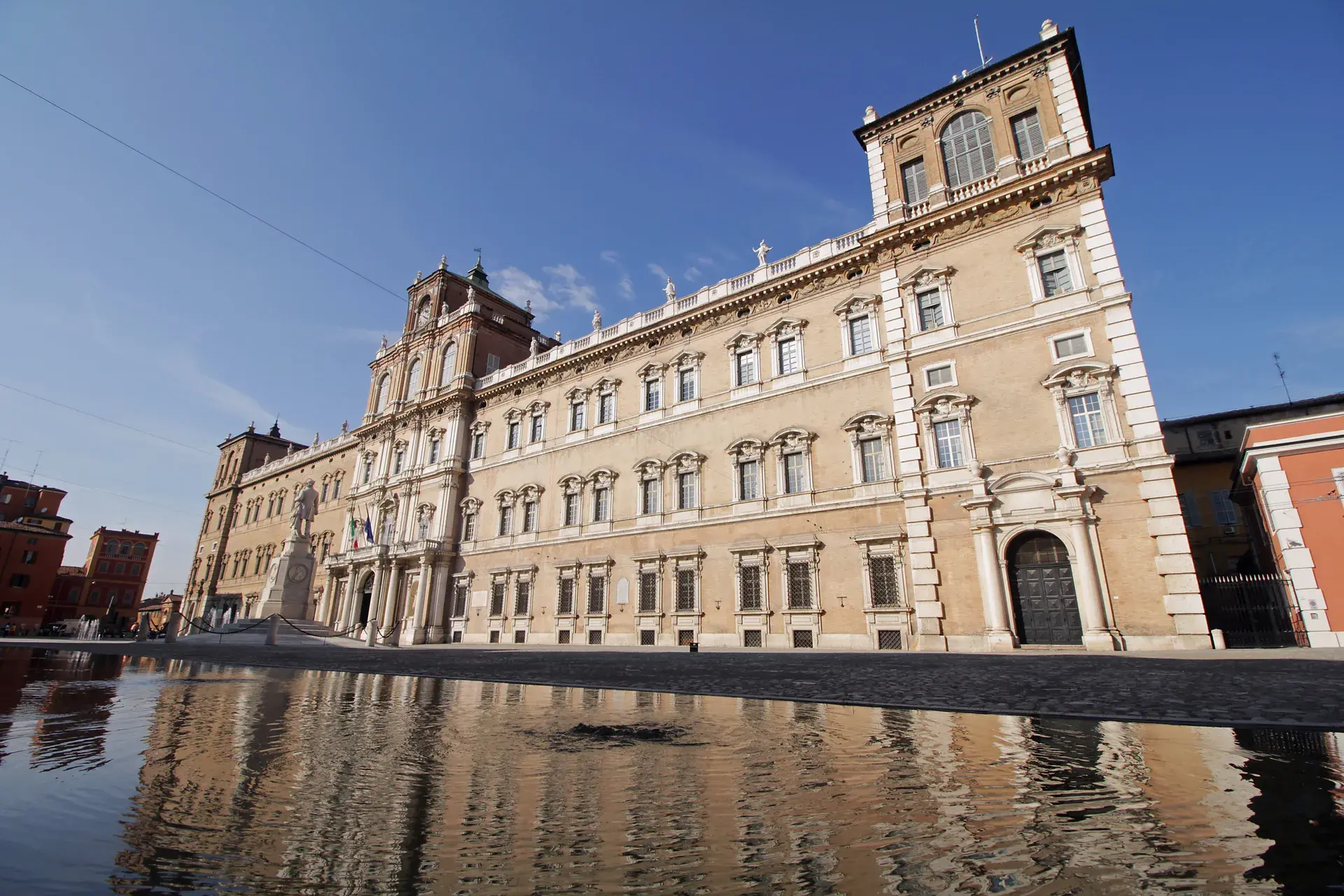
Following the loss of their ancestral capital in Ferrara to the Papal States in 1598, the Este family relocated to Modena. Seeking to project European prestige and assert the status of his dynasty, Duke Francesco I d'Este commissioned the construction of a grand palace in 1634. The new structure was built over the site of an existing 1291 medieval fortified castle, which the duke deemed inadequate for royal court life.
Roman architect Bartolomeo Avanzini primarily designed the complex. However, Duke Francesco I actively sought critiques from Rome's leading Baroque artists. Experts such as Francesco Borromini, Pietro da Cortona, Girolamo Rainaldi, and Gian Lorenzo Bernini contributed guidance, with Bernini personally inspecting the site during a visit in 1665.
Architectural Grandeur and State Rooms
The palace's massive, pale, multi-tiered Baroque facade dominates Piazza Roma, presenting a sharp contrast to the narrow, medieval street grid of the surrounding city center. The exterior is crowned by elaborate balustrades and statues, creating a striking visual anchor for the square.
Inside, the two-story arcaded Courtyard of Honor (Cortile d'Onore) establishes a sense of rhythmic symmetry with its double-tiered marble porticoes. A grand ceremonial staircase leads to the palace's opulent state rooms, which include the Grand Ballroom (Salone d'Onore), the Throne Room, and the highly decorated Golden Cabinet (Gabinetto d'Oro).
The Napoleonic Era and Military Transition
The Palazzo Ducale served as the official sovereign seat and royal residence for the Dukes of Modena and Reggio for over two centuries. This royal tenure was briefly interrupted in June 1805 when Napoleon resided at the palace. During his stay, he renamed the building Palazzo Nazionale and oversaw the removal of several works from the Este collections.
The palace's role as a royal residence permanently ended in 1859. Following Italian unification and the departure of the last Este duke, Francesco V, the complex transitioned into a military training institution.
Visiting the Modern Academy
Today, the palace is the active headquarters and academy for officers of the Italian Army and Carabinieri, known as the Accademia Militare di Modena. Because it remains a functioning military installation, visitors and passersby frequently observe military cadets undergoing daily drills or participating in formal ceremonies in the historic courtyard and across Piazza Roma.
Due to its active military status, public access to the Palazzo Ducale is limited and strictly regulated. The palace can only be visited via guided tours, which operate primarily on weekends and require advance reservations. These tours allow visitors to explore the State Apartments and the Historical Museum of the Military Academy, which houses collections of historical weapons, uniforms, flags, and military relics.
FAQ
Can the public visit the Palazzo Ducale di Modena?
Yes, but public access is strictly regulated. The palace is an active military installation, so visitors can only explore it on weekend guided tours that require an advance reservation. These tours cover the State Apartments and the Historical Museum.
Who designed the Palazzo Ducale di Modena?
The palace was primarily designed by Roman architect Bartolomeo Avanzini. Duke Francesco I d'Este also sought architectural guidance from prominent Baroque masters, including Gian Lorenzo Bernini, who personally inspected the site in 1665.
What is the Palazzo Ducale used for today?
The palace serves as the Accademia Militare di Modena. It is the active headquarters and training academy for officers of the Italian Army and the Carabinieri.