Santa Maria della Pomposa: Modena's Scholar Church
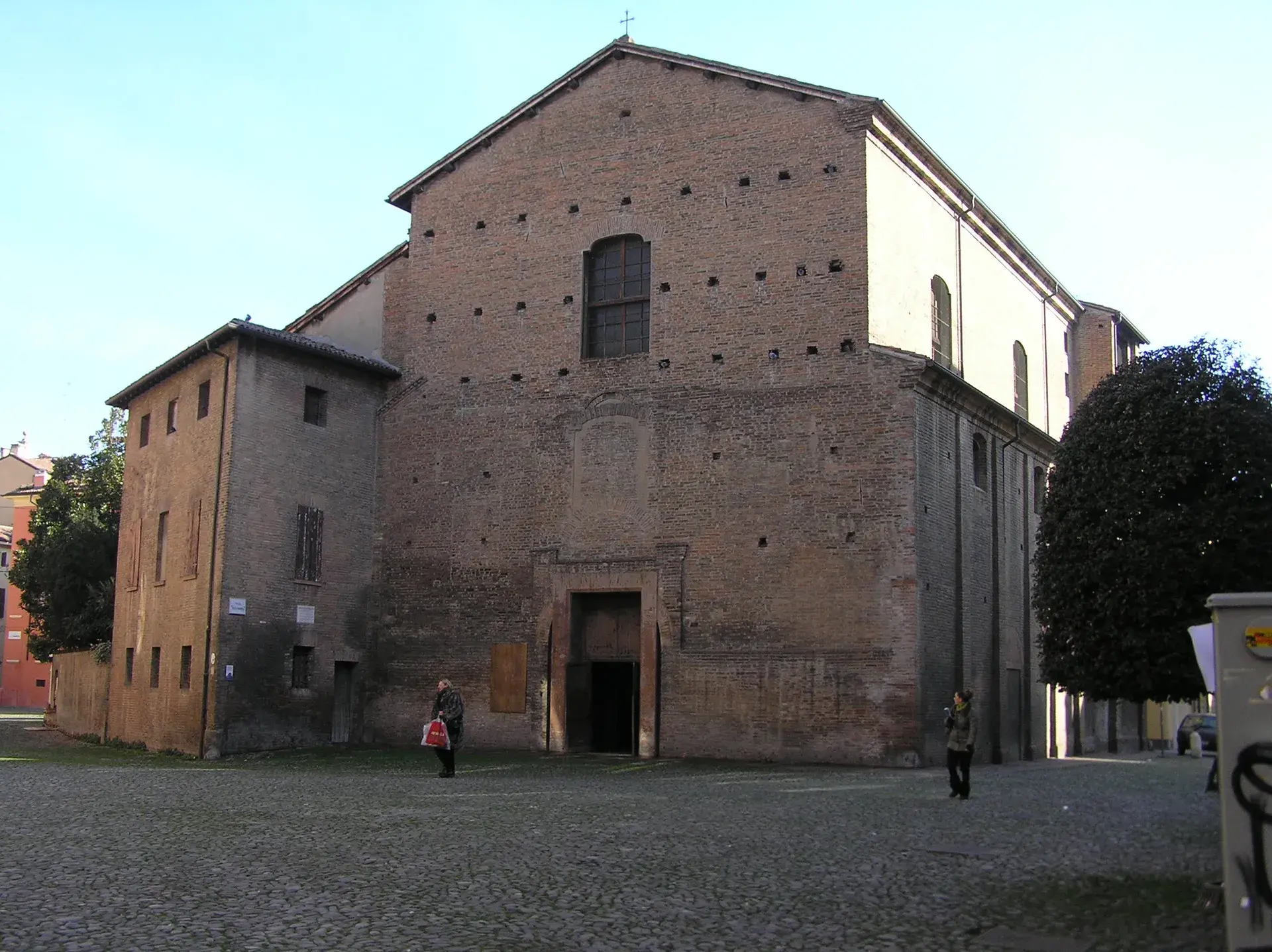
Behind an unfinished brick facade lies the modest headquarters of a parish priest who corresponded with Isaac Newton and wrote the definitive history of Italy. Soak in the lively neighborhood atmosphere surrounding the brick facade of Santa Maria della Pomposa right from the bustling square.
The Legacy of a Scholar-Priest
Located in Piazza della Pomposa within Modena's historic center, Santa Maria della Pomposa is deeply intertwined with the life of Ludovico Antonio Muratori. Known as the "father of Italian historiography" and the Este ducal archivist, Muratori served as the parish priest here from 1716 until his death in 1750.
When Duke Rinaldo I d'Este granted him the provostship of the church, the medieval structure was in poor condition. Muratori personally financed and directed its complete rebuilding starting in 1717. From this modest canon house, he combined a rigorous life of parish ministry with colossal intellectual output. Muratori maintained a prolific correspondence with leading European Enlightenment thinkers, including Isaac Newton and Gottfried Wilhelm Leibniz, all while compiling his monumental 28-volume history of Italy.
Architectural Details and Artworks
The church presents an austere, unfinished terracotta brick facade that still displays the architectural outlines of a former medieval arched doorway and a circular window above it. The earliest documented record of a church on this site dates to 1153, originally standing as a chapel near the medieval city walls.
Inside, the single-nave layout is framed by free-standing columns that define shallow side chapels. The side walls display a cycle of six 17th-century paintings by Bernardino Cervi illustrating the Life of Saint Sebastian. The altars feature intricate decorative frontals executed in traditional Emilian scagliola, a highly detailed imitation marble plasterwork. Additionally, the high altar holds an 18th-century copy by Jean Boulanger of a renowned Correggio painting. Muratori’s remains are entombed inside the church within a monumental marble tomb sculpted by Ludovico Pogliaghi in 1922.
The Aedes Muratoriana Complex Today
Following a period of deconsecration in the late 18th century, the church was granted to the Confraternity of Saint Sebastian and reconsecrated in 1814. Today, Santa Maria della Pomposa remains an active place of worship maintained by the Confraternity and is open daily to visitors.
The church is part of a larger urban complex known as the Aedes Muratoriana, which is recognized as a National Monument. The adjacent rectory houses the Museo Muratoriano, opened in 1931, which displays the scholar's personal belongings, desk, inkwell, and library. The complex also serves as the headquarters for the Deputazione di Storia Patria per le Antiche Province Modenesi, a historical research society.
Piazza della Pomposa
Positioned at the western edge of the old center near Via del Taglio, the church anchors one of Modena's most historically preserved squares. A small fountain stands to the left of the church facade, donated by the 20th-century Modenese restaurateur and food entrepreneur Telesforo Fini.
The square itself embodies the dual nature of Modena's urban character. By day, it serves as a secluded, quiet ecclesiastical enclave centered around the historic church and its courtyard garden. By night, the area transitions into a lively gathering space and local dining hub, offering a vibrant atmosphere right outside the historic church steps.
FAQ
Who rebuilt Santa Maria della Pomposa?
The church was completely rebuilt starting in 1717 by Ludovico Antonio Muratori, a parish priest and prominent scholar known as the "father of Italian historiography," after he found the medieval structure in poor condition.
What is inside the Museo Muratoriano?
Located in the adjacent rectory, the Museo Muratoriano displays the personal belongings of Ludovico Antonio Muratori, including his desk, inkwell, armchair, library, and correspondence with notable Enlightenment thinkers.
Is Santa Maria della Pomposa still an active church?
Yes, the church is an active place of worship maintained by the Confraternity of Saint Sebastian and is open daily to visitors.