Piazza Giuseppe Mazzini in Modena: History & Guide
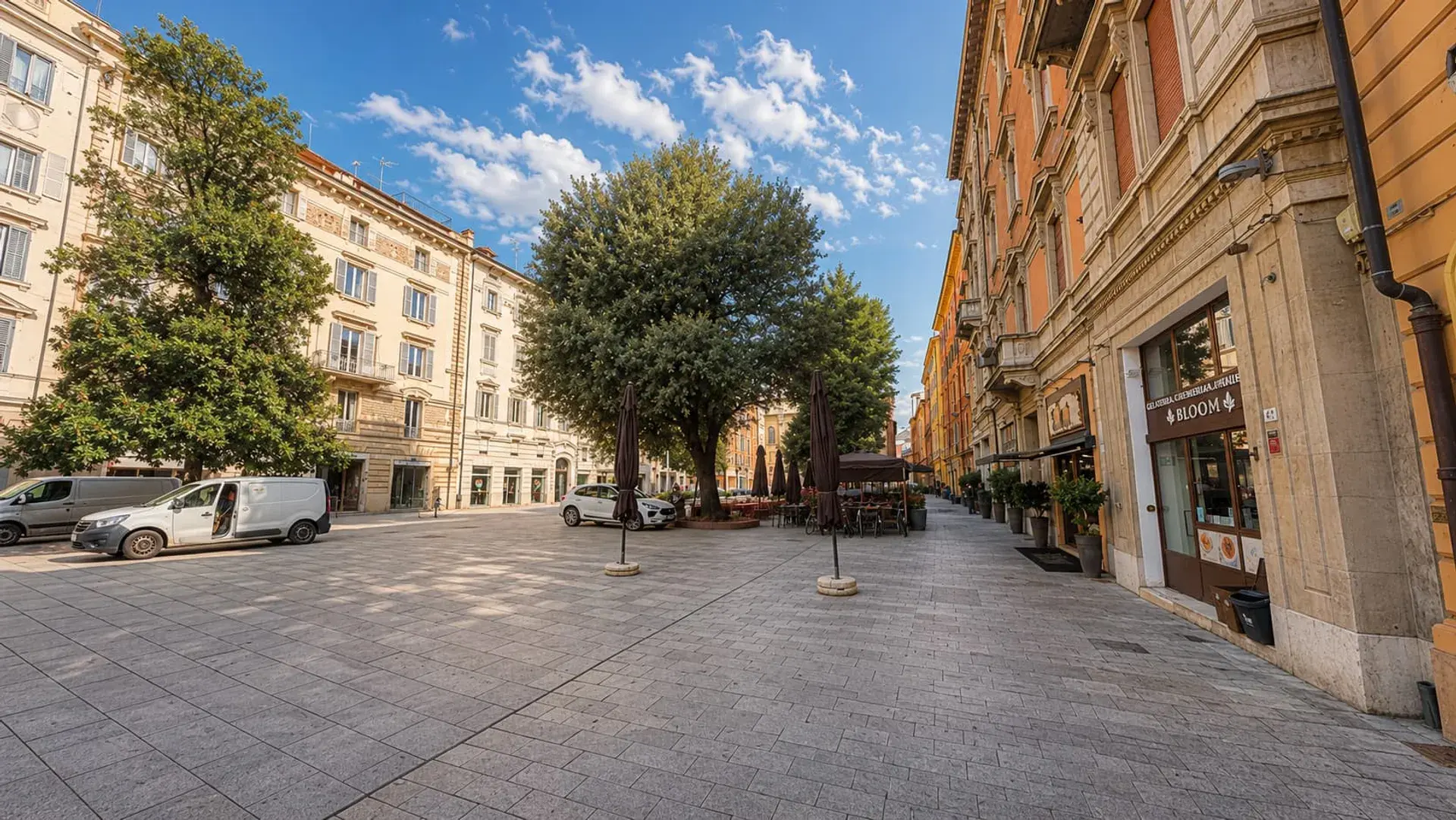
Step into the open expanse of Piazza Giuseppe Mazzini to appreciate the distinct urban atmosphere surrounding this central square. Located directly off the ancient Roman Via Emilia, it marks a vital transition in Modena's civic history from an era of enclosed ghettos to an open urban center.
A Square Born from Emancipation
In 1638, Duke Francesco I d'Este established an enclosed Jewish ghetto on this site. Gates sealed the quarter at night until the abolition of discriminatory laws and the unification of Italy in 1859. Following this emancipation, the Jewish community commissioned a monumental temple to symbolize their full civil and religious rights. Between 1903 and 1904, the dense city block between Via Emilia, Via Blasia, and Via Coltellini was demolished to improve urban hygiene and create an unobstructed view of the new building. The cleared open space was first named Piazza della Libertà to symbolize the end of religious division, before being renamed Piazza Mazzini in 1911 in honor of Italian patriot Giuseppe Mazzini.
The Monumental Synagogue of Modena
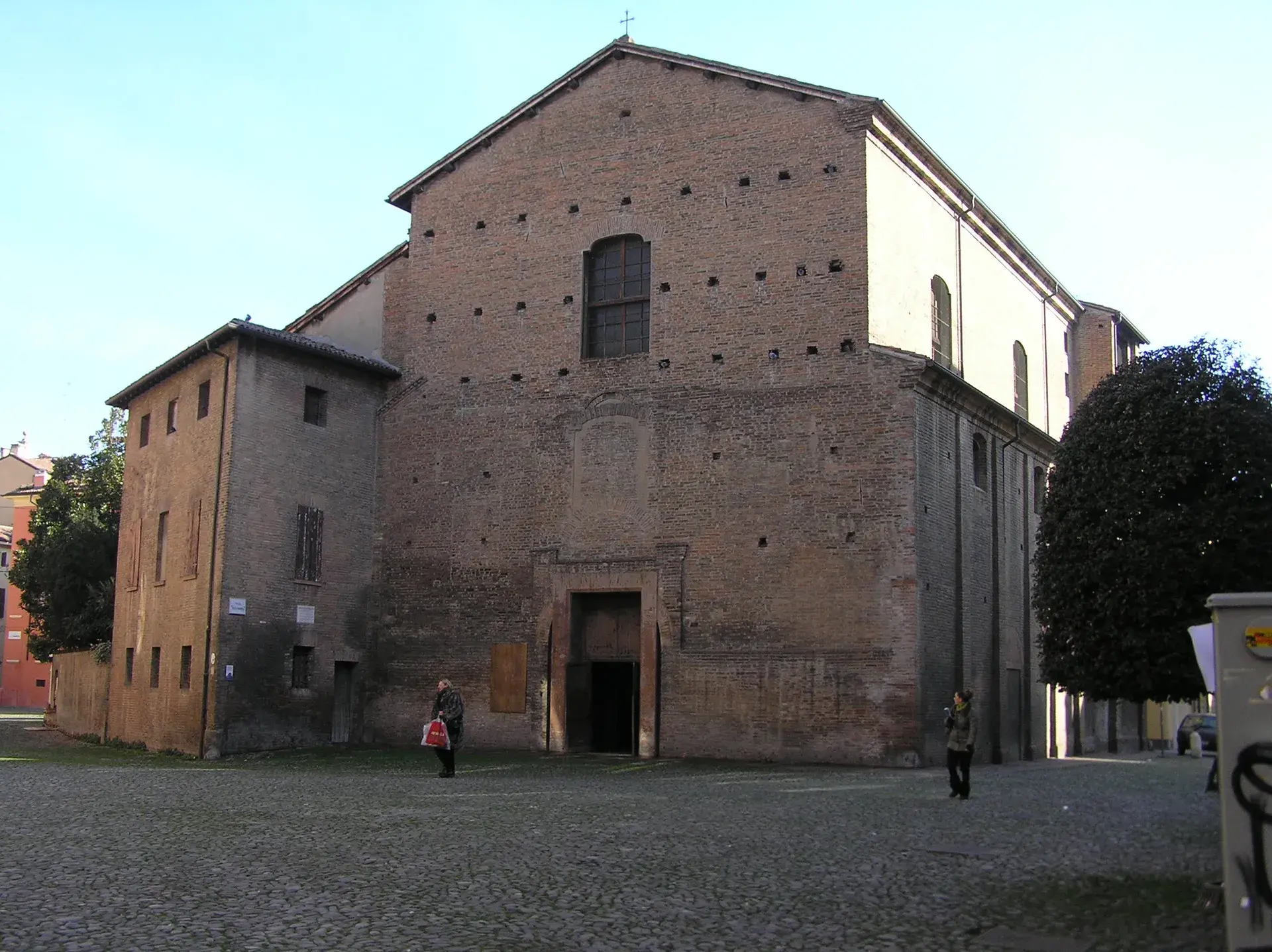
Piazza Mazzini is dominated by the Monumental Synagogue of Modena, constructed between 1869 and 1873 to designs by engineer and architect Ludovico Maglietta. The structure features a light-toned Neoclassical facade. Inside, the temple has an elliptical floor plan framed by twelve columns that support an elevated women's gallery. The inner surfaces and cupola were painted by Ferdinando Manzini, who created a celestial blue dome studded with golden stars. Because Jewish prayer requires facing east toward Jerusalem, the internal liturgical axis differs from the square's north-south architectural orientation. This results in two distinct monumental facades on Piazza Mazzini and Via Coltellini.
Hidden Histories and Fascist Era Concealment
The physical evolution of the square perfectly illustrates Modena's complex 20th-century history. In the 1930s, local authorities intentionally planted dense rows of trees in the square to visually screen the synagogue's facade from the perspective of passersby along the Via Emilia. Beneath the pavement, an underground public day hotel (albergo diurno) was built in 1933 to provide baths, luggage storage, and public conveniences. The surrounding architecture also holds secrets: several private buildings framing the square retain irregular rear geometry and blocked wall patterns, which are surviving remnants of the pre-1859 ghetto perimeter walls. Although religious life ceased during the Nazi-Fascist persecution and local community members were deported during World War II, the synagogue building survived intact.
Piazza Giuseppe Mazzini Today
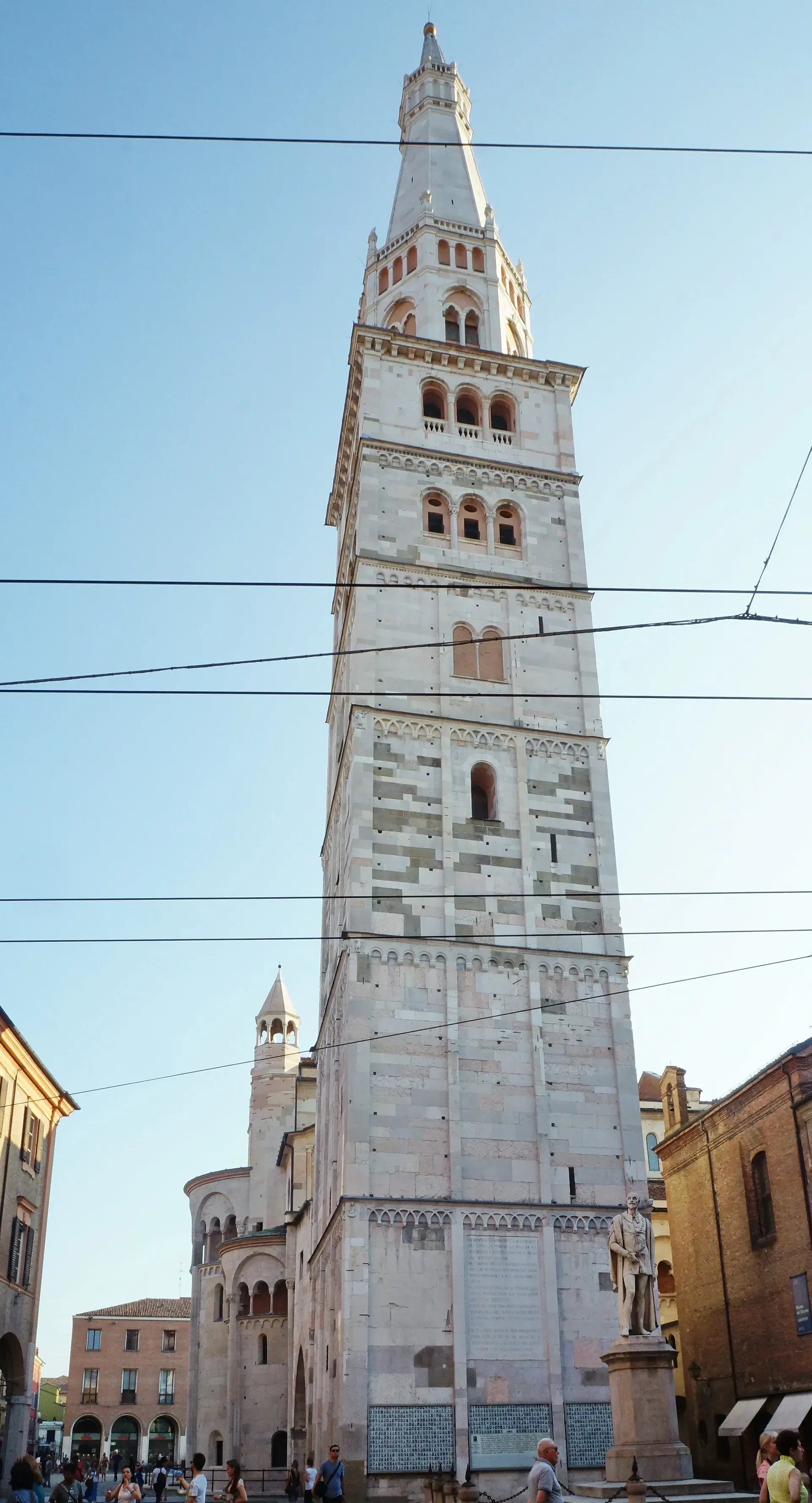
Today, Piazza Mazzini functions as a pedestrian area lined with shops, cafes, and historical memory markers. Stepping from the narrow colonnaded pavements of the Via Emilia into the square provides a sudden, wide vista of the synagogue. The temple remains active as the religious center for the Jewish community of Modena and Reggio Emilia, maintaining interior access for religious services and scheduled cultural visits. Located just steps from the UNESCO core of Piazza Grande, the Ghirlandina Tower, and the Duomo, the square is a vital historical landmark on the city's classic walking axis.
FAQ
Where is Piazza Giuseppe Mazzini located?
Piazza Giuseppe Mazzini is situated in the historic center of Modena, located directly off the ancient Roman Via Emilia and just steps from the Piazza Grande, the Ghirlandina Tower, and the Duomo.
Can visitors go inside the Monumental Synagogue of Modena?
Yes, the synagogue remains active as the religious center for the Jewish community of Modena and Reggio Emilia. It is open for religious services and scheduled cultural visits arranged through the local Jewish community administration.
What is hidden beneath Piazza Mazzini?
Beneath the pavement of the square lies an underground public day hotel, known as an albergo diurno, which was constructed in 1933 to provide public conveniences, baths, and luggage storage.
Why does the synagogue have two different facades?
Jewish prayer requires facing east toward Jerusalem. Because this internal liturgical axis differs from the square's north-south orientation, the building features two distinct monumental facades, one on Piazza Mazzini and another on Via Coltellini.
Gallery