Statua della Bonissima: Modena's Medieval Market Guardian
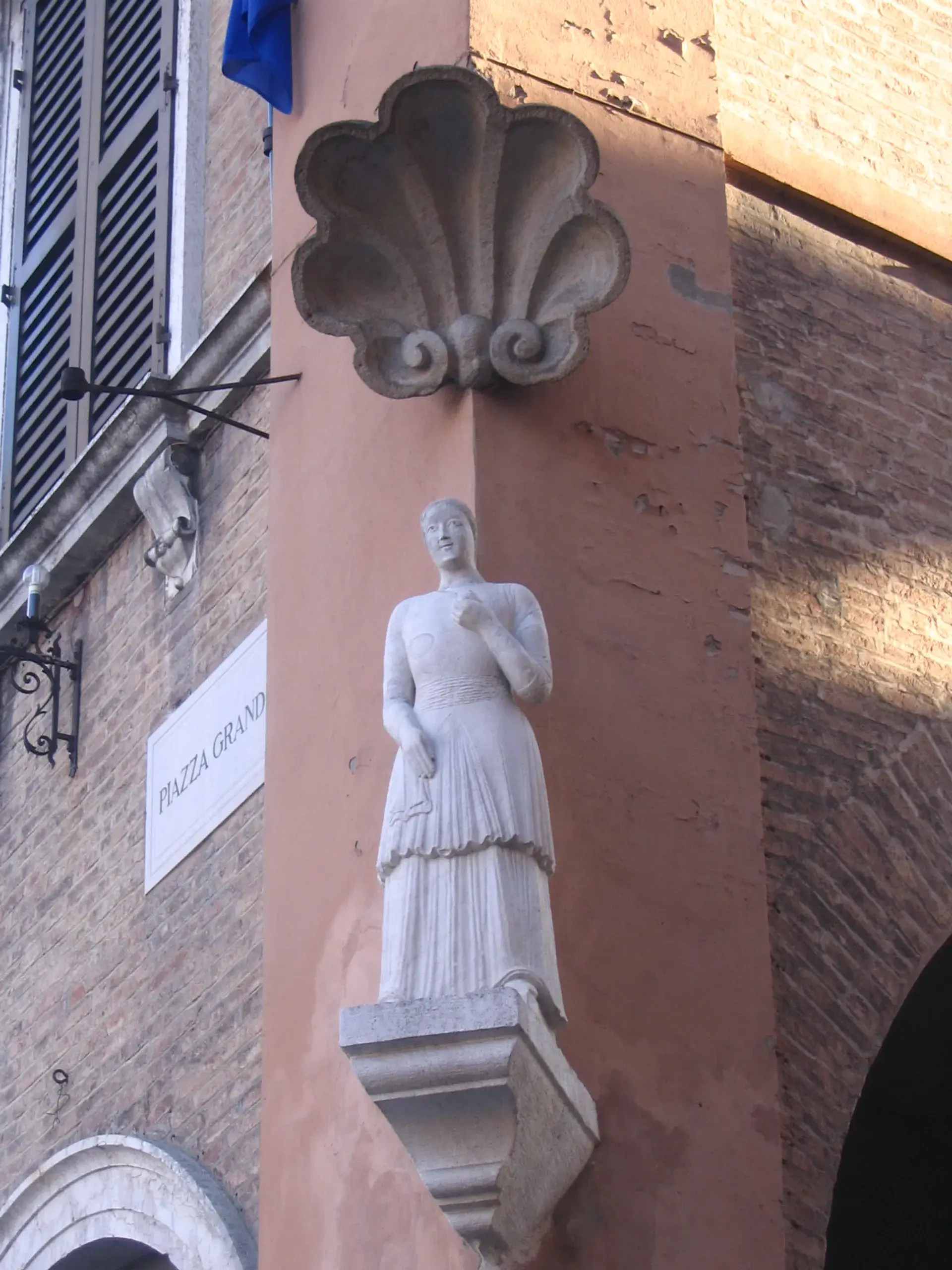
High on a corner of the Town Hall is an enigmatic stone woman who was once the literal benchmark for fair trade in medieval Modena. The Statua della Bonissima is a small medieval statue perched on an exterior wall bracket of the Palazzo Comunale, directly overlooking the intersection of Piazza Grande and Via Castellaro. With a serene gaze directed toward the cobblestone square, the figure has served as a guardian of the city's commercial and civic life for centuries.
The Benchmark of Fair Trade
During the Middle Ages, the Statua della Bonissima functioned as an allegory for the civic office of "Buona Stima" or the "Ufficio della Bona Opinione." This municipal body was responsible for regulating weights, measures, and fair trading standards in the bustling market square. According to municipal statutes, the statue's original base was engraved with the city's official standard measurements for merchants. These engravings provided exact dimensions for bricks, roof tiles, cloth spans, grain containers, and standard shoe soles.
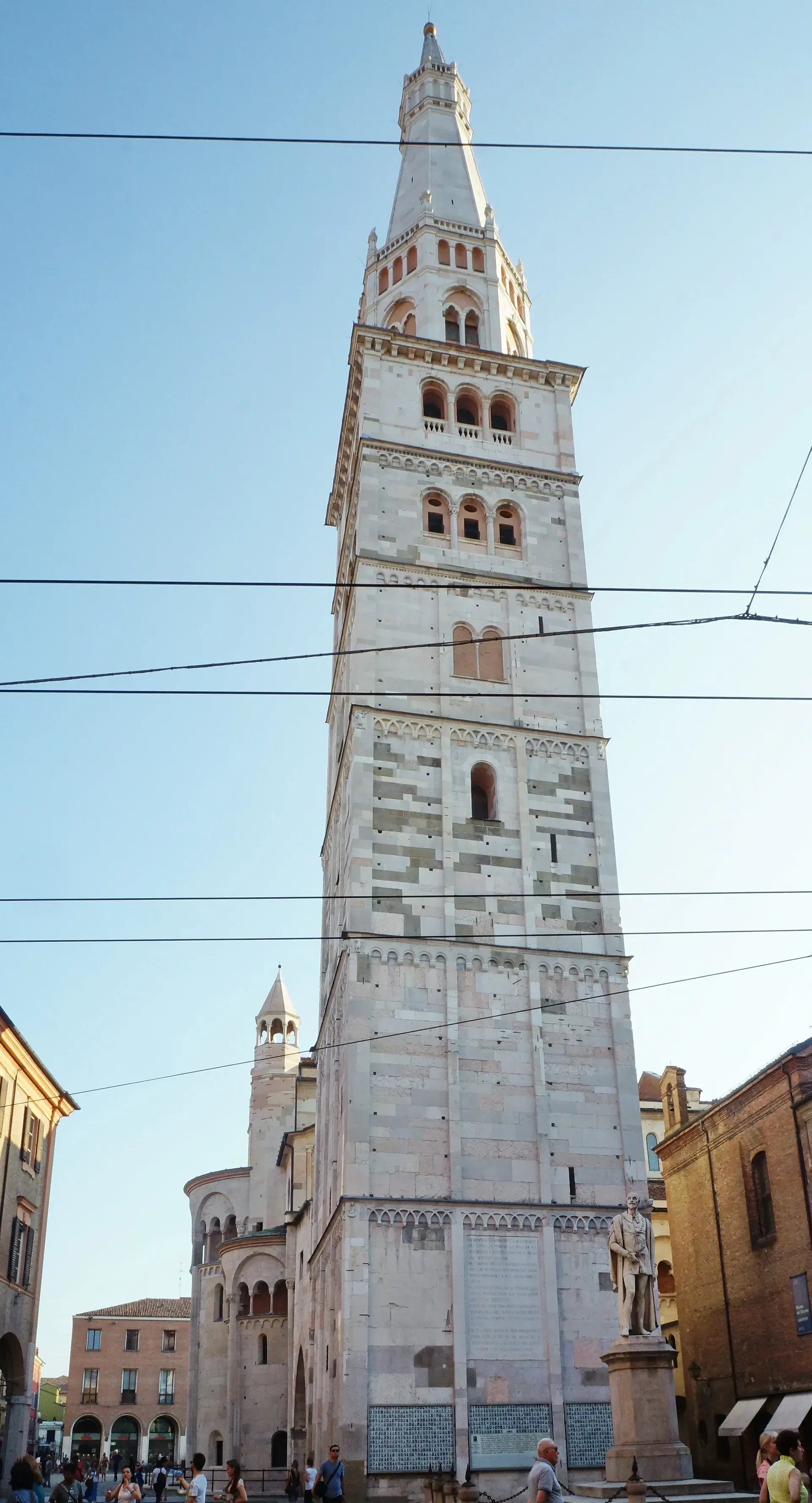
While the nearby Modena Cathedral and Ghirlandina Tower represented spiritual authority, the Bonissima anchored the secular and economic life of Piazza Grande. The statue symbolized municipal autonomy, commercial fairness, and community identity in the medieval commune.
Art and Relocation
Dated between the late 12th and 13th centuries, and frequently attributed to the year 1268, the sculpture features a limestone body and a distinct marble head. The figure wears simple medieval clothing and has a long braid of hair draped forward over her shoulder. Art historians stylistically attribute the piece to the workshop or circle of the anonymous Master of the Metopes, who sculpted the roof metopes of the adjacent cathedral.
The statue has not always occupied its elevated vantage point. Historical records indicate that the figure originally stood in the square at ground level. Local Modenese historian Jacopo de' Lancellotti documented its relocation to the Town Hall facade in 1468.
Local Legends and Modern Legacy
The true identity of the woman depicted remains a subject of local fascination, giving rise to two prominent theories. Local folk tradition claims the statue honors "Bona," a wealthy noblewoman who saved the people of Modena from a devastating famine by generously distributing grain. Another persistent local hypothesis suggests the statue portrays the Grand Countess Matilda of Canossa, a powerful medieval feudal ruler who exercised significant authority over Modena.
Today, the Statua della Bonissima is a recognizable historic landmark within Modena's UNESCO World Heritage precinct. The statue also lends its name to "La Bonissima," an annual gastronomy festival held in Piazza Grande that celebrates traditional Modenese food products like balsamic vinegar, Parmigiano Reggiano, and cured meats.
FAQ
What does the Statua della Bonissima represent?
Historically, it was an allegory for the "Buona Stima," a civic office regulating fair trade. However, local legends suggest it may depict a wealthy noblewoman named Bona who distributed grain during a famine, or the powerful medieval ruler Grand Countess Matilda of Canossa.
Where is the Statua della Bonissima located?
The statue is mounted on an exterior wall bracket of the Palazzo Comunale (Town Hall), situated at the corner of Piazza Grande and Via Castellaro in Modena.
What was the original purpose of the statue's base?
According to municipal statutes, the original base of the statue was engraved with Modena's official standard measurements. Merchants used these to check the required dimensions for items like bricks, roof tiles, cloth spans, grain containers, and shoe soles.