San Francesco all'Immacolata: Noto's Baroque Jewel
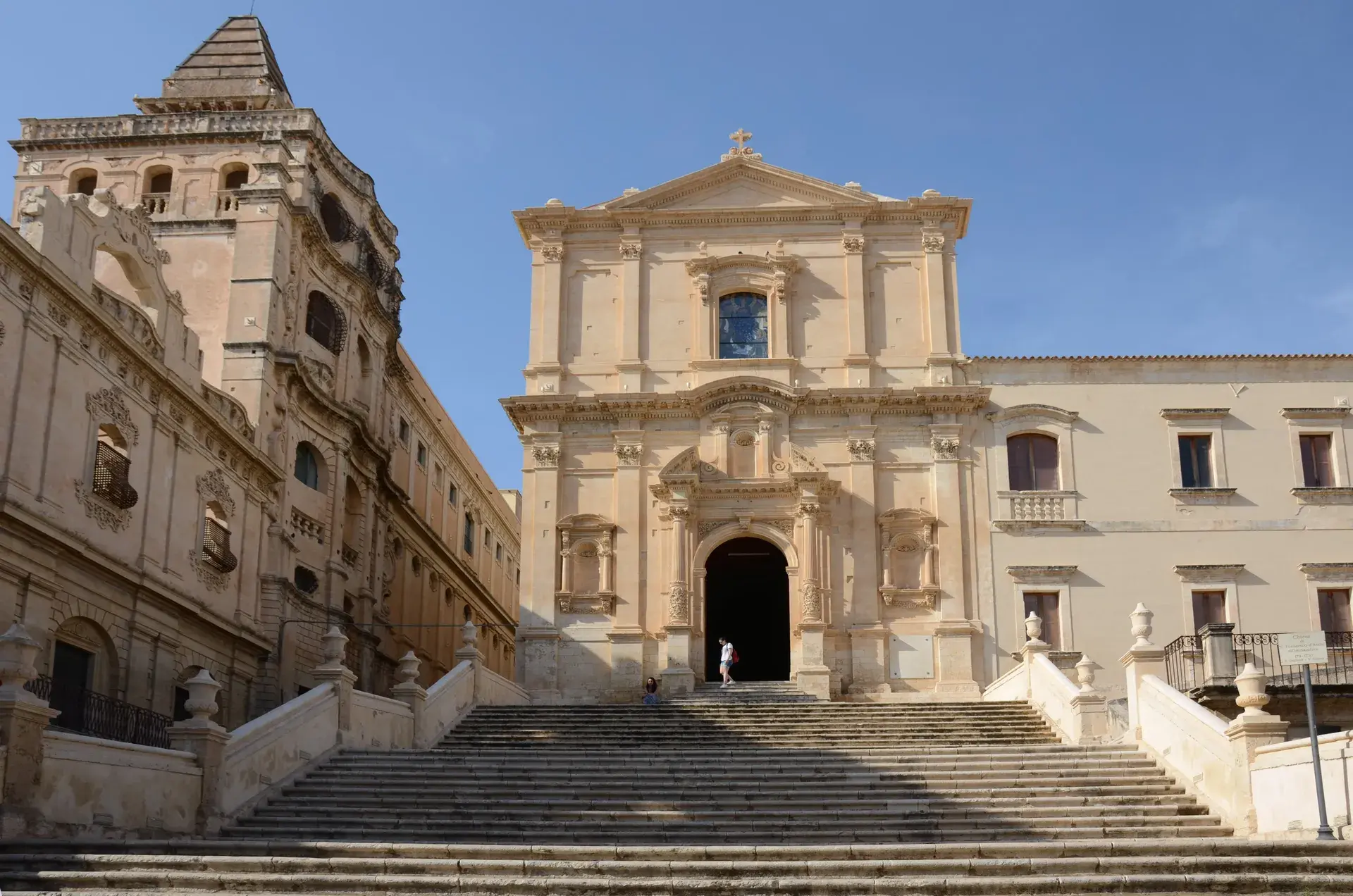
The Chiesa di San Francesco d'Assisi all'Immacolata stands as a monumental landmark on Noto's Corso Vittorio Emanuele. Its imposing three-flight staircase creates a theatrical stage, marking it as a key set-piece in the city's celebrated Baroque reconstruction. The church is a significant component of the 'Late Baroque Towns of the Val di Noto' UNESCO World Heritage site.
Post-Earthquake Reconstruction
The church and its adjoining convent were constructed between 1704 and 1750 for the Franciscan Friars Minor Conventual. This project was part of the massive rebuilding effort that followed the catastrophic 1693 earthquake, which completely destroyed the old city of Noto. The new construction on a different site reflected a unified and ambitious Baroque urban plan.
The project was initiated by Padre Superiore Filippo Tortora. The architectural vision was led by Rosario Gagliardi, who designed the exterior, and his disciple Vincenzo Sinatra, who co-directed the work and designed the cloister. The stucco decorations and the completion of the church were overseen by Padre Guardiano Francesco Ternullo and Padre Salvatore Gallo.
Architectural Design and a Surprising Adaptation
The building is a prime example of Sicilian Baroque style, featuring a facade with Corinthian capitals and a tympanum. The interior contains elaborate Baroque and Rococo stucco decorations in its side chapels, executed by stuccatore Giuseppe Gianforma according to Vincenzo Sinatra's designs.
A defining feature is the grand, three-ramped staircase. While it appears as a single, cohesive design, its lowest section was not part of the original plan. It was added in 1840, a necessary adaptation after the street level in front of the church was lowered by approximately two meters.
A History of Change
In 1866, the newly formed Kingdom of Italy passed laws suppressing religious orders. The convent was confiscated, and the friars were dispersed. The church briefly came under municipal ownership before being returned to the Diocese for worship. The church was established as a parish on January 18, 1921, and was elevated to the status of a Marian Sanctuary on May 8, 2019.
Art and Hidden Stories
The church houses significant works of art with deep connections to Noto's history. A wooden statue of the Immaculate Conception in the apse is popularly believed to have been found in the rubble of the 1693 earthquake. However, stylistic analysis suggests it dates to the early 18th century, a time of intense theological debate about the Immaculate Conception. Another piece, Antonino Vizzini's 1706 painting 'La Strage degli Innocenti' (The Massacre of the Innocents), is thought to contain an artistic allusion to the devastation of the earthquake.
The Church Today
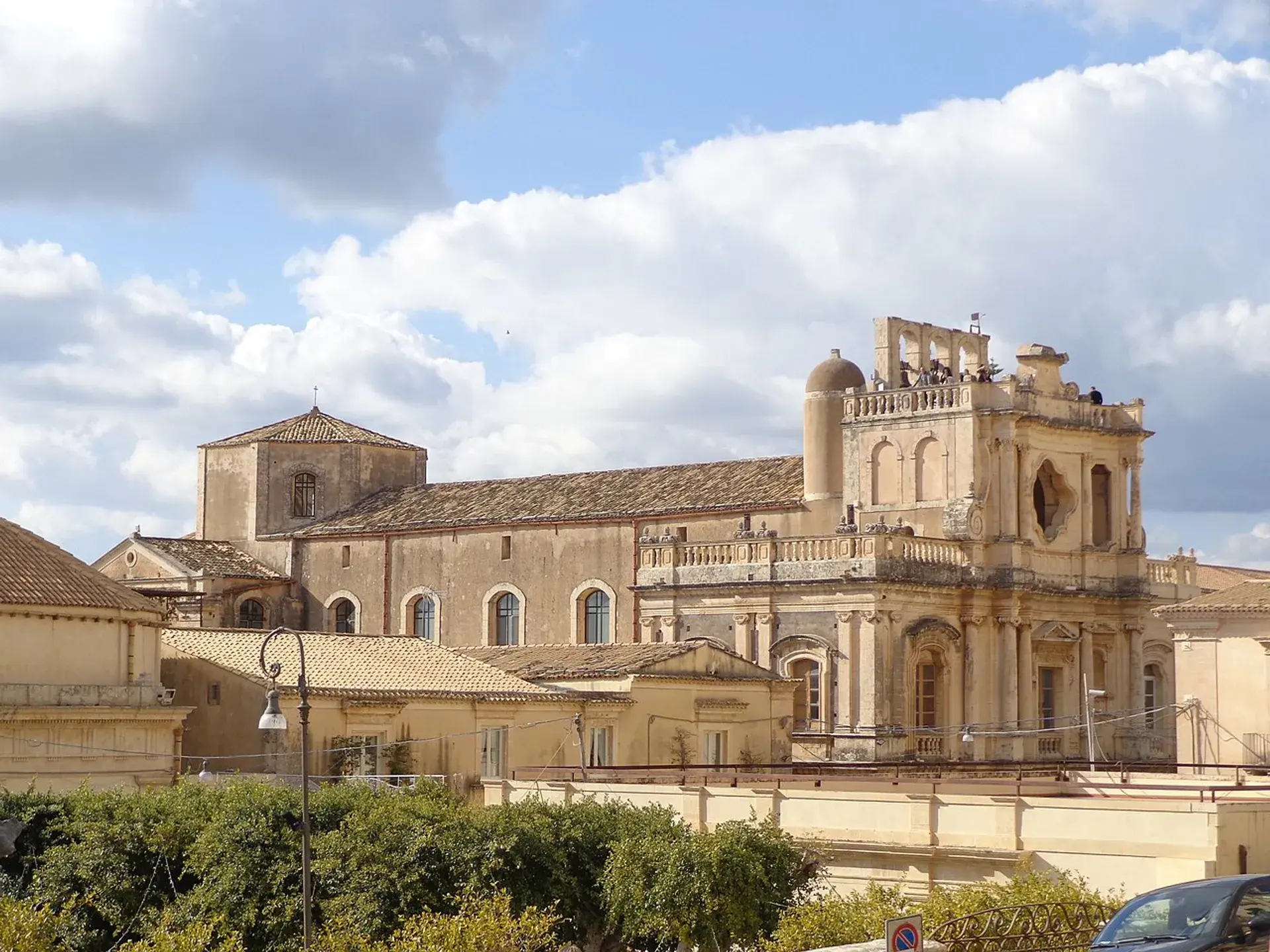
Currently, the Chiesa di San Francesco d'Assisi all'Immacolata serves as an active parish and Marian Sanctuary, open for religious services and to visitors. The adjacent former convent building, which once housed a scientific high school and a university consortium, is closed to the public.
FAQ
When was the Church of San Francesco all'Immacolata built?
The church and its convent were constructed between 1704 and 1750, as part of the large-scale reconstruction of Noto after the 1693 earthquake.
Who were the main architects of the church?
The exterior was designed by Rosario Gagliardi, a key figure in Sicilian Baroque architecture. His collaborator, Vincenzo Sinatra, co-directed the construction and designed the cloister and interior stucco decorations.
Is the grand staircase original to the church?
The upper two flights of the staircase are part of the original 18th-century design. The lowest flight was added in 1840 to accommodate a two-meter drop in the street level.
Is the convent next to the church open to the public?
No, the former convent building adjacent to the church is currently closed to the public. Only the church itself is open to visitors.