Porta Reale: The Royal Gate to Baroque Noto
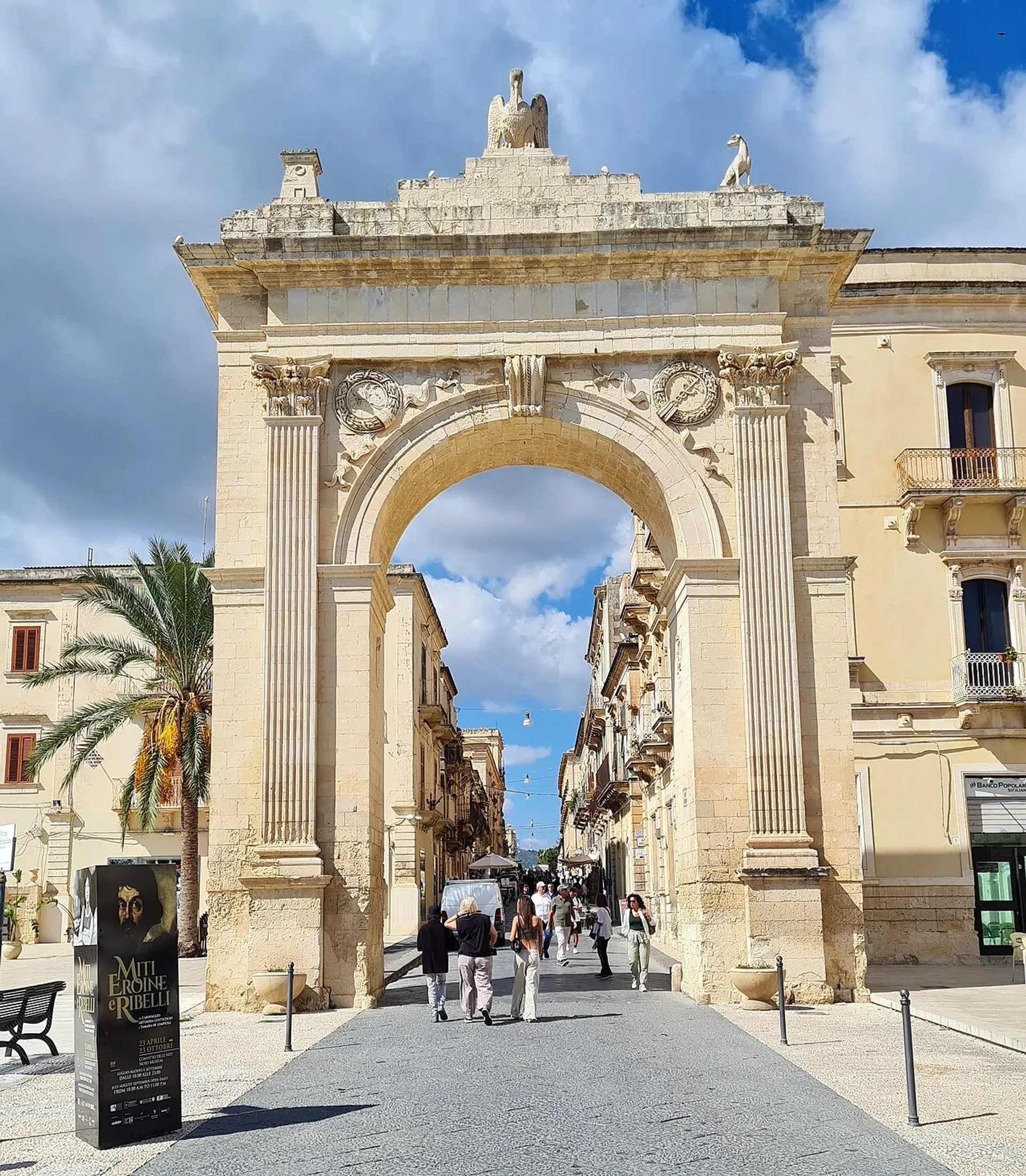
Porta Reale, also known as the Royal Gate or Porta Ferdinandea, is a grand triumphal arch that serves as the ceremonial entrance to the historic center of Noto, Sicily. Constructed from the local golden limestone characteristic of the city, this neoclassical monument marks the beginning of Corso Vittorio Emanuele, the principal thoroughfare of the UNESCO World Heritage city.
A Royal Welcome and Neoclassical Design
The gate was erected in 1838 to commemorate the visit of King Ferdinand II of Bourbon, then the King of the Two Sicilies. Its construction, funded by the Marquis of Cannicarao, also served as a symbol of Noto's allegiance to the Bourbon monarchy following an anti-monarchist revolt in 1837.
The design is attributed to the Neapolitan architect Orazio Angelici. While Noto is celebrated for its cohesive 18th-century Baroque architecture, rebuilt after a devastating 1693 earthquake, the Porta Reale is a distinct, later addition in the neoclassical style. It features two prominent pilasters adorned with Corinthian capitals.
Symbolic Sculptures and Inscriptions
At the summit of the Porta Reale stand three symbolic sculptures. A crenellated tower represents the power and strength of the city. A greyhound, specifically a Cirneco, symbolizes loyalty. The third sculpture, a pelican or stork, is a symbol of sacrifice and fertility.
An inscription on the central arch proudly displays Noto's motto: 'Felix Opportunitate Noto,' which translates to 'Fortunate is Noto's Opportunity.' This phrase celebrates the city's resilience and magnificent reconstruction following the catastrophic earthquake.
The Gateway to Modern Noto
Today, Porta Reale functions as the main gateway for visitors exploring Noto's Baroque landmarks, initiating the classic tourist route. The surrounding square, which was restored in 2014, remains a significant public space. The arch's prominence has made it a reference point for local businesses and a scenic backdrop for civic events, most notably the renowned Infiorata di Noto floral carpet festival.
FAQ
Why was the Porta Reale in Noto built?
The Porta Reale was constructed in 1838 to honor the arrival of King Ferdinand II of Bourbon in Noto. It also symbolized the city's loyalty to the Bourbon monarchy.
What do the statues on top of Porta Reale represent?
The three sculptures at the top are symbolic. The crenellated tower represents the city's power, the greyhound (Cirneco) symbolizes loyalty, and the pelican represents sacrifice and fertility.
Is Porta Reale the same architectural style as the rest of Noto?
No, Porta Reale is a neoclassical structure from 1838. It is a later architectural style compared to the city's famous 18th-century Baroque buildings, which were constructed after the 1693 earthquake.