Pantheon, Rome: History, Architecture & Visitor Info
Architectural Design and the Granite Portico
Standing on Piazza della Rotonda in the historic centre of Rome, the Pantheon faces north with a classical Greek-style temple front. Completed under Emperor Hadrian and most likely dedicated around 125–128 AD, the monument replaced earlier temples on the same site. From the pavement outside, the rectangular portico deliberately conceals the massive circular rotunda behind it, offering no hint of the vast spherical interior.
The portico (pronaos) features 16 monolithic Corinthian columns crafted from Egyptian granite. Eight grey granite columns from Mons Claudianus form the front row, backed by two rows of four pink granite columns from Aswan. Each shaft measures 40 Roman feet (11.8 to 11.9 metres) tall and weighs roughly 50 to 60 tonnes. Because the surrounding street level of Piazza della Rotonda has risen over the centuries, modern observers view the portico at eye level or slightly from above rather than looking up from below as ancient Romans did. Beyond the portico, a rectangular vestibule opens into the circular rotunda, which is crowned by an unreinforced concrete dome pierced by a central oculus.
Rome and Power - From the throne of St. Peter's to the shadow of the Colosseum
3 hours10 stopsAudio guideStart any day, at your own paceTicket on your phone · 30-day refundInscriptions and the Unbuilt Taller Pediment
Across the portico's architrave runs the prominent Latin inscription "M·AGRIPPA·L·F·COS·TERTIVM·FECIT," translating to "Marcus Agrippa, son of Lucius, consul for the third time, made this." Although Hadrian rebuilt the structure entirely, he retained Agrippa's name rather than inscribing his own—a choice historians attribute either to honouring Augustus and his predecessors or to political association and humility. A smaller, barely legible inscription below records a later restoration in 202 AD by Emperors Septimius Severus and Caracalla.
Clues to lost decorative elements remain visible on the stonework. Clamp holes across the triangular pediment indicate it once held a bronze sculpture, likely an eagle within a wreath with ribbons extending toward the corners, while two large niches inside the portico are thought to have held statues of Augustus and Agrippa. Higher up on the intermediate brick block behind the pediment, the ghostly outline of a second, taller pediment reveals that builders originally planned the portico for 50-Roman-foot (14.8-metre) columns before scaling down to 40-Roman-foot shafts due to the immense logistical challenge of quarrying and shipping 60-tonne monoliths from Egypt.
From Roman Temple to Christian Basilica
The site's history begins with Marcus Vipsanius Agrippa, who commissioned the first Pantheon around 27–25 BC during the reign of Augustus. That original structure burned in 80 AD, was restored by Domitian, and burned again following a lightning strike in 110 AD before Hadrian's reconstruction.
The monument's status as Rome's best-preserved ancient building owes as much to medieval politics as to Roman engineering. In 609 AD, Byzantine Emperor Phocas donated the temple to Pope Boniface IV, who consecrated it as the Christian church of Santa Maria ad Martyres (Saint Mary and the Holy Martyrs). Having an active institutional owner protected the Pantheon's marble and stone from being quarried for other building projects across the city.
Later Alterations and the Barberini Bronze
Even as a church, the Pantheon underwent significant alterations over the centuries. In 663 AD, Byzantine Emperor Constans II stripped the gilded bronze tiles from the dome's exterior. Between 731 and 741 AD, Pope Gregory III re-roofed the dome in lead to shield the underlying concrete from standing rainwater.
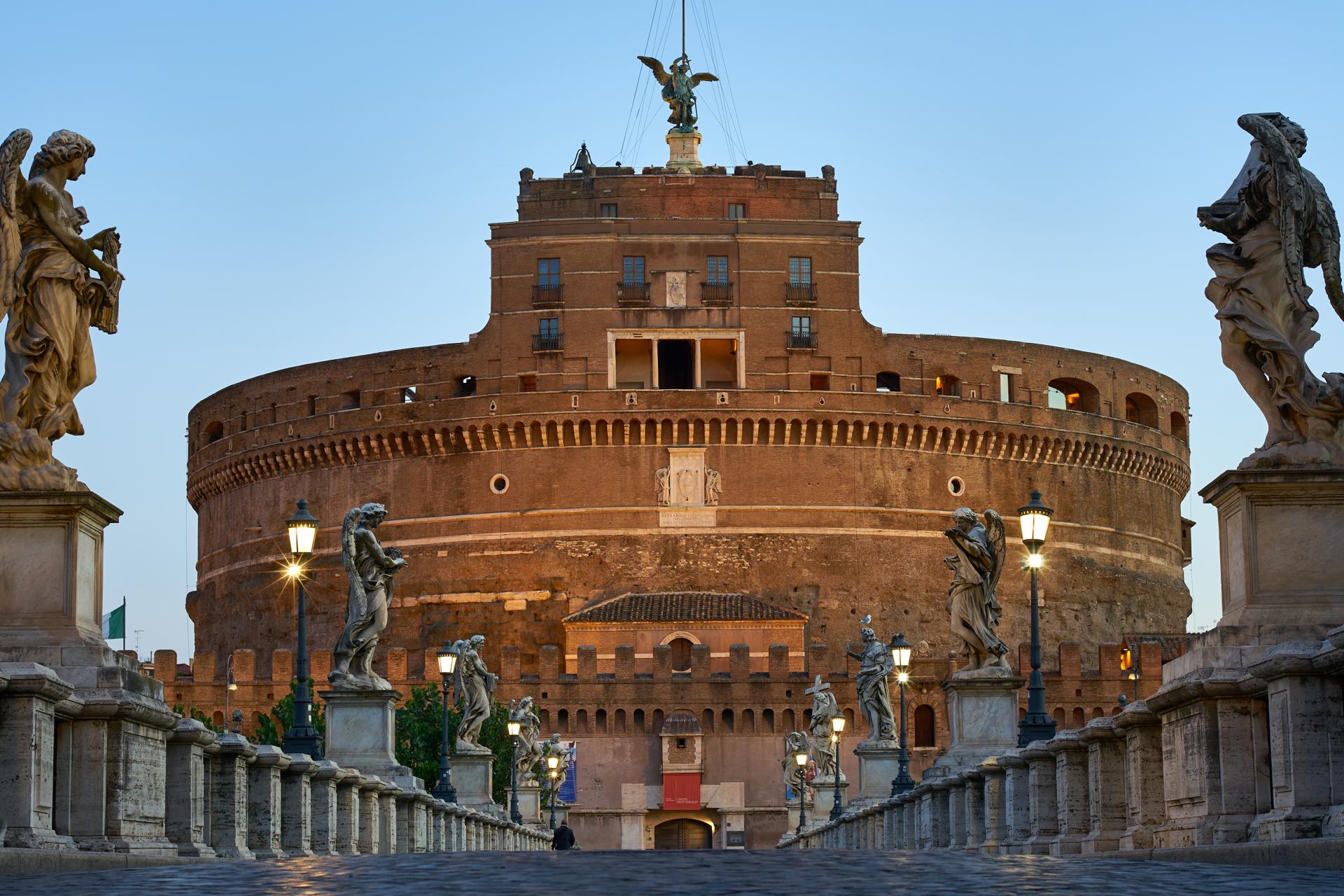
In 1625–1626, Pope Urban VIII of the Barberini family ordered the removal and melting down of 152.7 tonnes of massive bronze trusses from the portico's roof. Popular tradition claimed the metal was used to cast Bernini's baldachin in St. Peter's Basilica, inspiring the Roman quip "Quod non fecerunt barbari, fecerunt Barberini" ("What the barbarians did not do, the Barberini did"). However, archival accounts show roughly 91 percent of the bronze was actually cast into cannons for Castel Sant'Angelo, while the copper for the baldachin came from Venice, with at most a small fraction of Pantheon bronze possibly included. Later in the 17th century, two Baroque bell towers designed by Carlo Maderno were added to the façade; Romans mocked them as "orecchie d'asino" ("donkey's ears"), and they were demolished in 1881.
Visiting the Pantheon Today
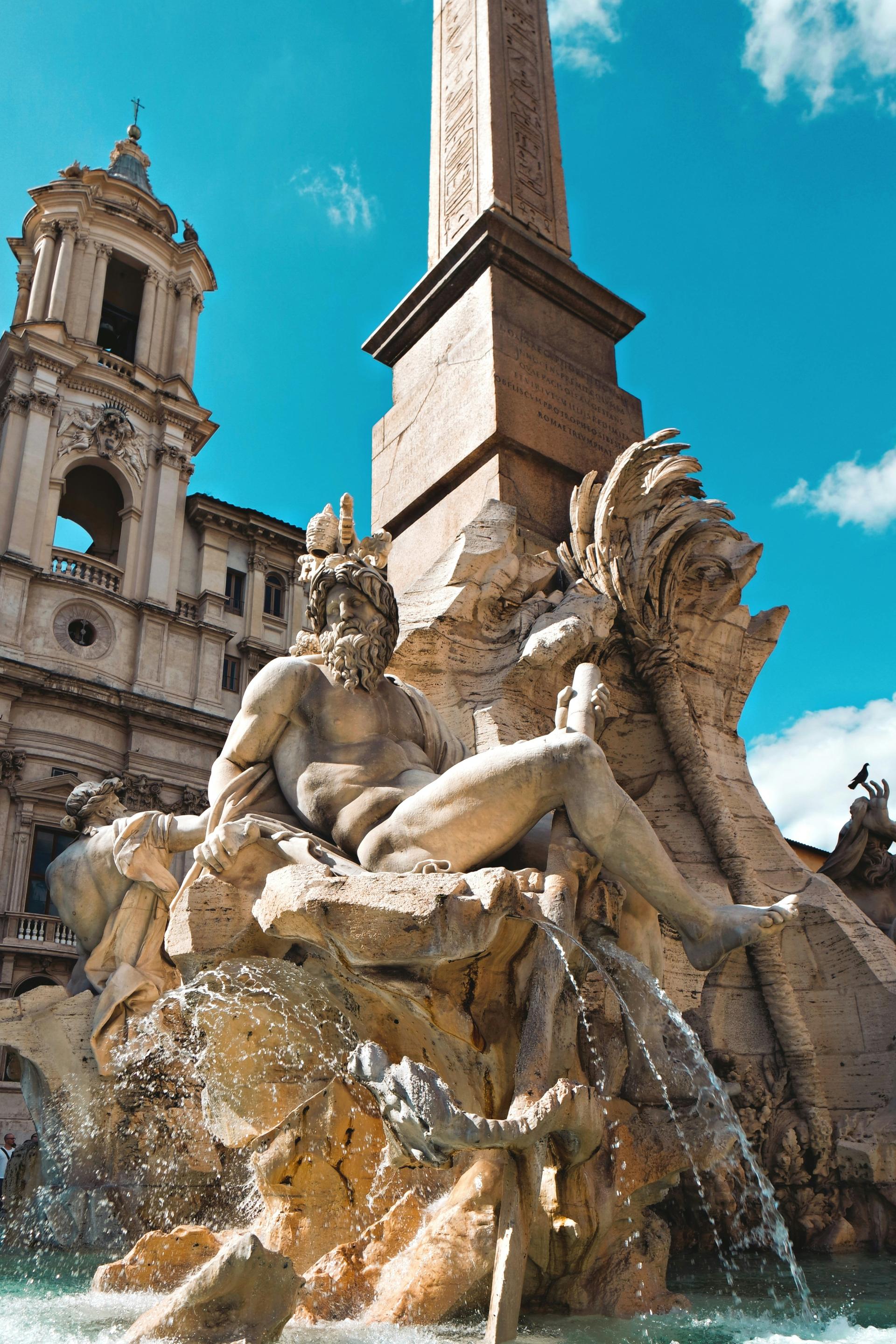
Located a short walk from Piazza Navona and the Trevi Fountain, the Pantheon operates as both a major historic monument and an active Roman Catholic minor basilica (Basilica di Santa Maria ad Martyres). According to 2026 schedules, it is open daily from 9:00 am to 7:00 pm, with last individual entry at 6:30 pm, and is closed on 25 December and 1 January. Paid admission is required for tourists, while entry on the first Sunday of each month is free with a reservation.
Because the basilica remains an active place of worship, Holy Mass is celebrated on Saturdays and vigil days at 5:00 pm and on Sundays and public holidays at 10:30 am, during which sightseeing access is restricted to worshippers. A dress code is strictly enforced: shoulders must be covered, and very short shorts, short skirts, low-cut tops, and transparent garments are prohibited.
FAQ
Why does the Pantheon façade bear Marcus Agrippa's name instead of Hadrian's?
Marcus Agrippa commissioned the original Pantheon around 27–25 BC, which later burned twice. When Emperor Hadrian rebuilt the monument around 125–128 AD, he placed Agrippa's original inscription on the architrave rather than his own name, likely to honour Augustus and his predecessors or as a gesture of political association and humility.
Why is there a second pediment outline behind the main roof of the Pantheon?
The outline on the intermediate brick block reveals that the portico was originally designed for taller 50-Roman-foot (14.8-metre) columns. Builders likely scaled down to 40-Roman-foot columns because of the logistical difficulty of quarrying and transporting 60-tonne granite monoliths from Egypt.
What happened to the bronze removed from the Pantheon's portico in the 17th century?
In 1625–1626, Pope Urban VIII (Barberini) ordered 152.7 tonnes of bronze roof trusses removed from the portico. Although legend claims it was used for Bernini's baldachin in St. Peter's Basilica, archival records indicate about 91 percent was cast into cannons for Castel Sant'Angelo.
What are the visiting hours and dress code for the Pantheon in Rome?
According to 2026 visitor schedules, the Pantheon is open daily from 9:00 am to 7:00 pm (last entry at 6:30 pm; closed 25 December and 1 January), with paid tickets for tourists and free entry with reservation on the first Sunday of the month. As an active church, it requires covered shoulders and prohibits very short shorts, short skirts, low-cut tops, and transparent clothing.