Arethusa Spring in Syracuse: Myth, History, and Nature
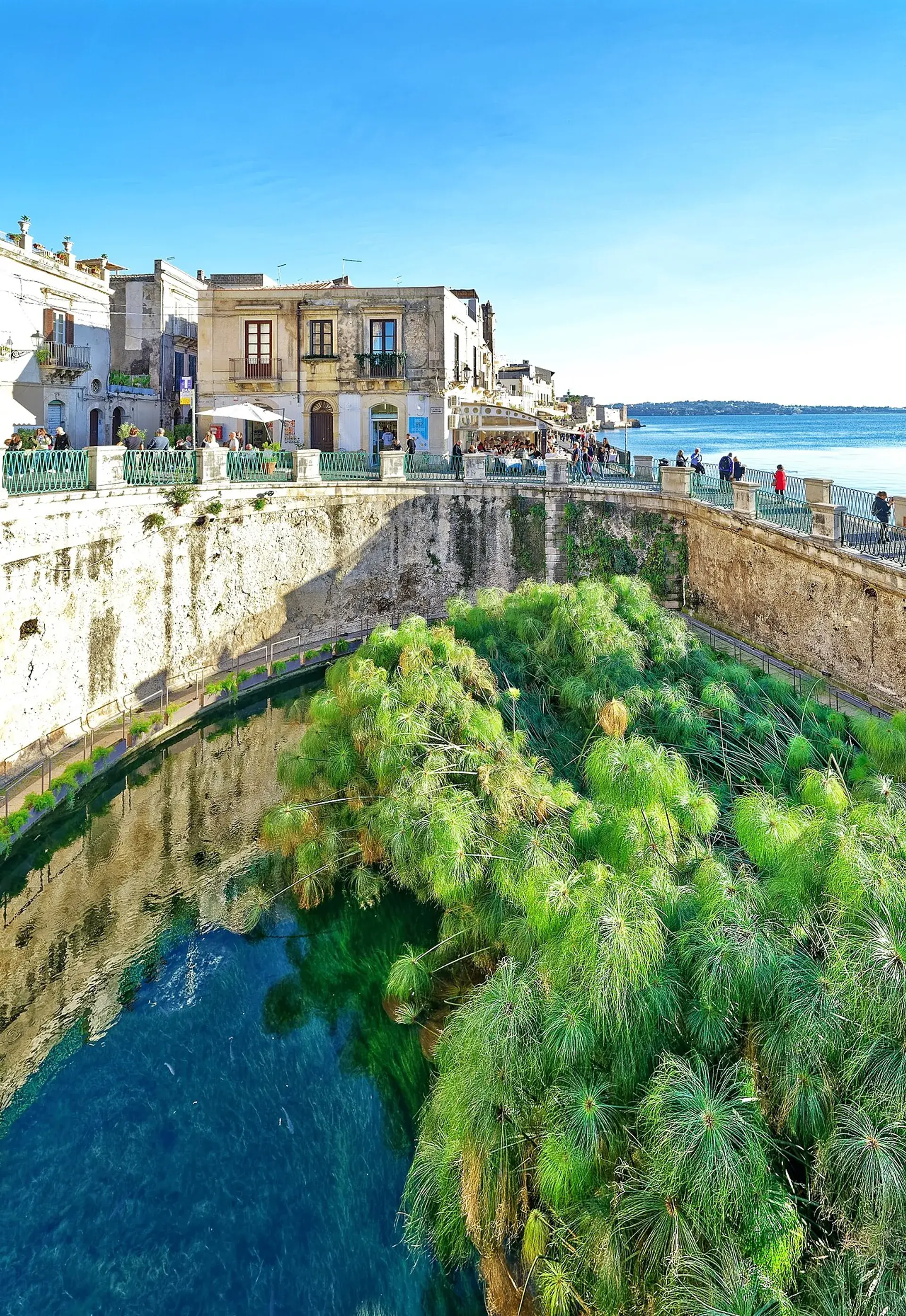
On the island of Ortigia in Syracuse, Sicily, the Arethusa Spring emerges as a natural freshwater source adjacent to the Ionian Sea. This unique location is a blend of ancient mythology, pivotal history, and rare natural beauty, making it one of Syracuse's most visited sites.
The Myth of Arethusa and Alpheus
The spring's origin is enshrined in Greek mythology. The story follows Arethusa, a nymph and follower of the goddess Artemis. To save her from the relentless pursuit of the river god Alpheus, Artemis transformed Arethusa into a freshwater spring on Ortigia. Undeterred, Alpheus transformed himself into a river, traveled underground from Greece beneath the sea, and merged his waters with hers in Syracuse, creating a symbol of eternal connection.
A Vital Historical Resource
Beyond its mythical origins, the Arethusa Spring was fundamental to the survival of ancient Syracuse. Its fresh water sustained the city's population, proving crucial during prolonged sieges, such as the Athenian siege in 414 BC. Its location outside the city walls made it a precious and strategically vulnerable asset. In later centuries, during the 1500s, its channels were repurposed for the tanning of leather. The nymph Arethusa became such a powerful symbol of the city that her head was featured on ancient Syracusan tetradrachm coins and, much later, on a 500 thousand lire Italian banknote in 1966.
Transformations Through Time
The spring has undergone significant changes over the centuries. In 1540, fortifications commissioned by Charles V reduced the size of its associated lake. These fortifications were later demolished in 1847, and the present-day Belvedere was constructed on their foundations, offering a scenic viewpoint. The current semicircular basin dates to 1843. Historically, the spring's water turned brackish after an earthquake in 1169, a condition that worsened after another seismic event in 1693 allowed more seawater to infiltrate the freshwater source.
A Unique Natural Habitat
The Arethusa Spring is a remarkable ecological site. It is one of only two wild papyretic springs in Europe, making it one of the few places on the continent where papyrus plants (Cyperus papyrus) grow naturally. The spring is hydrogeologically connected to the Ciane River, which flows under the Porto Grande before surfacing at Arethusa. Today, the basin is a lively habitat for fish and ducks, adding to its natural charm.
The Spring in Modern Times
Currently, the Arethusa Spring is a prominent tourist attraction, beloved for its historical and natural significance. It is a popular spot for romantic walks and watching the sunset. Nearby, a statue titled "Alphaeus and Arethusa" by artist Biagio Poidomani commemorates the enduring myth. The site continues to fascinate visitors, from those interested in its legendary past to historical figures like Admiral Horatio Nelson, who in 1798 believed drawing water from the spring would ensure his victory against Napoleon.
FAQ
Why is the water in the Arethusa Spring brackish?
The spring's water is brackish because of seawater infiltration. This process began after the earthquake of 1169 and intensified following the 1693 earthquake, which allowed seawater to mix with the freshwater.
What is the myth of the Arethusa Spring?
According to Greek mythology, the nymph Arethusa was transformed into a freshwater spring by the goddess Artemis to escape the river god Alpheus. Alpheus then flowed under the Ionian Sea to merge his waters with hers in Syracuse.
Is the papyrus at Arethusa Spring unique?
Yes, the Arethusa Spring is one of only two existing wild papyretic springs in Europe. It is one of the few locations on the continent where the papyrus plant grows naturally.
What was the historical importance of the Arethusa Spring?
It was a critical source of fresh water for ancient Syracuse, which was essential for the city's survival, particularly during military sieges. The spring's nymph, Arethusa, became a symbol of the city and appeared on its currency.