Castello Maniace: Syracuse's Imperial Seaside Fortress
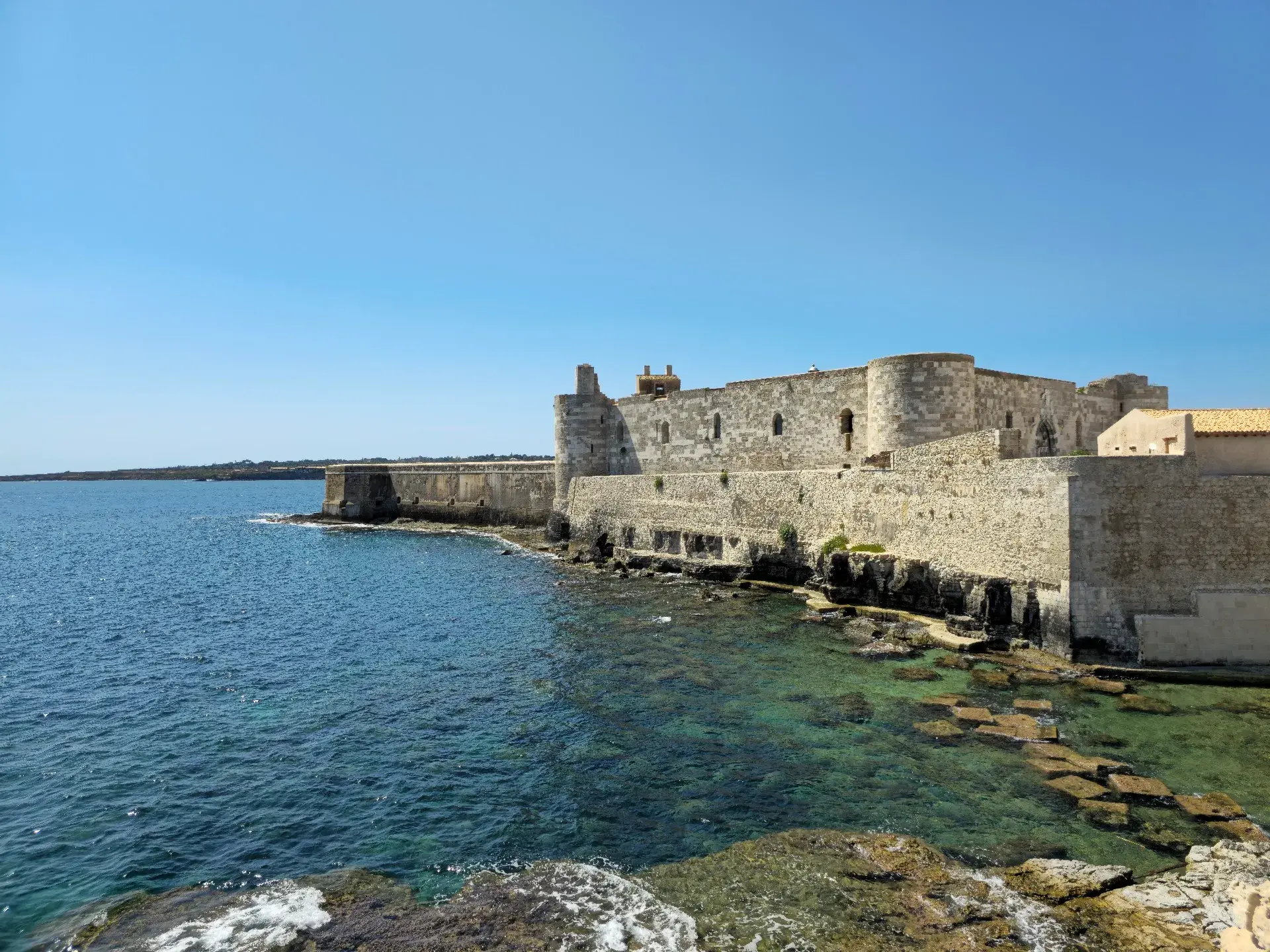
At the strategic southern tip of Ortigia Island in Syracuse, Italy, stands the formidable Castello Maniace. Commissioned by the Holy Roman Emperor Frederick II, this imposing structure was constructed between 1232 and 1240, serving as both a defensive stronghold and a symbol of imperial power. Its location has commanded the entrance to Syracuse's harbor for centuries, making it a crucial point in Mediterranean military and trade routes.
The Castle's Storied Past
The site's strategic importance was recognized long before the current castle was built. The fortress is named for the Byzantine general George Maniakes, who established a fort here in 1038 after reclaiming the city from Arab rule. However, the grand structure seen today is the vision of Frederick II, a ruler known for his appreciation of science and art. Under the supervision of architect Riccardo da Lentini, the castle took shape.
Throughout its history, Castello Maniace has been a stage for significant events. King Peter III of Aragon resided here with his family in 1288. From 1305 to 1536, it was part of the 'Camera Reginale,' a feudal domain granted to the Queens of Sicily, serving as a royal residence. A dark chapter occurred in 1448 when Captain Giovanni Ventimiglia executed his banquet guests on charges of treason. In the 16th century, under Charles V, extensive fortifications were added, transforming it into a full military bastion. The castle's military role continued for centuries, including its handover to Giuseppe Garibaldi's troops in 1860.
Architectural Grandeur and Cultural Fusion
Castello Maniace is a masterpiece of Swabian-era military architecture, blending Gothic, Norman, and Arab influences. The castle features a perfect quadrangular layout, with each side measuring 51 meters, anchored by four cylindrical towers at the corners.
Despite its martial exterior, the interior reveals surprising elegance. The main hypostyle hall was a marvel of design, originally featuring 25 ribbed and vaulted bays supported by a forest of columns and semi-columns. In a fascinating testament to the multicultural court of Frederick II, this grand hall was oriented towards Mecca. The main portal was once adorned with two 3rd-century BC Hellenistic bronze rams; one original is now in Palermo's Salinas Archaeological Museum, while reproductions stand at the castle entrance today.
Damage, Restoration, and Modern Use
A catastrophic event in 1704 permanently altered the castle's appearance when a gunpowder magazine exploded, destroying a significant portion of the structure, including part of the hypostyle hall's intricate vaulted ceiling. The castle remained a military site until it was demilitarized in the 1970s.
Following extensive restoration between 1993 and 2003, Castello Maniace is now open to the public as a state museum and a prominent tourist attraction. Visitors can explore its historic halls and bastions, which offer stunning panoramic views of the sea and the city of Syracuse. The castle also houses an antiquarium displaying artifacts related to its long history.
FAQ
Who built Castello Maniace?
Castello Maniace was commissioned by Holy Roman Emperor Frederick II and constructed between 1232 and 1240 under the supervision of architect Riccardo da Lentini.
Why is the castle named Maniace?
The castle is named after the Byzantine general George Maniakes, who built an earlier fort on the same site in 1038 after recapturing Syracuse from Arab control.
What is Castello Maniace used for today?
Today, Castello Maniace is a state museum and a popular tourist attraction. It is open to the public for visits and houses an antiquarium.
What happened to the castle in 1704?
In 1704, a gunpowder magazine inside the castle exploded. This catastrophic event severely damaged the structure, causing the collapse of a portion of the grand hypostyle hall's vaulted ceiling.
Discover Sicily like never before
Dive into Sicily hidden stories and secret spots with Ciceru interactive tours.
Explore tour
Audioguide
Quizzes
Maps
Solo
Couples
Groups & families

© Photo by Emilie THIRARD FEUTRY via Google Maps · Google Places